3 Form Fields vs 7: Why Shorter Forms Get More Countertop Leads
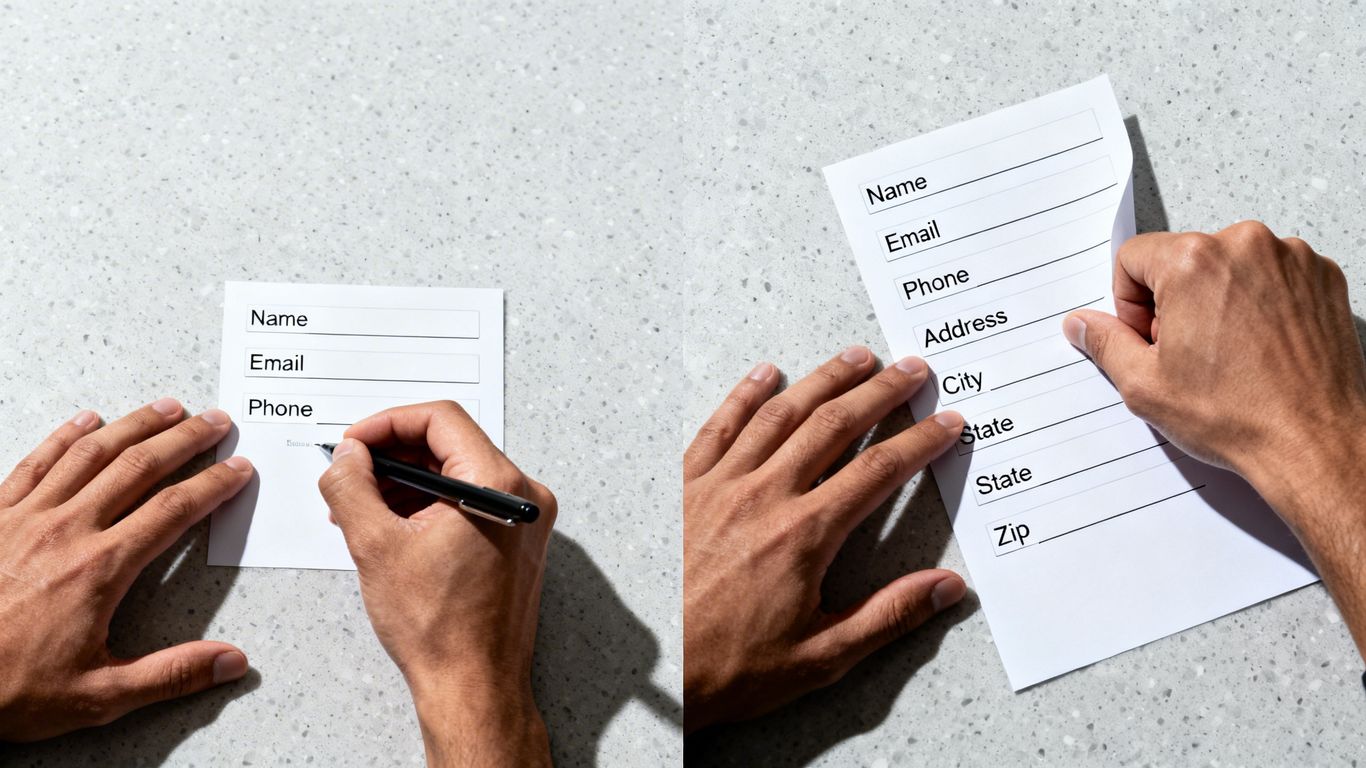
So, you run a countertop business and you're wondering about your website's contact form. Should it have three fields or seven? It sounds like a small detail, but it can really change how many people actually fill it out. We're talking about countertop company form fields optimization here, and it's more important than you might think for getting those leads in the door. Let's break down why less is often more when it comes to getting potential customers to reach out.
Key Takeaways
- Shorter forms with fewer fields generally lead to more completed submissions from potential customers.
- Asking for too much information upfront can scare people away before they even get a quote.
- Focus on getting the most critical information first, like name, phone, and email, to start the conversation.
- You can gather additional details later in the sales process after you've made contact.
- Optimizing your countertop company form fields is a simple yet effective way to boost lead generation.
1. Quartz Countertops
So, you're thinking about quartz countertops? Good choice. They've gotten super popular lately, and for good reason. Unlike natural stone, quartz is engineered. This means it's made in a factory, usually by mixing about 90% ground quartz with about 10% polymers and resins. This process gives it some pretty neat qualities.
One of the biggest draws is how low-maintenance they are. You don't have to seal them like granite or marble, and they're really tough against stains and scratches. Plus, because they're manufactured, you can get them in a huge range of colors and patterns, from plain white to ones that look just like natural stone. It's kind of the best of both worlds, really. You get the look you want without all the upkeep.
Here's a quick look at why people pick quartz:
- Durability: They hold up well against daily wear and tear. Think chopping, spills, and general kitchen chaos.
- Stain Resistance: Coffee, wine, juice: most common kitchen spills won't leave a mark if you wipe them up reasonably quickly.
- Low Maintenance: No need for special sealers or cleaners. Just soap and water usually does the trick.
- Design Flexibility: You can find almost any color or pattern imaginable, making it easy to match your kitchen's style. Some companies, like FASA STONE, are really leading the way in what's possible with quartz.
Of course, they aren't perfect. They can be more expensive than some other options, and because they're not natural, some people just don't like the idea of an engineered product. Also, while they're heat resistant, leaving a super hot pot directly on the surface for a long time isn't the best idea: it can damage the resin. So, maybe keep those trivets handy.
When you're looking at quartz, remember that the quality can vary between brands. It's worth checking out reviews and maybe even getting samples to see how they look and feel in your own kitchen lighting. Don't just go for the cheapest option; sometimes paying a bit more upfront saves headaches later.
2. Granite Countertops
Granite countertops are a really popular choice for kitchens, and for good reason. They look great, they're tough, and they add a nice touch of natural beauty to any space. When people think of a classic, durable kitchen countertop, granite often comes to mind first.
One of the big draws of granite is its unique look. No two slabs are exactly alike, so your kitchen will have a countertop that's truly one-of-a-kind. You can find granite in a huge range of colors and patterns, from subtle speckles to bold veins, meaning you can usually find something that fits your kitchen's style.
Beyond looks, granite is super practical. It's a hard stone, so it holds up well against scratches and heat. You don't have to worry too much about putting hot pots directly on it, though using a trivet is always a good idea to be safe. It's also pretty resistant to stains, especially if it's sealed properly.
Here's a quick look at why granite is a solid pick:
- Durability: It's one of the hardest natural stones used for countertops.
- Heat Resistance: Generally handles hot pans well.
- Unique Appearance: Every slab has its own natural pattern.
- Increased Home Value: Granite is often seen as a premium material that can boost your home's appeal.
Keeping granite looking its best is pretty straightforward. Most of the time, a simple wipe-down with mild soap and water does the trick. It's a good idea to have it sealed every year or two, depending on how much you use your kitchen. This sealing helps prevent stains from soaking in.
While granite is tough, it's not completely indestructible. Very sharp objects can still scratch it if you're not careful, and strong acids or chemicals can etch the surface. Regular maintenance, like sealing, is key to keeping it looking good for years.
3. Marble Countertops
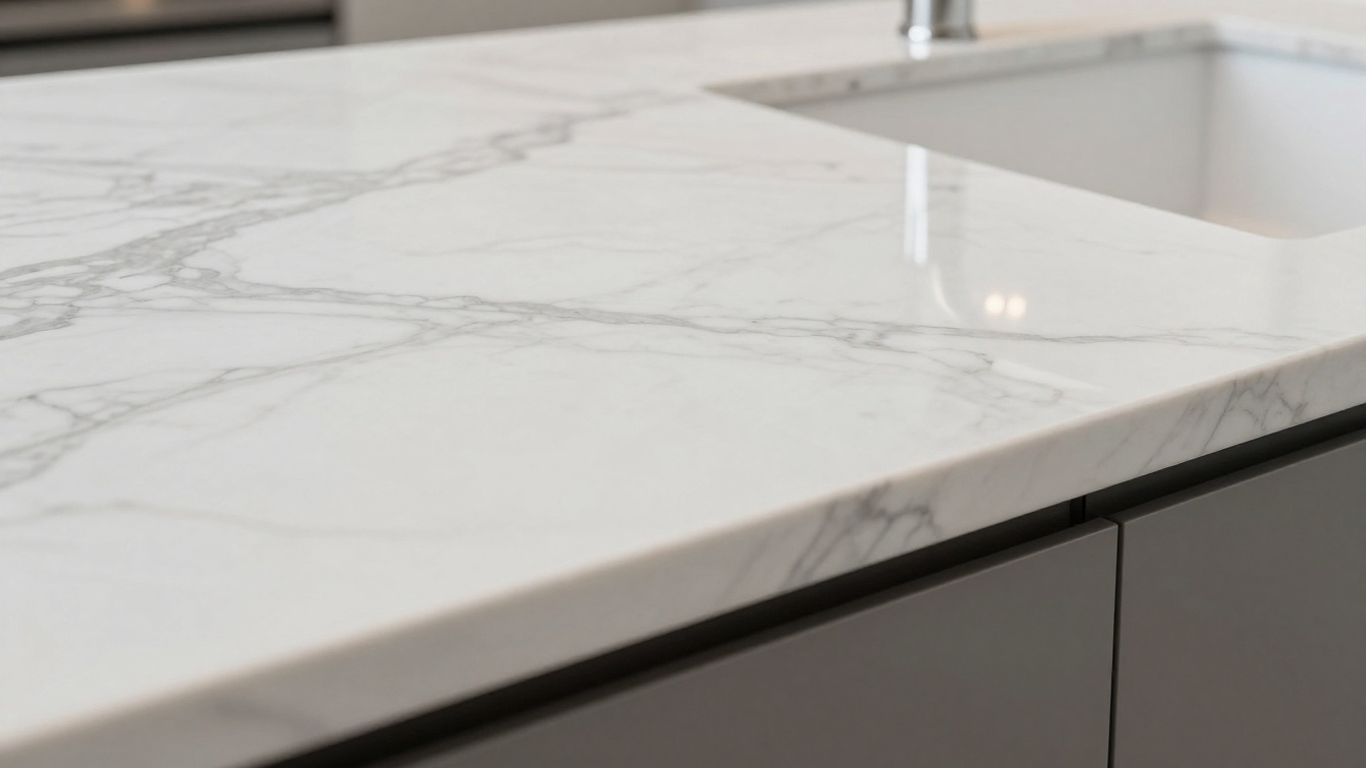
Marble countertops bring a touch of classic elegance to any kitchen. They're known for their beautiful veining and cool, smooth feel. However, this beauty comes with some upkeep.
Marble is a natural stone, and like all natural stones, it has its quirks. It's porous, which means it can absorb liquids. Spills, especially acidic ones like lemon juice or red wine, can etch the surface, leaving dull spots. You'll need to be pretty diligent about wiping things up right away.
Here's a quick rundown of what to expect:
- Appearance: Each slab is unique, with swirling patterns and colors that can range from pure white to deep blacks and greens.
- Durability: It's a hard stone, but it can chip or crack if heavy objects are dropped on it. It's also softer than granite, making it more prone to etching.
- Maintenance: Regular sealing is a must to help protect against stains. You'll also want to use pH-neutral cleaners.
If you're looking for a countertop that's super low-maintenance and can handle anything you throw at it, marble might not be your first choice. But if you appreciate its unique look and are willing to put in a little extra care, it can be a stunning addition to your home.
When considering marble, think about the specific type. Carrara marble is common and usually has finer, more subtle veining, while Calacatta marble often features bolder, more dramatic patterns. The price can vary quite a bit based on the rarity and pattern of the marble you choose.
4. Laminate Countertops
Laminate countertops are a really popular choice for a lot of homeowners, and it's easy to see why. They're budget-friendly, come in a huge variety of colors and patterns, and are pretty simple to keep clean. Think of them as the versatile workhorse of the kitchen.
They offer a great way to get a high-end look without the high-end price tag. You can find laminates that mimic the look of granite, marble, or even wood, fooling the eye quite effectively. Plus, installation is generally straightforward, making them a DIY-friendly option for some.
Here's a quick look at what makes laminate a go-to:
- Affordability: This is usually the biggest draw. Compared to natural stone or solid surfaces, laminate is significantly cheaper.
- Variety: The design possibilities are almost endless. You can get them in solid colors, abstract patterns, or realistic stone and wood looks.
- Maintenance: A damp cloth and some mild soap are usually all you need to keep them looking good. They resist stains pretty well, too.
- Installation: Lighter and easier to cut than stone, many people opt to install laminate themselves.
However, they do have their downsides. Laminate isn't as durable as some other materials. It can scratch, chip, or scorch if you're not careful. You can't really sand or refinish laminate like you can with wood or some stone, so if it gets damaged, you might be looking at replacement.
When considering laminate, think about how you use your kitchen. If you're a heavy-duty cook who often slides pots and pans or uses knives directly on the counter, laminate might not be the best fit. But for lighter use or if you're on a tight budget, it's a solid contender.
5. Butcher Block Countertops
Butcher block countertops bring a warm, natural feel to any kitchen. They're made from solid wood, often glued together in strips, which gives them that distinctive look.
These countertops are a favorite for homeowners who want a kitchen that feels cozy and lived-in. They can be made from various wood types, like maple, oak, or walnut, and each has its own character and durability.
Here's a quick look at some popular wood choices:
- Maple: A hard, light-colored wood that's pretty resistant to dents and scratches. It's a good all-around choice.
- Oak: Known for its strong grain pattern and good durability. It can be stained to match your kitchen's style.
- Walnut: A darker, richer wood that adds a touch of elegance. It's softer than maple or oak, so it might show wear more easily.
Maintaining butcher block does take a little effort, but it's not too bad. You'll want to keep it dry and oil it regularly to prevent cracking and staining.
Regular oiling is key to keeping your butcher block looking good for years. It helps protect the wood from moisture and stains, making it more practical for everyday kitchen use. Think of it like giving your wood a good drink of water.
If you're looking for a countertop that adds personality and a touch of nature to your home, butcher block is definitely worth considering. It's a material that ages beautifully and can become a real focal point in your kitchen.
6. Stainless Steel Countertops
Stainless steel countertops have really gained traction over the last decade or so. They bring a professional, almost restaurant-kitchen vibe to a home, which a lot of people dig. They're super durable and can handle a lot of wear and tear.
One of the biggest draws is how easy they are to clean. Seriously, spills just wipe right up. Plus, they're non-porous, meaning germs and bacteria don't really have a place to hide. This makes them a really hygienic choice, especially if you do a lot of cooking.
However, they aren't without their quirks. They can scratch, and if you're not careful, you might end up with a few dings. Also, fingerprints can be a bit of a pain to keep looking spotless, though there are ways to manage that.
Here's a quick rundown of what you're getting with stainless steel:
- Durability: Built to last, resisting heat and stains.
- Hygiene: Non-porous surface is easy to sanitize.
- Aesthetics: Modern, sleek look that fits many kitchen styles.
- Maintenance: Generally low, but requires attention to scratches and prints.
When you're thinking about getting metal countertops, stainless steel is definitely a strong contender. It’s a material that’s both practical and stylish, offering a clean look that many homeowners are after. It’s a solid choice if you want something that looks good and holds up well over time.
7. Concrete Countertops
Concrete countertops have really become a thing lately, and honestly, I get why. They offer a really unique look that you just can't get with other materials. Plus, they're super customizable. You can get them in pretty much any color, shape, or size you want. This makes them a fantastic choice for homeowners looking for something truly one-of-a-kind.
When you're thinking about concrete, it's not just about the raw material. There's a lot that goes into making them look good and last. Here's a quick rundown of what you're getting into:
- Customization: Seriously, the sky's the limit here. You can embed things like glass chips, metal pieces, or even old tiles into the concrete. Stains can give you a huge range of colors, from earthy tones to bold brights.
- Durability: When done right and sealed properly, concrete is tough. It can handle heat and heavy use, which is great for a busy kitchen.
- Maintenance: This is where people sometimes get tripped up. They need to be sealed regularly to prevent staining and etching. Think of it like waxing a car; it needs a refresh every so often.
- Cost: While they can be comparable to some natural stones, the price can go up quickly with complex designs or special finishes.
Here's a little table to give you an idea of how they stack up against a couple of other popular choices:
| Feature | Concrete Countertops | Quartz Countertops | Granite Countertops |
|---|---|---|---|
| Look | Unique, industrial | Consistent, modern | Natural, varied |
| Durability | Good (if sealed) | Excellent | Very Good |
| Maintenance | Needs sealing | Low | Low |
| Customization | High | Moderate | Low |
Getting concrete countertops installed isn't a simple DIY job for most people. It involves mixing, pouring, curing, and then a lot of finishing work, including sealing. It's usually best left to professionals who know how to get the mix right and achieve a smooth, durable surface without cracks or imperfections. They also know the best sealants to use for your specific needs.
Thinking about adding a cool concrete countertop to your kitchen or bathroom? They look awesome and are super tough! You can make them look like fancy stone without the big price tag. Want to see some amazing examples and learn how to get started? Visit our website today for inspiration and all the info you need!
So, What's the Takeaway?
Look, when people are looking for new countertops, they usually just want a price or a consultation, not to fill out a novel. We've seen it time and again with our clients in the home services world. Shorter forms, like the three-field ones we talked about, just work better. They get more people to actually hit submit. It’s not rocket science, but it’s easy to forget when you’re busy running your business. So, if you’re looking to get more leads for your countertop business, try cutting down those forms. You might be surprised at how much of a difference a few less fields can make. Less friction means more customers reaching out, and that’s what we’re all here for, right?
Frequently Asked Questions
Why do shorter forms work better for getting countertop leads?
Think about it: nobody wants to spend ages filling out a long form. When you make your form short and sweet, it's way easier and faster for people to give you their info. This means more people will actually finish the form and become a lead for your countertop business. It's all about making it simple!
What's the main difference between a 3-field and a 7-field form?
A 3-field form usually just asks for the essentials, like name, email, and phone number. A 7-field form might ask for more details, like the size of the kitchen, the type of countertop they want, and their budget. The shorter form gets straight to the point, which is often what people want when they're just starting to look.
How can I make my countertop website form more appealing?
Keep it clean and easy to understand. Only ask for the most important information upfront. You can always ask for more details later when you talk to the customer. Make sure the 'submit' button is clear and inviting. A simple, uncluttered form looks professional and trustworthy.
Does the type of countertop material affect form length?
Not really. Whether someone is interested in quartz, granite, or laminate, they'll likely prefer a shorter form to start. The material choice comes later in the conversation. The goal is to get their contact information first, no matter what material they're dreaming of.
What information is absolutely necessary for a countertop lead form?
At a minimum, you need a way to contact them. So, a name, an email address, and a phone number are usually the most critical pieces of info. This allows you to follow up and discuss their project in detail.
Will asking for less information scare away serious customers?
Actually, it's the opposite! Serious customers appreciate a business that respects their time. By keeping the initial form simple, you show that you're efficient. They'll be more willing to share details when they know you're ready to help them with their countertop project.