60% of Countertop Searches Are Mobile: Is Your Landing Page Ready?

So, you're selling countertops, right? And you're thinking about your ads. Good. But are you thinking about where people actually end up after they click? Because, surprise, most folks are scrolling on their phones. Like, 60% of them. That means if your landing page isn't built for a tiny screen, you're probably just throwing money away. Let's talk about making sure your granite mobile landing page actually works, not just looks pretty on a desktop.
Key Takeaways
- Most countertop shoppers (60%) use their phones. Your landing page needs to be mobile-first.
- Mobile users want quick info and easy ways to contact you. Make it simple.
- Fast loading times are non-negotiable on mobile. Slow pages lose customers.
- Your granite mobile landing page should match your ad. If the ad promises a discount, show it immediately.
- Track what mobile users do on your page to find out what's working and what's not.
Understanding The Mobile Countertop Shopper
The Dominance Of Mobile In Home Improvement Searches
It’s pretty wild how much we use our phones for everything these days, right? When it comes to big home projects, like picking out new countertops, it’s no different. Most people aren't sitting at a desktop computer to start dreaming about granite or quartz. They're on their phones, probably while they're already in their kitchen, looking at what's possible. We're talking about a huge chunk of potential customers. Seriously, over 60% of people searching for countertops are doing it on a mobile device. That number alone should tell you something important about where your business needs to be visible.
Think about it: someone sees a scuff on their current counter, pulls out their phone, and starts looking for replacements. It’s instant. This shift means that if your website isn't set up for mobile users, you're basically missing out on a massive part of the market. It’s not just about having a website anymore; it’s about having a website that works well for someone on the go, someone who wants quick answers and easy browsing. This is where effective marketing communication strategy comes into play, making sure your message reaches these shoppers when and where they're looking.
Why Countertop Buyers Prefer Mobile
So, why are people glued to their phones for this kind of shopping? A few reasons come to mind. For starters, convenience is king. People can search for countertop options anytime, anywhere. Waiting for the kids at soccer practice? Perfect time to browse some marble samples. On the couch after dinner? You can check out different edge profiles. It fits right into our busy lives.
Another big factor is the visual aspect. Phones have great cameras and screens. People can easily snap a picture of their current kitchen and then use their phone to see how different countertop materials might look. They can zoom in on details, compare colors side-by-side, and get a real feel for the product without having to be in a showroom. It’s about immediate gratification and easy comparison.
Here’s a quick look at why mobile wins:
- Instant Access: No need to boot up a computer. Just grab your phone.
- Visual Exploration: High-quality phone cameras and screens make it easy to see details.
- On-the-Spot Decisions: People can research while they’re already thinking about their kitchen.
- Comparison Shopping: Quickly check prices and styles from different suppliers.
Key Mobile User Behaviors To Consider
When someone is on their phone looking for countertops, they're usually not in a browsing-for-hours kind of mood. They want information, and they want it fast. They're often looking for specific things, like pricing, available materials, or local installers. They might be comparing a few options they found quickly, or they might be ready to make a call.
Mobile users tend to have a clear goal in mind. They're not usually just casually browsing; they're actively seeking solutions to a problem or fulfilling a desire. This means they expect to find what they need with minimal effort. If they hit a dead end or a slow-loading page, they're likely to just move on to the next search result.
What does this mean for you? You need to anticipate their needs. Think about what questions they're likely to have and make sure the answers are front and center on your mobile landing page. This includes things like:
- Clear pricing or a way to get a quick quote.
- Examples of your work, especially in different kitchen styles.
- Information about the materials you offer (granite, quartz, marble, etc.).
- Contact details and hours of operation, easily accessible.
- A simple way to request a consultation or site visit.
Understanding these behaviors helps you build a mobile experience that actually helps people, rather than frustrating them. It’s about meeting them where they are, with what they need, right when they need it.
Designing Your Granite Mobile Landing Page
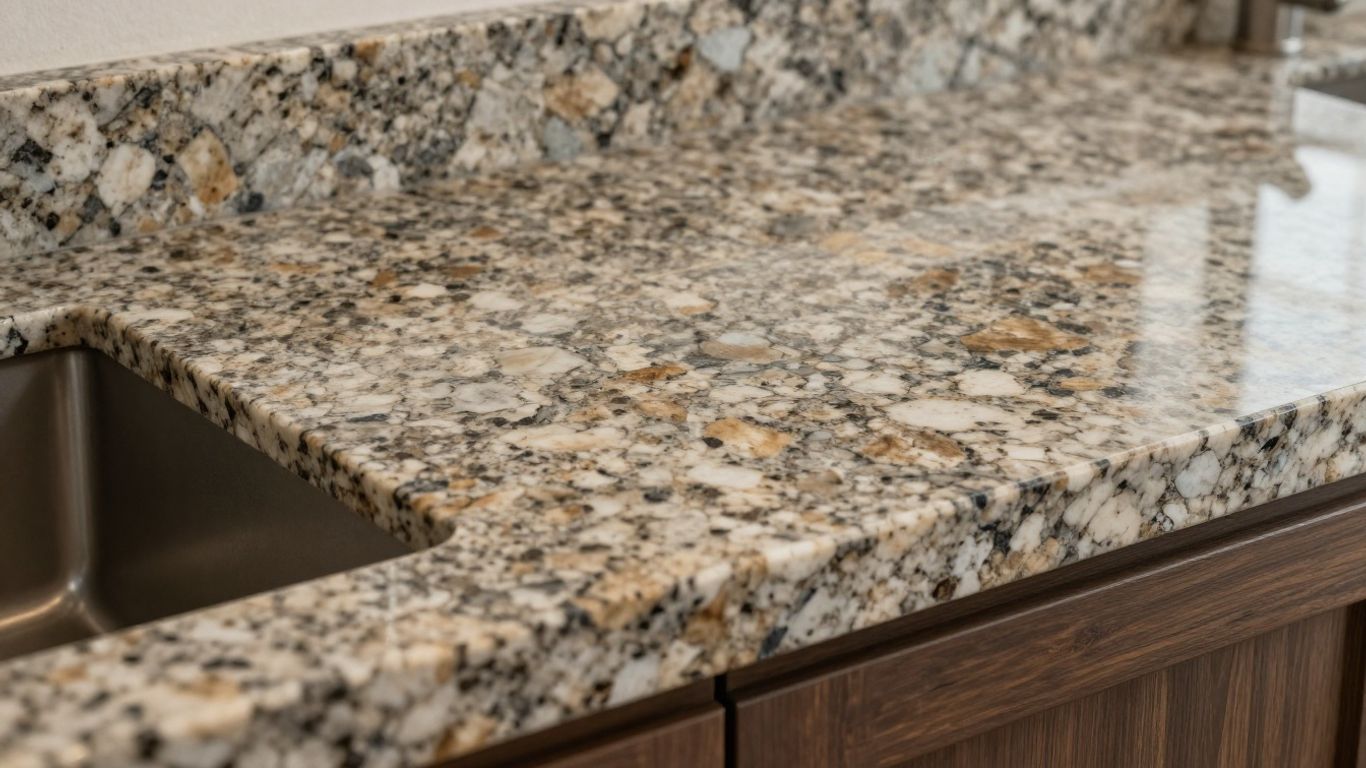
So, you know a lot of people are looking at countertops on their phones. That's great, but if your website looks like a jumbled mess on a small screen, you're probably losing them before they even get a chance to see your beautiful granite. We need to make sure your mobile landing page isn't just functional, but actually works well for someone on the go.
Essential Elements For A Mobile-First Design
When we talk about mobile-first, it means we're designing for the smallest screen first and then scaling up. This forces us to prioritize what's most important. Think about what a user absolutely needs to see or do right away when they land on your page looking for granite countertops.
- Clear Value Proposition: What makes your granite special? Get that front and center.
- Easy Navigation: People on mobile don't have time to hunt for things. Menus should be simple and obvious.
- Contact Information: Phone number, address, and a simple contact form should be readily available.
- Visual Appeal: Even on mobile, people want to see what they're buying. High-quality images are a must.
Optimizing Layout For Small Screens
Forget trying to cram everything from your desktop site onto a phone. It just doesn't work. We need a layout that's clean and easy to scan. Think single-column layouts, plenty of white space, and buttons that are big enough to tap without accidentally hitting something else. It’s about making it simple to digest information quickly. We want to make sure that finding information about kitchen design is straightforward.
Ensuring Fast Load Times On Mobile Devices
This is a big one. Nobody waits around for a slow-loading page, especially on mobile where data speeds can be spotty. If your page takes too long to load, people will just leave. We need to trim down image sizes, minimize code, and make sure your hosting is up to par. Every second counts here.
Slow loading pages are a silent killer of mobile conversions. Users expect instant gratification, and if your page doesn't deliver, they'll find someone who can. It's that simple.
Here's a quick checklist for speed:
- Compress all images.
- Minify CSS and JavaScript files.
- Use browser caching.
- Consider a Content Delivery Network (CDN).
- Test your page speed regularly.
Crafting Compelling Mobile Content
Okay, so you've got a mobile-friendly page. That's great. But what are you actually saying on that page? People on their phones are usually on the go, maybe even in your showroom or at a competitor's. They need information fast, and they need it to be easy to digest. Your mobile content needs to be sharp, to the point, and persuasive.
Concise Copy That Converts
Forget long paragraphs. Mobile users scan. They're not settling in for a deep read. Think short sentences, bullet points, and clear headings. Get straight to the benefits of your countertops. What makes them special? Why should someone choose you?
- Highlight unique selling points (e.g., "Scratch-resistant", "Low maintenance", "Wide color selection").
- Use simple language. Avoid industry buzzwords that might confuse someone just starting their search.
- Focus on solving their problems. Are they worried about durability? Cost? Installation?
Mobile users have short attention spans. Your copy needs to grab them immediately and tell them what they need to know without making them work for it. Think of it like a quick chat: get to the point, be friendly, and make it easy to understand.
High-Impact Visuals For Mobile
Pictures are huge for countertops. People want to see what they're buying. But on mobile, images need to load fast and look good on a small screen. Use high-quality photos, but make sure they're optimized for web. Nobody's waiting for a giant image file to download.
- Showcase your best work: close-ups of granite patterns, installed kitchens, different edge profiles.
- Consider short videos demonstrating durability or ease of cleaning.
- Ensure images are clear and accurately represent the colors and textures.
Clear Calls To Action On Mobile
What do you want people to do after they see your page? Call you? Visit your showroom? Request a quote? Make it super obvious. Buttons should be big enough to tap easily with a thumb, and the text should be direct.
- "Get a Free Quote"
- "Call Us Now"
- "Visit Our Showroom"
These buttons need to be prominent. Don't hide them at the bottom of the page. People are looking for the next step, so give it to them clearly and without fuss.
Technical Optimization For Mobile Performance
Mobile Responsiveness And User Experience
So, your landing page looks okay on a desktop, but what happens when someone pulls it up on their phone? That's where mobile responsiveness comes in. It's not just about shrinking things down; it's about making sure the page actually works well on a smaller screen. Buttons should be easy to tap, text should be readable without zooming, and images should load without breaking the layout. A page that's a pain to use on mobile will send shoppers running to your competitor. Think about how you use your phone: you want things quick and easy. If your page makes people pinch and zoom or scroll endlessly sideways, they're probably not sticking around.
Page Speed Optimization Strategies
Nobody likes waiting for a page to load, especially on mobile where data can be spotty or connections slower. Slow load times are a major turn-off. People will just hit the back button and find someone else. Here are a few ways to speed things up:
- Compress Images: Big image files are often the biggest culprits. Use tools to shrink them down without losing too much quality.
- Minify Code: This means cleaning up your website's code (like HTML, CSS, and JavaScript) by removing unnecessary characters and spaces. It makes the files smaller.
- Use Browser Caching: This tells a visitor's browser to store parts of your page so they don't have to re-download them every time they visit.
- Reduce Redirects: Every time a page redirects, it adds extra time to the loading process. Try to minimize these.
Slow pages don't just frustrate users; they actively hurt your search engine rankings. Google and other search engines consider page speed a ranking factor, so a sluggish site can mean fewer people find you in the first place.
Cross-Device Compatibility Checks
It's not enough for your page to look good on just one type of phone. People use all sorts of devices these days: different brands, different screen sizes, different operating systems. You need to check how your landing page performs across a range of these. This means testing on:
- Various smartphones (iPhones, Android phones)
- Different tablet sizes
- Even older devices if possible, to catch any compatibility issues.
This might seem like a lot, but it's really about making sure that no matter how someone finds your countertop business on their phone, they have a good experience. It builds trust and makes them more likely to consider you when they're ready to buy.
Leveraging Mobile Data For Granite Sales
So, you've got this great mobile landing page for your granite countertops. That's awesome. But what do you do with it? You don't just set it and forget it. You gotta look at the numbers. Understanding how people interact with your page on their phones is key to selling more granite. It’s like watching someone browse your store: you see what catches their eye, what they pick up, and what they put back down.
Tracking Mobile User Interactions
First off, you need to know what people are actually doing. Are they scrolling? How far? Are they tapping on your phone number or your 'get a quote' button? Tools like Google Analytics can show you this stuff. You can see things like:
- Time spent on page
- Bounce rate (how quickly they leave)
- Pages visited after the landing page
- Clicks on specific buttons or links
This data tells you if your page is holding attention or if people are bouncing off faster than a dropped pebble.
Analyzing Mobile Conversion Paths
Okay, so someone lands on your page from a mobile ad. What happens next? Do they fill out a form? Do they call you? Do they just leave? Mapping out these paths helps you see where people are getting stuck or where they're successfully moving towards becoming a customer. Sometimes, a simple change in button placement or text can make a big difference. You might find that most people who convert are coming from a specific ad type, or that they tend to look at your 'gallery' page before requesting a quote.
Here’s a simplified look at common paths:
| Path | Conversion Rate | Notes |
|---|---|---|
| Landing Page -> Quote Form | 5% | High intent, but form might be too long |
| Landing Page -> Gallery -> Contact | 3% | Visuals are important, need easy contact |
| Landing Page -> Call Button | 7% | Direct calls are effective for some users |
| Landing Page -> Exit | 85% | Page needs improvement to retain users |
Iterative Improvements Based On Mobile Analytics
Looking at the data isn't a one-time thing. It's a cycle. You check the numbers, you make a change, you check the numbers again. Maybe you notice that people are dropping off at the quote form. So, you simplify the form, make it shorter. Then you check your analytics again next week to see if more people are completing it. Or perhaps your photos aren't loading fast enough on mobile, causing people to leave. You optimize those images. It’s all about making small, smart adjustments based on what the data is telling you.
The goal is to make the mobile experience as smooth and helpful as possible. If people are searching for granite on their phones, they're likely in the research or decision-making phase. Your landing page needs to meet them right there, with clear information and an easy next step. Don't make them work for it.
Integrating Mobile Landing Pages With Ad Campaigns
Aligning Mobile Ads With Landing Page Experience
So, you've got this great mobile landing page for countertops, right? That's awesome. But if you're running ads to get people there, they need to match up. Think about it: someone clicks an ad for "granite kitchen countertops" on their phone. They expect to land on a page that's all about granite kitchen countertops. If the ad promises a "free design consultation" and the landing page is just a generic homepage, they're going to bounce. The ad's message and the landing page's content should be like two peas in a pod. This means using similar keywords, images, and offers. If your ad shows a specific style of granite, make sure that style is featured prominently on the landing page. It's about keeping that user journey smooth and predictable.
Targeting Mobile Users Effectively
Who are you trying to reach with your ads? Just saying "mobile users" is too broad. You need to get specific. Are they homeowners looking for a quick update, or people planning a full kitchen remodel? Are they searching during work hours, or late at night? You can use location targeting to show ads to people in specific neighborhoods you serve. Time-of-day targeting can also be smart. Maybe people are more likely to browse countertops after dinner. You can also target based on what they've searched for before. If someone recently looked up "kitchen renovation ideas," they might be a good candidate for your countertop ads.
Here's a quick look at some targeting options:
- Demographics: Age, income, homeownership status.
- Interests: Home decor, DIY projects, kitchen design.
- Location: Specific zip codes, cities, or radius around your showroom.
- Time of Day: When your target audience is most likely to be online.
Measuring ROI From Mobile Campaigns
Okay, so you're running ads and sending people to your mobile landing page. How do you know if it's actually working and making you money? You've got to track things. This means looking at how many people click your ads, how many land on your page, and most importantly, how many actually do what you want them to do, like fill out a form or call you.
Tracking your mobile ad performance means looking at the whole picture, from the first click to the final sale. It's not just about getting clicks; it's about getting qualified leads that turn into customers.
Here are some key metrics to watch:
- Click-Through Rate (CTR): How many people see your ad and click it.
- Conversion Rate: How many people who land on your page complete a desired action.
- Cost Per Acquisition (CPA): How much it costs you to get one customer from your mobile ads.
- Return on Ad Spend (ROAS): The revenue generated for every dollar spent on ads.
Making your ads and mobile pages work together is super important. When people click on your ad, you want them to land on a page that's easy to use and understand on their phone. This helps them do what you want them to do, like signing up or buying something. Want to learn more about how to make this happen? Visit our website today!
Don't Get Left Behind
So, the big takeaway here is pretty simple: most people looking for countertops are on their phones. If your website isn't built for that, you're probably losing business. Think about it: a clunky, hard-to-use mobile site means folks will just tap back and find someone else. Make sure your pages load fast, look good, and are easy to click around on, especially for someone trying to get a quick quote or find your number. It’s not rocket science, but it’s definitely where a lot of the action is happening right now. Get your mobile experience right, and you’ll be in a much better spot to grab those customers.
Frequently Asked Questions
Why do most people look for countertops on their phones?
Think about it: when you need something fast, like a new kitchen countertop, where do you usually reach first? Your phone! People use their phones to quickly search for ideas, compare prices, and find local businesses while they're on the go or even just relaxing at home. It's just easier and faster for most folks.
What makes a good mobile landing page for countertops?
A great mobile landing page is super simple to use on a small screen. It shows off beautiful countertop pictures right away, has clear buttons to click, and loads really fast. Imagine trying to zoom in and out all the time: nobody wants that! It needs to be easy to find what you're looking for and take the next step, like getting a quote.
How important is page speed for mobile users looking for countertops?
Super important! If your page takes too long to load, people will just leave and go to a competitor. They're often in a hurry or easily distracted. A speedy page means they can see your awesome countertops and get the info they need without waiting, making them more likely to stick around and become a customer.
Should my countertop ads match my mobile landing page?
Absolutely! It's like telling someone to go to the kitchen and then showing them the bathroom. If your ad talks about a specific type of granite, the landing page should show that granite. Consistency makes people trust you and understand what you're offering, leading to more sales.
How do I know if my mobile landing page is working well?
You track it! You look at how many people visit your page from their phones, how long they stay, and if they actually do what you want them to do (like fill out a form or call you). This information helps you see what's working and what needs to be changed to get more customers.
What's the difference between a website and a landing page for mobile ads?
A website is like a big store with many different sections. A landing page is more like a special display or a direct path to one specific product or offer. For mobile ads, a landing page is usually better because it's focused on getting the user to take one specific action, like requesting a countertop quote, without distractions.