Blogging for Pest Control: The 'What Bug Is This?' Content Strategy That Ranks and Converts
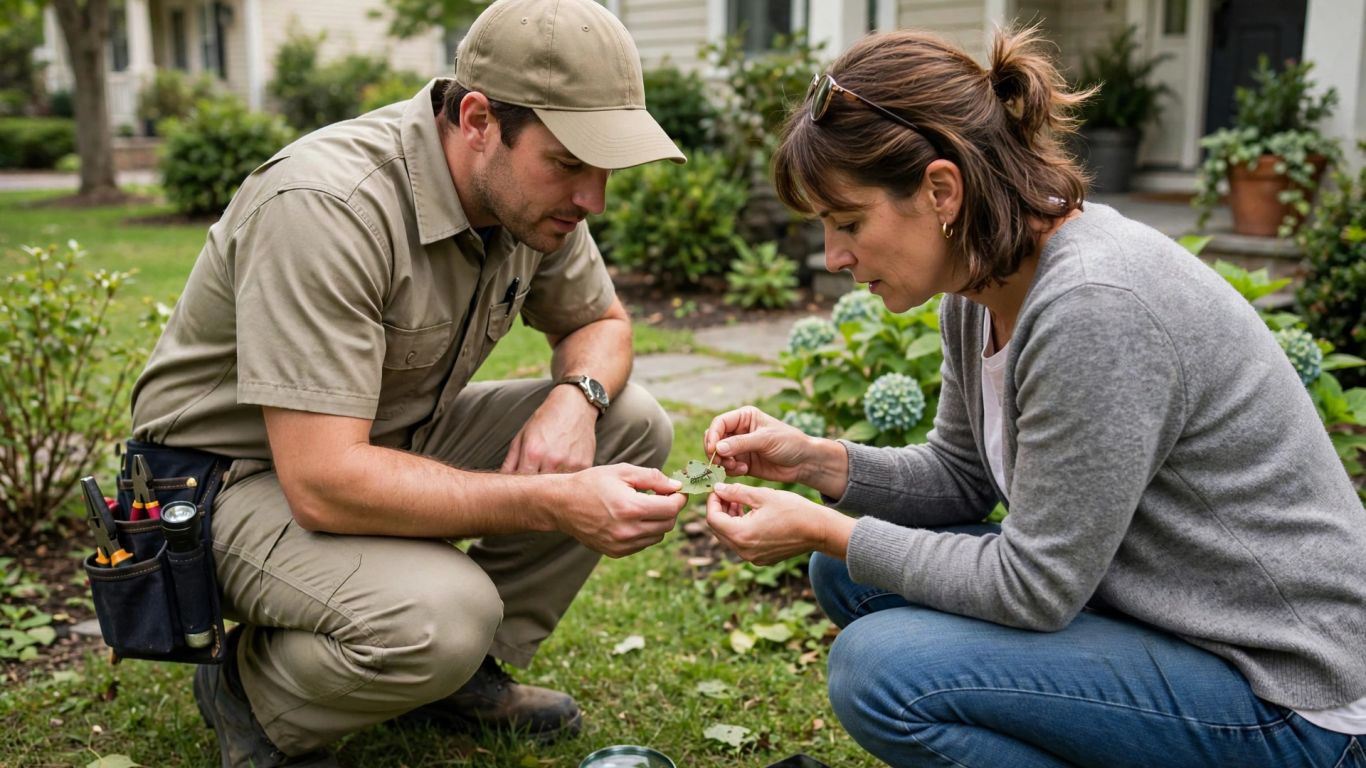
Key Takeaways
Bug-identification articles can earn attention early in a homeowner’s decision process, but they work best when they are accurate, locally relevant, and connected to a useful next step.
- Choose pest topics based on local demand and services you actually provide.
- Give readers clear identification clues, look-alike distinctions, and responsible safety guidance.
- Link each guide to the most relevant service page and a fitting next step.
- Use original images, local details, and clear page structure to support visibility and trust.
- Measure qualified inquiries as well as traffic, then refresh and expand content that performs.
Why bug-identification searches are valuable
A person searching “what bug is this?” may be worried, curious, or trying to decide whether a small sighting signals a larger problem. The search is informational, but it can also be the first step toward hiring a pest professional. For a local company, useful answers can build familiarity before the reader is ready to book. That makes bug-identification content a practical part of pest control SEO blog content, provided it helps the reader rather than forcing a sales pitch.
What people need when they search “what bug is this?”
Most readers want a quick way to compare what they saw with likely species, along with context about where the pest is usually found. A photo alone may not settle the question; size, shape, location, season, and behavior can all matter. Explain the most useful clues in plain language and make clear when those clues are not enough for a confident identification. That directness is more helpful than a long list of species with no way to distinguish them.
How identification content reaches homeowners before they’re ready to hire
A homeowner may look up a bug days or weeks before deciding that treatment is necessary. An article can answer the first question, then point to prevention advice or a professional assessment if the problem persists. The aim is not to turn every curious reader into a lead; it is to be useful enough that the company becomes a credible option when help is needed. A thoughtful guide can also introduce readers to the business’s service area and the kinds of pests it handles.
Which pests create a natural path from information to treatment
A natural connection exists when identifying the pest is only part of the problem. Readers may also need to know whether it can damage a home, keep returning, or be difficult to address safely without professional help. That often makes guides about termites, bed bugs, rodents, and stinging insects relevant to a service conversation, depending on the company’s actual offerings. Keep the transition grounded in the reader’s concern, not a generic “call now” placed after every identification answer.
Where identification content can overpromise or create safety risks
A photograph or short description cannot always establish a species with certainty, and treatment advice can carry real risks. Avoid diagnosing an infestation from a single clue, promising that a DIY method will solve it, or giving chemical-use instructions beyond what reliable product labels and applicable guidance support. When details are uncertain, say so and recommend an inspection where appropriate. Accuracy earns more trust than confident-sounding advice that could lead someone to misidentify a pest or use a treatment incorrectly.
Choose topics that match local demand and your services
The best topic list is not simply a catalogue of every insect a writer can name. It reflects what people in the company’s service area ask about, what the team can treat, and whether an article can provide a genuinely useful answer. Start with existing customer questions and search data, then compare those ideas with the company’s service mix. This keeps the content plan connected to both local interest and real operations.

Research pest questions in Search Console, keyword tools, and customer calls
Look for recurring questions in customer calls, estimate conversations, and service notes, then compare them with search queries and keyword research. Google Search Console can help reveal queries that already lead people to the site, including searches that may suggest a useful new guide or a missing detail on an existing page. Keyword tools can add estimates and related phrasing, but treat those numbers as directional rather than as proof of local demand. For more ideas on selecting topics and shaping useful pages, see this guide to pest service keyword research.
Prioritize bugs common to your service area and profitable service lines
A topic deserves priority when it is locally relevant, fits a service the company offers, and gives a reader a clear reason to keep learning. A simple comparison can make those trade-offs easier to discuss before the editorial calendar fills up.
| Topic signal | What to check | Editorial decision |
|---|---|---|
| Local frequency | Do customers mention it repeatedly, or does it appear seasonally? | Consider a dedicated guide if questions recur. |
| Service fit | Does the company treat this pest in its service area? | Connect the guide to a matching service page. |
| Reader need | Is identification, prevention, or treatment the main concern? | Focus the article on the question readers need answered. |
| Business value | Could a relevant inquiry lead to a service the company wants to grow? | Prioritize without overstating demand or likely results. |
Use the comparison to make a focused choice, not to assign an artificial score to every pest. If local frequency is high but the company does not provide the service, a brief referral to another reliable resource may be more appropriate than building a conversion page around it. The point is to align the editorial effort with the work the team can actually take on.
Build topic clusters around signs, behavior, prevention, and treatment
A cluster helps readers move from a first observation to the next question without forcing one article to cover everything. Start with a central identification guide, then add narrower content only where it serves a distinct purpose. Four useful supporting angles are:
- Signs that help distinguish the pest from look-alikes.
- Behavior and seasonal patterns that explain where it may appear.
- Prevention steps that fit the pest and the home setting.
- Treatment considerations, including when professional help may be appropriate.
Link the pieces where a reader would naturally want more detail, and keep each page’s purpose clear. A cluster should feel like a connected set of answers, not several near-duplicate posts competing for the same question.
Decide when a pest deserves its own article or a section on a broader page
A dedicated article makes sense when the pest generates a distinct set of questions, has meaningful local relevance, and can support original guidance. If the subject comes up rarely or shares the same identification clues and next steps as a broader topic, a concise section may be enough. Avoid thin pages that repeat basic facts with only the species name changed. Review what the company already publishes before adding another URL, so the new page fills a real gap rather than dividing attention.
Create a useful “what bug is this?” article
A strong identification article moves from observation to explanation in a sensible order. It should help a reader compare what they found, understand the conditions that may have attracted it, and decide what to do next. Write for someone looking at a bug on a wall or near a window, not for an expert who already knows the terminology. Specific details and honest limits make the page more useful than a sweeping promise of certainty.
Lead with clear identification clues and look-alike species
Open with the most diagnostic visible features: approximate size, body shape, color pattern, wings, legs, or distinctive markings where relevant. Then explain which similar species might be confused with it and what details separate them. Use plain language alongside technical terms, and avoid implying that one characteristic confirms an identification on its own. A compact comparison is often easier to use than a dense paragraph, especially when the reader is trying to match an insect in real time.
Use original photos, accurate captions, and descriptive alt text
Original photographs can show the scale, angle, and setting readers need to compare with their own observation. Use captions to identify what the image actually shows and avoid labeling a photo more precisely than the evidence allows. Descriptive alt text should convey the useful visual detail, such as a small brown insect on a windowsill, rather than repeat keywords. A short video can also demonstrate what identifying details to look for, as long as it supplements rather than replaces the written explanation.
Keep the written clues available to readers who cannot view the media or who are browsing on a slow connection. Images should clarify the identification, not carry the entire explanation.
Explain where the pest is found, what attracts it, and when it appears
Give readers context that makes the sighting easier to interpret: common indoor or outdoor locations, conditions that may attract the pest, and any relevant seasonal pattern. Be careful not to turn a tendency into a diagnosis. For example, finding an insect near a damp area may be a useful clue, but it does not prove the home has a particular moisture problem. Context should help people decide what to inspect next, while leaving room for differences in climate, building conditions, and species.
Cover health, property, and DIY-treatment considerations responsibly
Describe health or property concerns in proportion to what is known, and distinguish a possible risk from a certainty. If discussing DIY steps, prioritize low-risk actions such as reducing access to food or sealing an obvious entry point when appropriate. Do not imply that a household remedy is reliably effective or encourage unsafe handling. Readers should be able to tell which steps are general prevention and which questions call for a qualified professional.
Make uncertainty clear and explain when a professional inspection is needed
Some pests look alike, and evidence can be incomplete when the reader has only a blurry photo or a single specimen. Say when identification is uncertain and explain what additional details could help, such as a clearer photo or the location where the pest was found. If signs suggest recurring activity, possible damage, or a safety concern, explain that an on-site assessment may be the more reliable next step. Clear boundaries make the guide more credible, not less useful.
Turn identification content into a relevant service lead
An informational article should not behave like a service page with a photo pasted on top. The transition to a lead works when it answers the reader’s next practical question: whether the business treats this pest, whether the location is covered, and how to get help. Make the invitation specific to the article and keep it proportionate to the situation. That gives a motivated reader a useful next step without interrupting everyone else who came for information.
Match the call to action to the reader’s pest and level of urgency
A reader identifying a wasp near a doorway may need different guidance from someone who has found signs of recurring rodent activity. Use a call to action that reflects the pest and the likely concern, while avoiding alarmist language. If the situation sounds urgent, explain the appropriate way to contact the company; if it is less immediate, offer an assessment or a way to ask a question. A relevant invitation feels like part of the answer rather than a sales script.
Link to the right pest-specific service page and booking option
Connect the article to the service page that matches the pest, and make sure the destination explains what the company actually offers. A broad contact page can work when no pest-specific service page exists, but it should still make the next step clear. If an owner wants to discuss content and marketing priorities, they can book a conversation. Keep that action distinct from the pest-control booking path so readers do not confuse a marketing inquiry with a service request.
Use local proof such as service areas, reviews, and treatment expertise
Help readers decide whether the business is relevant to them by stating the communities it serves and describing its experience accurately. Reviews can add context, but do not imply that one customer’s outcome is typical or guaranteed. Where possible, use examples that explain the service process rather than making broad promises. Clear local details also help prevent out-of-area inquiries that the team cannot serve.
Make calls and forms easy to use on mobile
Many readers will arrive on a phone, possibly while looking at the pest itself. Keep contact options easy to find, use concise form fields, and make tap targets comfortable to use. If the page offers phone and online options, label them clearly and avoid making a long form the only route to assistance. Test the page on a real mobile device so the call to action remains usable beneath images and other page elements.
Track calls, form submissions, and booked jobs from article visits
Traffic alone cannot show whether an article helps the business. Where tracking is available, distinguish article visits from service-page visits and connect calls or form submissions to the pages that influenced them. A call may happen after a reader visits several pages, so avoid treating a single last-click source as the whole story. Reviewing lead quality and booked work alongside visits gives the team a more grounded view of the article’s contribution.
Optimize articles for local and organic visibility
On-page optimization helps search engines and readers understand what a page covers. It begins with a title and structure that match the real question, then carries through to useful internal links, clear local information, and a page that works well on a phone. Search visibility is never guaranteed, so the aim is to make the page easy to interpret and genuinely helpful. For a broader view of local search visibility, keep the same practical focus on nearby customers and service fit.
Use a clear title, URL, headings, and meta description for the search intent
Name the pest and the reader’s question plainly in the title, then use headings to organize identification, behavior, prevention, and next steps. Keep the URL readable and focused rather than stuffing it with variations of the same phrase. A concise meta description can summarize the value of the page, though search engines may display a different excerpt. Match the wording to the article’s actual content so a click does not lead to a mismatch in expectations.
Link between identification guides, pest pages, and location pages
Internal links help people move from a general answer to the relevant service and location details. Add links where they answer a natural follow-up question, and use descriptive anchor text that makes the destination clear. Avoid repeating the same link in every paragraph or linking to pages that are only loosely related. A small, deliberate network is easier for both readers and site editors to maintain.
Add author and review details to support accuracy and trust
Identify who prepared the article and, when applicable, who reviewed the pest or treatment information. Include relevant qualifications only when they are accurate and verifiable. A review date helps editors know when the page was last checked, but it should reflect a real review rather than a cosmetic update. These details give readers context for evaluating advice, particularly where identification and safety are involved.
Keep business details and service-area information consistent
Use the same business name, contact details, and service-area descriptions across the site and other public business listings. Do not list towns merely to capture search traffic if the team does not serve them. On the article itself, mention local conditions only when they are relevant and supported by the company’s experience. Readers need to know whether help is available where they live, not just see a string of place names.
Improve image speed and page experience without hiding useful content
Resize and compress images so they load efficiently, while keeping enough detail to support identification. Make sure important explanations are visible without requiring a visitor to dismiss intrusive overlays or navigate a maze of tabs. Check that text remains readable on small screens and that the page does not shift unpredictably as images load. A faster page is useful, but not if optimization removes the details that made the article worth visiting.
Measure performance and improve the content over time
An article is not finished simply because it has been published. Search visibility, seasonality, service priorities, and reader questions can all change, so set a regular review cadence instead of waiting for a page to become visibly stale. Measure outcomes that matter to the business as well as the page’s reach. That makes it easier to decide whether to update, expand, consolidate, or leave a guide alone.
Separate informational traffic from service-page and lead activity
Use page groups or reporting labels to distinguish identification guides from service pages and location pages. Then consider how readers move between them: an informational page may introduce a service visit without receiving the final click before a call. Google Search Console can help review query and click patterns for organic pages, while lead records can add context about calls, forms, and booked work. Keep those sources distinct enough to understand their limits before drawing conclusions.
Monitor rankings, clicks, engagement, calls, and qualified inquiries
Track several signals rather than judging an article by its position for one phrase. Rankings and clicks show search visibility, while engagement and inquiry data can suggest whether the page answers the right question and reaches relevant readers. Google Search Console provides query and click information that can help identify changes in organic visibility; call and form tracking can show what happens after a visit. Interpret shifts against seasonality and service-area demand instead of assuming every fluctuation reflects a content change.
Update seasonal advice, pest photos, and treatment information
Review pages when pest activity changes seasonally or when better photos and clearer explanations become available. Check that treatment references remain accurate and do not conflict with current product labels or professional guidance. Remove or revise advice that is no longer appropriate, and make meaningful updates visible to readers where useful. A short, careful refresh is better than adding new material simply to make a page longer.
Refresh weak pages based on Search Console queries and conversion data
When a page attracts impressions but few clicks, compare its title and description with the questions people are asking. When clicks arrive but readers do not continue to a relevant service page or contact option, review whether the article answers the question and offers an appropriate next step. Google Search Console query data can surface terms that the current page only partially addresses, while conversion information helps separate a content gap from a service or usability issue. Change one meaningful element at a time where possible, then give the page time to collect new evidence.
Expand topics that attract local leads into a connected content cluster
If a guide draws relevant inquiries, look for unanswered follow-up questions rather than publishing a near-copy of the original. Add a supporting article when it serves a distinct intent, such as identifying signs, understanding seasonal behavior, or explaining prevention. Link the pieces so readers can move between them and keep each page’s role clear. Over time, the cluster can become a practical resource for local homeowners and a more useful pathway to the company’s services.
Conclusion
A “what bug is this?” article earns its place when it gives homeowners a careful answer, reflects the pests and services that matter locally, and offers a relevant next step without overpromising. Treat each page as part of a connected customer journey, then use real search and lead data to improve it. If you want help shaping a content plan around your home service business, consider discussing the priorities with a marketing professional.
Frequently Asked Questions
Does bug-identification content help pest control SEO?
It can help a pest control site address useful informational searches and introduce readers to related services. Its value depends on local relevance, accuracy, and whether the page answers a real question well.
Which pests should a pest control company write about first?
Start with pests that customers ask about often, that occur in the service area, and that the company actually treats. Existing call notes and search query data can help prioritize the list.
Should every pest have its own blog article?
No. A dedicated article is useful when the pest has distinct local demand and enough unique information to support a complete page. Otherwise, a section on a broader guide may serve readers better.
How can an article identify a bug accurately?
Describe visible clues such as size, shape, markings, and where it was found, while comparing likely look-alikes. Make uncertainty clear because a photo or brief description may not be enough for a confident identification.
What should a pest-identification article say about DIY treatment?
It should stick to responsible, low-risk prevention guidance and avoid promising that a home remedy will solve the problem. For chemical products, readers should follow the label and seek qualified advice when needed.
How should a pest control blog turn readers into leads?
Link to the relevant pest-specific service page and offer a clear contact option that fits the reader’s level of concern. Keep the invitation useful and avoid implying that every sighting requires treatment.
How often should pest control articles be updated?
Review them when seasons change, treatment guidance needs checking, photos become outdated, or query and lead data reveal a gap. A regular review schedule helps catch issues before the content becomes misleading or stale.