Broad Match Is Bleeding Your Countertop Budget: Here's the Proof

So, you're running ads for your countertop business and you're using broad match. It seems like a good idea, right? It's supposed to find you more customers. But lately, you've been seeing your ad spend go up without a clear reason why. It feels like money is just disappearing. Well, you're not alone. Many stone fabricators fall into this trap, and it's costing them a lot. Let's talk about why broad match might be the culprit and how to fix it.
Key Takeaways
- Broad match can show your ads for searches that have nothing to do with what you offer, leading to wasted money.
- When your ads show up for irrelevant searches, you pay for clicks from people who won't buy countertops.
- Checking your search terms report in Google Ads is the best way to see exactly what people are typing before your ads show.
- Using phrase match and exact match, along with smart negative keywords, helps you control who sees your ads and stops wasted spend.
- Focusing on keywords that show people are ready to buy, like 'granite countertop installation near me,' brings in better leads than just hoping for clicks.
The Hidden Cost Of Broad Match For Stone Fabricators
Understanding Broad Match's Allure
Look, I get why broad match sounds good at first. It's like casting a wide net, right? You want your ads to show up for as many people as possible who might be looking for countertops. The idea is simple: more searches, more potential customers. It feels like a way to not miss out on anyone. You figure, if someone is even vaguely thinking about granite or quartz, your ad should pop up. It seems like the easiest way to get your business in front of a lot of eyes without having to think too hard about every single word.
Why Broad Match Fails Stone Fabricators
But here's the thing, that wide net? It catches a lot of junk. For stone fabricators, broad match often means your ads show up for searches that have absolutely nothing to do with what you do. Think about it: someone searching for "stone age facts" or "how to clean garden stones" might trigger your ad. That's not a potential customer looking for a new kitchen island. It's just… noise. Your carefully crafted ad, meant for someone ready to buy, is wasted on someone who just wants to know about rocks from prehistoric times. It’s a mismatch, plain and simple.
The Direct Impact on Your Budget
This isn't just annoying; it's expensive. Every time your ad shows up for an irrelevant search, you're spending money. Even if the click doesn't cost much, those pennies add up fast. Your advertising budget is being chipped away by clicks that will never turn into a sale. It's like paying for flyers to be handed out at a dog show when you sell cat food. It just doesn't make sense. You end up paying for impressions and clicks from people who aren't even in the market for what you offer, directly hurting your bottom line.
Here's a quick look at how that waste can add up:
- Irrelevant Impressions: Your ad is shown to people who aren't looking for countertops.
- Wasted Clicks: People click on your ad out of curiosity or mistake, not because they need your service.
- Lower Conversion Rates: Because so many clicks are from the wrong audience, your overall conversion rate drops, making your campaigns look less effective than they are.
The promise of broad match is reaching more people, but for specialized businesses like stone fabrication, it often means reaching the wrong people. This leads to a significant drain on marketing funds that could be used for more targeted, effective strategies.
How Broad Match Fuels Unnecessary Ad Spend
Broad match keywords, when not handled with care, can really start to drain your advertising budget. It’s like leaving the faucet running when you’re trying to save water. The system tries to guess what people are looking for, and sometimes, it just gets it wrong. This leads to your ads showing up for searches that have nothing to do with what you offer, and that’s where the money starts to disappear.
Irrelevant Search Queries Triggering Ads
Google’s algorithm is smart, but it’s not psychic. When you use broad match, you’re telling Google to show your ads for searches that are related to your keywords. The problem is, 'related' can mean a lot of different things. Someone searching for 'how to fix a granite countertop chip' might see an ad for a company that installs new countertops, not repairs them. Or worse, someone looking for 'DIY countertop ideas' might click on your ad for high-end custom fabrication. These searches aren't looking to buy what you sell, not right now anyway, and certainly not in the way your ad is presented.
Wasted Clicks on Non-Prospects
Every click costs money. When your ads appear for searches like 'countertop reviews' or 'best kitchen design trends,' and someone clicks because they're just browsing or researching, you've just paid for a click from someone who wasn't ready to buy. They might be months or even years away from needing a new countertop. This is the core of the problem: paying for attention from people who aren't in the market for your services right now. It’s not just about showing up; it’s about showing up for the right people. You want clicks from folks actively looking to get a quote or schedule an installation, not just anyone who typed a word related to countertops.
The 'Stone Fabricator Broad Match Waste' Phenomenon
We see this pattern a lot with stone fabricators. They use broad match terms like 'quartz countertops' or 'granite installation.' Then, their ads start showing up for things like:
- 'quartz countertop cleaner'
- 'how to polish granite'
- 'kitchen design ideas with marble'
- 'DIY laminate countertop installation'
None of these searches indicate an immediate need or intent to purchase fabricated stone. Yet, the clicks still come in, and the ad spend goes out. It’s a slow leak that can add up significantly over time, impacting your ability to invest in more effective advertising strategies. It’s a classic case of paying for irrelevant traffic that never converts.
The temptation with broad match is that it seems like a good way to capture a wide audience. But in reality, it often captures a lot of the wrong audience, leading to wasted money and missed opportunities to connect with genuinely interested customers. It’s better to be precise and reach fewer, but more qualified, potential buyers.
Analyzing Your Campaign Data For Waste
So, you've got your ads running, and you're hoping for the best. But are you actually seeing where your money is going? Broad match can be like a leaky faucet for your ad budget, and you won't know until you look closely at the numbers. It’s time to get your hands dirty with your campaign data. This is where you find out if you're paying for clicks that will never turn into customers.
Identifying Broad Match's Footprint
First things first, you need to see how much broad match is actually being used in your campaigns. If you're not careful, it can creep into your ad groups without you even realizing it. Check your keyword settings. Are you using broad match on purpose for specific, high-volume terms, or did it just sort of… happen? It’s easy to set it and forget it, but that’s exactly how the money drains away. You need to know which keywords are set to broad match so you can start tracking their performance separately.
Search Term Reports: Your Best Friend
This is probably the most important report you'll look at. The Search Term Report shows you the actual queries people typed into Google that triggered your ads. This is gold. You'll see things like "granite countertop repair near me" (good!) next to "how to make a concrete countertop" (bad!) or even "best pizza places" (what?!). If your broad match keywords are pulling in these kinds of irrelevant searches, you're wasting money. You can use this report to add negative keywords and really trim the fat. It’s a step-by-step approach to eliminating wasted ad spend.
Here’s a quick look at what you might find:
- Relevant Searches: Queries directly related to buying or installing stone countertops.
- Vaguely Related Searches: People looking for DIY countertop solutions or general home improvement.
- Completely Unrelated Searches: Random queries that have nothing to do with your business.
Quantifying Wasted Impressions and Clicks
Once you’ve identified those irrelevant search terms, you can start to see the real cost. Look at the number of impressions and clicks those terms generated. Even if a click is cheap, hundreds or thousands of wasted clicks add up fast. You might see something like this:
| Search Term Category | Impressions | Clicks | Cost | Conversion Rate |
|---|---|---|---|---|
| Directly Related | 10,000 | 500 | $1,000 | 5% |
| DIY/Home Improvement | 5,000 | 250 | $500 | 0% |
| Unrelated | 15,000 | 750 | $1,500 | 0% |
In this example, the "DIY/Home Improvement" and "Unrelated" categories represent a significant chunk of your ad spend with zero return. That $2,000 could have been used to attract more qualified leads. It’s not just about the clicks; it’s about the quality of those clicks. You need to be ruthless about cutting out anything that doesn't bring you closer to a sale.
The data doesn't lie. If your ads are showing up for searches that have nothing to do with what you offer, you're essentially throwing money into a black hole. Regularly reviewing your search term reports is non-negotiable if you want to keep your advertising budget healthy and focused on bringing in actual business.
Strategic Alternatives To Broad Match
Broad match can feel like a shotgun approach, firing off ads everywhere and hoping something sticks. But for stone fabricators, this often means a lot of wasted ammo. Thankfully, there are smarter ways to target your ideal customers without breaking the bank. Let's look at some solid alternatives that give you more control and better results.
Leveraging Phrase Match Effectively
Phrase match is a good middle ground. It's more specific than broad match but still offers some flexibility. When you use phrase match, your ad can show up when someone searches for your keyword or variations of it, as long as the search query includes your exact keyword phrase or a close variation, and the words are in the right order. For example, if your phrase match keyword is "granite countertops," your ad might show for searches like "install granite countertops," "best granite countertops prices," or "where to buy granite countertops." It filters out a lot of the noise that broad match lets in, meaning fewer irrelevant clicks.
The Power of Exact Match Precision
Exact match is the most restrictive, and often the most effective, for highly specific services like stone fabrication. With exact match, your ad will only show when someone searches for the exact keyword or very close variations. If your exact match keyword is [quartz kitchen countertops], your ad will only appear for searches like "quartz kitchen countertops" or "kitchen countertops quartz." This level of precision means you're reaching people who are very close to making a decision. It cuts out almost all irrelevant traffic, making every click more likely to be a qualified lead. It requires more keyword research upfront, but the payoff in reduced waste is significant.
Negative Keywords: Your Budget's Shield
Think of negative keywords as your budget's bodyguard. They actively prevent your ads from showing for irrelevant searches. You can add negative keywords at the campaign or ad group level. For a countertop business, this could include terms like "DIY countertops," "countertop repair," "used countertops," or "countertop installation jobs." If you sell granite but don't want to show up for "granite polish," you'd add "polish" as a negative keyword. This is a simple yet powerful way to stop ad spend from being wasted on people who aren't looking to buy what you offer. Regularly reviewing your search term reports (more on that later!) is key to finding new negative keywords to add.
Building a strong list of negative keywords is an ongoing process. What seems irrelevant today might become a common search term tomorrow. Stay vigilant and keep refining your list to protect your ad spend.
Optimizing For Qualified Leads, Not Just Clicks
So, we've talked about how broad match can really drain your budget on searches that don't matter. Now, let's shift gears. Instead of just aiming for any click, we need to focus on getting clicks from people who are actually ready to buy a countertop. It’s about quality over quantity, plain and simple.
Focusing on Intent-Driven Keywords
Think about what someone types into Google when they're serious about getting a new countertop. They're not just browsing. They're looking for specific things. Keywords like "quartz countertop installation cost" or "granite fabricator near me" show a much higher level of intent than something generic like "kitchen ideas."
- "Buy granite countertops"
- "Marble slab pricing"
- "Kitchen countertop replacement quote"
- "Best quartz for kitchen island"
These phrases tell you the searcher is further down the buying path. By targeting these, you're more likely to connect with someone who needs your services right now.
Aligning Ad Copy with User Needs
Your ad copy is your first impression. If someone searches for "affordable quartz countertops," and your ad pops up saying "Premium Quartz Slabs," they're probably going to keep scrolling. You need to match what you say in your ad to what the person is actually looking for.
If your keywords are about specific materials, mention those materials in your ad. If people are searching for local services, make sure your ad highlights your location or service area. This simple alignment makes your ad more relevant and increases the chance of a click from a genuinely interested buyer.
Here’s a quick look at how different keyword intents might match ad copy:
| User Search Intent | Example Keyword | Effective Ad Copy Example |
|---|---|---|
| Price Shopper | "quartz countertop cost" | "Get Affordable Quartz Countertop Pricing Today!" |
| Local Service Seeker | "countertop installer [city]" | "Local Countertop Installation Experts in [City]" |
| Material Specific | "granite vs quartz" | "Granite & Quartz Countertops: Pros & Cons Explained" |
| Project Focused | "kitchen remodel countertops" | "Upgrade Your Kitchen with Stunning New Countertops" |
Improving Landing Page Relevance
Okay, so you've got a great keyword, and your ad copy is spot on. The user clicks. Now what? If they land on your homepage and have to hunt around for information about countertop pricing or installation, you've lost them. The page they land on needs to directly address their search query.
If someone searches for "quartz countertop installation quotes," they expect to see a page that talks about installation and provides a way to get a quote. Sending them to a general page about different types of stone, even if it's good information, isn't going to convert them. Make it easy for them to take the next step.
This means having dedicated landing pages for different services or types of countertops. It shows you understand what they need and makes it much easier for them to become a lead. It’s all about making that connection smooth and direct.
Real-World Examples Of Broad Match Overspending
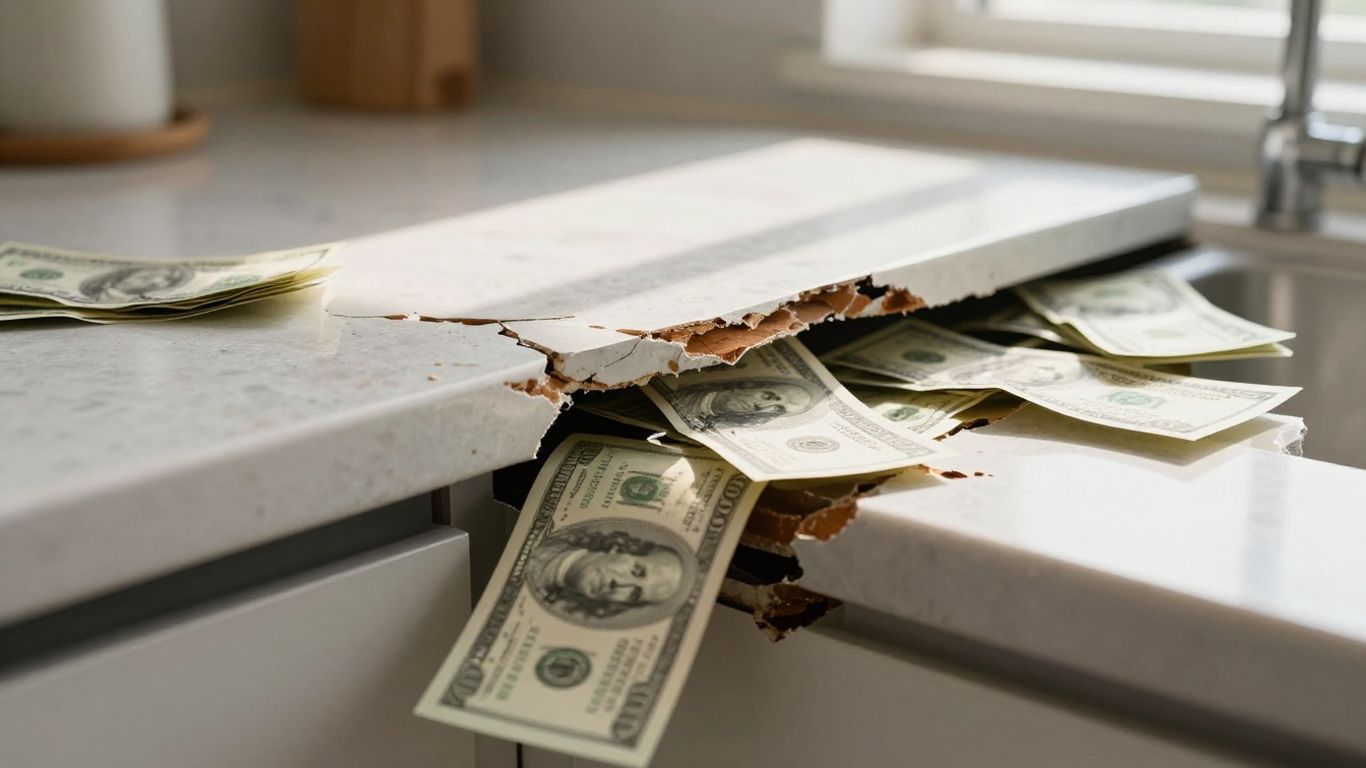
Case Study: A Countertop Company's Broad Match Blunder
Let's look at a fictional but totally believable scenario. Imagine 'Granite & More,' a local countertop fabricator. They decided to jump into Google Ads, wanting to get more kitchen and bathroom projects. Their marketing person, let's call him Dave, was told broad match was the way to go for maximum reach. So, he set up campaigns with keywords like 'kitchen countertops' and 'granite installation' using broad match.
What happened next wasn't pretty. Their ads started showing up for searches like:
- 'how to fix a wobbly table'
- 'DIY granite cleaner recipes'
- 'pictures of marble statues'
- 'jobs for construction workers'
See the problem? None of these people were looking to buy new countertops. They were just curious, looking for DIY tips, or searching for completely unrelated things. Granite & More ended up paying for thousands of clicks from people who had zero intention of buying.
Lessons Learned from Costly Mistakes
Dave eventually looked at the search term report (thank goodness for that report!). He saw the wild goose chase his ad spend was on. It was a mess. He realized that just because someone typed a word related to 'granite' or 'countertops,' it didn't mean they were in the market.
Here’s what he learned:
- Broad match is like shouting your message into a crowded stadium hoping the right person hears you. Most of the time, you're just making noise.
- The cost per lead skyrocketed because so many clicks were from unqualified searchers.
- His competitors, who were likely using more precise match types, were getting the actual customers.
The allure of 'reaching everyone' with broad match is a dangerous trap for businesses with specific services. It dilutes your budget and your message, attracting tire-kickers instead of buyers. Focusing on intent is key.
The Financial Repercussions of Inaction
If Granite & More had kept going with broad match without checking, they would have burned through their entire marketing budget in no time. They might have spent thousands of dollars and gotten maybe one or two actual leads. That's a terrible return on investment. It's money that could have gone into better local advertising or even improving their showroom. The longer they waited to fix it, the more money just slipped through their fingers. It’s a common story, unfortunately, and one that many businesses repeat without realizing the damage until it’s too late.
Are you losing money on ads because of broad match? Many businesses do. It's easy to spend too much when your ads show up for things you don't want. We can help you stop wasting money and get better results. Visit our website to learn how to fix your ad campaigns and save your budget!
So, What's the Takeaway?
Look, broad match can sometimes feel like a lottery ticket for your ad spend, especially when you're trying to get new countertop clients through the door. We've seen it time and again: campaigns that look good on paper but are just burning through cash on searches that have nothing to do with granite or quartz. It's not about ditching broad match entirely, but it needs a serious rethink. Think tighter keyword lists, smart negative keywords, and really watching where your money is going. If you're not seeing direct leads from those broad searches, it's probably time to pull back and focus on what actually works. Your budget will thank you, and you'll get closer to filling your install schedule with actual customers, not just random clicks.
Frequently Asked Questions
What exactly is 'broad match' in online ads?
Think of broad match like telling Google to show your ad for almost anything related to your keywords. If you sell countertops and use 'granite countertops' as a broad match keyword, your ad might show up for searches like 'how to clean granite,' 'granite polish,' or even 'granite jewelry.' It casts a really wide net, hoping to catch *something* relevant, but often catches a lot of stuff you don't want.
Why is broad match bad for countertop businesses?
Countertop businesses need people who are ready to buy or at least seriously thinking about buying. Broad match can show your ads to people just looking for information, DIY tips, or even unrelated items. This means you're spending money on clicks from people who aren't likely to become customers, which is a huge waste of your budget.
How can I tell if broad match is costing me money?
You need to look at your Google Ads account, specifically the 'Search Terms' report. This report shows you the actual words people typed into Google that triggered your ads. If you see a lot of searches that have nothing to do with buying countertops, like 'DIY countertop repair' or 'pictures of marble,' then broad match is likely the culprit.
What are better ways to target customers than broad match?
Instead of broad match, try 'phrase match' or 'exact match.' Phrase match shows your ad when someone searches for your keyword phrase or close variations, in that order. Exact match is even more precise, showing your ad only when someone searches for that exact term or very close versions. These give you much more control.
How do negative keywords help my ad budget?
Negative keywords are like a 'do not show my ad' list. You tell Google specific words you *don't* want your ad to show up for. For example, if you don't do repairs, you'd add 'repair' as a negative keyword. This stops your ads from appearing for irrelevant searches and saves you money.
What's the difference between a click and a qualified lead?
A click is just someone tapping on your ad. A qualified lead is someone who clicked your ad *and* showed a real interest in what you offer, like visiting your 'get a quote' page or calling your business. Broad match often brings in lots of clicks but very few qualified leads, which is why it's so costly.