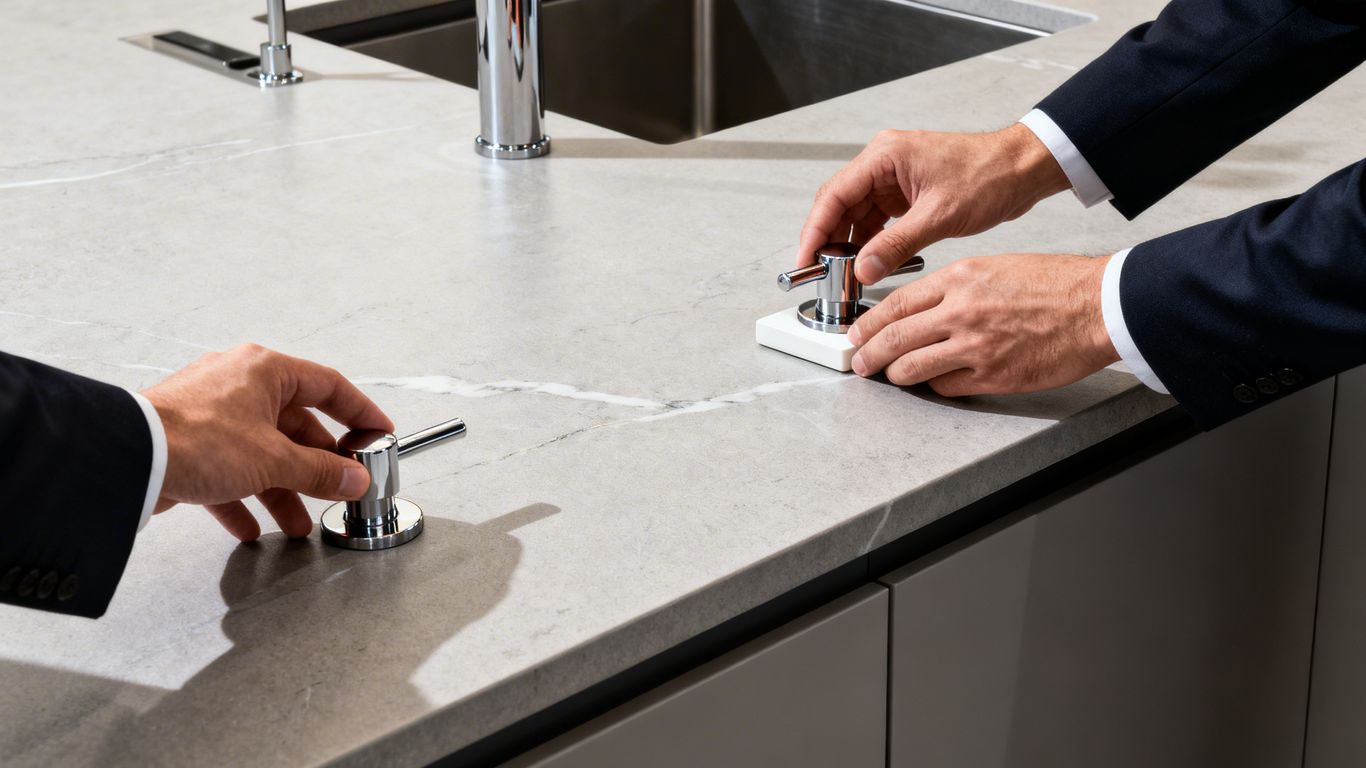
So, you're in the business of selling countertops and want to get more commercial work. That means you're probably looking to connect with general contractors (GCs), property managers, and developers. It's a different ballgame than selling to homeowners, for sure. You've got to speak their language, understand their pressures, and show them why you're the best choice for their next big job. This guide is all about that – how to get your countertop commercial project marketing right, so you can land more of these bigger deals.
Key Takeaways
- Figure out who actually makes the decisions on commercial jobs. It's not always the first person you talk to. You need to know if it's the GC, the developer's project manager, or maybe even the property owner.
- When you talk to GCs and developers, focus on how you can make their projects easier and more profitable. Think about timelines, budget, and how your countertops fit into their overall vision.
- Property managers care about the long haul. Show them how durable your countertops are and how little maintenance they need. This means fewer calls from tenants and less hassle for them.
- Use online ads, especially Google Search, to catch people who are actively looking for countertop suppliers for commercial jobs. When someone searches for 'commercial countertops near me' or 'quartz supplier for apartments', you want to show up.
- Build relationships. Go to industry events, connect on LinkedIn, and send targeted emails. Showing you're reliable and easy to work with goes a long way in getting repeat business and referrals for your countertop commercial project marketing.
Understanding Your Commercial Client's Needs
When you're selling commercial countertops, it's not just about the product itself. You've got to get inside the heads of the people signing the checks. They aren't just looking for a pretty surface; they're looking for solutions to their business problems. Think about it: a restaurant owner needs something that can take a beating and is easy to clean. A hotel manager is worried about long-term durability and how it fits into their overall aesthetic. Developers and general contractors (GCs) have their own set of priorities, often centered around budget, timelines, and project efficiency. Getting this right means you can speak their language and show them you're not just another vendor, but a partner.
Identifying Key Decision-Makers in Commercial Projects
Figuring out who's actually in charge can be tricky. It's rarely just one person. You've got the GC who's managing the day-to-day build, the developer who's overseeing the whole project's financial health, and property managers who are thinking about the long haul after the building is occupied. Each of them has a different stake. For instance, a developer might be focused on the initial cost and how it impacts their overall project budget, while a property manager is more concerned with maintenance costs and tenant satisfaction down the line. Knowing these different roles helps you tailor your approach. Sometimes, you'll be talking to an architect who's specifying materials, or even an interior designer. It's a bit of a puzzle, but piecing it together helps you direct your sales efforts effectively.
Tailoring Your Value Proposition for GCs and Developers
General contractors and developers are all about efficiency and profitability. They're juggling multiple trades, deadlines, and budgets. So, when you talk to them, focus on how you make their job easier and their project more successful. This means highlighting things like:
- Reliable scheduling: Can you deliver on time, every time? Delays cost them money.
- Accurate bidding: Provide clear, detailed quotes upfront. Nobody likes surprises.
- Material availability: Do you have the products they need in stock, or can you source them quickly?
- Installation support: Do you have a professional installation team that works well with other trades on site?
Developers are also thinking about the overall appeal and marketability of their project. For retail spaces, understanding the nuances of retail construction is key to aligning your countertop solutions with their brand and customer experience goals. Showing them how your countertops contribute to a high-quality finish without breaking the bank is a win-win.
Addressing Property Manager Concerns for Long-Term Value
Property managers are the ones who live with the decisions made during construction. Their main concerns usually revolve around durability, ease of maintenance, and tenant satisfaction. They want surfaces that look good for years with minimal fuss. Think about materials that resist stains, scratches, and are easy to clean.
Property managers often deal with the aftermath of tenant turnover. They need materials that can withstand heavy use and are simple to repair or replace if damage does occur. This translates to lower operational costs and fewer headaches for them.
When you talk to property managers, bring up:
- Warranty information: What kind of guarantee do you offer?
- Maintenance recommendations: Provide clear instructions on how to care for the countertops.
- Repair services: Can you offer quick and efficient repair if something goes wrong?
- Material longevity: How long can they expect the countertops to last under normal commercial use?
Focusing on these practical, long-term benefits shows you understand their operational realities and are offering a solution that adds lasting value to their properties.
Strategic Digital Marketing for Commercial Countertop Projects
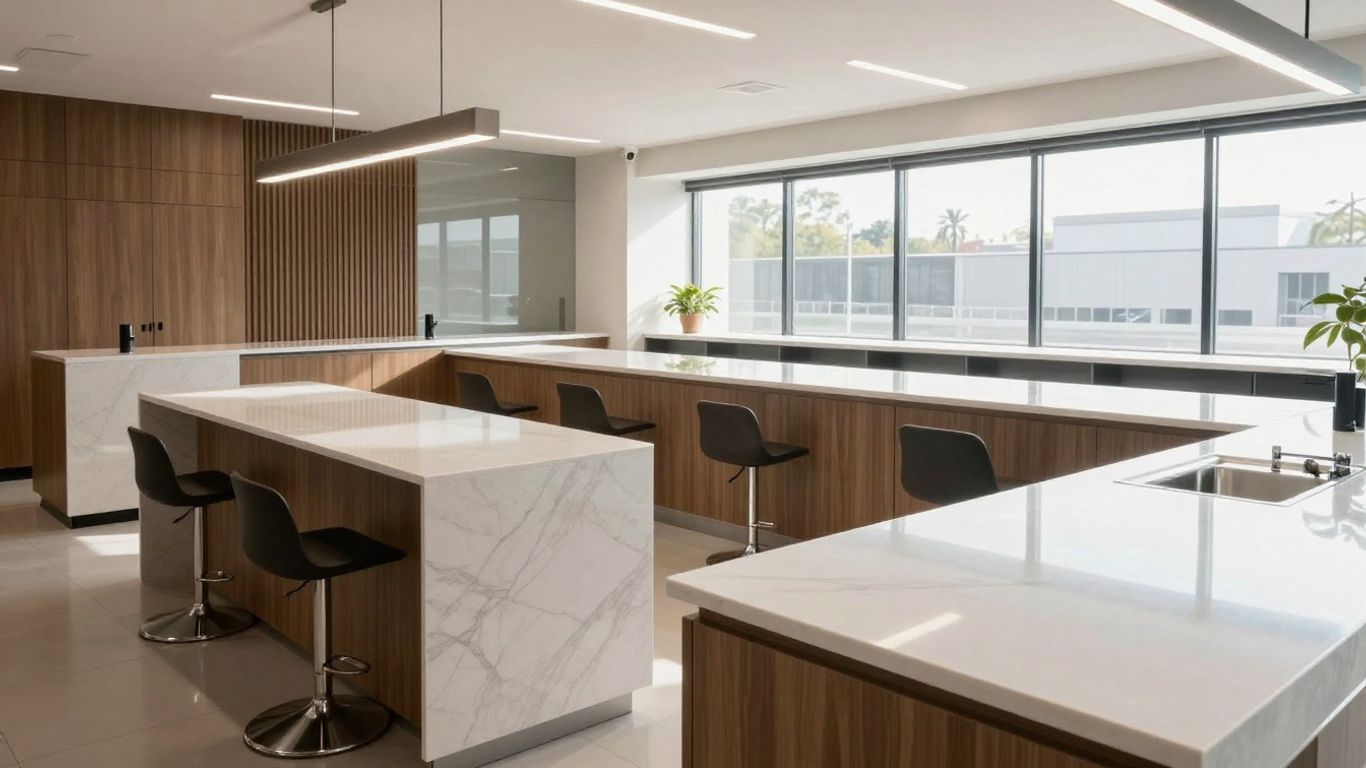
Okay, so you've got a great product, but how do you get the right commercial clients to see it? Digital marketing is where it's at these days, especially when you're trying to reach GCs, property managers, and developers. It’s not just about having a website anymore; it’s about being found when they’re actively looking for what you do.
Leveraging Paid Search for High-Intent Commercial Leads
When a general contractor is in the middle of a project and needs countertops, they don't usually browse social media. They go straight to Google. That's where paid search, or pay-per-click (PPC) advertising, comes in. You want to show up at the top of the search results for terms like "commercial quartz countertops," "restaurant bar tops," or "office reception desk installation." This is how you capture leads that are ready to buy, right now.
Here’s a quick look at what you should focus on:
- Keyword Research: Find out what terms your ideal clients are actually typing into search engines. Think beyond just "countertops" and get specific to commercial applications.
- Ad Copy: Write ads that speak directly to the needs of commercial clients. Mention things like durability, bulk pricing, or fast turnaround times.
- Landing Pages: Make sure the page they click through to is relevant to the ad. If they searched for "commercial granite," the landing page should be about commercial granite, not just general countertops.
- Budgeting: Start with a clear budget. Paid search can get expensive, so know your limits and track your spending closely.
Optimizing Social Media Campaigns for Developer Engagement
Social media might seem more consumer-focused, but it's a powerful tool for reaching developers and showcasing your brand. Platforms like LinkedIn are goldmines for connecting with professionals in the construction and real estate industries. You can share project highlights, company news, and thought leadership content that positions you as an expert.
Think about:
- Targeted Ads: Use LinkedIn's robust targeting options to reach specific job titles (e.g., "Development Manager," "Project Director") and companies within your geographic area.
- Visual Content: Developers are visual people. Share high-quality photos and short videos of your completed commercial projects. Before-and-after shots can be very effective.
- Engagement: Don't just post and leave. Respond to comments, join relevant groups, and participate in discussions. Building relationships online can lead to offline opportunities.
Content Marketing to Showcase Commercial Project Expertise
Content marketing is all about showing, not just telling, what you can do. By creating helpful, informative content, you attract potential clients and build trust. This could be blog posts, case studies, guides, or even webinars.
Consider creating content around:
- Material Comparisons: A guide comparing the pros and cons of different countertop materials for commercial settings (e.g., quartz vs. laminate vs. solid surface for high-traffic areas).
- Project Spotlights: Detailed case studies of successful commercial installations. Include the challenges, your solutions, and the positive outcomes. Photos are a must here.
- Industry Trends: Articles discussing new trends in commercial design or material innovations that might interest developers and property managers.
Creating content that addresses the specific pain points of commercial clients—like budget constraints, project timelines, and durability requirements—will naturally draw them to your business. It shows you understand their world.
This kind of digital presence doesn't just happen. It takes planning and consistent effort, but the payoff in qualified leads and stronger business relationships is definitely worth it.
Building Trust and Credibility with Commercial Partners
Showcasing Successful Commercial Countertop Installations
Look, anyone can say they do good work, right? But showing it? That’s a whole different ballgame. For commercial projects, especially countertops, seeing is believing. We’re talking about putting your best foot forward with actual examples of jobs you’ve completed. Think about it: a general contractor (GC) or developer is looking at a big project, and they need to know you can handle it. They’re not just buying countertops; they’re buying peace of mind. So, how do you give them that?
- High-Quality Photos: Get good pictures of finished projects. Show the details, the edges, how it fits with the overall design. Natural light is your friend here.
- Project Case Studies: Write up a few short stories about past jobs. What was the challenge? What did you do? What was the result? Keep it focused on the client's win.
- Client Testimonials: Real words from real people go a long way. Ask satisfied clients if they’d be willing to share their experience. Video testimonials are even better if you can get them.
It’s about demonstrating a track record of successful execution, not just listing services. This is where you can really make your brand shine, telling a story about your capabilities. Kartchner Group is great at helping companies with brand storytelling that makes a difference.
When you present your work, focus on the tangible outcomes. Did you finish ahead of schedule? Did the client rave about the material quality? Did the installation go off without a hitch? These are the details that build confidence.
Highlighting Durability and Maintenance Benefits
Commercial spaces take a beating. Think about a busy restaurant kitchen or a high-traffic office lobby. Countertops in these places need to be tough. They need to look good for a long time without costing a fortune to maintain. This is a major selling point for GCs and property managers who are thinking about the long haul.
- Material Properties: Clearly explain what makes your materials durable. Are they scratch-resistant? Stain-proof? Heat-tolerant? Use simple terms.
- Maintenance Guides: Provide easy-to-follow instructions on how to clean and care for the countertops. This shows you’re thinking about the end-user and reducing future headaches.
- Warranty Information: A solid warranty can be a huge trust builder. It shows you stand behind your product and installation.
Emphasizing Timely Project Completion and Reliability
Projects run on schedules, and delays cost money. For commercial clients, finishing on time isn't just a nice-to-have; it's often a requirement. If your installation team is known for being late or unreliable, that’s a red flag. You need to show that you’re a partner they can count on.
- Project Management: Talk about your process for managing projects from start to finish. How do you keep things on track?
- Communication: Explain how you’ll keep the client informed throughout the process. Regular updates prevent surprises.
- References: Offer to connect potential clients with past partners who can vouch for your reliability and punctuality. This is a direct way to build trust.
Effective Outreach and Relationship Building
Forming relationships with general contractors, property managers, and developers isn't just about sending emails and waiting for a reply. It's about showing up, making conversations, and offering something that really matters to their projects. Building trust takes more than a handshake—it's about ongoing, honest communication and proving you understand their daily challenges.
Networking at Industry Events and Trade Shows
If you're not attending industry meetups, you could be missing out on real connections. Most business cards get collected at booths, but that isn't the whole story. Here are some ways to get more from these events:
- Show up early and walk the floor before it gets crowded.
- Have a quick demo or sample on hand to catch attention.
- Follow up right after the event—don't wait until weeks later when they've forgotten you.
Real relationships are built face-to-face, even in a digital world. Making the effort to be present gives you a chance to understand what your clients want.
Developing Targeted Email Marketing Campaigns
Email is a quiet workhorse. Compared to flashy ads or cold calls, it puts your business in front of decision-makers on their own schedule. Here's a basic framework for strong emails:
- Open with a point that addresses a current problem (like timeline concerns or materials).
- Offer a straightforward case study or testimonial, not a sales pitch.
- Make it easy to respond—"Reply here, call me directly, or book a quick meeting."
| Email Metric | Average Industry Value | Your Goal |
|---|---|---|
| Open Rate (%) | 26 | 30+ |
| Click-Through Rate (%) | 3 | 5 |
| Response Rate (%) | 1 | 3 |
Utilizing LinkedIn for Professional Connections
LinkedIn isn't just digital noise. Used right, it's a tool for genuine business connections. GCs and developers often look there before answering your emails. Try these tactics:
- Connect with decision-makers after meeting them at events—mention where you met.
- Share project photos and short updates to stay on their radar.
- Join industry groups to join conversations, not just to advertise.
Building reliable connections with GCs, property managers, and developers takes patience and real work. The goal is to stay visible and helpful—not just another sales pitch flooding their inbox.
Streamlining the Commercial Sales Process
Making the commercial sales process straightforward gives you a real edge when selling countertops. The goal is to make it easy for general contractors, property managers, and developers to choose you over the competition. Every point of contact, from bid to final walkthrough, should feel simple and professional. Here’s how to keep things moving without all the usual headaches.
Providing Clear and Competitive Commercial Bidding
- Use direct, transparent pricing so clients know what they’re getting up front.
- Break down material, labor, and timeline in the bid—nobody likes surprises later on.
- Be quick with your quotes—respond within 48 hours if you can.
| Bid Component | Typical Turnaround | What Clients Want |
|---|---|---|
| Initial Quote | 1-3 days | Fast & Specific |
| Revisions/Questions | <24 hours | Clear, Timely Answers |
| Final Contract | <1 week | Simple, No Hidden Fees |
Offering Material Samples and Design Consultations
- Bring stone, laminate, and solid surface samples to site visits or meetings.
- Schedule in-person or virtual consults for fast feedback and decisions.
- Be ready with technical info, like fire ratings or surface specs, if they ask.
Ensuring Seamless Installation and Project Management
- Set clear expectations about install dates and daily work hours.
- Assign a main point of contact for each project—avoid passing clients back and forth.
- Provide real milestones: fabrication, delivery, install, punch list.
Stepping into commercial work means treating each part of the sales process like an ongoing partnership, not just a transaction. When your team is consistent and organized, property managers and general contractors will think of you first—because they know you make things simple.
Measuring Success in Commercial Countertop Marketing
So, you've put in the work, right? You've been hitting the pavement, sending out emails, and maybe even running some ads. But how do you know if any of it is actually paying off? It's easy to get caught up in the day-to-day hustle, but taking a step back to see what's working and what's not is super important. Without tracking your results, you're basically flying blind.
Tracking Lead Generation from Commercial Channels
First things first, you need to know where your leads are coming from. Are those LinkedIn messages turning into actual conversations? Did that trade show booth bring in serious inquiries? Keeping tabs on this helps you figure out where to focus your energy and your budget.
Here’s a simple way to start tracking:
- Website Forms: Make sure every form on your site has a field asking how they heard about you (e.g., referral, online search, ad, social media).
- Phone Calls: Train your team to ask callers how they found your number.
- Email Inquiries: Note the source of the email if it's not obvious.
- In-Person Events: Have a system for logging contacts made at shows or meetings.
It might seem like a small detail, but knowing which channels are bringing in the most potential clients is a game-changer.
Analyzing Conversion Rates for Project Proposals
Getting a lead is one thing, but turning that lead into a signed contract is the real win. You need to look at how many of those initial inquiries actually turn into proposals, and then, how many proposals get accepted.
Think about it like this:
- Lead to Proposal: What percentage of people you talk to end up getting a formal quote from you?
- Proposal to Close: Of the proposals you send out, how many do you win?
This helps you see if your sales pitch is hitting the mark or if there are issues in your quoting process. Maybe your pricing is off, or perhaps your proposal isn't clear enough about the benefits.
| Stage | Leads Generated | Proposals Sent | Projects Won | Conversion Rate (Lead to Proposal) | Conversion Rate (Proposal to Win) |
|---|---|---|---|---|---|
| Q1 2026 | 150 | 60 | 15 | 40% | 25% |
| Q2 2026 | 180 | 75 | 20 | 41.7% | 26.7% |
Looking at these numbers helps you spot trends. If your proposal-to-win rate is dropping, it's time to review your sales approach and what you're offering compared to competitors.
Calculating Return on Investment for Marketing Efforts
Ultimately, you need to know if your marketing spend is actually making you money. This is where Return on Investment (ROI) comes in. It’s not just about how many leads you get, but how much revenue those leads bring in, minus the cost of getting them.
Here’s a basic formula:
- ROI = (Total Revenue from Marketing - Total Marketing Costs) / Total Marketing Costs
For example, if you spent $5,000 on a digital ad campaign and it brought in $25,000 in new business, your ROI is:
- ($25,000 - $5,000) / $5,000 = 4 or 400%
This tells you that for every dollar you spent, you got four dollars back. Tracking this for each marketing channel or campaign helps you decide where to put your money next time. It’s all about making smart choices based on real data, not just guesses.
Figuring out if your countertop business is doing well is super important. Are more people buying from you? Are they happy with what they get? Tracking these things helps you know what's working and what's not. Want to learn more about how to track your sales and make your business even better? Visit our website today to get all the tips and tricks!
Wrapping It Up
So, we've talked about how to get your commercial countertops in front of the right people – the GCs, property managers, and developers who actually sign the checks. It’s not just about having a good product; it’s about making sure they know you exist and that you can handle their projects. Think about using targeted ads on platforms like Google and Facebook, maybe even LinkedIn if you’re going after bigger developers. Show them examples of your work, especially projects similar to what they might need. Don't forget about having a solid website that clearly shows what you do and how to get in touch. It’s a lot, I know, but putting in the effort to reach these specific groups can really make a difference for your business. Keep at it, and you'll start seeing those bigger jobs come your way.
Frequently Asked Questions
How do I get high-quality commercial leads for countertop projects?
Focus your paid search campaigns on keywords that target commercial intent, like 'commercial countertop installation' or 'countertops for office buildings.' Use Google Ads and Local Service Ads to reach general contractors and property managers who are ready to buy. Make sure your landing pages clearly show your experience with commercial jobs.
What’s the best way to show my experience to developers and GCs online?
Post pictures and case studies of your past commercial countertop projects on your website and social media. Use LinkedIn to connect with developers and general contractors, and share updates about your work. This builds trust and shows you know what you’re doing in the commercial space.
How can I make my digital ads stand out to property managers?
Highlight things that matter most to property managers like durability, easy maintenance, and quick installation times. Use simple, clear ad copy and strong images of your work. On Facebook and Instagram, try carousel ads to show before-and-after shots or different material options.
What should I include in my bids for commercial countertop jobs?
Keep your bids clear and detailed. Break down the costs, timeline, and what’s included. Offer to provide samples or a design consultation. Being up front and easy to understand helps you win trust and more projects.
How do I track if my marketing is working for commercial projects?
Set up conversion tracking on your website to see where your leads are coming from. Use call tracking and UTM codes to know which ads bring in the most property managers, developers, or GCs. Review your proposal-to-close rate and check if your ad spend is bringing in profitable jobs.
What’s a simple way to build relationships with commercial partners?
Attend local trade shows and industry events to meet people face-to-face. Follow up with personalized emails or LinkedIn messages. Share helpful content or industry tips to stay on their radar, even when they’re not ready to buy right away.