Direct Mail for Quartz Countertop Companies: Targeting Recent Home Buyers
Key Takeaways
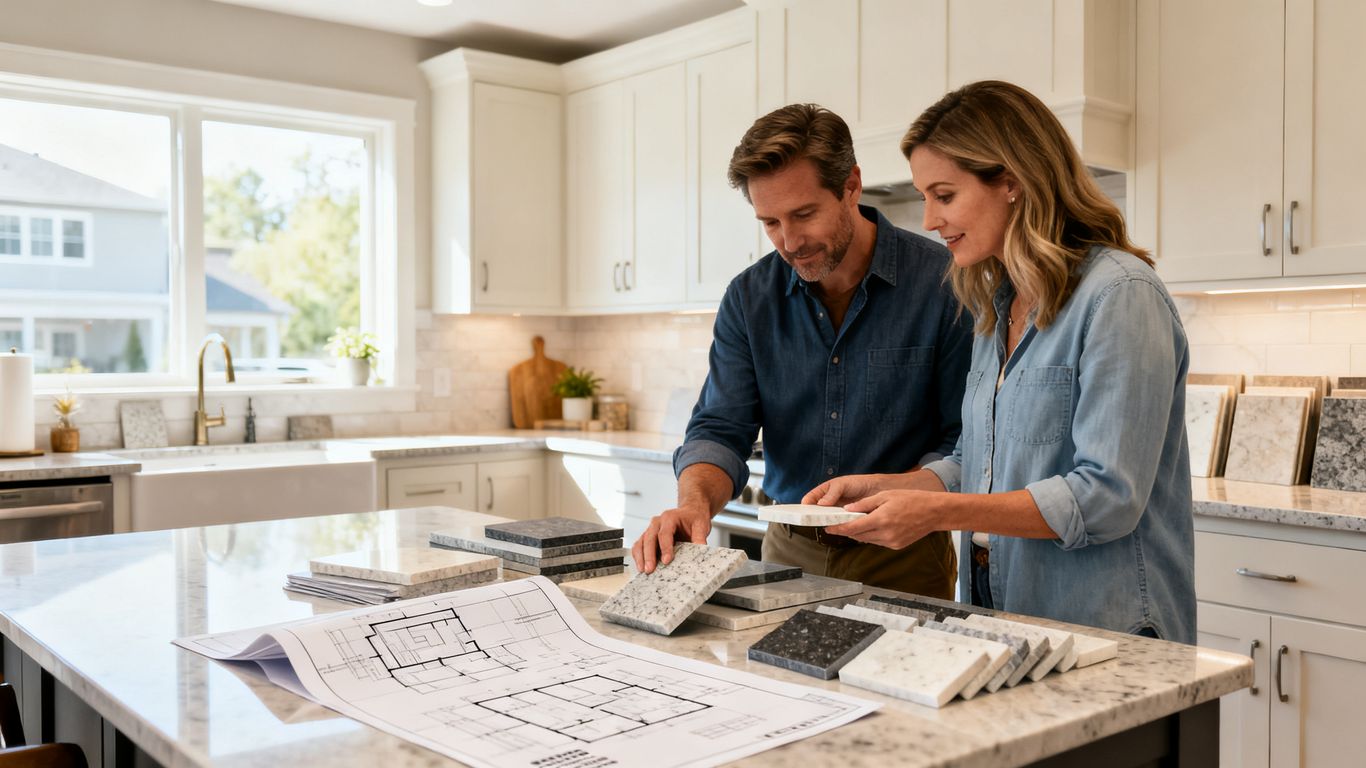
Recent homeowners are a practical audience for quartz countertop campaigns because they are already evaluating how to make a new property feel like their own. The strongest programs connect a relevant offer with precise targeting, fast follow-up, and measurable digital paths.
- Target recent buyers by property details, neighborhood, and likely renovation timing.
- Frame quartz as a move-in personalization project rather than a generic material upgrade.
- Use mail creative that shows finished work, explains value clearly, and gives one obvious next step.
- Connect every mail drop to trackable calls, forms, QR codes, and CRM source fields.
- Improve the campaign by measuring qualified opportunities and revenue, not response volume alone.
Define the recent-homebuyer audience and campaign opportunity
A quartz countertop company direct mail campaign works best when it starts with a specific homeowner moment. Recent buyers have just made a major property decision, but they may still be deciding which rooms deserve attention first. That creates an opportunity to reach them before their renovation plans become fixed. The goal is not to mail every address in a broad service area; it is to identify households with a plausible reason to consider a countertop project.
Why recent buyers are strong quartz countertop prospects
Moving into a home often reveals compromises that were easy to overlook during a showing. A kitchen may function well but still feel dated, while an older bathroom vanity can make the whole space feel unfinished. New owners are also more emotionally invested in personalizing the property, especially during the first year. A timely message can meet that motivation without assuming they are ready to purchase immediately.
Identify homes with outdated or builder-grade countertops
Public property information, closing data, home age, and visual review can help narrow the list, although none of these signals should be treated as proof of a countertop condition. Older homes may have laminate, tile, or worn natural surfaces, while newer properties may have standard builder selections that the owner wants to replace. Keep the language observational and respectful: invite homeowners to explore options rather than declaring that their kitchen needs work.
Segment by home age, neighborhood, property value, and renovation intent
Segmentation makes the creative and offer more useful. A recently purchased older home may respond to a kitchen-refresh message, while a high-value home in a newer development may be a better fit for a design consultation focused on an island or entertaining space. Add renovation intent signals where available, then compare those segments against historical lead quality. Broader countertop marketing tactics can support the direct mail effort, but the mailing itself should have a clear audience hypothesis.
Balance list quality, geographic reach, and mailing volume
A small, carefully selected list gives you cleaner learning, while a larger saturation drop may create more local recognition. The right balance depends on showroom capacity, installation coverage, and how many consultations the sales team can handle in a given week. Start with a manageable test area, hold out a comparable neighborhood when possible, and expand only when the team can follow up consistently.
Build a direct mail offer that makes quartz feel timely
The offer should give a new homeowner a reason to act now without making the project feel artificially rushed. Quartz is a considered purchase, so the first conversion may be a conversation, a design appointment, or a material review rather than a signed contract. Present the next step as useful and low-friction. That approach protects margin while making the mailer feel relevant to the move-in experience.
Position the countertop upgrade around move-in and kitchen personalization
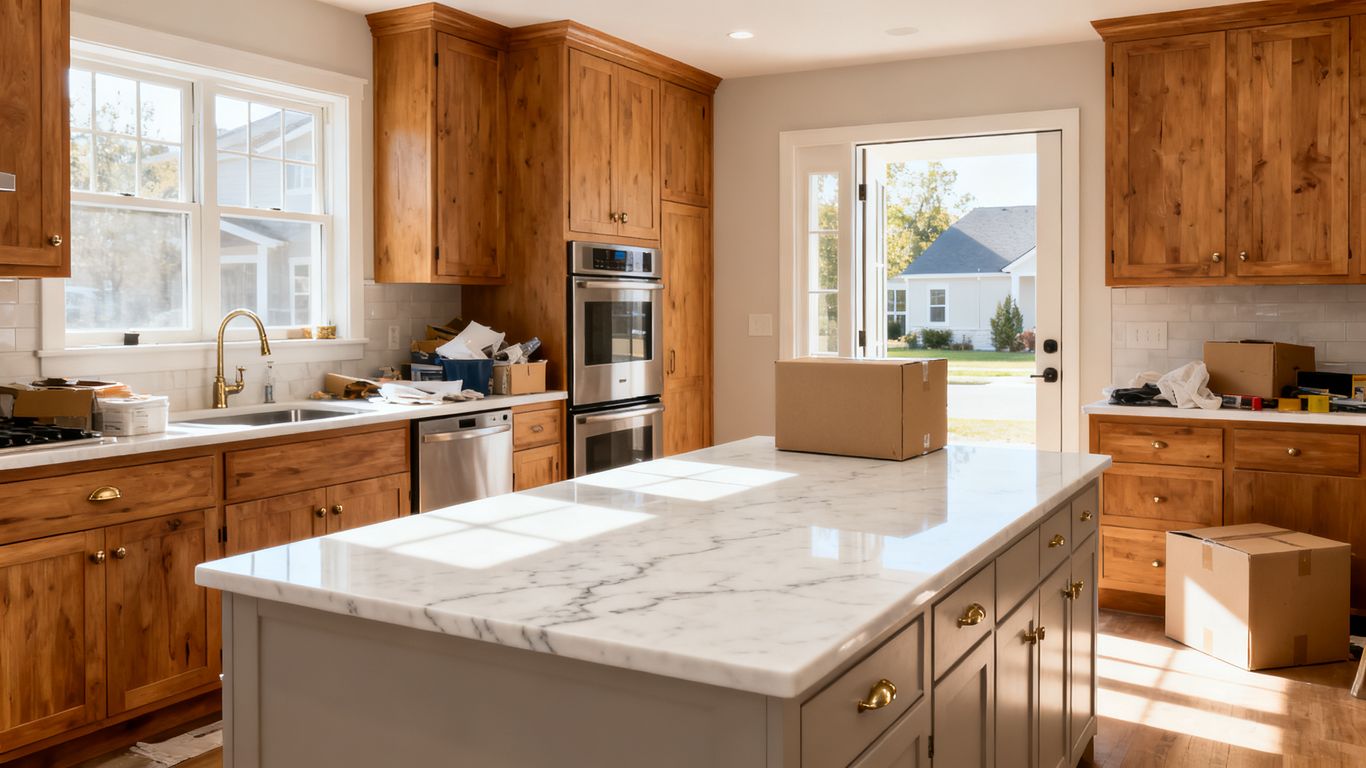
Lead with the homeowner's situation, not a generic product announcement. Phrases such as “make the kitchen yours” or “plan the first upgrade after closing” connect quartz to personalization without presuming a particular budget. Finished spaces, coordinated cabinetry, and a welcoming island can help recipients picture the project as part of settling in, not just replacing a surface.
Choose between free consultations, design appointments, samples, and estimates
Different offers attract different levels of readiness. A design appointment suits someone comparing layouts, while samples may be a better first step for a homeowner still choosing between colors and materials. Estimates can generate stronger intent but may require more project information. Test one primary offer at a time so you can tell whether the audience or the incentive is driving the response.
Use urgency without discounting away project margin
Urgency can come from a seasonal design calendar, limited consultation availability, or a planning deadline tied to an upcoming remodel. Avoid promising savings that the business cannot support or using a deadline that has no operational basis. Protect the project margin by making the scarce resource the appointment, consultation, or planning window rather than the countertop itself.
Create separate offers for kitchens, bathrooms, islands, and full remodels
A single mailer can mention several applications, but the primary offer should reflect the segment receiving it. A kitchen-focused piece can discuss workflow and entertaining, while a bathroom piece can focus on a contained refresh. Island and full-remodel offers should set expectations about design complexity and coordination. Clear scope helps the sales team qualify inquiries before investing time in a site visit.
Create mail pieces that earn attention from homeowners
Direct mail has only a moment to earn a second look. Homeowners should understand what is being offered, why it may fit their current situation, and how to respond without hunting through dense copy. Strong photography does much of the initial work, but the supporting language must remain specific and credible. Treat the piece as the first step in a larger conversion path, not as a complete sales presentation.
Select postcards, letters, dimensional mailers, and neighborhood formats
Postcards are efficient for visual reminders and neighborhood testing. Letters allow more explanation and can feel more personal when the offer requires context, while dimensional pieces may be reserved for high-value segments where a larger cost per household is justified. A neighborhood format can build recognition when several nearby homes are likely to see the same company name. Choose based on the audience and sales capacity, not novelty alone.
Lead with finished-project photography and specific quartz benefits
Use photographs that show the countertop in a believable home setting, with enough detail to convey edge treatment, veining, island scale, and the relationship to cabinets. Pair the image with benefits that are accurate for the material and relevant to the project, such as design flexibility or a consistent visual finish. Avoid vague superlatives. The mailer should help a homeowner begin a useful conversation about choices.
Show pricing context without making unsupported promises
A price range, project example, or “starting consultation” message can help filter expectations, but it must reflect the company's actual process. Installation conditions, material selection, edge details, sink cutouts, and demolition can affect the final cost. If you do not have reliable pricing context, explain what the consultation covers instead. Transparency often produces fewer but more qualified inquiries.
Include a clear call to action, phone number, QR code, and service area
Give the recipient one dominant action, such as booking a design appointment, while keeping the phone number visible for people who prefer to call. The QR code should lead to a mobile-friendly page that repeats the offer and makes the next step obvious. Include the service area and any practical qualification, such as showroom location or consultation coverage. A clear lead-capture process is especially useful when direct mail is paired with search and social traffic.
The response path should also be easy for the office to recognize. A unique phone line, short URL, or offer code prevents the campaign from disappearing into a general inbox and gives the team a clean way to ask how the homeowner heard about the company.
Time and sequence the campaign around the buyer journey
Mail timing should follow the homeowner's decision process rather than an arbitrary calendar. A new buyer may spend the first few weeks unpacking, then begin collecting ideas, comparing contractors, and setting a renovation budget. Several useful touches can be more effective than one oversized drop. Sequence them around the time when a reminder feels helpful instead of intrusive.
Reach new homeowners after closing and before major renovation decisions
The first mailing should arrive after the move has become real but before the homeowner has committed to a design direction. Avoid making assumptions about the closing date or the condition of the property. A welcoming message with a planning-oriented offer gives recipients room to act when they are ready. Later touches can introduce project examples or a more specific appointment invitation.
Coordinate first-touch, reminder, and follow-up mailings
A simple sequence might begin with a visual introduction, continue with a reminder that answers a common planning question, and end with a direct invitation to schedule. Keep the message consistent while changing the reason to respond. For example, the second touch might feature material selection, while the third highlights available consultation times. The sequence should also be visible in the CRM so sales staff know which message the homeowner received.
Align mail drops with remodeling seasons and showroom availability
A mailing that creates demand when the showroom is overloaded can damage the experience it was meant to improve. Check consultation capacity, templating schedules, fabricator lead times, and seasonal demand before setting the drop date. If availability is limited, narrow the audience or make the offer planning-focused. Operational readiness is part of campaign strategy, not an afterthought.
Use neighborhood saturation to build local familiarity and trust
Repeated exposure in a defined area can make an unfamiliar fabricator feel more established. Saturation does not require every household in a region; it requires a consistent presence among the addresses most likely to become customers. Pair the mail with local project photography and service-area language. If visibility has been slipping in important searches, review the broader visibility gaps affecting the business as well.
Connect direct mail to a conversion-focused digital experience
The mailer should hand the homeowner into a digital experience that feels like the same campaign. Sending every recipient to a generic homepage creates unnecessary friction and makes attribution harder. A dedicated page can answer the immediate question, collect useful project details, and offer a convenient way to continue. This is where direct mail and paid media begin reinforcing each other.
Send recipients to a dedicated quartz countertop landing page
Build a page around the exact audience and offer used in the mailing. It should explain the consultation or project opportunity, show relevant work, and make the form or scheduling option easy to find on a phone. Keep navigation focused so the visitor does not have to reconstruct the campaign from a broad service menu. The page can still link to supporting material for homeowners who need more education.
Match the page headline, offer, imagery, and service area to the mailer
Message matching reduces doubt. If the card promises a kitchen design appointment, the landing page should repeat that phrase, use related imagery, and confirm where the service is available. The form should not suddenly ask for information unrelated to the offer. Small inconsistencies can make a legitimate campaign look generic or misleading.
Use forms and scheduling tools that qualify project readiness
Ask for enough information to route the inquiry without turning the first step into an application. Project type, approximate timing, location, and whether the homeowner has selected materials can be useful qualification fields. A scheduling option can reduce back-and-forth when the prospect is ready, while a lighter form can serve earlier-stage visitors. Let the data collected match what the sales team can actually use.
Support the campaign with branded search, Meta retargeting, and local SEO
Some recipients will search for the company after seeing the mailer rather than scan the QR code. Branded search can capture that demand, while Meta retargeting can remind visitors who reached the landing page but did not submit. Local SEO supports people researching the company, service area, and countertop options. Keep audiences, creative, and landing-page messaging aligned so the channels feel like one campaign.
Track leads, sales, and revenue from every mail drop
Measurement should connect the physical mailing to the business outcome, not stop at scans or visits. Assign a source to every drop and preserve it when the lead moves through consultation, estimate, and close. This matters because countertop projects may take time to mature. A campaign that looks quiet in week one may produce valuable opportunities later.
Use unique phone numbers, QR codes, URLs, and offer codes
Give each audience segment or creative variation a distinct identifier where practical. Unique phone numbers help separate calls, while QR codes and short URLs distinguish mail from organic or paid traffic. Offer codes can work at the showroom or during a consultation, provided the team records them consistently. Avoid creating more variations than the operation can maintain accurately.
Configure call tracking, form attribution, and CRM source fields
Call tracking should pass the campaign source to the sales record, and forms should capture the same information without relying on memory. Create CRM fields for mailing date, neighborhood, creative version, offer, and project type when those details support analysis. CallBranch is documented as a phone system that diverts spam and qualifies serious customers, so it may fit a call-handling workflow where that capability is needed. Keep attribution rules documented before launch.
Measure response rate, booked consultations, close rate, and revenue
A response is only the first checkpoint. Review how many recipients became inquiries, how many inquiries booked, how many consultations became estimates, and how much revenue came from each drop. The funnel view helps distinguish a weak message from a weak follow-up process. It also prevents a high volume of low-intent calls from looking like success.
A compact reporting table keeps the conversation focused on decisions rather than isolated numbers:
| Metric | What it reveals | Useful comparison |
|---|---|---|
| Response rate | Whether the mailer generated action | Creative and offer version |
| Booked consultation rate | Whether inquiries had real intent | Audience segment |
| Close rate | Whether sales qualified and progressed opportunities | Neighborhood or project type |
| Revenue per drop | Whether the campaign produced business value | Total mailing cost |
Read the metrics together. A low response rate with strong close quality may call for better reach or creative, while many responses with few booked appointments may point to offer clarity or follow-up friction.
Calculate cost per qualified lead and return on ad spend
Include printing, postage, creative, list acquisition, landing-page work, tracking, and sales labor where appropriate. Cost per qualified lead is more useful than cost per raw inquiry, and revenue should be tied to the mailing source as far as the sales cycle allows. If paid search or retargeting supports the campaign, report those costs separately and then review the combined contribution. Do not call a campaign profitable until the revenue definition and attribution window are clear.
Optimize the campaign after the first mailing
The first drop is a learning instrument as much as a lead source. Give it enough time for delayed responses, then compare results by audience, message, format, and sales handling. Resist changing every variable at once. A clean testing rhythm will tell you what to repeat in the next neighborhood and what to retire.
Test audience segments, creative angles, offers, and formats
Start with a small number of meaningful comparisons. You might test recent buyers in older homes against recent buyers in newer developments, or compare a design appointment with a sample-focused offer. Keep the service area and follow-up standard stable where possible. Document each change so a winning result can be reproduced rather than remembered vaguely.
Review lead quality instead of optimizing only for response volume
A response is not automatically a sales opportunity. Review project type, location, budget fit, timeline, and whether the homeowner can make or influence the decision. If one segment generates fewer inquiries but more estimates, it may deserve additional volume. This is where the difference between attention and demand becomes visible.
Follow up quickly with calls, texts, emails, and showroom invitations
Direct mail creates permission for a conversation, but the response still needs prompt handling. Route calls during staffed hours, acknowledge forms quickly, and use text or email only with appropriate consent and clear expectations. ACTION-APPS are documented as tools that turn a website into a lead-closing machine, so they may be relevant when the digital handoff needs immediate activation. Invite qualified homeowners to the showroom when seeing materials in person will move the project forward.
A useful follow-up rhythm can include:
- A same-day acknowledgment for online inquiries.
- A personal call for homeowners who request an appointment.
- A short reminder when a scheduled consultation is approaching.
- A later nurture touch for prospects whose project timing has changed.
This sequence gives the sales team several chances to help without treating every inquiry as ready for an immediate close. Record each touch so future campaign analysis includes the operational side of conversion.
Build a repeatable neighborhood expansion strategy from winning results
Once a segment and offer show healthy qualified-lead economics, expand to adjacent neighborhoods with similar property and buyer characteristics. Keep a control area or original benchmark so growth does not erase the ability to compare performance. Refresh photography and examples periodically, but preserve the parts of the message that consistently attract good projects. The result should be a repeatable local acquisition system, not a series of disconnected mail experiments.
Schedule a Strategy Call
If your countertop business needs a clearer path from marketing activity to booked consultations, schedule a conversation to review the audience, offer, tracking, and follow-up plan.
Conclusion
A well-planned quartz countertop company direct mail campaign reaches recent homeowners with a relevant reason to consider an upgrade, then carries that interest through a matched landing page, responsive sales process, and reliable attribution. Start with a focused neighborhood test, protect the value of the offer, and let qualified-lead and revenue data guide the next mailing.
Frequently Asked Questions
Why target recent home buyers for quartz countertop direct mail?
Recent buyers are often still personalizing the property and deciding which improvements matter most. That does not mean every new homeowner is ready to renovate, but the timing can make a relevant planning offer more noticeable.
How soon after closing should a mailing arrive?
There is no universal date. Test a window after the move is underway but before the homeowner has settled on a renovation provider, and adjust based on response timing and local buying behavior.
What should a quartz countertop mailer offer?
A design appointment, consultation, material samples, or estimate can all work. Choose the offer based on project readiness and make sure the business can deliver it consistently.
Should direct mail focus only on kitchens?
Kitchens are a natural focus, but bathrooms, islands, and full remodels may perform well with distinct messaging. Segmenting the offer helps recipients understand whether the project fits their situation.
What information should a countertop landing-page form collect?
Ask for practical details such as project type, location, approximate timing, and contact information. Keep the form short enough for mobile users and collect only what the sales team will use.
How can a company measure direct mail results?
Use campaign-specific phone numbers, URLs, QR codes, offer codes, and CRM source fields. Then follow the lead through consultation, estimate, close, and revenue rather than judging the campaign by scans alone.
How many times should a neighborhood receive the mailer?
A coordinated sequence is usually more informative than one isolated drop. Test a first touch, reminder, and follow-up invitation while controlling volume so the sales team can respond well.