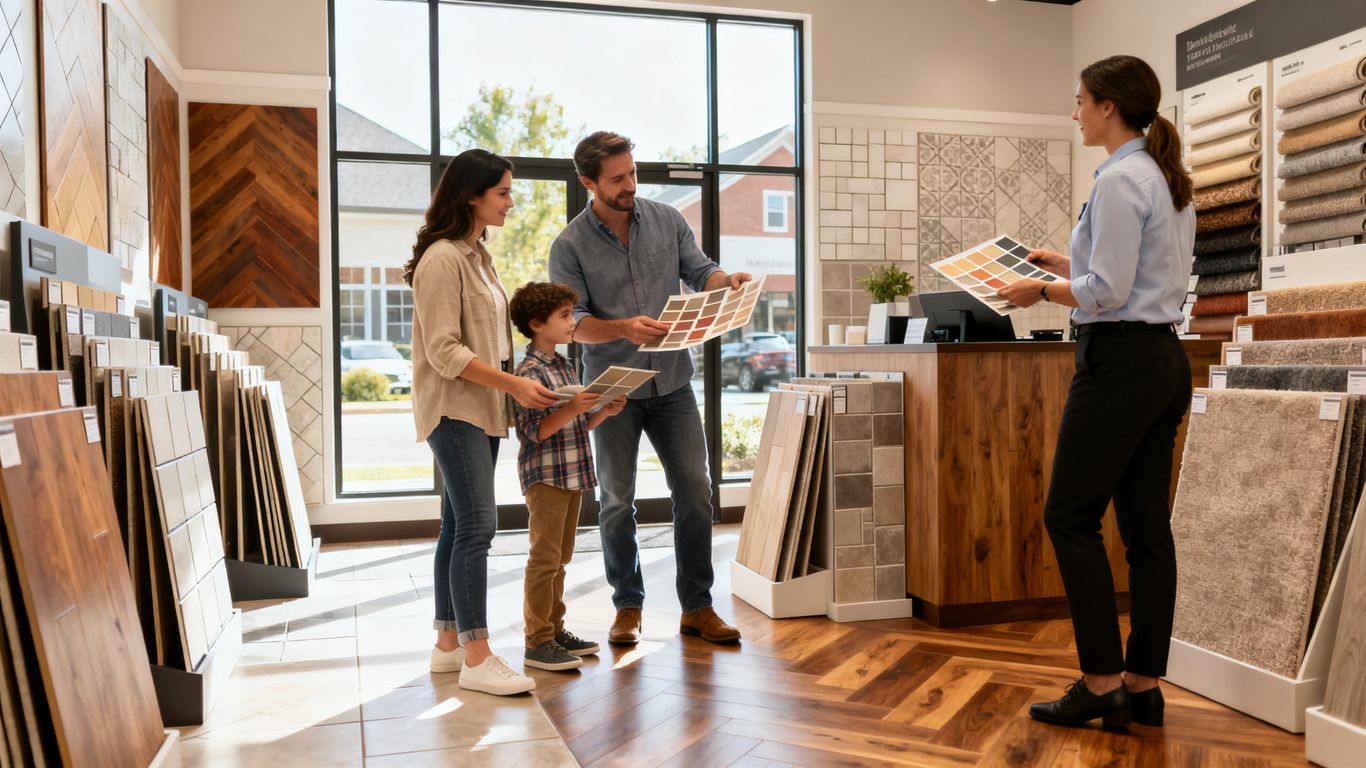
Key Takeaways
Showroom visits usually follow a series of online and offline decisions, so marketing works best when each step connects to the next. Focus on making the visit worthwhile, easy to plan, and measurable.
- Treat flooring research as a longer journey, not a single ad click.
- Make each showroom’s local details easy to find in search.
- Use paid campaigns to reach nearby shoppers with clear reasons to visit.
- Align staff, samples, and consultations with the promise made online.
- Track visits and sales alongside calls, bookings, and online leads.
Map the path from online research to showroom visit
Flooring shoppers often move between inspiration, product research, budget decisions, and conversations with other household members before they visit a showroom. A useful flooring showroom foot traffic marketing plan treats those steps as one journey rather than separate campaigns. The aim is to give people the information and confidence they need to take the next step. That path may be gradual, but its signals can still guide your marketing.
Account for the long flooring purchase journey
A flooring project is rarely an impulse purchase. Shoppers may compare materials, collect ideas, measure rooms, and revisit their budget over time, while different decision-makers weigh in along the way. Your messaging should therefore help at more than one stage: broad room inspiration can introduce options, while detailed product information can support someone closer to choosing. For additional perspective on this extended process, see this guide to the flooring customer journey.
Identify the online actions that signal showroom intent
Not every site visit means someone is ready to drive over, but some actions suggest a stronger interest in seeing products in person. A visitor who checks showroom hours, requests directions, calls with a product question, or reviews appointment details may be closer to a visit than someone who only browsed an inspiration page. Treat these as useful clues, not proof of intent. Taken together, they can help you distinguish visit-ready behavior from early research.
Set visit goals alongside leads and online sales
A showroom visit is a different outcome from an online form submission, so define it separately in campaign planning. Decide which actions you can reliably record—such as appointment bookings, calls, or a staff-logged walk-in—and keep them distinct from quote requests and online purchases. A simple view of the funnel can help your team avoid treating every conversion as equivalent:
| Stage | Example signal | Useful follow-up |
|---|---|---|
| Research | Product or room-page visit | Share relevant product information |
| Evaluation | Call or sample inquiry | Answer questions and suggest a visit |
| Visit planning | Directions or appointment request | Confirm details and prepare the team |
| In showroom | Walk-in or consultation | Record needs and agreed next steps |
The table is a working model, not a claim that every shopper follows the same sequence. Use it to agree on what your business can actually track, then review whether those signals are leading to qualified conversations and sales.
Build messaging around samples, consultations, and in-person comparisons
Online creative can help a shopper picture a room, but flooring decisions often involve details that are easier to assess in person. Explain what a showroom visit makes possible: comparing colors under different lighting, looking closely at texture, or discussing how a material might suit a particular room. Keep the invitation specific and practical rather than relying on a generic “visit us” message. A clear reason to come in gives the shopper a more useful next step.
Capture local demand through search
Local search is often where an online flooring project becomes a real-world errand. Someone comparing flooring options nearby needs to know whether your showroom is relevant, where it is, and when it is open. Search visibility matters, but so does the accuracy and usefulness of the information a potential visitor sees. Make the route from search result to showroom straightforward.
Optimize Google Business Profile for showroom visits
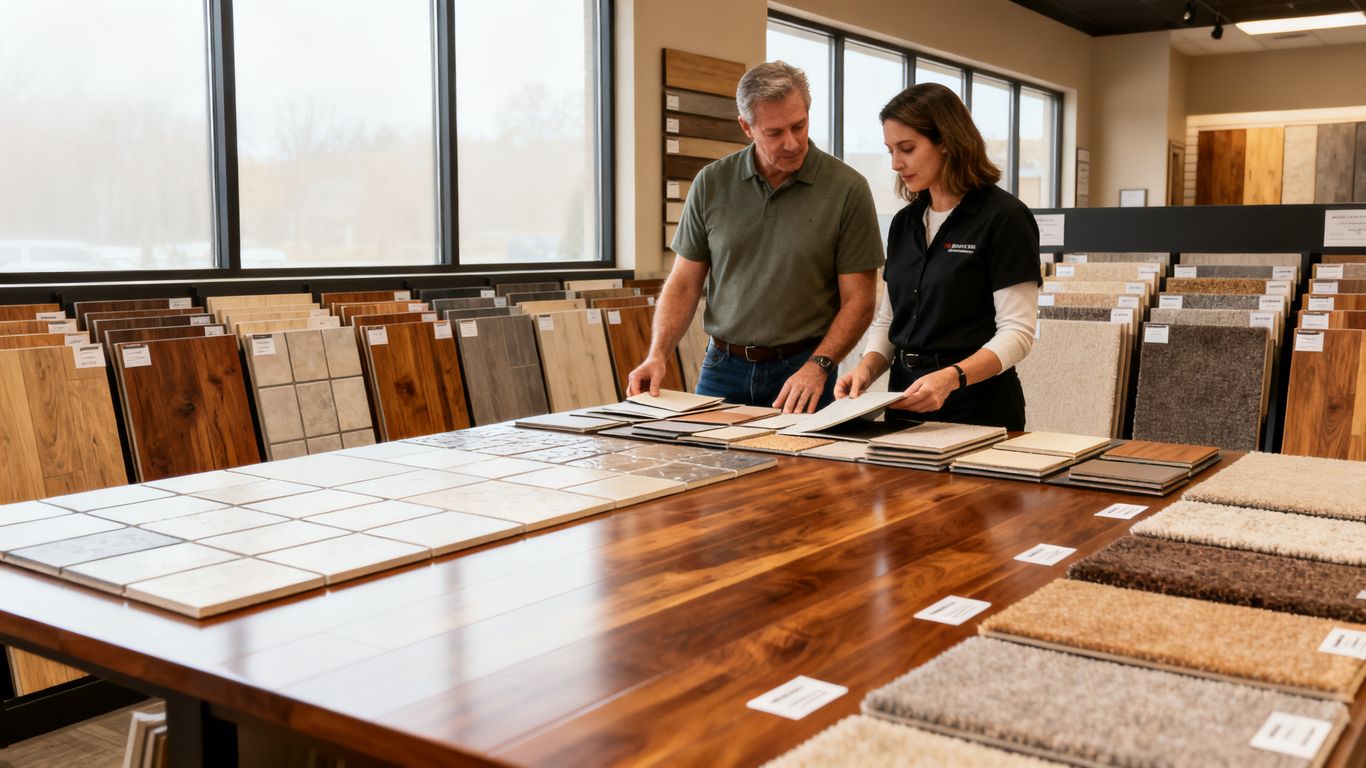
Treat your Google Business Profile as a practical information point for people deciding whether to visit. Keep the business category, phone number, website, address, hours, and photos current, and make sure the profile reflects the showroom experience accurately. Reviews and fresh images can help people understand what to expect, while correct details reduce uncertainty about the trip. These fundamentals are also covered in this guide to local SEO for flooring showrooms.
Build location pages around service areas and flooring categories
A location page should help a nearby shopper see that your business serves their area and offers the flooring categories they are researching. Give each showroom a page with its own address and contact details, and connect that page to relevant category information rather than relying on a generic location list. This also gives your team a useful destination for local campaigns. Keep claims about service areas and available products grounded in what the business can actually provide.
Use local SEO to rank for product and “near me” searches
People may search for a flooring type, a showroom, or a nearby place to compare materials. Use language that reflects those real needs in page titles, headings, and useful copy, while avoiding repetitive location phrases that make pages hard to read. Local visibility is built through a combination of relevant pages, accurate business information, and a clear customer experience—not by repeating “near me” everywhere. For independent retailers, a hyperlocal marketing approach can keep the focus on the communities and shoppers that matter to each showroom.
Keep hours, address, inventory details, and contact information consistent
A mismatch between search listings and your website can derail a visit before it starts. Check that hours, addresses, phone numbers, and appointment instructions agree wherever they appear. Be cautious with inventory language: if a product may not be available at a specific location, invite shoppers to confirm before making the trip rather than implying that every sample is always on display. Consistency is a small operational task with a direct effect on how confidently people can plan a visit.
Use paid media to bring nearby shoppers in
Paid media can help a showroom appear in front of people who are already looking for flooring, while social creative can introduce possibilities to local homeowners earlier in their research. The right campaign depends on the goal, the store’s trade area, and whether the business can measure what happens after someone clicks. Start with a clear purpose for each campaign instead of asking every channel to do everything. Then judge performance by the quality of resulting activity, not reach alone.
Target high-intent searches with Google Ads
Search campaigns are a practical place to capture demand from people actively looking for flooring stores, specific flooring categories, or a nearby showroom. In Google Ads, separate themes that reflect different needs and send each to a relevant page, rather than sending every search to the homepage. Use local targeting that makes sense for the store and review search terms regularly so the budget stays focused. The goal is to make the ad and destination feel like a direct answer to the shopper’s query.
Use Performance Max carefully when store-visit signals are available
Performance Max is among the campaign options available through Google Ads, but a campaign aimed at showroom outcomes needs dependable signals to inform evaluation. Before expanding into it, confirm that the account has meaningful conversion actions and that the business can assess the quality of resulting activity. Keep the store’s location and offer information consistent with the destination experience. If visit measurement is limited, avoid treating a platform-reported result as a complete picture of offline impact.
Reach local homeowners with Meta Ads and room-focused creative
Meta Ads can be used as part of paid social campaigns for home service businesses, and room-focused creative gives flooring shoppers something concrete to react to. Show a real space, a finished installation, or a close view of samples, then pair it with a specific invitation such as browsing materials or arranging a consultation. Keep the message and landing page aligned so the click does not lead to a vague offer. Test a few creative directions and assess which ones contribute to meaningful inquiries or visits.
Match campaign geography and budget to each showroom’s trade area
A store’s practical trade area is shaped by how far customers are willing to travel and where the company can serve them. Set geography and budget around each location’s reality, rather than applying one broad radius to every showroom. If there are multiple stores, compare them separately so stronger activity at one location does not hide weak coverage at another. Adjust targeting when call quality, appointment volume, or staff feedback suggests the campaign is drawing people from too far away.
Turn ad clicks into reasons to visit
A click is a chance to make the showroom visit feel worthwhile, not an end point in itself. Landing pages should answer the questions that stand between an interested shopper and a trip: what can I compare, where is the store, and what happens if I come in? A consistent message from ad to page makes the next action easier to understand. Small practical details can matter as much as the creative idea.
Create landing pages for specific flooring types and promotions
Send a shopper looking for a particular flooring category to a page that addresses that category, rather than asking them to navigate from a broad homepage. Include useful product context and a clear visit invitation, and make any promotion’s terms easy to understand. Keep the page focused on what the ad promised. If a promotion applies only to certain products or dates, say so plainly to reduce confusion before someone arrives.
Make directions, hours, parking, and appointment options easy to find
Once a shopper is considering a visit, basic logistics should not take detective work. Put the address, current hours, directions, parking information, and appointment options where they are easy to spot on mobile and desktop. If parking or building access needs explanation, include it in a concise note. A straightforward path from page to door removes friction without requiring another campaign or offer.
Offer useful visit incentives without relying on discounts alone
A reason to visit can be useful without being a price cut. You might invite shoppers to compare samples in person, bring room measurements for a conversation, or ask questions about material choices. Choose an incentive your team can consistently deliver and make its terms clear. The purpose is to give a visit substance, not to train every shopper to wait for a discount.
Show real installations, samples, and showroom expertise
Photographs of completed projects and close-up material details help bridge the gap between a digital impression and what a visitor will encounter. Use images that accurately reflect your work and showroom, and give them context with a short explanation of the room or product. Pair visuals with practical expertise: what shoppers can compare, what questions staff can help answer, or what they should bring. That combination makes the online invitation feel credible.
Make the showroom experience fulfill the online promise
The visit itself determines whether the online message felt honest and useful. Staff need enough context to recognize why someone came in, while shoppers need room to compare choices without feeling rushed. A well-prepared showroom can turn a digital inquiry into a helpful conversation even when the customer is still early in the decision process. The handoff between marketing and the sales floor deserves deliberate attention.
Prepare staff to connect ad offers and inquiries to an in-person visit
Share current campaign details with the people greeting customers, especially when an ad mentions a promotion or a specific product category. If a shopper called or submitted a form first, give staff a simple way to find that inquiry and continue the conversation without making the customer repeat everything. Agree on who checks incoming requests and how they are followed up. Clear ownership helps prevent a promising online interaction from going unanswered.
Help shoppers compare materials, finishes, and total project costs
A showroom conversation should help shoppers make a decision that fits the room and the project, not just compare colors on a display. Ask about the space, intended use, timing, and the customer’s priorities before walking through appropriate options. Discuss the full project cost as clearly as your estimates allow, including the factors that can change it. This kind of guidance gives a shopper a more grounded basis for comparing choices.
Use appointment scheduling for consultations and high-value projects
Some customers benefit from a planned conversation, particularly when they have a larger project or several decisions to work through. Make it easy to ask for a consultation and set expectations about what information to bring, such as room measurements or project timing. Keep walk-ins welcome where your business can accommodate them; an appointment option should add convenience rather than create an unnecessary barrier. If you are considering scheduling tools, you can explore Calendly as part of planning how customers request a consultation.
Track walk-ins and quote requests back to their original campaign
A simple intake question can help staff record how a visitor first heard about the showroom, while a consistent note in your customer records can preserve that context for later follow-up. Keep the process short enough that it actually gets used. When a walk-in asks for a quote, record both the project details and the original source if known. Over time, those notes make campaign reviews more useful than click totals alone.
Measure performance and improve the online-to-offline funnel
Showroom marketing is easier to improve when the team agrees on what counts as progress. Clicks and online forms can show activity, but they do not automatically tell you whether the right shoppers arrived or purchased. Combine available digital signals with careful staff records and sales information, recognizing that no single metric explains the whole journey. Review results by location and make changes that the team can evaluate.
Track calls, direction requests, appointment bookings, and store visits
Choose a manageable set of actions that reflect how customers move toward a visit: calls, direction requests, appointment bookings, and recorded walk-ins. Make sure each action is defined consistently, and avoid counting the same customer interaction as several separate outcomes when you can reasonably identify it. If a measure is incomplete, label it accordingly rather than presenting it as exact. A reliable baseline is more useful than a complicated report full of uncertain numbers.
Use CRM and point-of-sale data to connect visits with revenue
When the available systems and staff processes allow it, link inquiry and visit records with later quote and sales outcomes. Use consistent customer details and source notes so the business can follow a project from its first conversation through a purchase. Not every sale will be attributable to one campaign, especially after a long decision process, so keep that limitation visible. The purpose is to improve understanding, not to claim more certainty than the records support.
Compare campaign performance by location, product category, and lead quality
Avoid averaging different stores and product categories into one headline number. A campaign may bring more inquiries but fewer qualified projects, or a location may generate fewer visits that are more likely to request a quote. Review patterns by showroom, category, and lead quality, then ask staff whether the data matches what they are seeing in person. This context helps identify where an adjustment is worth testing.
Test creative, offers, and landing pages against showroom outcomes
Change one meaningful element at a time where possible, and decide in advance what result would justify keeping the change. A new room image, a clearer visit invitation, or a more relevant landing page may affect different stages of the journey. Compare the results using the measures your team trusts, including qualified calls, appointments, and recorded visits. Then keep what appears to help and continue testing where the evidence is still mixed.
Plan Your Next Step
If you are considering how to organize consultation requests, explore Calendly and decide whether it fits the way your showroom serves shoppers.
Conclusion
Flooring showroom foot traffic marketing works best when local search, paid campaigns, useful landing pages, and a prepared in-person experience support the same shopper journey. Make each next step clear, track what you can verify, and use the resulting evidence to improve the path from first search to showroom conversation.
Frequently Asked Questions
How can a flooring showroom attract more nearby shoppers?
Keep local business details accurate, create useful pages for nearby locations and flooring categories, and use relevant paid campaigns to reach people in the store’s practical trade area. Give each shopper a clear reason to visit.
What online actions may indicate someone is ready to visit a showroom?
Requests for directions, calls about products, appointment inquiries, and visits to showroom information can indicate stronger interest. They are signals to follow up, not proof that a visit or purchase will happen.
Should flooring companies advertise every product category separately?
Separate campaigns or landing pages can help when shoppers have meaningfully different needs, but the structure should reflect the business’s actual offerings and budget. Start with the categories that matter most and assess lead quality before expanding.
What should a flooring showroom landing page include?
It should match the ad or search intent, explain the relevant flooring category or offer, and make the showroom’s address, hours, directions, and appointment options easy to find. Use accurate images and clear terms.
Are discounts necessary to increase showroom visits?
No. A useful consultation, an opportunity to compare samples, or help understanding materials can give shoppers a reason to visit without a discount. Choose an invitation the team can consistently fulfill.
How should a flooring business measure showroom marketing?
Track a mix of calls, direction requests, appointments, recorded walk-ins, quote requests, and sales where the available records allow. Review lead quality and showroom feedback alongside digital metrics.
How long does it take to see results from showroom marketing?
Timing varies with local demand, campaign setup, the purchase journey, and how consistently the business follows up. Review early engagement signals, but allow time to assess whether visits and qualified project conversations follow.