Drone Photography for Landscapers: The Portfolio Content That Wins $25K+ Projects
Key Takeaways
Aerial photos can help a prospective client understand the whole property, but they work best as part of a thoughtful project story. Plan each shoot around the questions a serious buyer needs answered.
- Choose projects that reflect the services and job sizes you want more of.
- Combine overhead, angled, and ground-level images to show both layout and craftsmanship.
- Record consistent before-and-after views and useful details from the work in progress.
- Turn the best images into case studies with project context and a clear next step.
- Publish responsibly, then track whether the content brings in qualified inquiries.
Why aerial content helps win larger landscaping projects
A prospective client looking at a substantial landscaping investment wants more than a beautiful patio photo. They need to understand what changed, how the design fits the property, and whether the finished work feels right for their goals. Aerial images can make those relationships easier to see, especially when paired with ground-level photographs and a clear explanation. For landscaper drone photography marketing, the point is not simply to show a dramatic view; it is to make the value of the work easier to grasp.
Show the full scope of a property at a glance
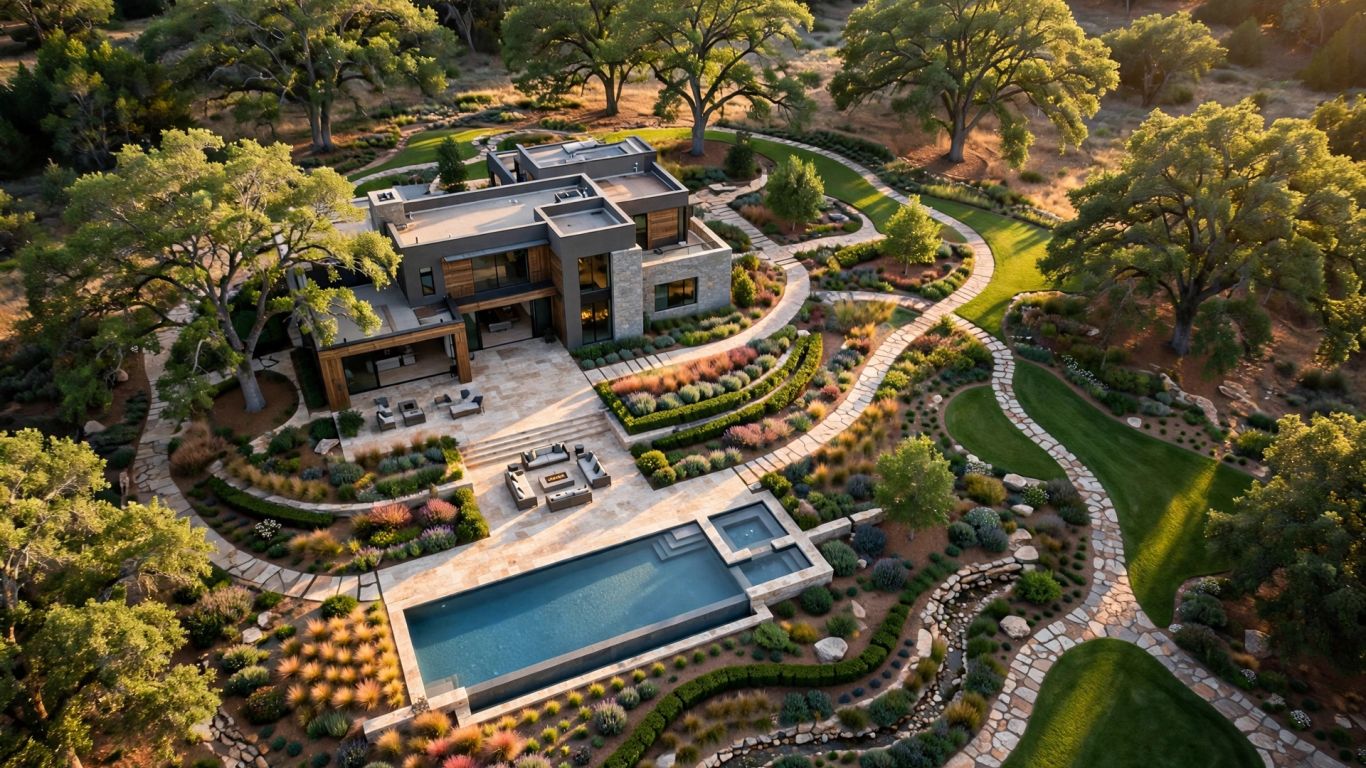
A wide aerial view can place the home, lawn, planting beds, paths, pool, and gathering spaces in one frame. That gives a viewer a quick sense of the project’s footprint before they look closer at individual features. It can also help explain why a project required careful coordination across different parts of a site. A strong portfolio image should be legible at a glance, not so wide or busy that the main work disappears.
Help clients picture how separate outdoor areas work together
A yard often functions as a series of connected places: a route from the back door to a dining area, a transition from lawn to planting, or a walkway that links a pool to a shaded seating space. From above, those relationships can be easier to follow than they are in a sequence of isolated photos. The view is most useful when it shows how people move through the property, not merely where each feature sits. A short caption can name the connections the viewer might otherwise miss.
Demonstrate the scale and complexity behind premium projects
Aerial content can give context to work that spans a large property or involves several coordinated elements. It may reveal the length of a retaining wall, the relationship between terraces, or the extent of new planting in a way a close crop cannot. For more examples of the medium in a landscaping portfolio, see this overview of drone photography for landscaping. Use the perspective to clarify the work, while keeping descriptions specific to what the image actually shows.
Set expectations for what a comparable investment can deliver
A portfolio image can help a buyer picture the kind of finished environment a project may create, but it should not imply that every property or budget will produce the same result. Give the image context: the services involved, the site conditions, and the client’s goals. That context keeps an inspiring example grounded and helps a visitor decide whether to ask about a similar project. Clear project context is part of the proof, not a footnote to it.
Plan drone shoots around the questions buyers ask
A useful shoot begins before the drone is in the air. Decide what a prospective client should understand after seeing the images, then choose views that answer those questions without creating a pile of redundant footage. Think about the services you want to sell, the property’s distinct areas, and what the client has agreed to share. A little planning makes the finished portfolio easier to edit and more useful in sales conversations.
Choose projects that match your ideal job size and services
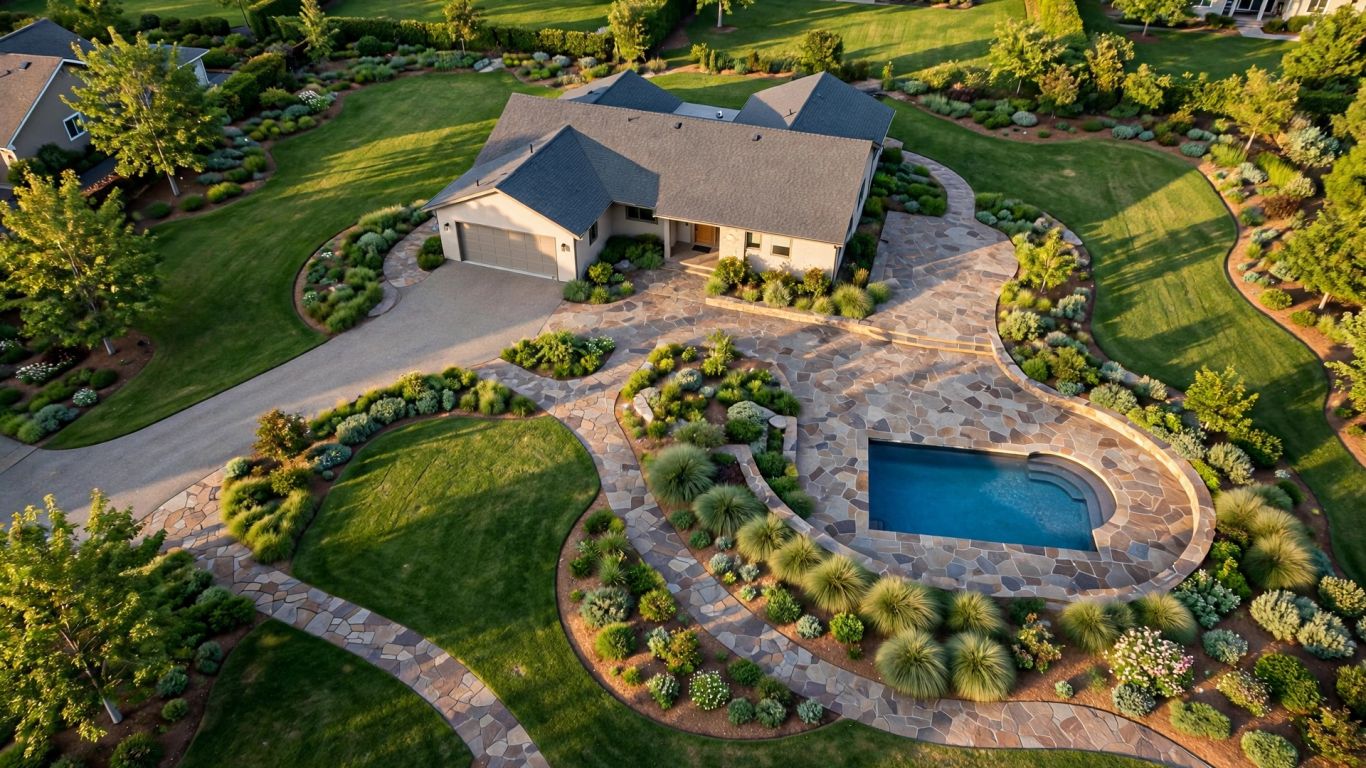
A portfolio should make it easy for the right buyer to recognize the type of work you want to do again. Choose projects that align with your core services and show enough scope to tell a complete story. A high aerial view may suit a broad redesign, while a tighter set of images may be more useful for a focused outdoor-living installation. Select examples for their relevance, not just because they happen to be the largest or most dramatic properties.
Map the property to capture distinct zones and transitions
Before the shoot, sketch the areas that matter: the house, main gathering spaces, paths, planting, lawn, changes in grade, and any other features central to the project. Then note the connections between them. This simple map helps the photographer avoid returning with several versions of the same view while missing a key transition. It also gives the editor a useful starting point for selecting a sequence that feels coherent.
A compact shot plan can connect each view to the question it should answer:
| View to capture | Buyer question it can help answer | Useful context |
|---|---|---|
| Wide overhead | How much of the property was redesigned? | Show the home and major outdoor zones together |
| Angled overview | How do spaces connect or change elevation? | Include transitions, walls, paths, or terraces |
| Detail from the ground | What does the finish look and feel like? | Show materials, edges, planting, or joinery |
| Repeat view after completion | What changed from the original site? | Match the earlier camera position as closely as practical |
Use the map as a guide rather than a rigid script. On site, weather, access, and the shape of the property may make a different angle more informative, but the buyer questions still help keep the shoot focused.
Schedule before-and-after flights from consistent angles
When possible, capture the site before work begins and again after the project is complete. Returning to a similar position, height, and direction makes the change easier to read. Keep notes on the original camera location and framing so the second visit is not based on memory alone. If the early flight was not arranged, avoid presenting a later image as a direct before-and-after comparison; an honest project narrative is more persuasive than a forced visual match.
Coordinate drone shots with ground-level photos and client access
A drone view cannot explain every decision, and it should not be expected to. Coordinate aerial work with ground-level photography so the project has both a broad view and close evidence of finishes. Confirm when the property will be available, which areas may be photographed, and whether people, vehicles, or personal belongings need to stay out of frame. A planned visit respects the client’s privacy and gives the photographer time to capture the work without rushing.
Capture the details that make a project persuasive
The strongest project galleries move between a view of the whole property and the details that make the work feel considered. Aerials are good at showing relationships and scale; ground-level images explain texture, finish, and the experience of standing in a space. Together, they can answer more of the questions a buyer has while browsing. The goal is a clear visual sequence, not the largest possible collection of files.
Use overhead views to explain layout, circulation, and symmetry
A straight-down view can make the geometry of a design easy to read: the alignment of a path, the placement of beds, or the way a patio relates to a lawn. It can also show whether separate outdoor areas feel connected or deliberately distinct. Watch for visual clutter from shadows, parked cars, and strong patterns that compete with the design. A good overhead frame gives the viewer a useful map of the space.
Use oblique angles to show grading, retaining walls, and elevation
An angled view often communicates depth better than a straight-down frame. It can make a change in grade, a terrace, or a retaining wall easier to understand while keeping the home and surrounding landscape in view. Vary the height and angle with a reason: one frame might explain the overall slope, while another gives a more direct look at a transition. This variety helps the viewer understand both the property and the work performed on it.
Include close-ups of craftsmanship that aerials cannot reveal
An aerial photograph can show where a feature belongs, but it cannot reliably show the quality of a joint, the texture of a stone, or the finish at the edge of a planting bed. Make room for close-ups of those details alongside wider views. A focused set of ground-level images might include:
- Material transitions where paving meets planting or lawn.
- The finish and alignment of stonework, steps, or retaining walls.
- Plant combinations and the way beds meet paths or structures.
- A comfortable human-scale view of a completed seating area.
These images bring the viewer closer to the finished work and complement the larger aerial story. Choose details that are visible and in good condition; a tight crop should clarify a design decision, not conceal a distracting issue.
Record different stages to show the work behind the finished result
A finished landscape is the main attraction, but selected progress images can explain how the team got there. Capture meaningful stages such as site preparation, hardscape installation, or planting, provided the client has approved the photography. Keep the number of progress images small and purposeful. A few well-chosen frames can make a complicated transformation easier to understand without turning the case study into a construction diary.
Turn each project into a portfolio case study
A portfolio case study should help a visitor follow the project from initial need to completed space. Start with the image that makes the design easiest to understand, then add enough context to show why the solution suited the property. Keep the story factual and focused on this particular client’s site and goals. When drone photos sit inside that narrative, they become evidence rather than decoration.
Lead with a strong aerial hero image or short video
Choose an opening view that communicates the project quickly and leaves room for the rest of the story. The best hero image may be an aerial still, an angled frame, or a short video clip, depending on what reveals the design most clearly. Avoid selecting a frame only because it feels cinematic; the property and the completed work should remain easy to see. A short edit can work well when its pacing gives each important zone time to register.
Explain the client’s goals, site constraints, and design decisions
A few plainspoken sentences can make an image much more informative. Describe what the client wanted, what conditions shaped the project, and why the final layout addressed those needs. Avoid inventing a problem or claiming an outcome the client did not report. This kind of detail helps a potential customer compare the example with their own property and start a more specific conversation.
Pair annotated plans or callouts with finished-property views
An annotation can clarify a feature that is hard to identify in a wide shot, such as a new connection between outdoor areas or a change in grade. Keep callouts sparse and make sure they point to something visible in the image. If a plan is included, pair it with the finished view so the visitor can connect the design intention to the result. The aim is to aid understanding, not cover the work with labels.
Add project scope, location, services, and investment context
Useful project details let a visitor judge whether the example resembles the work they have in mind. Include the general location where appropriate, the services performed, and an honest description of the project’s scope. If you share an investment range, explain that site conditions and selections affect pricing rather than implying that every similar project costs the same. Even a short project summary can give a serious buyer a better starting point than a photo gallery alone.
Build portfolio pages that convert high-value leads
A portfolio page has two jobs: help a visitor assess the work and make the next step clear. Treat it as a landing page for a particular project type or service, rather than a storage place for every image the company has taken. Keep the copy close to the evidence in the gallery, and make the inquiry path easy to find. That way, the portfolio can support both organic discovery and future advertising without promising more than the project demonstrates.
Create dedicated pages for signature services and project types
If a company regularly handles several kinds of work, a single mixed gallery can make visitors work too hard to find a relevant example. Group projects by service or type when there is enough useful proof to support a dedicated page. Give each page a clear introduction and choose examples that genuinely fit its subject. This organization also makes it easier to send a prospective customer to a relevant project during a sales conversation.
Optimize image file names, alt text, captions, and page titles for SEO
Use descriptive file names and alt text that accurately identify what an image shows. Captions can add project context that does not belong in alt text, while a page title should describe the page in language a potential customer might use. Keep descriptions natural and specific; repeating a phrase unnaturally across every image does not make the gallery more useful. Accessibility and clear context should guide image descriptions as much as search visibility does.
Keep galleries fast-loading without sacrificing image quality
Large photo files can make a portfolio page slow, especially when a gallery loads many images at once. Prepare images at suitable display dimensions and use an efficient format, then check the page on a phone as well as a desktop. Keep enough detail to show the materials and finish, but avoid uploading oversized originals when a visitor will see a smaller version. A fast page is more likely to let the project story unfold without friction.
Place a relevant estimate request beside the project proof
Once visitors have seen the work, offer a next step that fits what they just viewed. A brief estimate request near the project summary can make sense for someone considering a similar service, while a broader contact link may suit a visitor still exploring options. Keep the request simple and ask only for information that helps begin a useful conversation. If you want to discuss a practical plan for your portfolio, you can book a planning call.
Publish drone content responsibly across marketing channels
A useful portfolio asset still needs careful handling once it leaves the editing folder. Confirm that the flight and publication are appropriate for the location, the property, and the intended channel. Then adapt the material to how people will encounter it: a quick social clip has a different job from a detailed project page. Tracking the response helps distinguish attention from genuine buyer interest.
Confirm FAA requirements, airspace restrictions, and client permissions
Before a flight, verify the applicable FAA requirements and check for airspace restrictions using current official guidance. Confirm the operator is prepared to fly legally and safely, and obtain the client’s permission for both capture and publication. Consider neighboring properties and private details that may appear in the frame. Permissions and flight planning are part of producing usable marketing content, not administrative cleanup after the shoot.
Use short video cuts for social ads and longer edits on project pages
A short cut can introduce a completed project quickly in a social feed, while a longer edit on a project page can give viewers more time to understand the site. In either format, show the work early and avoid a long opening that delays the useful images. Add captions when they help explain the project without sound, and make sure the edit still makes sense on a small screen. The best duration depends on the story and placement, not a universal formula.
Track calls, form submissions, and qualified project inquiries
A view or a like may show that content reached someone, but it does not tell you whether the portfolio is helping attract appropriate projects. Watch for calls, completed forms, and inquiries that match your services and preferred scope. Where possible, ask new prospects how they found the project page and keep the answer with the inquiry record. Over time, those signals can help you decide which types of case studies deserve more space or promotion.
Refresh portfolio content as new seasons and completed projects create better proof
Portfolio pages can grow stale when the same examples appear year after year or when the images no longer reflect the work you want to sell. Review them as new projects finish and seasonal conditions create stronger views of a property. Replace outdated examples only when the new material adds useful proof, and keep the descriptions accurate to the work completed. A focused update is more valuable than changing images simply to make a page look new.
Conclusion
Drone photography can make a landscaping project easier to understand when it is planned around buyer questions and paired with honest project context. Capture the full layout, the transitions, and the details that show the quality of the work; then shape those images into a case study with a clear next step. Used thoughtfully, aerial content can help the right prospects picture what a carefully planned project might mean for their own property.
Frequently Asked Questions
Is drone photography useful for every landscaping project?
Not necessarily. It is most useful when an aerial view clarifies the project’s scale, layout, or connections between outdoor areas; smaller projects may be better explained with ground-level photos.
What should a landscaping drone photo show?
It should show the parts of the property that help a potential client understand the work, such as the overall layout, transitions between spaces, or a significant change in grade. Pair it with closer images for material and finish details.
Should I photograph a project before and after the work?
When practical, yes. Returning to a similar camera position makes the change easier to compare, but do not suggest a direct comparison if the views or conditions are substantially different.
Do aerial images replace traditional project photos?
No. Aerial images explain scale and spatial relationships, while ground-level photos reveal craftsmanship, materials, and how a space feels to use. A balanced case study benefits from both.
How many photos should a landscaping case study include?
There is no fixed number. Include enough images to show the overall result, key transitions, and meaningful details, then remove frames that repeat the same information.
What should I include on a landscaping portfolio page?
Show the project clearly, explain the client’s goals and relevant site conditions, identify the services performed, and provide a straightforward way to inquire about similar work. Keep every claim consistent with the project itself.
What permissions should I consider before publishing drone footage?
Get the client’s permission to capture and publish the property, and consider privacy for neighbors or anyone who may appear in the footage. Also check current FAA requirements and applicable airspace restrictions before flying.