Key Takeaways
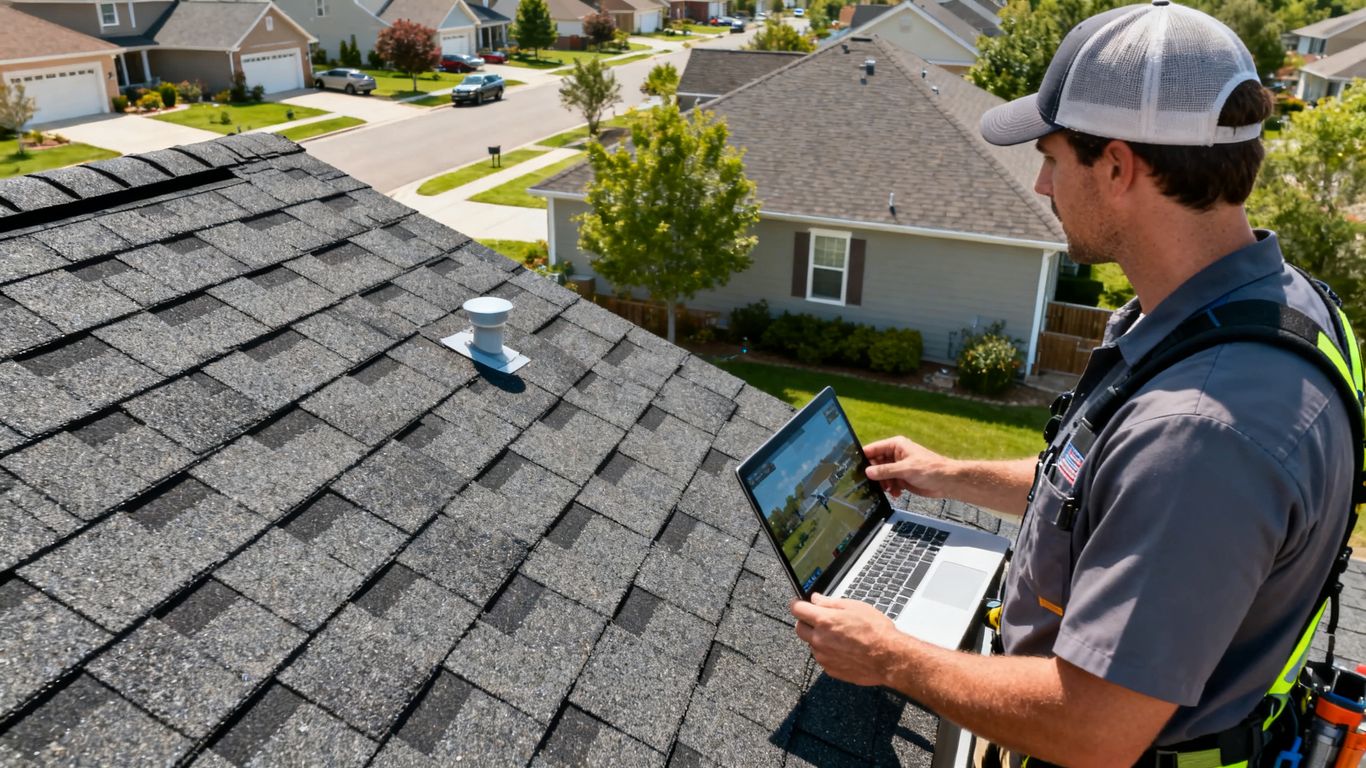
Drone footage can make a roof replacement ad easier to understand, but the video still needs a clear offer, honest context, and a useful next step.
- Open with a clear roof problem rather than a generic company introduction.
- Film stable, privacy-conscious footage that gives homeowners visual proof.
- Edit separate versions for vertical, square, and landscape placements.
- Match the offer and landing page to the homeowner’s buying readiness.
- Judge creative by qualified opportunities, not clicks alone.
Why drone footage works for roof replacement Facebook ads
A roof is difficult to inspect from the curb, and many homeowners do not know which signs suggest repair versus replacement. Aerial footage closes that visual gap before the homeowner fills out a form or calls. Used well, it gives the ad a specific subject instead of another broad promise about quality workmanship. That specificity is central to effective roof replacement facebook ads creative.
The visual proof homeowners need before requesting an estimate
Homeowners usually want some evidence that a roofing conversation is warranted. A slow pass over missing shingles, visible wear, exposed areas, or uneven roof sections can help them understand why an inspection is being offered. The footage should support a question—“Could this be happening on my roof?”—rather than pretend to diagnose a property from the screen.
That distinction matters for trust. Show enough detail to make the issue tangible, then direct the viewer toward an inspection or consultation where a professional can assess the roof in person. The ad earns the click by making the next step feel sensible, not by claiming that a video alone proves the full scope of work.
How aerial perspective makes roof damage easier to understand
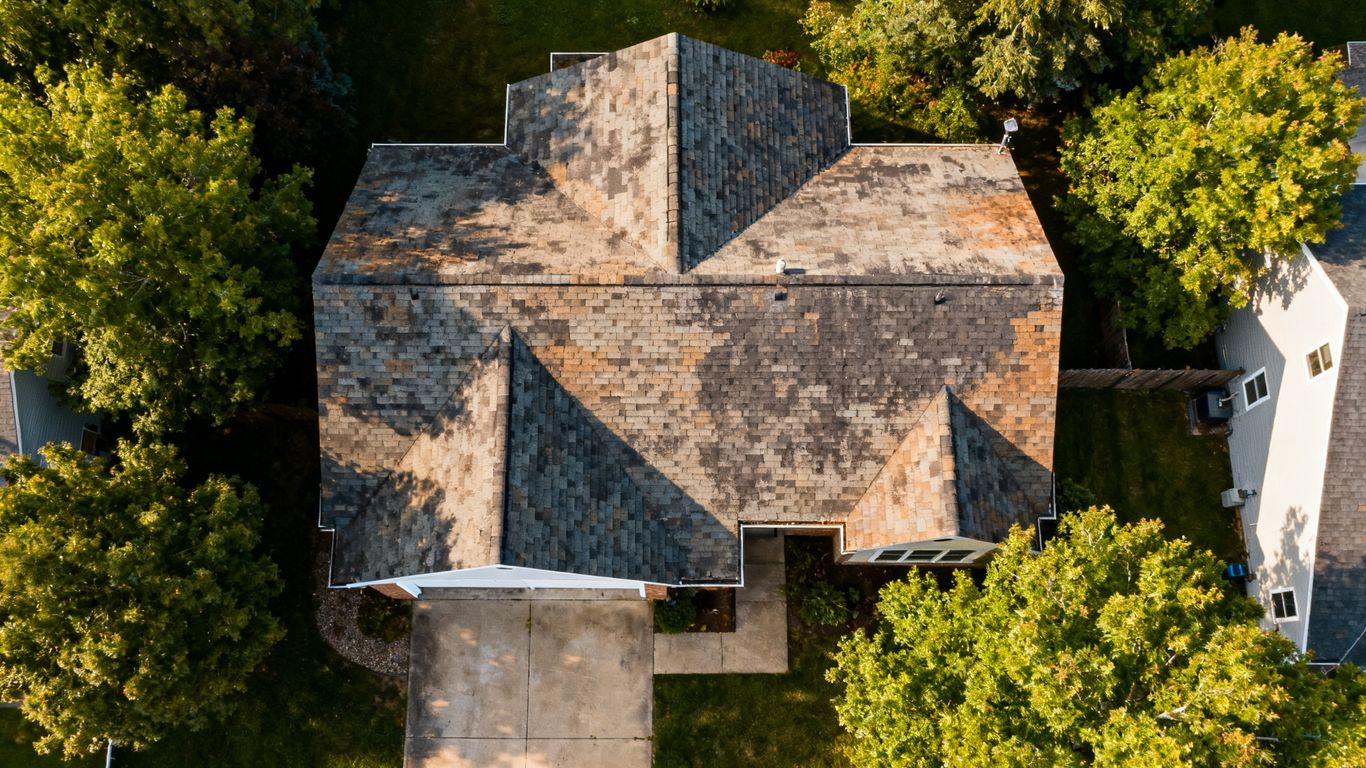
Aerial footage gives viewers a relationship between the roof planes, nearby trees, drainage areas, and the overall shape of the home. That context can make an isolated problem easier to interpret than a tight ground-level shot. It also lets the editor use a wide view first and a closer detail second, creating a natural visual explanation.
Keep the sequence simple. Establish the property, move toward the relevant roof area, and return to a view that makes the suggested next step clear. When the footage needs a little more structure, this Facebook ad examples guide can help frame the relationship between visual attention, copy, and calls to action without turning the creative into a template.
When drone footage attracts curiosity but fails to create buying intent
A dramatic orbit can stop the scroll while saying nothing about why the homeowner should act. Curiosity is useful at the opening, but it fades quickly if the viewer cannot identify the roofing problem, service area, or offer. The same is true when the video shows a beautiful house with no visible connection to replacement work.
Add a clear bridge from image to action. Identify what the viewer is seeing, explain what the inspection or consultation covers, and use a direct call to action. If the footage is interesting but the lead quality is poor, the problem may be the promise around the video rather than the drone work itself.
Plan the footage around the roof replacement decision
Production should begin with the buying decision, not with a wish list of cinematic shots. Decide whether the ad is for storm-related concern, visible aging, a seasonal inspection, or a planned replacement conversation. Then choose footage that answers the homeowner’s first practical questions. A short creative brief keeps the shoot focused and makes later testing easier.
Capture damage, aging, and problem areas without exaggeration
Film real conditions with enough context to avoid misleading close-ups. A damaged section can be useful, but it should not be presented as proof that every roof in the area has the same issue. Avoid dramatic color grading or edits that make ordinary wear look catastrophic. Honest footage may feel less sensational, yet it gives the sales conversation a stronger starting point.
Ask the roofing team which visible areas are appropriate to show and which claims require an on-site assessment. Terms such as “may,” “could,” or “worth checking” are often more accurate than a definitive diagnosis when the ad is not based on a completed inspection.
Show the full property context while protecting homeowner privacy
A wide shot can establish the property, surrounding trees, roof lines, and access conditions. It can also reveal neighboring homes, vehicles, license plates, or people who did not agree to appear in an ad. Plan the flight path and edit with privacy in mind, and blur or crop identifying details when needed.
The goal is useful context, not unnecessary exposure. A shot that shows the relevant roof plane and enough of the surrounding home will usually do more for the ad than a sweeping neighborhood panorama. Keep the homeowner’s property recognizable only to the extent needed for the message.
Build a shot list that supports the ad’s offer and call to action
A practical shot list gives the editor options without producing hours of unfocused footage. Include an establishing view, a detail of the relevant condition, a smooth transition between the two, and a clean closing frame for the offer. Capture several openings so the same production day can produce more than one testable hook.
The core sequence can be organized around four shots:
- A quick roof view that creates a relevant question.
- A closer pass showing the condition without exaggeration.
- A wider context shot that keeps the property understandable.
- A final frame that leaves room for the offer and call to action.
After the shoot, check whether each clip has a job. If a beautiful movement does not clarify the problem or support the next step, it may belong in a brand reel rather than a lead-generation ad.
Film drone footage that performs in Meta placements
Meta placements reward footage that communicates before the viewer has sound or much patience. The first frame, aspect ratio, motion, and safe space for overlays all affect whether the creative remains understandable in a feed or short-form placement. Film with the edit in mind rather than assuming one master video will fit everywhere. A good shoot creates flexible raw material without making every version feel generic.
The opening three seconds and the thumb-stopping roof shot
Start with the most legible visual problem, not a long logo animation or a distant approach to the house. A roof plane with a visible concern can work, especially when the first line of text gives the viewer a reason to keep watching. The opening does not need to be frantic; it needs to be immediately relevant.
Test a few different openings from the same flight. One version might begin with a close detail, another with a roof-to-property reveal, and a third with a storm-related context shot. Comparing those openings helps separate the strength of the footage from the strength of the surrounding copy.
Vertical, square, and landscape framing for Facebook and Instagram
Shoot with vertical crops in mind, even if a landscape master feels more natural for aerial work. Keep the important roof area away from edges where platform controls or captions may cover it. Square versions can work when the property needs balanced context, while vertical versions often give the roof more screen space on mobile.
Create placement-specific exports instead of relying on an automatic crop to make every decision. Check the first frame, text-safe areas, subtitle size, and final call to action in each format. Small framing changes can determine whether the viewer understands the footage at a glance.
Camera movement, flight paths, and clips that remain easy to follow
Smooth movement is more valuable than complicated movement. A slow push, controlled lateral pass, or gentle rise usually gives the viewer time to understand what the camera is showing. Keep clips long enough for the editor to find a clean beginning and ending, but avoid extended passes that ask a cold audience to wait for the point.
Use consistent altitude and direction when capturing multiple versions. That makes cuts feel intentional and reduces the temptation to hide weak transitions with excessive effects. The footage should feel like a clear inspection story, not a collection of unrelated drone maneuvers.
Weather, lighting, and safety considerations for roofing footage
Choose lighting that reveals roof texture without harsh glare. Wind, rain, and low visibility can make the footage harder to interpret and create unnecessary operational risk. Follow applicable flight rules, obtain the property owner’s permission, and keep people and structures safely separated from the aircraft.
Plan a backup date when conditions could compromise either safety or clarity. A slightly later shoot with even light and stable movement is usually more useful than footage captured quickly in poor conditions. Production discipline protects the ad and the people involved.
Turn raw footage into a high-click Facebook ad creative
Raw aerial footage rarely explains itself. The edit must give the viewer a reason to care, show enough proof to make the concern credible, and present a next step that feels proportionate. This is where a cinematic shoot becomes a performance asset. Clarity beats spectacle when the goal is a qualified roofing conversation.
Use on-screen text to identify the roofing problem quickly
Use short overlays that label what the viewer is seeing without making a diagnosis the footage cannot support. “Visible wear along this roof plane” is more responsible than a definitive claim about hidden damage. Keep the text large, high contrast, and positioned away from the roof detail it describes.
Read the video with the sound off. If a viewer sees only the first frame and the first overlay, they should still understand the broad subject and local service being offered. Captions can carry the supporting explanation while the image remains clean.
Structure the video with a hook, proof, offer, and next step
A reliable edit often follows a simple sequence: introduce the concern, show the relevant roof area, state what the company is offering, and explain how to respond. Each part should earn its place. If the proof is strong, the offer can be brief; if the visual is subtle, the copy may need to provide more context.
Do not bury the action until the final second. Mention the inspection, estimate, or consultation early enough that viewers understand what the video is leading toward. The ending can repeat the action, but it should not be the first time the offer appears.
Add captions, branding, and local trust signals without clutter
A logo, service area, phone number, and a restrained brand color can help viewers identify the advertiser. Too many badges and claims compete with the roof footage. Choose the one or two trust signals that matter most for the specific offer, such as a local service area or a clearly stated credential that the company can substantiate.
Keep visual hierarchy consistent across cuts. The roof problem should remain the primary visual, the explanation should be secondary, and the brand should be recognizable without taking over the frame. Local relevance is useful when it is specific and accurate rather than decorative.
Choose video length and editing speed for cold audiences
Cold viewers need a quick explanation, but that does not mean every ad should be reduced to a frantic montage. Test a short cut that makes one point and a longer cut that gives the roof condition more context. Watch for drop-off around the moment the creative stops answering a clear question.
The best length depends on the complexity of the offer and the footage. Trim repeated passes, empty approach shots, and transitions that do not add meaning. A shorter edit with a complete argument will usually beat a longer edit that simply shows more roof.
Pair the drone video with an offer that generates qualified clicks
The offer determines what kind of response the video attracts. “Learn more” can produce broad curiosity, while an inspection or replacement consultation sets a more specific expectation. Neither is automatically right. The useful choice depends on the homeowner’s likely readiness and the amount of information the landing page can provide.
Free roof inspections versus estimates and replacement consultations
A free inspection can lower the first-step barrier when the homeowner is unsure whether a problem exists. An estimate or replacement consultation speaks more directly to someone who already suspects the roof needs work. Make the distinction clear so the ad does not attract people expecting a complete price from aerial footage alone.
The form and follow-up should use the same language as the offer. If the ad promises an inspection, do not send the click to a page centered only on replacement packages. Consistency improves both trust and the usefulness of the resulting conversation.
Location-specific messaging for storm damage and aging roofs
Storm messaging should be tied to a real service area and an appropriate time frame, not vague references to weather everywhere. Aging-roof messaging can focus on visible wear, maintenance questions, or planning before a larger problem develops. Separate campaigns or creative angles make it easier to understand which concern is generating the response.
For more ideas on structuring roofing campaigns around storm and retail intent, review this roofing Facebook ads guide. The principle is straightforward: let the local situation shape the message, while keeping claims grounded in what the footage and business can support.
Set expectations about insurance, financing, warranties, and pricing
If the offer mentions insurance help, financing, warranties, or pricing, explain the limits in plain language. Coverage depends on the policy and claim circumstances, financing depends on approval and terms, and warranties have conditions. Avoid using these topics as vague reassurance when the landing page cannot provide details.
Clear expectations may reduce some low-intent clicks, which is often a good trade. A smaller pool of people who understand the offer is more useful than a larger pool built on assumptions the sales team must correct later.
Match the call to action to the homeowner’s readiness to buy
Use an inspection-focused action for uncertainty, a consultation action for active planning, and a direct contact option when the situation appears urgent. The wording should tell the homeowner what happens after the click. “Request an inspection” is more informative than a generic button that leaves the next step unclear.
Keep the action visible in the video, primary text, headline, and landing page. Repetition is helpful when each placement reinforces the same promise rather than introducing a new offer.
Write primary text and headlines around the footage
The copy should explain the image, not compete with it. Aerial footage already gives the viewer a visual subject, so the primary text can focus on why the condition matters and what the company can do next. Strong roof replacement facebook ads creative usually feels specific because the words and visuals are solving the same communication problem.
Lead with the visible problem instead of generic roofing claims
Begin with the issue the viewer can recognize: worn roof areas, storm concerns, or a question about whether replacement planning is overdue. Generic lines about superior service are easy to ignore because they could accompany any home service image. Let the footage provide the specificity, then use the copy to make the next step practical.
A useful opening might ask whether the roof has visible wear after recent weather, followed by a clear explanation of the offered inspection. Keep the question honest and avoid implying that the viewer’s home has a known defect.
Use local proof, credentials, and customer outcomes responsibly
Local proof can include a clearly stated service area, verifiable credentials, or a properly documented customer result. Do not turn one homeowner’s experience into a promise for every lead. If a result is used, give it appropriate context and make sure the business can substantiate the claim.
The strongest trust signals are often quiet: a consistent local identity, transparent process, and an offer that matches the page. Review this roofing ad examples collection for additional ways to connect pain points, proof, and calls to action without making the copy sound inflated.
Create multiple copy angles for urgent, planned, and storm-related replacement
One message rarely fits every roofing situation. Build separate angles for immediate storm concern, planned replacement, and homeowners who are simply trying to understand visible aging. Keep the footage related to each angle so the copy does not ask the video to carry an unrelated story.
Test variations such as:
- A storm-response message focused on arranging an inspection.
- A planning message focused on understanding replacement timing.
- An aging-roof message focused on reviewing visible wear.
- A consultation message focused on discussing options and next steps.
These angles should not become four versions of the same vague promise. Each one needs a distinct reason for the homeowner to click and a landing page experience that follows through.
Avoid misleading damage claims and Meta policy risks
Do not state or imply that a specific person’s roof is damaged when the ad does not establish that fact. Avoid fear-based language, exaggerated urgency, and personal-attribute phrasing that makes assumptions about the viewer. Use the footage to invite an evaluation rather than declare a diagnosis.
Review overlays, primary text, headlines, and landing page copy together. A compliant sentence can become misleading when paired with a dramatic crop or an unsupported before-and-after implication. Responsible creative protects both performance and the sales conversation.
Test and optimize roof replacement Facebook ad creative
Testing should isolate decisions rather than produce a pile of random variations. Change one meaningful element at a time when possible: the first shot, the offer, the edit length, or the copy angle. Keep the audience and conversion path stable enough to make comparisons useful. This is where the roofing creative testing guide can provide a broader framework for comparing formats and campaign inputs.
Build a testing matrix for hooks, footage, offers, and copy
Start with a small matrix that reflects real strategic choices. Test two or three openings, two offers, and several copy angles before multiplying every combination. The aim is to learn which message earns qualified attention, not to create dozens of ads that never gather enough delivery to judge.
Record the hypothesis behind each test. For example, a close roof detail may be expected to improve early attention, while a wider property shot may improve understanding of the service. That note makes the result more useful than a simple winner label.
Measure thumb-stop rate, click-through rate, landing page views, and leads
Early-view metrics show whether the opening is working, while clicks and landing page views show whether the promise carries forward. Leads matter, but they should be reviewed alongside appointment rates and sales-team feedback. A cheap click is not a win if the person expected a different service or location.
Use consistent reporting windows and enough delivery to avoid reacting to one unusual day. Compare creative within the same campaign conditions when possible, then inspect the quality of responses before increasing spend.
Diagnose creative fatigue and audience saturation
Fatigue can appear as declining early engagement, rising costs, or repeated exposure without corresponding action. Saturation is more likely when the audience is narrow and the same roof shot has been used for too long. Check frequency, delivery, comments, and lead quality together rather than blaming the video automatically.
Sometimes the audience is still appropriate and only the opening needs a new cut. In other cases, the offer has become less relevant or the campaign has reached most of the available local demand. The diagnosis should determine the fix.
Decide when to refresh footage, edit a new cut, or change the offer
Refresh the edit when the underlying footage remains accurate but the first seconds feel familiar. Capture new footage when the roof examples, season, or service context no longer match the campaign. Change the offer only when the data suggests the next step itself is creating friction or attracting the wrong people.
Avoid changing all three at once unless performance has collapsed and there is a clear reason to rebuild. Controlled updates preserve learning and make it easier to identify what actually improved the result.
Connect the ad click to a roof replacement conversion path
A strong video can lose its value after the click if the landing page changes the promise or asks for too much information. Treat the ad, page, form, phone process, and follow-up as one path. The homeowner should recognize the same concern and next step from the first frame through the appointment conversation. For teams using Calendly, the scheduling experience should also fit the offer rather than feel like a separate destination.
Align the landing page headline with the drone video promise
Repeat the core concern and offer above the fold. If the video invites a roof inspection, the page should make that inspection the obvious next action. Show a related roof image or short explanation, but do not replace the specific promise with a generic home-services headline.
The page can add detail below the first action: service area, process, expectations, and qualifications. A visitor who clicked on visible roof wear should not need to search for what happens next. Calendly can be referenced only where the scheduling step is genuinely part of the stated path.
Reduce friction in inspection and estimate forms
Ask for the information the roofing team needs to respond, not every detail that might be useful later. Name, contact method, location, and a concise description of the concern may be enough for the first exchange. If photos are necessary, explain why and make the upload experience workable on a phone.
Set expectations beside the form. Tell the homeowner what happens after submission, how quickly the team generally responds if that timing is accurate, and whether the request is for an inspection, estimate, or consultation. The fewer surprises in the process, the more meaningful the lead becomes.
Track calls, booked appointments, and qualified roofing opportunities
A form submission is only one stage of the funnel. Connect lead records to calls, completed appointments, inspection outcomes, and qualified replacement opportunities where the systems allow. If Calendly is used for booking, distinguish a completed booking from a page visit or an abandoned scheduling attempt.
Use a consistent definition of qualified. It might include service area, replacement relevance, reachable contact details, and a genuine project conversation. Without that definition, creative optimization tends to favor volume over business value.
Use lead quality data to scale the winning creative responsibly
When one ad generates better opportunities, increase delivery gradually while monitoring frequency, response speed, and sales outcomes. Preserve the winning promise as you expand, but keep testing new footage and openings so the campaign does not depend on one clip forever. Scaling is a process of confirming that performance survives more spend, not simply turning up a budget.
Feed sales feedback back into the next creative brief. If leads misunderstand the offer, revise the copy or page before buying more traffic. If Calendly bookings are strong but appointments are poorly qualified, improve the qualification step rather than assuming the drone footage is the problem.
Make Your Next Roofing Campaign Easier
If you are ready to turn a roof replacement campaign into a clearer booking path, use book a strategy call to discuss the creative, offer, and follow-up experience with a marketing team. Bring your current footage and lead-quality data so the conversation can focus on practical improvements.
Conclusion
Drone footage gives roof replacement ads a valuable visual starting point, but clicks come from the complete argument: an honest roof concern, a focused edit, a relevant offer, clear copy, and a conversion path that respects the homeowner’s readiness. Treat the video as one part of the campaign, test it against real lead quality, and let the evidence shape the next cut.
Frequently Asked Questions
Is drone footage effective for roof replacement ads?
It can be effective when it makes a real roofing concern easier to understand and leads to a specific, credible next step. Aerial footage by itself does not guarantee attention or qualified leads.
What should a roofing drone video show?
It should show the relevant roof area with enough surrounding context to make the condition understandable. Avoid exaggerated close-ups, unsupported diagnoses, and footage that exposes unnecessary private details.
How long should a roof replacement ad video be?
Use the shortest version that communicates the problem, proof, offer, and next step. Test different lengths because the right duration depends on the complexity of the footage and the homeowner’s level of intent.
Should roofing ads use vertical video?
Yes, vertical versions are useful for mobile placements, but square and landscape exports may also be appropriate. Protect important roof details from platform controls and check every crop before publishing.
What offer should accompany drone footage?
An inspection, estimate, or replacement consultation can work depending on the homeowner’s readiness. The offer should be stated clearly and match the landing page and follow-up process.
How can a roofing company avoid misleading ad claims?
Describe what the footage visibly shows, avoid diagnosing an unseen condition, and use qualified language when an in-person assessment is required. Review the video, text, and landing page as one claim rather than separately.
Which metrics matter most for roofing video ads?
Early attention, click-through rate, landing page views, leads, booked appointments, and qualified opportunities all provide useful signals. The most valuable metric is the one that connects creative performance to real roofing conversations and sales outcomes.