
Key Takeaways
Effective carpet installer Facebook ads targeting starts with service-area discipline, clear offers, and a realistic path from inquiry to installation. The strongest campaigns connect audience signals with useful creative and fast follow-up.
- Focus spend on profitable service areas and job types.
- Speak to new-home projects without depending on sensitive or outdated assumptions.
- Reach allergy-conscious shoppers through home-environment messaging, not health claims.
- Use room transformations, installation footage, and transparent offers to build confidence.
- Optimize toward qualified leads, booked estimates, and completed jobs rather than clicks alone.
Build a Facebook Ads strategy around carpet installation demand
Carpet installation is rarely an impulse purchase. A homeowner may notice worn flooring, move into an unfinished room, or begin planning a renovation weeks before contacting an installer. Your campaign should reflect those different reasons for buying instead of treating every inquiry as the same opportunity.
Start with the economics of the work, then build the audience and creative around it. A useful flooring advertising guide can help you think through the difference between broad awareness and direct-response campaigns, but the final structure should come from your own close rates, margins, and capacity.
Define the highest-value service areas and job types
Map the towns, ZIP codes, and drive times that produce profitable work. A lead from the edge of your territory may look inexpensive in Ads Manager but become unprofitable after travel, measurement time, and scheduling friction. Separate high-margin full-home installations from smaller room projects, rental turnovers, stairs, and builder work so you can judge each type fairly.
A simple service-area review keeps the first campaign grounded in operations. Consider these inputs before setting a radius:
- Average revenue and gross margin by job type.
- Drive time, fuel, and measurement costs by area.
- Installer availability during the next four to eight weeks.
- The minimum project size worth sending to sales.
After that review, exclude places where the crew cannot respond reliably. Tight geographic discipline usually makes later audience testing easier because the campaign is not mixing attractive leads with jobs you cannot serve well.
Separate replacement, new-construction, and room-specific campaigns
Replacement buyers need reassurance about removal, furniture, disruption, and cleanup. New-construction buyers may care more about coordinating with a move-in date, while a homeowner replacing one bedroom may respond to a smaller, clearer offer. Separate these motivations in the ad copy and landing-page experience, even if the campaigns eventually share some creative.
Do not create a separate ad set for every minor variation on day one. Start with a few meaningful campaign themes, then split only when the differences affect qualification, sales handling, or expected value. This gives the platform enough signal while keeping your reporting readable.
Set lead, booked-estimate, and revenue goals before spending
A low cost per lead is not a business goal. Decide how many qualified inquiries the team can handle, what percentage should become estimates, and how many completed installations the monthly budget must support. Work backward from gross profit rather than choosing a budget because a daily number feels comfortable.
A planning table makes the assumptions visible before launch:
| Measure | Planning question | Why it matters |
|---|---|---|
| Lead volume | How many inquiries can sales answer promptly? | Prevents demand from exceeding follow-up capacity |
| Qualified lead rate | How many inquiries fit the service and project criteria? | Separates useful demand from raw form fills |
| Booked estimate rate | How often does a qualified lead schedule? | Connects advertising to the sales process |
| Revenue per job | What is the realistic average installation value? | Sets an acceptable acquisition cost |
Use conservative estimates at first and update them with real sales data. Profitability starts with clean assumptions, not with a dashboard full of impressive but disconnected metrics.
Match the offer to the customer’s buying stage
Someone who has just moved may want room ideas and a measurement conversation, while someone comparing installers may be ready for a firm estimate. A single “get a quote” message can work, but it often performs better when supported by stage-specific creative, such as a local project gallery, a flooring consultation, or a clear estimate request.
Make the next step easy without promising a price you cannot know yet. Explain what happens after the form, who will respond, and what information helps prepare an estimate. That small amount of clarity can filter out casual clicks while making serious buyers more comfortable.
Target new homeowners without relying on outdated audience assumptions
New homeowners are a useful audience because moving creates several natural reasons to reconsider flooring. Still, housing and life-event signals are not perfect proxies for intent, and platform availability can change. Build around location, creative context, and first-party engagement rather than assuming one audience label will identify every recent buyer.
The goal is to make the ad feel relevant without making an uncomfortable personal assertion. Let the image and offer speak to a move-in project, a new room, or unfinished flooring, then allow the prospect to decide whether it fits.
Use location, service radius, and housing-market signals
Set the service area around where crews can actually install, not simply around the population you would like to reach. Layer local market context into the creative with references to move-in preparation, renovation timing, or room finishing. In a competitive market, the difference between a useful local ad and a generic flooring ad is often the specificity of the situation.
Review delivery by town and ZIP code after enough data accumulates. If one area produces many forms but few viable projects, lower its priority rather than allowing aggregate results to hide the problem.
Reach people who have recently moved or are settling into a new home
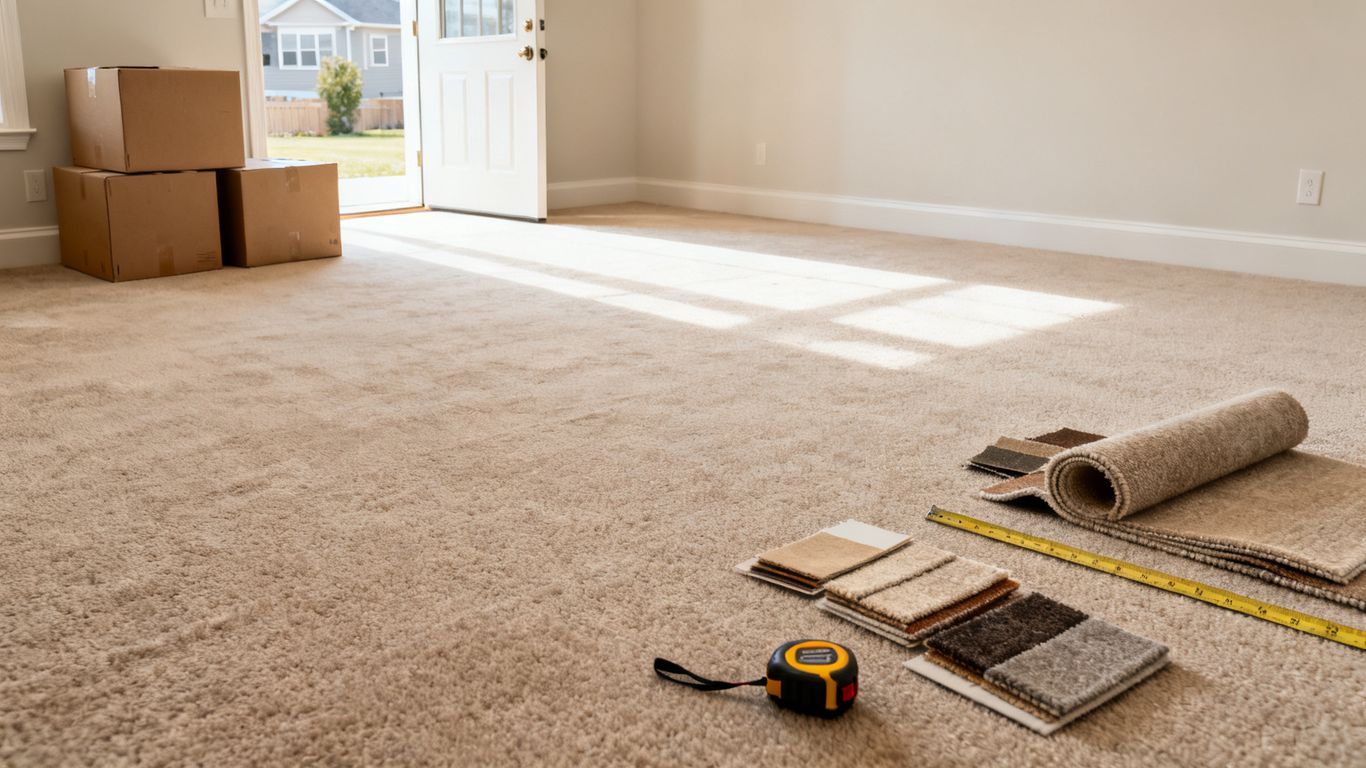
Use moving-related context carefully and avoid wording that tells a person what you believe about their private life. “Planning a move?” is generally more natural than “You just bought a home,” because it invites self-identification instead of asserting a fact. Creative can show an empty room becoming finished, boxes near a newly carpeted hallway, or a family preparing a bedroom.
Pair the message with a practical offer: an installation consultation, material guidance, or a conversation about timing. New homeowners may be coordinating paint, furniture, and other work, so a clear process matters as much as the finished-room photo.
Combine broad targeting with flooring, renovation, and interior design interests
Interest groups can provide a starting hypothesis, but they should not become a maze of tiny ad sets. Test broad local delivery against a small set of relevant renovation, flooring, and interior design signals when available. Then judge the audiences by qualified inquiries and booked estimates, not by the apparent neatness of the targeting setup.
Creative should do some of the qualification. A close-up of carpet texture, a comparison of room finishes, or a short explanation of the installation process gives the algorithm and the viewer more useful context than a generic “new floors” headline.
Build retargeting audiences from website visitors and video viewers
People who visit a project page or watch most of an installation video have given you a stronger signal than someone who merely saw an impression. Create sensible retargeting windows and tailor the message to the action already taken. A visitor may need proof and a next step; a video viewer may need a reason to request an estimate.
Keep retargeting pools large enough to deliver and exclude people who have already become customers when possible. Use frequency and lead quality as guardrails so repeated exposure supports consideration rather than becoming an annoyance.
Reach allergy-conscious customers within Meta’s targeting restrictions
Allergy-related advertising requires extra care because the subject can involve personal health information. The campaign can discuss flooring characteristics and household preferences, but it should not imply that the platform knows someone’s diagnosis, symptoms, or medical history. This is a compliance issue as well as a tone issue.
Frame the conversation around the home and the product. The reader can decide whether easier maintenance, a comfortable surface, or a particular cleaning routine matters to their household.
Avoid targeting users based on personal health information
Do not build an audience around an inferred medical condition or write copy that says, “Are you suffering from allergies?” Personalization that feels clever in a spreadsheet can feel intrusive in the feed, and it can create policy problems. Keep targeting grounded in geography, home improvement context, and engagement with your flooring content.
The same rule applies to forms and follow-up. Ask about the project, room, timeline, and preferred contact method rather than requesting unnecessary health details. Good qualification protects both the prospect and the business.
Use compliant interests and home-environment messaging
Use broad home-improvement, cleaning, interior design, and renovation contexts where they are available and relevant. Then let the ad speak about the environment: carpet selection, routine maintenance, cleaning expectations, and comfort underfoot. This approach reaches people who care about the topic without declaring why they care.
A helpful landing page can explain cleaning considerations in plain language and direct readers toward an estimate. Keep claims specific to the product and installation service; avoid medical promises or language suggesting that a flooring choice treats a condition.
Write ads around cleanability, maintenance, and flooring comfort
Describe what the customer can evaluate: pile, color, padding, cleaning routines, removal, and installation timing. If a household is thinking about maintenance, those details are more useful than a dramatic health claim. Photos of a tidy finished room and a clean installation process can carry much of the message.
Offer a conversation about materials and upkeep rather than a guaranteed outcome. The best copy gives a prospective customer enough information to take the next step while leaving room for an installer to make recommendations based on the actual home.
Test contextual creative instead of making sensitive personal claims
Run creative that presents a clean, comfortable room and asks whether the household is planning a flooring update. Another version can focus on maintenance questions or explain how the consultation works. Compare the quality of resulting inquiries, not just the click-through rate.
Contextual relevance is often more durable than forced personalization. It also gives the sales team a clearer opening conversation because the lead arrives through a project topic rather than an implied diagnosis.
Create Facebook ad creative that makes carpet installation tangible
Carpet is a visual product, but installation is a physical service. Prospects want to know what the room will look like, how disruptive the work may be, and whether the crew will leave the space orderly. Creative should answer those questions quickly, especially when the first touch happens during a casual scroll.
Use real project material whenever possible. Consistent framing, honest process footage, and clear next steps usually build more confidence than highly polished images with no local or practical context.
Show room transformations with consistent before-and-after framing
Photograph the same room from similar angles before and after installation. Keep lighting reasonably consistent and avoid staging the finished image so heavily that the comparison becomes hard to trust. Add a short caption explaining the room, carpet choice, or project scope rather than relying on a vague transformation headline.
Show a range of rooms and budgets so the campaign does not attract only people expecting a showcase renovation. New homeowners may respond to a whole-room refresh, while allergy-conscious households may pay closer attention to the finished, orderly environment.
Use installation process videos to build trust and reduce uncertainty
Short videos can show measurement, preparation, carpet placement, seam work, and the finished cleanup. The footage does not need elaborate production. A steady phone video with clear narration may answer more useful questions than a montage set to music.
Use an opening frame that makes the project obvious, then explain what viewers are seeing. A video that demonstrates the sequence of work can also support retargeting because viewers who stay engaged have shown interest beyond a passing impression.
Highlight carpet selection, padding, removal, and cleanup
Many prospects are unsure what installation includes. Explain whether the consultation covers carpet samples, padding choices, removal of existing material, furniture expectations, and cleanup. If some items depend on the job, say so plainly rather than turning every service into an implied guarantee.
This detail gives sales a better starting point. It also reduces low-quality inquiries caused by a mismatch between the ad promise and the actual installation process.
Adapt creative for new homeowners versus allergy-conscious households
For new homeowners, show an unfinished room becoming part of a settled home and make timing easy to understand. For allergy-conscious households, stay with neutral language about maintenance, comfort, and the home environment. Both audiences can see the same craftsmanship, but the reason for contacting the installer should feel distinct.
Create several hooks from the same project rather than producing unrelated ads. That makes testing more efficient and helps identify whether the offer, visual, or message is responsible for the difference in response.
Structure campaigns, ad sets, and budgets for useful testing
Campaign structure should make decisions easier, not make the account look sophisticated. Start with the fewest layers needed to separate prospecting, retargeting, and genuinely different offers. Too many small ad sets divide delivery and leave you guessing whether a weak result comes from the audience or from simple lack of data.
A local installer also has a real-world limit: the crew cannot install an unlimited number of rooms. Budget planning should therefore account for lead handling, measurement appointments, and production capacity, not just media spend.
Choose between lead forms, calls, messages, and landing pages
Instant forms can reduce friction, while landing pages give you room to explain service areas, project details, and expectations. Calls suit prospects who want immediate answers, but they require reliable coverage. Messages can work for early questions when someone is not ready to schedule, provided someone owns the inbox.
Choose the path your team can handle consistently. A theoretically high-converting format is not useful if submissions sit untouched, calls reach voicemail, or messages receive a reply the next day.
Allocate budget across prospecting, retargeting, and creative tests
Give prospecting enough budget to reach new people, but reserve a measured share for visitors and engaged viewers who need another touch. Creative tests should change one meaningful variable at a time when possible: opening frame, offer, room type, or message. Avoid shifting every setting at once and then calling the result a test.
A modest budget can still produce learning if the account is focused. The local flooring campaign approach is a useful reminder that service-area targeting and follow-up need to work together rather than being treated as separate marketing tasks.
Use campaign naming and tracking conventions that reveal performance
Name campaigns by objective, service area, audience context, and offer. Record the ad version, landing page, and lead source in the CRM or spreadsheet used by sales. Consistent naming lets you compare a new-home campaign with a replacement campaign without reconstructing the account from memory.
Use platform reporting alongside call records and appointment outcomes. The ad account can show where an inquiry came from, but only the sales process can tell you whether that inquiry became a viable installation opportunity.
Know when to consolidate ad sets instead of fragmenting delivery
Consolidate when several ad sets target the same geography, use the same offer, and produce too little volume to evaluate independently. Keep them separate when the sales process, economics, or creative promise is genuinely different. The question is not whether the labels are tidy; it is whether the structure helps you make a better allocation decision.
Review changes on a reasonable schedule instead of editing every day. Frequent resets make it difficult to distinguish normal variation from a meaningful improvement.
Convert Facebook clicks into qualified carpet installation leads
The handoff from ad to inquiry is where many campaigns lose their value. A compelling room photo cannot compensate for a slow page, a vague form, or a business that takes two days to respond. Treat the landing page, lead form, call handling, and scheduling process as one conversion system.
A qualified lead is not necessarily someone who fills in every field. It is someone who fits the service area, project type, timeline, and basic economics well enough for a useful conversation.
Build landing pages around local proof and a clear estimate offer
Send each campaign to a page that repeats the relevant service and geography. Show local project photos, explain the estimate process, and make the next step visually obvious. A page for new-home installations should not force the visitor to hunt through a general services menu for information about timing and room preparation.
Use one primary action and a secondary contact option if the business can support it. The estimate request process should feel straightforward from the first click through the confirmation message, with no surprise promises added between the ad and the form.
Ask enough lead-form questions to qualify without reducing volume
Ask for the details that change routing or sales priority: location, project type, rooms, approximate timeline, and preferred contact method. Avoid collecting information simply because the form allows it. Every extra question creates friction and should earn its place by improving follow-up.
Test shorter and more detailed forms against the downstream quality of the leads. A smaller volume of well-matched inquiries may be more valuable than a large list of people who cannot describe the project or live outside the service area.
Use scheduling, call handling, and speed-to-lead workflows
Give prospects a clear way to request a conversation while interest is fresh. Assign missed calls, form notifications, and messages to a named person, with a backup for evenings and weekends. If online scheduling fits the operation, a simple booking flow can reduce the back-and-forth between inquiry and appointment.
Follow-up should be helpful, not repetitive. Confirm the project details, answer the immediate question, and offer realistic appointment windows. Track response time because a campaign can appear expensive when the real issue is that leads are not reached promptly.
Address pricing, installation timelines, pets, and furniture moving
People often hesitate because they do not know what the project will require. Explain how pricing is determined, what affects scheduling, whether existing carpet is removed, how pets should be handled, and what furniture preparation may be necessary. You do not need to publish a universal price if the work varies, but silence creates unnecessary uncertainty.
These answers belong on the page, in the form confirmation, and in the first sales conversation. Clear expectations protect the customer experience and help the installer spend time on projects that are genuinely ready to move forward.
Measure and optimize Facebook Ads for profitable booked jobs
Optimization ends at the installation, not at the lead form. A campaign can generate inexpensive inquiries while producing little revenue if the audience is poorly matched or the follow-up is weak. Connect the advertising record to appointment status, estimate value, close outcome, and completed work as consistently as the operation allows.
This is also where patience matters. Make changes when the pattern is meaningful, then give the revised campaign enough time to collect comparable data. Constant tinkering creates noise and makes good decisions harder.
Track leads from the first click through the completed installation
Use consistent source fields and a simple status path: new lead, contacted, qualified, estimate booked, estimate completed, won, lost, and installed. Preserve the campaign and creative identifiers so revenue can be reviewed by the original message. If calls are part of the strategy, include them in the same reporting process rather than treating them as invisible conversions.
The system does not have to be elaborate at first. A disciplined spreadsheet connected to sales activity is more useful than an expensive dashboard no one updates.
Compare CPL, qualified lead rate, booked estimate rate, and ROAS
Cost per lead is an early signal, not a final verdict. Compare it with the percentage of leads that qualify, the percentage that books an estimate, average project value, and return on ad spend where revenue data is available. A higher CPL may be acceptable if it produces more completed installations and less wasted sales time.
Set reporting windows that reflect the sales cycle. Review weekly for operational problems, but use a longer view for budget allocation and creative decisions so a few unusually fast or slow jobs do not dominate the conclusion.
Diagnose weak performance across creative, targeting, and follow-up
If impressions and clicks are weak, inspect the opening visual, offer, and geographic relevance. If clicks are healthy but forms are scarce, examine page speed, message match, and form friction. If leads arrive but estimates do not, review qualification, response time, pricing expectations, and the service area before changing audiences.
The booked-job measurement guide is a useful companion when the business needs to look beyond raw clicks. The practical lesson is simple: identify the first stage where performance falls, then test that stage rather than rebuilding everything at once.
Scale winning campaigns without sacrificing lead quality or service capacity
Increase budget gradually when a campaign produces consistent qualified demand and the crew can absorb more work. Watch geography, project type, response time, and close rate as spend rises. A sudden expansion can bring a larger volume of inquiries that are less profitable or harder to schedule.
Scaling may mean adding creative, widening a carefully reviewed service area, or improving follow-up before increasing spend. The best account is not the one with the most leads; it is the one that reliably turns appropriate demand into profitable installations.
Get More Carpet Installation Leads
If managing targeting, creative, follow-up, and booking is pulling attention away from the work itself, get help building a cleaner path from ad click to scheduled conversation. Review your current funnel, identify the largest leak, and take the next practical step toward more qualified carpet installation opportunities.
Conclusion
Facebook Ads can support carpet installers when the strategy reflects how flooring is actually bought: through local trust, visible project evidence, practical questions, and timely human follow-up. Target new-home and allergy-conscious audiences through relevant context rather than sensitive assumptions, then judge the campaign by qualified estimates and completed work.
Frequently Asked Questions
How much should a carpet installer spend on Facebook ads?
Start with a budget your team can support through prompt follow-up and estimates, then scale after you understand qualified lead costs and booked-job economics. The right amount depends on service area, margins, capacity, and sales performance.
Should carpet installers use lead forms or landing pages?
Both can work. Lead forms reduce friction, while landing pages provide more room for local proof, service details, and qualification. Choose the format your team can respond to consistently and compare downstream lead quality.
Can carpet installers target people who recently moved?
Moving-related context can be tested where available, but it should not be treated as a perfect or permanent audience signal. Use respectful wording, local creative, and a clear offer that lets people identify whether the project fits.
Can ads target people with allergies?
Avoid targeting or addressing people based on personal health information. Instead, use home-improvement context and discuss maintenance, flooring comfort, cleaning considerations, and installation details without making medical claims.
What creative works well for carpet installation ads?
Room transformations, consistent before-and-after images, installation footage, carpet and padding choices, removal details, and cleanup scenes can all reduce uncertainty. The strongest creative usually answers a practical question as well as showing a finished room.
How fast should a carpet installer respond to a Facebook lead?
Respond as soon as the business can do so reliably, especially during staffed hours. Use assigned ownership, missed-call procedures, and clear appointment windows so inquiries do not disappear between the ad platform and the sales team.
Which Facebook ad metrics matter most for installers?
Track cost per lead alongside qualified lead rate, booked estimate rate, close rate, revenue, and completed installations. These measures show whether advertising is creating profitable work rather than merely generating inexpensive form submissions.