Facebook Ads for Pool Builders: Targeting by Home Value, Lot Size, and Life Stage

Key Takeaways
Strong pool advertising starts with the projects and properties your business can serve, not a long list of audience filters. Use geography, creative, and follow-up to find people who are genuinely ready to plan.
- Define profitable project types and service boundaries before buying traffic.
- Treat home value and lot size as qualification clues, not guaranteed targeting controls.
- Use ad creative and forms to clarify project fit while keeping the path to inquiry simple.
- Separate lead volume from qualified consultations and closed work in your reporting.
- Change one major campaign variable at a time and judge results by sales outcomes.
Build a targeting strategy around pool fit
Pool builder Facebook ads targeting works best when the campaign begins with the business you can actually deliver. A broad audience can still produce poor results if the property, project scope, or location falls outside your operating model. Before setting up ads, decide what makes an inquiry worth a sales conversation. Those decisions give your targeting and qualification process a useful center.
Define the properties and projects your crews can serve profitably
Start with the projects your team wants more of, then describe the practical conditions needed to complete them well. A new in-ground pool, a resurfacing job, and an equipment upgrade may require different budgets, timelines, and crew capacity. If a site is too constrained or distant, even a motivated homeowner may not be a viable prospect. Put the sales and operations teams in the same conversation so the criteria reflect real delivery limits, not just ideal leads.
Treat home value and lot size as qualification signals, not standard Meta targeting controls
Home value and lot size can help interpret a lead, but they should not be treated as ordinary audience switches that are always available in an ad account. Instead, use them as context gathered through appropriate research or after an inquiry, where permitted. A property's value does not prove someone wants a pool, and a smaller lot does not automatically rule out every design. The practical goal is better qualification context for sales, not a false promise of precise targeting.
Map service areas around drive time, permitting rules, and seasonality
A radius on a map is only a starting point. Consider travel time, the places where your crews can reliably work, local permitting requirements, and when weather makes installation realistic. If the business serves several distinct areas, compare results by area rather than rolling every location into one blended number. A short service-area campaign perspective can help frame local reach without assuming every nearby homeowner is equally valuable.
Separate new pool builds from renovations and equipment upgrades
Do not ask one campaign to explain every service at once. A homeowner considering a new build needs help imagining the design and construction process; someone replacing equipment may be looking for a narrower, more immediate solution. Keep the offers and landing-page paths distinct where the sales process differs. This makes it easier to see which project category attracts qualified demand, even when the initial inquiry counts look similar.
Reach likely-fit homeowners with Meta’s audience tools
Audience settings can guide delivery, but they cannot replace a clear service definition or good creative. Treat the campaign as a series of practical tests: where you advertise, how broadly you let delivery explore, and which prior customer or lead signals you use. Keep expectations grounded, especially when the total service area is limited. The most useful setup is the one that brings in people your team can serve and follow up with promptly.
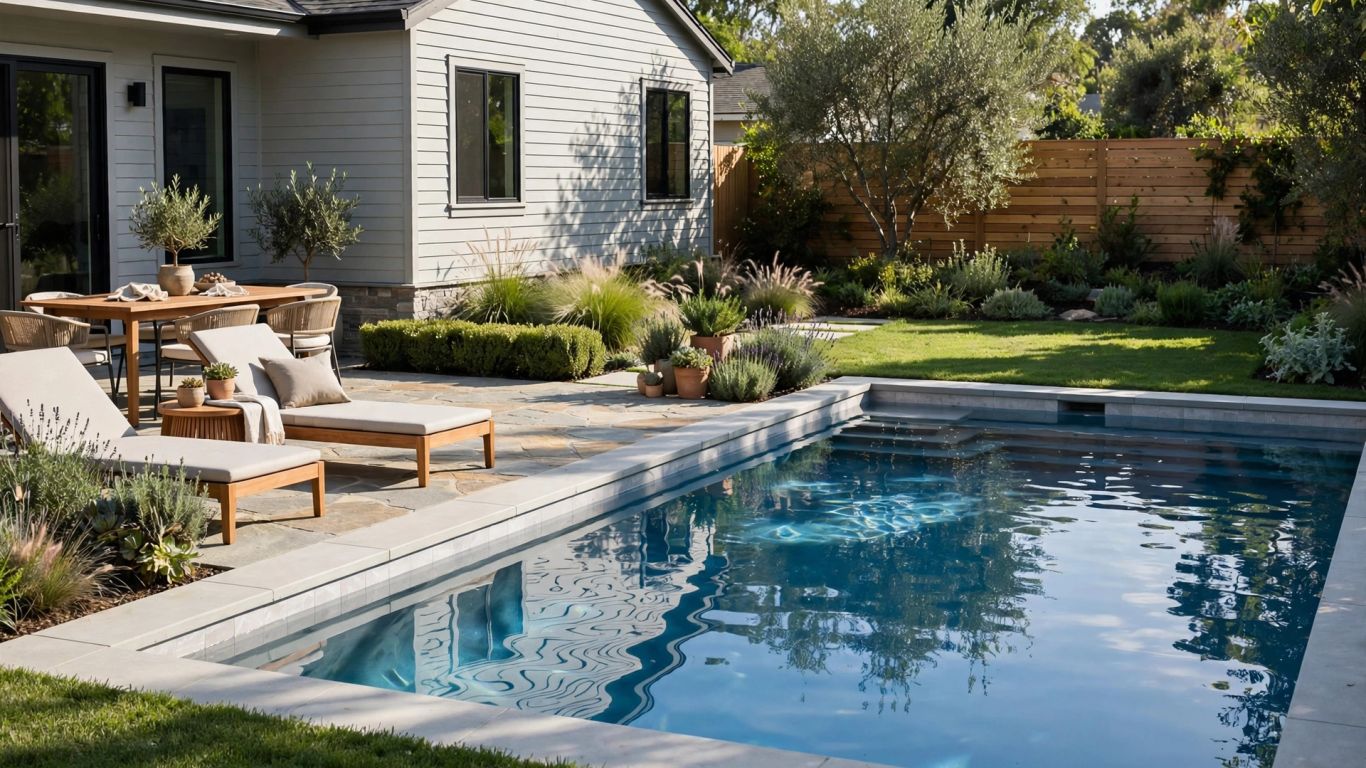
Use location settings to focus spend on practical service areas
Set geography around where your crews can perform the work, then review the actual locations associated with inquiries. Town boundaries, road access, and travel time may matter more than a clean-looking radius. If a location produces many form fills but few workable projects, narrow or separate it and investigate why. Geo-targeted campaigns are a common way to organize local reach, but the service map still needs to reflect your own operating constraints.
Test broad and Advantage+ audiences against carefully defined audience suggestions
When using Meta Ads, compare a broader setup with carefully chosen audience suggestions rather than assuming that a narrow set of interests is automatically better. Keep the creative, offer, and follow-up process steady during the comparison so the audience approach is the main variable. Avoid making a small result look conclusive; pool projects often have a longer decision path than a quick form submission suggests. You can also review pool advertising benchmarks as background, while treating your own qualified consultations and sales as the decision criteria.
Build custom audiences from qualified leads and past customers
If your records are organized and your use of them is permitted, existing customer and lead information can help structure audience tests. Separate qualified inquiries from unresponsive or unsuitable leads before using those records as a source. A list built from all form submissions may teach the campaign to seek more of the wrong inquiries. Keep the audience definitions aligned with the project types and areas your business has decided to prioritize.
Use lookalike audiences as a test, then judge them by lead quality
A lookalike audience can be tested as one route to reach people with characteristics similar to a source audience, but the source quality matters. Use a well-defined group of qualified prospects or customers where allowed, and compare the resulting inquiries with a suitable baseline. Do not declare a winner just because the initial cost per lead is lower. Sales conversations will show whether the audience is attracting homeowners with a real fit.
Use property data to improve lead quality
Property information can help the team assess fit after an inquiry, provided it is collected and used appropriately. It is most useful when it informs a relevant next step: a site visit, a design conversation, or a polite explanation that the requested work is outside the service area. Avoid treating a single data point as a verdict. The best qualification process combines property context with the homeowner’s stated goals.
Enrich inquiries with home value and lot-size data where permitted
When permitted, add property details to an inquiry record so the sales team can prepare for a more informed conversation. Note where the information came from and when it was checked, since estimates can be incomplete or outdated. A parcel’s apparent dimensions may not describe usable yard space, and estimated home value is not a reliable proxy for budget or intent. Use the details to ask better questions, not to make assumptions about a person.
Create CRM segments for properties that meet your installation criteria
A customer relationship management system can help organize inquiries around the requirements already agreed on by sales and operations. Useful segments may distinguish new construction from renovation, serviceable from out-of-area addresses, or projects awaiting a site visit from those ready for an estimate. If several factors matter, keep the segment names simple enough that staff will apply them consistently. The point is not to create a complicated scoring model; it is to make follow-up more relevant.
Ask a few high-value questions on forms without adding unnecessary friction
A short form can screen for project intent without making the homeowner complete an application. Ask only for information that changes the next step, and explain why it is useful. For example, a compact set of prompts might ask:
- What type of pool project are you considering?
- Where is the property located?
- When would you like to begin planning?
- Is there anything about the yard or access that the team should know?
Each question should earn its place. If a question does not change routing or preparation for the consultation, leave it out and gather the detail in conversation instead.
Check data sources, consent, and privacy practices before uploading customer lists
Before using customer information for advertising, confirm that the source and intended use are consistent with applicable requirements and the permissions you obtained. Keep access limited to staff who need it, and follow your data retention and deletion practices. If the status of a list is unclear, do not upload it until the appropriate person has reviewed it. Good lead generation should not come at the expense of customer trust.
Match ad messaging to life stage and buying context
Life stage can shape the reasons someone considers a pool, but an ad should not presume personal circumstances or make sensitive inferences. Focus on the everyday use, planning questions, and project details a person can choose to engage with. Different creative can speak to different motivations while remaining open to anyone who finds it relevant. The message should invite consideration rather than claim to know who the viewer is.
Speak to growing families through space, safety, and everyday-use benefits
For households looking for more ways to spend time outdoors, show how a pool area might fit into ordinary routines as well as special occasions. Be careful with claims about safety: avoid suggesting that a pool is inherently safe for children, and direct readers to discuss appropriate barriers and local requirements with qualified professionals. The imagery and copy can convey practical use without depicting a household as a certain type of family. Concrete details tend to feel more credible than broad promises.
Reach new homeowners with planning ideas rather than assuming immediate purchase intent
Someone who recently moved may still be learning the property, setting priorities, or budgeting for repairs. Offer useful planning prompts, such as checking access, understanding the yard, or thinking through the desired project scope, instead of treating a move as proof of immediate buying intent. Keep the first step low-pressure. That way, the ad remains relevant to curious homeowners as well as people who are closer to requesting a consultation.
Position low-maintenance upgrades for empty nesters and downsizers
A homeowner considering a smaller or simpler outdoor space may value ease of upkeep, but avoid assuming that age or household size determines their preferences. Show the range of project options your business genuinely offers and explain what maintenance questions to discuss before choosing a design or upgrade. That makes the message useful to anyone weighing similar trade-offs. Let the project details, not a presumed life stage, do the qualifying.
Use creative to signal the right project instead of relying on sensitive personal targeting
A photograph of a compact design, an existing-pool renovation, or a larger outdoor setting can help people recognize whether the service is relevant. Pair that image with plain language about the work being offered. Meta Ads can be part of a campaign that presents those project choices, but the creative itself should do the explaining without implying private knowledge about the viewer. Clear signals help self-selection while leaving room for a broad audience.
Build ads that prequalify without shrinking reach
Prequalification does not have to mean piling on restrictions. An ad can give a person enough information to decide whether to learn more, while leaving the campaign room to reach interested homeowners you may not have anticipated. Show real project variety and be candid about what happens after someone responds. A useful ad reduces mismatched expectations before a sales call, not simply the number of people who see it.
Show pool designs suited to different lot sizes and property types
Use project imagery that reflects the range of properties your company can serve. A smaller yard, a narrow lot, or an established landscape may call for different design conversations than a wide-open property. Avoid suggesting that a single photo guarantees the same result at another home; site conditions and local requirements matter. Diverse examples can prompt more relevant inquiries and help homeowners describe what they have in mind.
Set realistic expectations around project scope, timelines, and investment
A clear explanation of the next step helps filter out people expecting an instant quote for a complex build. If you discuss timelines or investment, use ranges only when your business can support them and explain what affects the final plan. Do not promise an installation date or price before the necessary assessment. The goal is to set an honest frame for a conversation, not to scare away every person who is still exploring.
Test seasonal offers against consultation and design-planning offers
An offer tied to the season may attract attention, while a planning-oriented invitation may bring in people who need more time to decide. To compare them, use a simple table of what each message is meant to accomplish and what to watch after the click.
| Ad approach | Useful when | Measure beyond the initial response |
|---|---|---|
| Seasonal offer | A real seasonal service or promotion is available | Qualified inquiries and completed next steps |
| Consultation invitation | Homeowners need to discuss fit and scope | Consultations that are actually booked |
| Design-planning offer | Prospects are early in the decision process | Follow-up engagement and project suitability |
Keep the offer accurate and consistent with what the team can deliver. If one version gets fewer inquiries but leads to more suitable conversations, that may be the better use of budget.
Match each ad’s promise to a landing page or lead form that continues the conversation
The page or form should continue the same conversation the ad began. If the ad shows a renovation, do not send people to a page focused only on new installations; if it promises a planning discussion, make that next step clear. Repeating the project type, service area, and realistic expectations reduces confusion. Review the full path on a phone as well as a desktop, since an awkward form can undo a strong ad.
Optimize for booked, qualified consultations
A campaign can look healthy in the ad account while producing little business value if the team cannot connect inquiries to outcomes. Track each stage consistently, from the first call or form submission through consultation and completed work. Meta Ads can support paid campaigns across Facebook and Instagram, but reporting still depends on how carefully the business records what happens after an ad response. Use the sales process as the source of truth for quality.
Track calls, form submissions, appointments, and closed projects separately
Give each important action its own clear record. A phone call, a submitted form, an appointment that was booked, and a closed project are different events and should not be treated as interchangeable conversions. This separation helps diagnose whether the campaign is attracting poor-fit prospects or whether leads are getting lost during follow-up. Consistent definitions across marketing and sales make the reporting more useful.
Send qualified-lead and sales outcomes back to Meta through CRM integrations
If your CRM and advertising setup support it, consider returning qualified-lead or sales outcomes to Meta through an integration. Confirm which events can be shared, how they are matched, and whether your privacy practices allow the transfer before turning it on. Do not report every inquiry as a qualified lead simply to create more conversion activity. A signal is useful only when it reflects the outcome you actually want more of.
Compare cost per qualified consultation, not just cost per lead
Cost per lead is easy to spot, but it says little about whether the prospect is serviceable or ready to speak with the team. Compare the cost of consultations that meet your criteria, then look at how many progress into estimates and projects. This gives you a more honest basis for comparing campaigns with different inquiry volumes. It also helps explain why a slightly more expensive lead source may still be worthwhile.
Test one audience or qualification change at a time and scale based on sales results
When multiple settings change at once, it becomes difficult to know what improved performance. Choose one meaningful change, keep the rest stable long enough to gather useful evidence, and review both campaign and sales records. Scaling on a low cost per lead alone can magnify weak-fit volume. Use qualified consultations and completed sales to decide whether the change deserves more budget.
Plan Your Next Step
If you want to talk through your campaign approach, start a conversation and bring the project types, service boundaries, and lead-quality measures you want to improve.
Conclusion
Effective pool advertising is less about finding a perfect audience filter and more about connecting a workable service area, clear project messaging, thoughtful qualification, and disciplined follow-up. Use property context carefully, test audiences with patience, and judge performance by qualified consultations and sales rather than raw lead counts. That process gives a pool business a steadier way to learn what its market responds to.
Frequently Asked Questions
Can Facebook ads target homeowners by home value?
Home value is better treated as a qualification clue than a guaranteed standard targeting control. Use relevant property information only where permitted, and combine it with what the homeowner says about the project.
Can I target people by lot size?
Lot size can help your team assess project fit after an inquiry, but it should not be assumed to be a standard audience setting. Property measurements may also fail to capture usable space, access, or site conditions.
Should pool builders use broad or narrow audiences?
Test a broad approach against a more defined setup when possible, while keeping the offer and creative consistent. Judge the results by qualified conversations and sales outcomes, not just inquiry volume.
What should a pool builder ask on a lead form?
Ask only questions that affect routing or preparation, such as project type, property location, and planning timeframe. Keep the form short enough that interested homeowners can complete it easily.
How can pool ads attract better-fit leads?
Show projects your company actually performs, explain the service area and next step, and set realistic expectations. Follow up promptly and track which inquiries become qualified consultations.
Should new pool builds and renovations use the same ad?
Usually, distinct messages are clearer when the projects have different customers, scopes, or sales processes. Separate creative and landing-page paths also make results easier to interpret.
Which result matters most when evaluating pool ads?
Look beyond cost per lead to the cost of qualified consultations, estimates, and completed projects. Tracking each stage separately shows whether the campaign is producing business value.