Facebook for Electricians: Targeting Homeowners With Older Homes
Key Takeaways
Transitioning from emergency service calls to high-ticket whole-home upgrades requires a proactive digital marketing shift. By focusing your ad spend on aging infrastructure, you can reach homeowners before a critical system failure occurrs.
- Prioritize targeting neighborhoods built before 1970 to increase the likelihood of finding homes with obsolete wiring.
- Use creative that highlights safety hazards like knob-and-tube to build urgency with older home property owners.
- Implement negative audience filtering to exclude renters and focus marketing budgets strictly on actual property owners.
- Track performance based on qualified leads and closed high-ticket revenue rather than simple click-through volume.
- Maintain a robust digital presence using 58fb principles to ensure scalable and reliable business systems.
Structuring campaigns for older home electrical services
Most contractors wait for the phone to ring during an emergency, but that strategy limits your reach to small service repairs. Successful electrical firms use proactive campaigns to capture attention before a code compliance issue turns into a safety disaster. This approach focuses on specialized projects like panel upgrades and full-home rewiring that carry much higher margins.
Segmenting by neighborhood age and property density
Targeting based on home age is the most efficient way to lower your cost per lead for specialized upgrades. By utilizing geographical data, you can filter your campaigns to specifically reach homeowners living in vintage clusters where outdated electrical service is statistically more common. This allows you to avoid wasting spend in new construction areas that do not require your core electrical safety services.
The trade-off between instant forms and click-to-website campaigns
Hibu provides systems that allow you to balance lead generation speed with brand authority. Instant forms on Meta capture quick contact data but often result in lower-quality leads, while clicking through to a professional website allows for better education on safety standards. For high-ticket items like whole-home rewiring, the latter often builds the necessary trust early in the buyer journey.
Managing localized budget allocation for high-density vintage residential areas
Localized budget management ensures your spend is concentrated only where high-value work is likely. By shifting budget away from commercial zones, you ensure that every dollar competes for homeowner attention in neighborhoods where electrical panel upgrades are frequently required. This precision helps optimize your return on advertising spend.
Creative strategies that convert homeowners in older properties
Visual storytelling is your strongest asset when explaining technical safety to non-experts. Homeowners fear what they cannot see, so showing them the reality of their aging walls turns abstract code fears into actionable motivations. Professional visuals that contrast dangerous conditions with safe, modern solutions provide the clarity needed to book a consultation.
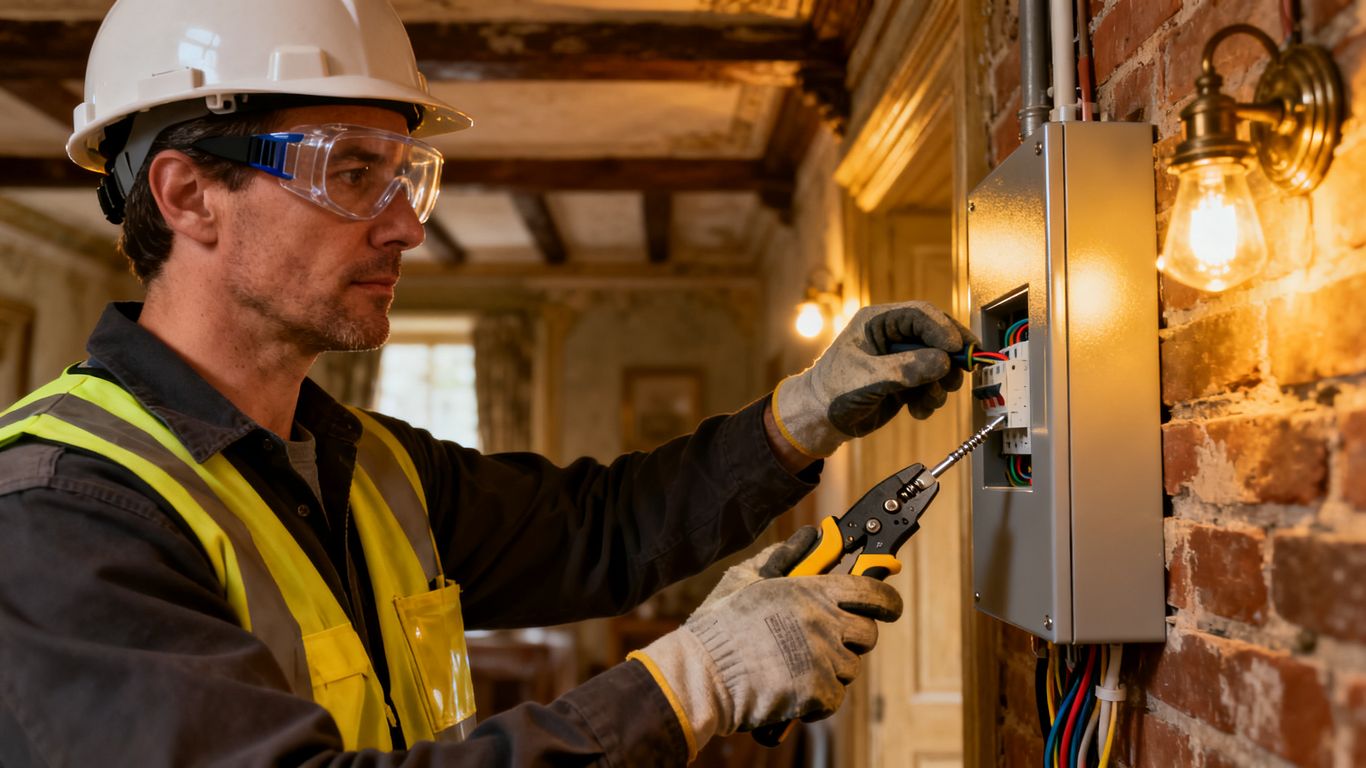
Using visual evidence of knob-and-tube or aluminum wiring hazards
Showing the physical signs of aging electrical systems makes the conversation about safety concrete. Many homeowners might not notice these issues day-to-day, but clear, professional photos capture their immediate attention.
- Exposed knob-and-tube insulation showing cracks
- Damaged aluminum wiring connections at terminals
- Overloaded circuits discovered inside vintage load centers
- Frayed insulation near old junction boxes
Using these visual cues acts as a clear indicator of necessary repairs before a larger problem develops in the household.
Before-and-after imagery demonstrating professional panel upgrades
Nothing beats a clean, organized panel installation for demonstrating craftsmanship. By showing the transition from a messy, fire-prone fuse box to a sleek, modern electrical panel, you provide visual proof of the security a homeowner receives. This contrast reinforces that your team delivers high-quality work, not just temporary fixes.
Leveraging authentic job-site photography to build localized trust
Real images of your team on the job show potential customers that you are a trusted local expert. This visual authenticity is often more convincing than corporate stock photos. When you share pictures of your trucks and technicians doing real work in identifiable local neighborhoods, you lower the barrier to hiring a new service provider.
The impact of video testimonials from historic home restoration clients
Video content allows satisfied clients to tell your story for you. Seeing a homeowner in a similar historic property discuss their positive experience with your team provides social proof.
Advanced audience targeting for niche residential electrical work
Focusing on advanced audience targeting strategies enables you to reach homeowners who specifically value the integrity of their older properties. You are aiming for individuals who are actively investing in renovation rather than searching for a quick handier-man repair. This targeting is the foundation for profitable long-term growth when managing ads for electrician facebook ads older homes.
Utilizing Meta’s detailed targeting for historic home renovation interests
Meta allows you to layer interests like historic home restoration and architecture. By reaching these specific segments, you ensure your ads appear to people who likely already understand the importance of maintaining vintage property safety. This audience is often more receptive to messaging about technical code compliance and electrical reliability.
Exclusion strategies to prevent budget waste from renters and commercial traffic
Your budget is better spent reaching homeowners who actually have the authority and capital to approve panel upgrades. Excluding categories like renters, commercial business interests, or apartment-dweller demographics prevents your ad platform from burning through budget on non-qualified clicks. Maintaining tight audience controls is essential for controlling ad costs in competitive markets.
Building custom audiences from your existing client database
Your existing customer list is an untapped goldmine for future projects. By uploading your client database, you can create custom audiences to retarget previous smaller-job clients with information about larger systems like home panel upgrades. This provides a gentle nudge to move them toward higher-ticket maintenance.
Modeling lookalike audiences based on high-value whole-home rewiring projects
Once you have successfully completed large-scope rewiring projects, you can use that data to find others with similar profiles. Modeling your lookalike audiences after your highest-value customers helps the algorithm identify new prospects who share similar behavioral and demographic characteristics. This is a powerful way to scale your outreach without sacrificing lead quality.
| Targeting Strategy | Audience Segment | Primary Objective |
|---|---|---|
| Geographic Filtering | Older Neighborhoods | Higher Job Value |
| Interest Layering | Renovation Enthusiasts | Panel Replacement |
| Custom Audiences | Past Electrical Clients | Whole-home Rewires |
Writing ad copy that drives action on aging electrical systems
Copywriting for electrical services requires moving away from generic "we are available" language to specific, benefit-driven messaging. Homeowners need to understand the connection between their outdated wiring and the modern safety standards required for their appliances, electronics, and overall property value.
Addressing common code compliance issues found in vintage homes
Educating the homeowner on local code allows you to position your service as necessary rather than optional. Using copy that directly addresses common issues like ungrounded outlets or aging fuse boxes helps the customer realize their home environment might be at risk. This transparency builds credibility and positions your company as an authority on electrical safety.
Positioning panel upgrades as non-negotiable safety investments
Focus on the long-term protection that comes with a panel upgrade. By framing the purchase as a safety investment, you help the homeowner view the cost as a necessary step for protecting the people and property they value most. This shift in perspective makes high-ticket services easier for prospects to approve.
Using "peace of mind" framing to lower the barrier for high-ticket services
Most homeowners dread the uncertainty of electrical repairs. Copy that highlights "peace of mind" and "seamless installation" helps reduce the fear of professional contractors working in their home. Showing that you manage the entire project from start to finish reduces the client's stress during the upgrade process.
A/B testing emotional safety appeals versus functional modern convenience
It is wise to test different angles to see which resonates most with your unique area. Some neighborhoods respond better to safety-focused warnings, while others prefer hearing about the benefits of modern convenience like better-powered home offices or smart-home capabilities. 61bd strategies are useful for identifying which copy elements successfully drive specific conversion outcomes.
Optimizing post-click experiences for older residential electrical leads
Getting a click is only part of the battle; what happens on your landing page determines if you get a booking. An optimized post-click experience ensures that your marketing effort translates directly into a lead in your system without unnecessary friction.
Tailoring landing page headlines to specific wiring concerns
Ensure that your landing page headline directly matches the promise made in your ad. If your ad talks about panel upgrades for historic homes, the top of your page must immediately confirm that expertise. This continuity reassures the customer that they have found the exact solution they were searching for.
Implementing mobile-first lead intake forms for immediate quote requests
Many homeowners prefer to book their service from their phone while doing daily chores. A mobile-formatted form that is clean, short, and quick to fill out is vital for capturing this intent-heavy traffic. Do not create unnecessary barriers like long surveys; just get the basics required for an initial conversation.
Integrating automated booking calendars to capture intent-heavy traffic
Built-Right Digital provides strategies for reducing the time spent on scheduling coordination. By scheduling a strategy call or using automated booking, you allow customers to pick a time that works for them, which significantly increases conversion rates compared to waiting for a call-back.
Highlighting technical credentials and licensing to mitigate buyer hesitation
Establishing your qualifications early prevents potential clients from doubting your safety standards. Display your license numbers, insurance badges, and professional association logos prominently on your landing page. When the homeowner feels confident in your professionalism, they are much more likely to complete their booking request.
Performance tracking and attribution for electrical service leads
Data-driven decision making is the only way to scale your ad spend effectively in the long run. Without proper tracking, you are guessing which campaigns bring in the best work. 778e methods allow you to see the true value of your digital investments.
Configuring the Meta Pixel for granular event-based conversion tracking
Installing your pixel correctly is the foundation for optimizing your campaigns. You must track every meaningful contact point, such as button clicks, quote form submissions, and thank-you page views. This granular data tells the Meta algorithm exactly who to look for to improve your overall results.
Distinguishing between simple service calls and large-scale rewiring inquiries
ccc7 resources emphasize that not all leads have equal value. By setting up custom event tracking for "requested quote for rewire" versus "requested fix for outlet," you can manually attribute more weight to the higher-value leads in your reporting. This helps you identify which specific ads yield the best profit margins.
Utilizing offline conversions to bridge the gap between digital clicks and closed jobs
Digital clicks do not always result in immediate appointments, so tracking offline conversions is essential for true ROI analysis. By uploading your finalized sales back into your ad platform, you allow the machine to learn which clicks actually translate into closed jobs. This creates a feedback loop that rewards campaigns that drive actual revenue.
Conclusion
Successfully scaling your business through paid advertising means moving beyond generic tactics to a more sophisticated model that respects high-value homeowner needs. When you align your targeting, creative, and tracking with the specific challenges of aging electrical infrastructure, you stop chasing small jobs and start building an efficient pipeline for sustainable, profitable growth.
Frequently Asked Questions
Why are older homes better for high-ticket electrical work?
Older homes frequently deal with outdated wiring systems that can no longer handle the demands of modern electronics. This makes full panel upgrades and rewiring projects necessary safety requirements rather than optional improvements, which generally leads to higher project values.
How can I make sure I am only reaching property owners?
Meta provides detailed audience filtering options that allow you to segment by homeownership status. By specifically selecting property owners and intentionally excluding renter demographics, you ensure your marketing dollars are focused squarely on the decision-makers who have the authority to hire you for major electrical work.
Why do my electrical ads feel like they only get small jobs?
Running generic ads often attracts homeowners with immediate, low-cost problems like a broken switch or failing outlet. To attract high-ticket work, you must change your ad copy and imagery to specifically address the broader safety concerns inherent in older home infrastructure, which shifts the lead intent from basic fixing to comprehensive upgrading.
How many images should I use in my ads?
A/B testing is essential for determining which visual assets perform best in your specific market. It is often helpful to combine before-and-after photos of panel upgrades with video testimonials to show both the technical quality of your work and the happy results for previous clients.
Should I use lead form ads or send traffic directly to my website?
Both have distinct advantages. While lead forms simplify the contact process for users on mobile devices, sending traffic to a well-optimized website often builds more trust for larger projects. Testing both methods will help you determine which produces higher conversion rates for your specific services.
How do I track which leads actually result in booked jobs?
Configuring offline conversion tracking is the most reliable way to monitor your true ROI. By integrating your offline sales data back into your ad management platform, you can identify exactly which campaigns and ads are driving real revenue instead of simply counting the leads that do not convert.
What does average high-ticket professional wire work cost?
The pricing for professional electrical work varies significantly based on local labor costs, the size and condition of the residential property, and the specific scope of the project. Contractors should evaluate their own business economics and labor averages to establish profitable rates that reflect the quality of their work and current market demand.