Here are the main points to remember about using Facebook to target specific neighborhoods for your lawn care business. These tips will help you get more customers and make your workdays more efficient.
Key Takeaways
- Facebook lets you target ads to very specific areas, like just a few neighborhoods, which is perfect for lawn care.
- You can draw a circle around your service area or block off places you don't want to work in.
- Your ads should talk about local benefits and make it easy for people to book a service.
- Watch which neighborhoods bring in the most business and adjust your spending to focus there.
- Use past customer data to find similar people in nearby areas and keep your schedule full.
Leveraging Facebook for Hyperlocal Lawn Care Growth
Think about your lawn care business. You probably have a few neighborhoods where you do most of your work, right? It just makes sense to focus your advertising efforts there. Trying to get customers all over town can be a real headache, leading to long drives and wasted gas. Facebook ads let you get super specific about who sees your message. It’s like putting flyers only in the mailboxes of houses you actually want to work with. This means less wasted money and more efficient scheduling. The goal is to fill your routes with nearby clients.
Understanding the Power of Neighborhood Targeting
Why is targeting specific neighborhoods so effective for lawn care? Well, people tend to trust businesses that are close by. If their neighbor uses your service and is happy, they're more likely to give you a call. Facebook makes it easy to reach these potential customers. You can show your ads only to people living within a certain distance of your current jobs or your business location. This is way better than just blasting ads everywhere and hoping for the best. It’s about smart growth, not just any growth. You can even get exclusive ZIP codes for your service area, making sure you're the go-to provider.
Why Facebook Ads Are Ideal for Lawn Care Businesses
Facebook is a great place for lawn care businesses because so many people use it daily. Plus, the targeting options are really detailed. You can pick specific towns, zip codes, or even draw a circle around an area to show your ads. This means you're not paying to show ads to people who live too far away to be practical clients. It’s a cost-effective way to get your name out there to the right people. Think about it: you want to service homes that are close together to make your routes efficient. Facebook advertising helps you do just that.
Defining Your Ideal Customer Within Specific Neighborhoods
Before you even start creating ads, you need to know who you're trying to reach. Are you looking for homeowners with large yards? Maybe families who are too busy to mow? Or perhaps older residents who need help with yard work? Once you know this, you can use Facebook's tools to find those people in the neighborhoods you want to target. You can look at demographics, interests, and even behaviors. This helps make sure your ad money is spent wisely, reaching people who are most likely to need and want your lawn care services. It’s about being precise, not just broad.
Focusing your advertising on specific neighborhoods means you can build a strong reputation in those areas. Happy customers in one street can lead to more customers on the next street over, creating a snowball effect.
Mastering Facebook Neighborhood Targeting for Lawn Care
Okay, so you know Facebook ads can work for your lawn care business, but how do you actually make them work for specific neighborhoods? It’s not just about throwing money at ads and hoping for the best. You need a plan. This is where precise targeting comes in, making sure your ads are seen by the people most likely to need your services, right in your service area.
Setting Up Location-Based Campaigns on Facebook
First things first, you need to tell Facebook exactly where you operate. When you create a new ad campaign, you'll see a section for 'Locations'. Instead of just putting in your city, get specific. You can target:
- Zip Codes: This is a great way to nail down specific neighborhoods you want to work in.
- Cities: Good for broader targeting if your service area covers a whole town.
- Radius: You can draw a circle around a specific point, like your office or a central point in your service area. This is super handy for defining your exact reach. You can even set the radius in miles or kilometers.
When you're setting this up, think about where you actually want to drive. Don't just target everywhere; focus on the areas where you can efficiently provide service and make a good profit. This is a key part of effective marketing strategies for lawn care.
Utilizing Radius Targeting for Service Areas
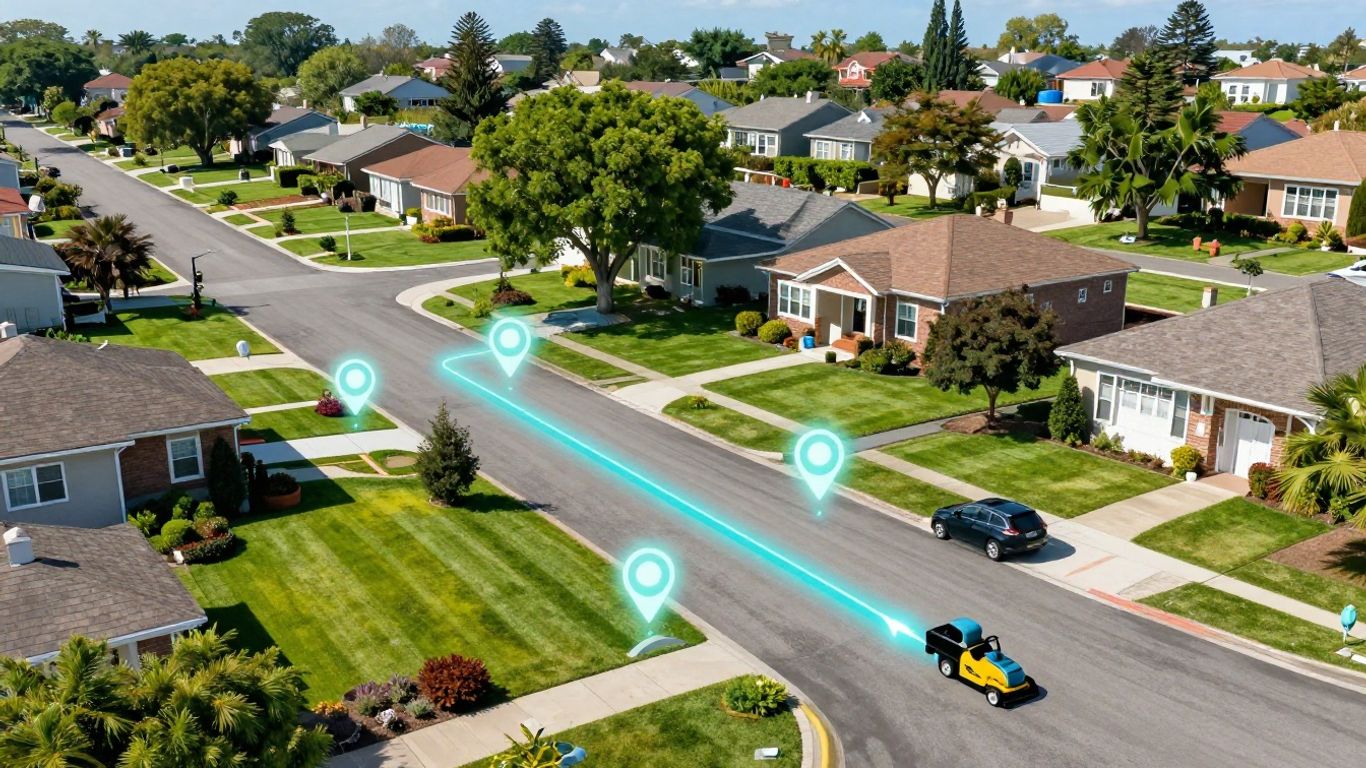
Radius targeting is your best friend for defining your service area. Let's say you want to focus on a few neighborhoods that are close to each other to keep your routes tight. You can set up multiple ad sets within one campaign, each with its own radius targeting. For example:
- Ad Set 1: 5-mile radius around 'Neighborhood A'.
- Ad Set 2: 3-mile radius around 'Neighborhood B'.
- Ad Set 3: 7-mile radius around 'Neighborhood C'.
This lets you tailor your ad copy and offers to each specific area if needed. Maybe 'Neighborhood A' has a lot of older homes that need regular mowing, while 'Neighborhood B' has newer developments where people might want more landscaping work. You can adjust your ads to match. This kind of focused approach is what makes Facebook ads services for landscaping businesses so effective.
Excluding Non-Serviceable or Undesirable Zones
Just as important as targeting where you want to go is excluding areas you don't want to serve. Maybe there's a part of town with really difficult access, or an area where you've had trouble getting good customers in the past. You can exclude these zones from your targeting. This prevents you from wasting ad spend on people who are unlikely to become customers or who would be too costly to service.
For instance, if your service area ends at a major highway, you can exclude the zip codes on the other side. Or, if you know a particular housing development has strict rules about lawn care services, you might want to skip it. This keeps your ads in front of the right eyes and helps keep your routes efficient.
Being smart about where your ads show up means you're not just spending money; you're investing it. It's about making sure every dollar spent is working towards filling your schedule with profitable jobs in areas that make sense logistically. This isn't rocket science, but it does take a bit of thought and planning to get right.
Crafting Compelling Ads for Targeted Neighborhoods
So, you've figured out which neighborhoods you want to focus on. That's great! But just showing up in their feed isn't enough. You need ads that actually grab their attention and make them think, 'Hey, these guys get it.' It’s about speaking directly to the people in that specific area, not just shouting into the void.
Ad Creative That Resonates with Local Homeowners
Think about what makes a neighborhood unique. Is it the mature trees? The family-friendly parks? The quiet streets? Your ad images or videos should reflect that. If you're targeting a place with lots of older homes, maybe show a picture of a beautifully manicured lawn next to a classic house. For newer developments, perhaps focus on clean lines and modern landscaping. The goal is for someone scrolling through Facebook to see your ad and immediately feel a connection to their own street. It’s not about generic lawn pictures; it’s about showing you understand their environment. You can even use local landmarks in your visuals if it makes sense.
Messaging Focused on Neighborhood-Specific Benefits
What problems does a lawn in this particular neighborhood face? Maybe it's dealing with a specific type of weed that's common in the area, or perhaps the soil needs a particular kind of treatment. Mentioning these specifics shows you're not just a general lawn service, but a local expert. For example, instead of saying 'We offer lawn care,' try something like, 'Tired of crabgrass taking over your Elm Street lawn?' or 'Getting your Oak Avenue yard summer-ready? We can help.' This kind of tailored message makes people feel seen. It's about showing you've done your homework on local lawn care needs.
Here’s a quick breakdown of what to consider:
- Problem Identification: What are common lawn issues in this specific area?
- Solution Highlighting: How does your service directly address those issues?
- Local Flavor: Can you tie your service to local pride or community aesthetics?
Call-to-Actions Designed for Immediate Service Bookings
Once you've got their attention, you need to make it super easy for them to take the next step. Don't just say 'Contact us.' Be specific. Use calls to action like:
- 'Get a Free Quote for Your [Neighborhood Name] Lawn Today!'
- 'Book Your Spring Cleanup in [Street Name Area] Now!'
- 'Schedule a Lawn Assessment for Your Home on Maple Drive'
Make sure the link or button leads directly to a page where they can easily request a quote or book a service. The less friction, the better. You want them to go from seeing your ad to having a service booked in just a few clicks. This is where Facebook's targeting tools really shine, allowing you to put these specific offers in front of the right people.
When you're creating ads for specific neighborhoods, think like a local. What would make you stop scrolling and consider a service? It's usually about relevance and ease. If you can show you understand their specific situation and make it simple to get help, you're already ahead of the game. Generic ads just don't cut it anymore when you can be so precise.
Optimizing Facebook Campaigns for Route Density
So, you've got your Facebook ads running and people are clicking. That's great! But if those new customers are scattered all over town, your travel time eats up profits. The real win is getting clients close together, making your routes super efficient. This is where optimizing your Facebook campaigns for route density comes in. It's all about smart targeting that fills up your schedule without sending you on wild goose chases across the county. The goal is to make every mile driven count towards more booked services.
Analyzing Performance by Geographic Clusters
First things first, you need to see where your leads are actually coming from. Facebook Ads Manager lets you break down performance by location. Look at which neighborhoods are bringing in the most leads, the best conversion rates, and, most importantly, the most booked jobs. You can often see this data in the 'Demographics' or 'Location' tabs within your ad set reporting.
- Identify High-Performing Zones: Pinpoint the specific zip codes or even smaller areas that are giving you the best results.
- Spot Underperforming Areas: See which targeted zones aren't yielding much, so you can adjust or cut spending there.
- Map Your Leads: Visualize where your new customers are located. This helps you see natural clusters forming.
This kind of breakdown is key to understanding where your ad money is working hardest. It helps you focus your efforts and budget on areas that are already showing promise, which is a smart way to build route density.
Adjusting Bids Based on Neighborhood Profitability
Not all neighborhoods are created equal when it comes to profit. Some areas might have homeowners who opt for more premium services, while others might be more budget-conscious. Once you know which neighborhoods are bringing in the most profitable clients, you can adjust your ad bids accordingly. If a particular zip code is a goldmine for your business, consider increasing your bids slightly there to make sure your ads are seen by more people in that area. Conversely, you might lower bids in less profitable zones.
Here’s a simple way to think about it:
| Neighborhood | Leads Generated | Jobs Booked | Avg. Revenue per Job | Profitability Score | Bid Adjustment |
|---|---|---|---|---|---|
| Oakwood | 50 | 15 | $120 | High | +15% |
| Maple Creek | 35 | 8 | $90 | Medium | +5% |
| Pine Ridge | 20 | 3 | $80 | Low | -10% |
This kind of data-driven approach means you're not just spending money; you're investing it where it's most likely to pay off. It's about getting the most bang for your buck, neighborhood by neighborhood.
Strategies for Filling Gaps and Maximizing Efficiency
Even with great targeting, you'll likely have some gaps in your schedule or areas that aren't quite dense enough. Here are a few ways to tackle that:
- Targeted Promotions: Run special offers specifically for neighborhoods that need a boost. Think a "Spring Spruce-Up" deal for a particular area.
- Referral Programs: Encourage existing customers in dense areas to refer neighbors. A small discount for both parties can work wonders.
- New Mover Campaigns: Use services that identify people who have recently moved into your target neighborhoods. They often need lawn care services right away. Direct mail can be a good way to reach these folks, complementing your online efforts. Direct mail programs can be very effective here.
- Day-Specific Offers: If you know Tuesdays are usually lighter, offer a small discount for bookings on that day within your most profitable zones.
Focusing on route density isn't just about saving gas; it's about building a more predictable and profitable business. When your clients are clustered, your team spends less time driving and more time working, leading to higher earnings and happier crews. It's a win-win that starts with smart advertising.
Advanced Facebook Strategies for Lawn Care Expansion
Once you've got your neighborhood targeting dialed in, it's time to think about how to really grow. We're talking about getting more customers in areas you already serve well and maybe even pushing into new, promising spots. It’s not just about running the same ads over and over; it’s about being smarter with your Facebook efforts.
Lookalike Audiences Based on High-Value Neighborhoods
This is where things get interesting. You know which neighborhoods are your goldmines – the ones with the most profitable customers. Facebook can help you find more people like them. You can create what are called 'lookalike audiences.' Basically, you tell Facebook, 'Hey, here are my best customers from these specific neighborhoods.' Facebook then goes out and finds other people on its platform who share similar characteristics – maybe they live nearby, have similar interests, or are in a similar demographic. It's like having a digital scout finding potential clients who are already predisposed to needing your services. This is a powerful way to expand without just guessing where your next best customers might be. It's a smart way to scale your local lead generation.
Retargeting Past Customers in Adjacent Areas
Don't forget about the people who already know and trust you. If you've done great work for a customer, and they live in, say, Maplewood, think about retargeting their neighbors in Oakridge. They might see your ad and think, 'Oh yeah, my neighbor uses them, and their lawn always looks good.' It’s a form of social proof, really. You can set up custom audiences of past clients and then exclude them from your main prospecting campaigns, but use them for special offers or to remind them about seasonal services. Then, you can build out from there. Maybe you target people within a mile of your existing clients who haven't booked yet. It’s about filling those small gaps and making your routes more efficient.
Testing Different Ad Formats for Local Engagement
Not all ads are created equal, and what works in one neighborhood might not pop in another. You should be playing around with different ad formats. Video ads showing off a before-and-after of a lawn you just serviced can be really effective. Carousel ads are great for showcasing different services you offer, like mowing, fertilization, and pest control. Even simple image ads with a clear offer can work wonders. The key is to test. Run a few different versions of your ads in a specific neighborhood and see which ones get the most clicks and, more importantly, the most bookings. This kind of testing is a core part of successful Facebook ad strategies for landscapers.
When you're expanding, it's easy to get caught up in trying to reach everyone. But with Facebook's tools, you can be super specific. Think about it: if you're targeting a new neighborhood, you can run ads that specifically mention that neighborhood. It makes people feel like you're talking directly to them, not just sending out a generic blast.
Here’s a quick look at how you might structure your testing:
- Video Ads: Short, engaging clips of your work. Focus on the transformation.
- Carousel Ads: Showcase multiple services or before/after shots.
- Image Ads: High-quality photos with a strong, clear offer.
- Lead Ads: Make it super easy for people to request a quote directly through Facebook.
Measuring Success with Facebook Neighborhood Targeting
So, you've been running Facebook ads targeting specific neighborhoods for your lawn care business. That's great! But how do you know if it's actually working? It's not enough to just spend money; you need to see what you're getting back. Tracking your results is how you figure out what's paying off and what's just draining your budget.
Key Metrics for Localized Campaign Performance
When you're looking at your Facebook Ads Manager, it can feel a bit overwhelming. But focus on a few key numbers, and you'll get a clearer picture. For neighborhood targeting, these are the ones that really matter:
- Reach: How many unique people saw your ad within those target areas?
- Impressions: How many times was your ad shown in total?
- Click-Through Rate (CTR): What percentage of people who saw your ad actually clicked on it? A higher CTR usually means your ad is grabbing attention.
- Cost Per Click (CPC): How much are you paying each time someone clicks your ad? This can vary a lot by neighborhood.
- Conversions: This is the big one. How many people actually booked a service or filled out a contact form after seeing your ad? You need to set this up in Facebook to track properly.
Tracking Customer Acquisition Cost by Neighborhood
Knowing your Customer Acquisition Cost (CAC) is super important. It tells you how much you're spending, on average, to get one new customer. When you're targeting specific neighborhoods, you can break this down even further. Imagine you spend $200 on ads in Neighborhood A and get 5 new customers. Your CAC for Neighborhood A is $40. If you spend $300 in Neighborhood B and only get 3 new customers, your CAC there is $100. That's a big difference!
Here's a simple way to think about it:
| Neighborhood | Ad Spend | New Customers | CAC |
|---|---|---|---|
| Oakwood | $200 | 5 | $40 |
| Maple Creek | $300 | 3 | $100 |
| Pine Ridge | $150 | 4 | $37.50 |
This kind of breakdown helps you see which areas are most cost-effective for finding new clients. You might find that some neighborhoods are much cheaper to get customers in than others. This information is gold for deciding where to focus your ad spend. You can find more about landscaping Meta ads cost to get a better idea of benchmarks.
Calculating Return on Ad Spend for Hyperlocal Efforts
Return on Ad Spend (ROAS) is the ultimate test. It shows you how much revenue you're generating for every dollar you spend on ads. For lawn care, this means looking at the total value of the services booked by customers who came from your Facebook ads.
Let's say you spent $500 on ads in a specific neighborhood last month. Those ads brought in 10 new customers. If the average customer value (what they spend with you over a year, for example) is $600, then your total revenue from those new customers is $6,000. Your ROAS would be $6,000 / $500 = 12. That means for every dollar you spent, you got $12 back in revenue.
You need to be honest about your numbers here. If a neighborhood isn't giving you a good ROAS, it might be time to rethink your targeting or ad creative for that area. It's all about making your advertising dollars work as hard as possible.
By consistently checking these metrics, you can make smart decisions about where to spend your advertising money and how to adjust your campaigns to get the best results for your lawn care business. It's like starting a dropshipping business; you need to watch your numbers closely to see what's profitable.
Want to know if your Facebook ads are hitting the right people in your local area? Understanding how to measure success with Facebook Neighborhood Targeting is key. It's not just about reaching people, but reaching the right people. We can help you figure out if your efforts are paying off. Visit our website today to learn more about making your local ads work harder for you!
Conclusion
Using Facebook for lawn care neighborhood targeting isn't just a good idea; it's becoming a must-have for local businesses. By getting specific with who you show your ads to, you stop wasting money on people who can't use your services. This smart approach helps you fill up your schedule with jobs that are close to each other, making your routes shorter and your business more profitable. It takes a bit of effort to set up right, but the payoff in new customers and smoother operations is totally worth it. So, start playing around with those targeting options and watch your lawn care business grow, one neighborhood at a time.
Frequently Asked Questions
What is neighborhood targeting on Facebook for lawn care?
It means you can show your Facebook ads only to people living in certain neighborhoods or within a specific distance from your business. It's like putting up flyers only on the streets you want to work on, but online.
Why is this better than showing ads to everyone?
Showing ads to everyone is like shouting in a huge crowd. Neighborhood targeting lets you talk directly to homeowners in the areas you actually serve. This saves you money because you're not paying to advertise to people who can't hire you.
How do I set up Facebook ads for a specific neighborhood?
When you create an ad campaign on Facebook, there's a section for location. You can type in specific zip codes, cities, or even draw a circle on a map around the neighborhoods you want to reach. You can also tell Facebook which areas to avoid.
What kind of pictures or words should I use in my ads?
Use pictures of nice-looking lawns, maybe even from your own service area if you can. Your words should talk about how you can make their yard look great and mention things that matter to people in that neighborhood, like keeping up with the Joneses or saving time.
How can I make sure my ads help fill my schedule efficiently?
Look at which neighborhoods are giving you the most customers. If one area is really busy, maybe spend a bit more money targeting there. Also, try to get jobs booked close together so you aren't driving all over town.
What if I want to get more customers in areas near my current ones?
You can use Facebook's 'lookalike audience' feature. If you give Facebook a list of your best customers, it can find other people who are similar and live nearby. You can also show ads again to people who have visited your website before but live in new areas you want to grow into.