'Fiberglass vs Wood': The Comparison Blog Post That Ranks and Converts for Door Companies
Key Takeaways
Choosing the right entry door requires balancing material durability, aesthetic requirements, and long-term investment value. This analysis provides the framework needed to weigh these factors effectively.
- Fiberglass doors offer superior resistance to moisture and weather-induced rot compared to organic materials.
- Natural wood provides a level of aesthetic customization and warmth that remains unmatched by synthetic graining.
- Energy efficiency ratings depend heavily on the internal core material and the precision of factory sealing.
- The total cost of ownership accounts for periodic maintenance cycles, specifically for wood, alongside initial installation expenses.
- Aligning the door material with the home's architectural era significantly enhances both resale value and regional market appeal.
Durability and maintenance expectations
Selecting a front entrance material involves a rigorous assessment of environmental exposure, as the front door is the primary barrier for your home. Understanding the lifecycle costs associated with different materials helps ensure that the installation remains an asset rather than a recurring project. Whether you are consulting on expert door selection or evaluating raw performance, the longevity of your choice is dictated by how the material handles local weather patterns.
Environmental resistance against moisture and rot
Fiberglass acts as an inert material, meaning it does not absorb moisture or react to humidity in the environment. This makes it an ideal choice for humid climates where wood might suffer from structural degradation over time. In contrast, solid wood is porous and requires a strict protective coating to prevent rot from taking hold.
Managing wood door upkeep cycles for homeowners
Wood doors require a proactive maintenance schedule to preserve their finish and structural integrity, unlike their synthetic counterparts. Homeowners need to commit to periodic inspection and refinishing to prevent dry rot or finish peeling. Consider following these maintenance steps:
- Inspect weatherstripping every six months for gaps or signs of compression set that compromise the seal.
- Apply a high-quality marine-grade sealant or stain every two to three years to maintain the finish integrity.
- Check bottom sweeps and threshold gaps regularly to ensure moisture is not wicking into the door bottom.
- Monitor hardware for loosening due to the natural movement of the wood frame during seasonal transitions.
Consistent effort in these areas prevents premature failure. While the work is substantial, it rewards the owner with the unmistakable feel of real timber.
Impact of climate on door lifespan and warranty claims
Extreme exposure to UV rays and fluctuating temperatures causes wood to expand and contract, which may impact frame squareness and lead to warranty disputes. Fiberglass is engineered to remain dimensionally stable, providing a predictable lifespan even in areas prone to harsh climate shifts. For those managing impact-resistant installations in difficult weather, understanding how materials behave under tension ensures the manufacturer's warranty remains valid over the long term.
Aesthetic appeal and customization capabilities
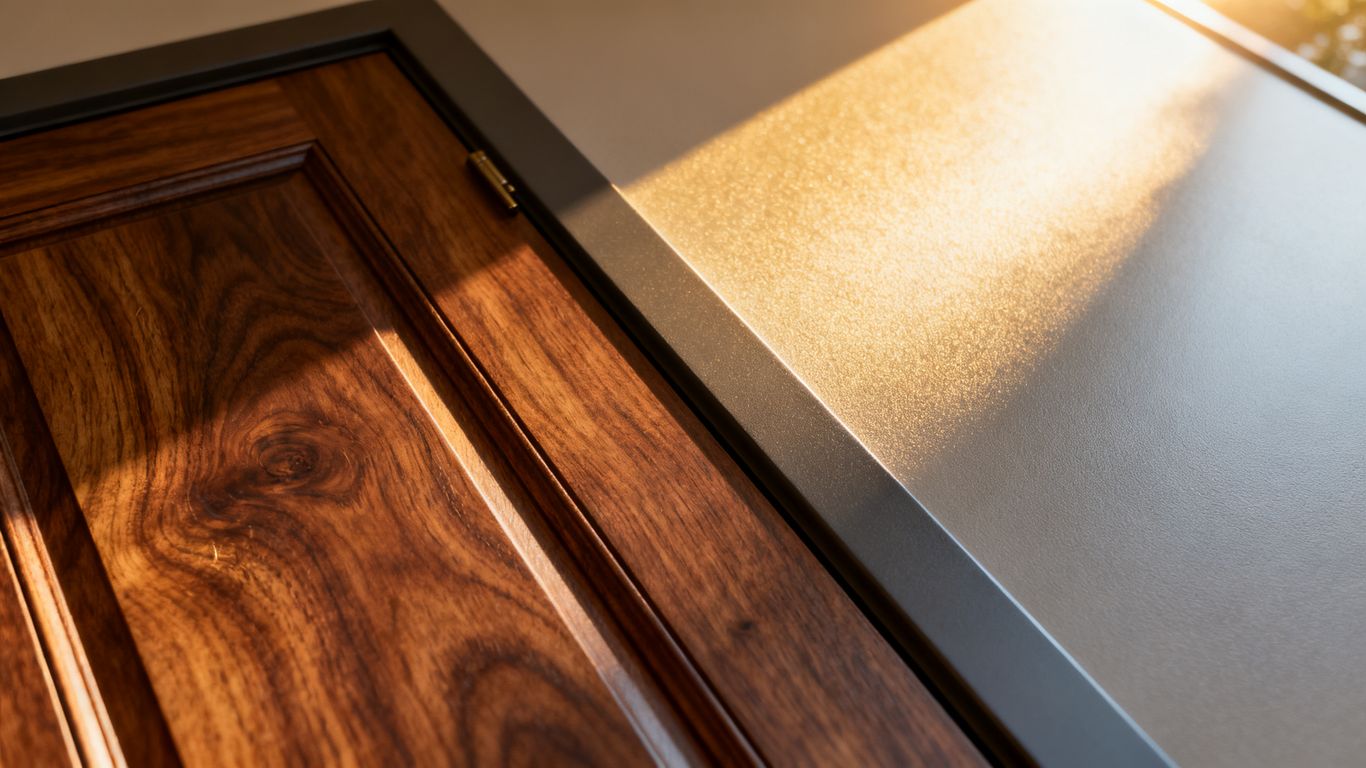
Visual impact is often the primary driver for homeowner satisfaction, as the entry door establishes the character of the facade. While both material classes aim to deliver high curb appeal, their methods of achieving that goal differ significantly in practice. Discerning buyers often find that natural wood aesthetics provide a depth and organic texture that mass-produced synthetic alternatives struggle to replicate authentically.
Wood textures and the limitations of fiberglass graining
Fiberglass doors are manufactured using steel molds that impress a pattern into the skin. While this creates a uniform look, the grain is repetitive and lacks the natural chaos of a living material. Real wood exhibits unique color variations and grain patterns that are entirely spontaneous, providing a genuine sense of authenticity that is physically impossible to find in composite molds.
Staining and finishing processes for high-end wood doors
Professionally finished wood requires a multi-step process involving sanding, staining, and top-coating to protect the fibers while highlighting natural character. This process allows for complete control over the final hue, ensuring that the door perfectly complements the specific architectural palette of the residence. It is a slow, artisanal approach that results in a unique, rich finish.
Painting versatility of factory-finished fiberglass units
Factory-finished fiberglass arrives ready to hang, often with specialized coatings that resist fading and scratching. While these can be painted, the process is less about revealing texture and more about achieving a smooth, durable color surface. This versatility makes them adaptable for homeowners who seek consistent residential color schemes across their exterior features.
Energy efficiency and thermal performance
Thermal performance is a critical metric for long-term comfort and cost-containment. A door serves as a significant thermal bridge, and its ability to resist heat transfer is determined by the composition of the core and the quality of the weather seal. Just as efficient oral health products prioritize long-term preventative care, thermal-rated doors reduce the load on HVAC systems significantly.
Understanding insulating properties of core materials
Modern doors utilize advanced internal structures to maximize R-values. The DSA Doors collection, for example, utilizes Cross Laminated Ply Foam cores to enhance energy efficiency, effectively minimizing conductive heat loss in extreme temperatures. These cores are lighter than solid wood but offer superior thermal resistance.
Seal integrity in harsh temperate environments
Seal failure often results from the frame shifting after a few seasons of thermal contraction. Because fiberglass stays rigid, it provides a consistent perimeter that keeps gaskets tight against the weatherstripping. Wood frames, however, may require occasional adjustment to maintain the same level of seal integrity after years of exposure to heat and moisture.
ROI for energy-efficient door upgrades
When calculating the return on investment for an energy-efficient door, consider the reduced demand on heating and cooling hardware over a decade. A professionally sealed, high-efficiency door effectively lowers monthly utility expenditures, especially in homes with high solar gain or deep winter drafts. Consider the following performance metrics:
| Feature | Wood Door Performance | Fiberglass Performance | Impact on Efficiency |
|---|---|---|---|
| Core Insulation | Moderate | High | Significant |
| Thermal Expansion | High | Very Low | Minimal leakage |
| Moisture Seal | Sensitive to gap | Consistent | High durability |
Selecting a high-efficiency door is an investment in home performance that pays dividends through lower monthly utility bills and reduced mechanical wear on climate control equipment, similar to how efficient logistics coordination streamlines complex transport chains.
Cost, depreciation, and homeowner value
Market perception of value varies between these materials. Solid wood is a premium choice, often associated with luxury properties where heritage architecture demands authentic materials. Fiberglass is often viewed as a practical, high-value alternative that balances performance with approachable pricing. Companies often find that discussing these nuances through direct material guidance shifts the conversation from price-points to long-term ownership value.
Material pricing structures for entry-level vs. luxury segments
Entry-level fiberglass options offer high energy ratings and acceptable aesthetics for standard renovations, while high-end wood options command a significant premium due to the cost of raw materials and professional labor. The segments rarely compete on price directly; they serve distinct financial thresholds.
Impact on property appraisal and curb appeal
An entry door is a central element in a home's first impression. A finely finished, high-quality wood door can heighten perceived value in historic or high-end markets, providing a tangible signal of luxury. Conversely, a clean, modern fiberglass unit signals maintenance-free reliability in newer suburban markets, which is equally valued by today's time-constrained buyers.
Calculating the total cost of ownership over ten years
Over a ten-year horizon, the cost of ownership includes the initial purchase price plus the maintenance labor and materials required. Wood doors may require two or three refinishing cycles to maintain their look, adding significantly to the cumulative investment. Fiberglass requires little more than occasional cleaning, often resulting in a lower total expenditure over the same decade.
Converting comparison queries into sales leads
Content strategy hinges on capturing the user at the precise moment they begin their research. By positioning your business as a trusted advisor, you shorten the sales cycle and improve lead quality. Leveraging strategic venue positioning principles, you can ensure your content remains as memorable as it is useful.
Using comparison pages to shorten the inquiry phase
Comparison guides perform best when they validate the user's research while gently guiding them toward the logical conclusion that suits their home. When a prospect realizes that fiberglass offers the best protection for their specific climate, they are already primed to accept your recommendation for a high-quality product line. You can schedule a consultation directly from these insights.
Capturing high-intent traffic via local service ads
Local service ads are perfect for capturing traffic that is already searching for professional installation near them. When these ads lead to high-quality comparison content, they build an immediate sense of competence, reassuring the buyer that they are working with an expert who understands the nuances of regional climate requirements.
Building trust through transparent material guidance
Honesty regarding the pros and cons of both materials establishes credibility that generic marketing copy cannot replicate. Discussing where wood shines and where it fails demonstrates a command of the product that builds long-term trust, which is the foundational currency of all trade-based businesses.
Aligning material choice with home architecture
Building a custom aesthetic requires that exterior elements serve the architecture rather than detract from it. Regional trends often dictate which material is prioritized, but a discerning homeowner knows when to override trends in favor of design consistency.
Evaluating door styles for historic home renovations
For historic preservation, wood is almost universally preferred due to its ability to be custom-milled to exact dimensions and period-correct details. Fiberglass can sometimes appear "too perfect," losing the charm that comes from slightly non-standard proportions or unique historical geometry. Authentic reproduction often requires the material properties of wood to be successful.
Modern design trends favoring fiberglass versatility
Modern architecture leans toward clean lines and high-performance materials. Fiberglass thrives here, as engineers can produce precise, geometric shapes and smooth, matte finishes that define current architectural trends. The material's inherent stability allows for larger, more consistent doors that wouldn't hold up as well if they were made of natural timber.
Matching entry door materials to regional real estate trends
Regional real estate markets often favor materials that have proven themselves over decades. Coastal properties almost exclusively turn to synthetic composites for moisture resistance, while traditional mountain homes maintain a wood-first approach to match the surrounding landscape. Understanding the expectations of the local buyer is essential to maximizing the return on your renovation investment.
Conclusion
Choosing between wood and fiberglass is less a battle of better versus worse and more a question of what your specific home requires for its unique environment. Fiberglass leads on performance metrics like thermal efficiency and weather resistance, while wood offers an unmatched level of tactile luxury and design flexibility that defines the character of many upscale residences. Ultimately, the best choice is the one that aligns with your maintenance capacity and the architectural authenticity you aim to preserve.
Frequently Asked Questions
Do fiberglass doors ever need to be repainted?
Fiberglass doors generally arrive with factory-applied finishes that are extremely durable, though they can be repainted if a color change is desired for aesthetic updates, provided you use the correct adhesion-promoting primer.
Can wood doors be installed in high-humidity climates?
Yes, but they require significant protective measures, such as marine-grade finishes and regular inspections, because high humidity promotes wood expansion and can lead to finish failure if the seal is compromised.
Which material is more secure against intruders?
Both materials can be secured with high-quality multi-point locking systems, though fiberglass is inherently more rigid and less susceptible to the structural fatigue that can occur in wood frames over long periods of forced-entry attempts.
Does fiberglass look like real plastic?
Modern fiberglass doors are engineered with deep moldings and sophisticated printing techniques to emulate wood grain, making it difficult for the average observer to distinguish them from natural timber from a standard viewing distance.
What does total cost of ownership involve for an entry door?
Beyond the initial installation cost, you must factor in the recurring labor and material expenses for staining, painting, weatherstripping replacement, and potential adjustments required to keep the door frame squared over its lifespan.
Should I match my door style to the era of my home?
Yes, choosing a style that respects the historical era of your architecture typically leads to higher curb appeal and better appraisal values when compared to installing mismatched modern trends on a period-style home.
Do energy-efficient doors actually lower HVAC bills?
Yes, by effectively eliminating drafts and reducing conductive heat transfer at the entryway, a well-sealed, high-insulation core door reduces the frequent cycling of heating and air conditioning systems, leading to lower monthly energy usage.