HVAC Landing Pages: The Layout Proven Across 40 Companies
So, you're running an HVAC business and wondering how to get more leads from your website? You've probably heard about landing pages, but which ones actually work? We've looked at what 40 different HVAC companies are doing, and there's a pattern. It's not just about having a page; it's about how you put it together. We're talking about the whole HVAC landing page conversion layout: what makes people click that 'get a quote' button. Let's break down what we've seen that gets results.
Key Takeaways
- The top of your page, what people see first without scrolling, needs to make an impact fast. Show them exactly what you do and why you're the best choice right away.
- People need to trust you. Showing reviews, certifications, or guarantees makes them feel safer about contacting you.
- Make it easy for people to use your page, especially on their phones. If it's slow or confusing, they'll leave.
- Your words and pictures matter. Use clear headlines, explain the benefits of your services, and show off your work with good photos.
- The layout of your HVAC landing page conversion layout is key. Where you put your headline, how many form fields you ask for, and the design of your call-to-action button all influence whether someone converts.
The Foundation Of A High-Converting HVAC Landing Page
So, you've got a business that fixes air conditioners and furnaces. Great! But how do you get people to actually call you when they need help? It all starts with your website's landing page. Think of it as the digital front door to your business. If it's messy or confusing, people will just walk away. We looked at over 40 HVAC companies, and the ones that got the most calls had a few things in common.
Above The Fold: The Critical First Impression
This is the part of your page people see immediately when they land on it, without scrolling. It's like the handshake you give someone when you meet them. If it's firm and friendly, they're more likely to stick around. For HVAC, this means showing them right away that you can solve their problem. Is their AC broken? Is their furnace making weird noises? Your page needs to say, "We can help with that!" right up front. This initial view is where you make or break the visitor's decision to stay. A clear headline and a relevant image or short video work wonders here. It’s about making it obvious you’re in the right place for HVAC services.
Clear Value Proposition: What Makes You Stand Out?
Why should someone pick your company over the one down the street? That's your value proposition. It’s not just saying "we do HVAC." It’s saying how you do it better. Maybe you offer 24/7 emergency service, or you have the fastest response times in town. Perhaps your technicians are NATE certified, or you offer free estimates. Whatever it is, make it loud and clear.
Here are some common value propositions we saw:
- Same-day service availability
- Upfront, honest pricing
- Highly trained and background-checked technicians
- Satisfaction guarantees on all work
If you're struggling to define this, think about what your best customers always praise you for. That's usually a good clue. Getting this right can really help your business stand out, especially when people are searching for local HVAC services.
Compelling Call To Action: Guiding The User
Once you've got their attention and told them why you're great, what do you want them to do next? You need to tell them! A call to action (CTA) is like giving directions. Don't just hope they figure it out. Use clear, action-oriented language. Buttons that say "Get a Free Quote," "Schedule Service Now," or "Call Us 24/7" are much better than a vague "Contact Us."
We found that the most effective CTAs were:
- Prominently placed: Easy to see, often above the fold and repeated lower down.
- Action-oriented: Using verbs that tell the user what to do.
- Benefit-driven: Hinting at what the user gains, like a "Free Estimate" or "Emergency Repair."
It’s about making that next step as simple and obvious as possible. You want to guide them smoothly towards becoming a lead, perhaps by signing up for a lead generation website that's built for this purpose.
Elements That Drive Trust And Credibility
People are understandably cautious when inviting someone into their homes, especially for something as important as their HVAC system. Building trust isn't just a nice-to-have; it's a must-have for getting people to pick up the phone or fill out a form. You need to show them you're reliable and that you stand behind your work.
Social Proof: Testimonials And Reviews
What are other people saying about your service? That's often the first place a potential customer looks. Real feedback from actual clients can be incredibly persuasive. Think about including quotes from happy customers right on the page. It's even better if you can link to a place where they can see more reviews, like Google or Yelp. This kind of feedback helps paint a picture of your company's reputation.
- Feature customer names and locations (if possible) for authenticity.
- Include a mix of reviews covering different services (repairs, installations, maintenance).
- Showcase both positive feedback and how you addressed any concerns.
Trust Badges And Certifications
Are you licensed? Insured? Part of any industry associations? Displaying these credentials visually tells visitors you're a legitimate and professional operation. Think of them as little seals of approval. Things like BBB accreditation or certifications from manufacturers can make a big difference. It shows you've met certain standards and are committed to your trade. This is a quick way to signal that you're a serious business.
Displaying these badges prominently, perhaps near the contact form or call to action, can preemptively answer a visitor's questions about your legitimacy.
Guarantees And Warranties
What happens if something goes wrong? A strong guarantee or warranty can remove a lot of the risk for the customer. It shows you're confident in the quality of your work and the products you use. Clearly stating what your guarantees cover, like a satisfaction guarantee or a warranty on parts and labor, can make a prospect feel much more secure about choosing your service. This is especially important for larger investments like a new AC unit. Many successful HVAC contractors make their guarantees a central part of their messaging because it directly addresses customer concerns about cost and reliability.
Optimizing For User Experience And Conversions
Think about the last time you visited a website that was slow to load or hard to use. Chances are, you didn't stick around for long. For HVAC companies, this is a big problem. People looking for AC repair or furnace service usually need help now. They aren't going to wait around for a clunky, slow site to figure itself out. Making your landing page easy and fast to use is just as important as the services you offer.
Mobile-First Design For On-The-Go Customers
Most people today use their phones for everything, including searching for local services. If your landing page looks like a mess on a smartphone, you're losing business. We're talking about people who might be sweating in a broken AC and need to find someone quickly. They're not going to zoom and pinch to read your text. A mobile-first approach means designing for the smallest screens first, then scaling up. This way, your page works well for everyone, no matter what device they're using. It's about making it simple to find your phone number, see your services, and fill out a contact form without any fuss. A well-designed user interface can significantly increase conversion rates, potentially by up to 200%.
Fast Loading Speeds For Immediate Engagement
Nobody likes waiting. If your page takes more than a few seconds to load, visitors will click away. This is especially true for urgent HVAC needs. Imagine someone's furnace breaks in the dead of winter; they need help fast, not a loading spinner. Optimizing images, using efficient code, and choosing good hosting all play a part in making your page load quickly. A speedy site shows you're professional and respect your potential customer's time.
Intuitive Navigation And Form Design
Once someone is on your page, they need to know what to do next. The path to contacting you should be super clear. This means having obvious buttons and easy-to-understand forms. If your contact form has too many fields or asks for confusing information, people will just leave. Keep it simple: name, phone number, maybe a brief description of the problem. A good form is like a friendly guide, leading the user smoothly towards becoming a customer. We've seen companies get great results by streamlining their forms, making it easier for people to reach out for HVAC service quotes.
Making your landing page easy and fast to use is just as important as the services you offer. It's about respecting your visitor's time and making it simple for them to get the help they need, when they need it.
Here are some things to think about for better forms:
- Keep it short: Only ask for information you absolutely need to start the conversation.
- Clear labels: Make sure each field clearly states what information is required.
- Mobile friendly: Forms should be easy to fill out on a small screen, with large enough buttons and fields.
- Error messages: If a user makes a mistake, tell them clearly what needs to be fixed.
Getting these details right can make a big difference in how many people actually reach out. It's all part of creating a website that works for your business and your customers, which is a big part of effective website design.
Content Strategy For HVAC Landing Pages
So, you've got this great-looking landing page, but what are you actually saying on it? The words you use matter. A lot. It's not just about listing your services; it's about connecting with people who have a problem and need you to fix it. Think about it: someone's AC just died on the hottest day of the year. They're not looking for a technical manual; they want relief, fast.
Headline That Grabs Attention
Your headline is the first thing people see, so it needs to stop them in their tracks. Forget generic stuff like "HVAC Services." Try something that speaks directly to their pain point or offers a clear benefit. Something like "Beat the Heat: Emergency AC Repair Available Now" or "Lower Your Energy Bills with Our Tune-Up Special" works way better. It tells them immediately what you do and why they should care. It's like the cover of a book; it needs to make someone want to open it up and read more. If your headline is weak, they'll just click away.
Benefit-Driven Copywriting
After the headline, you need to explain why they should pick you. Don't just list features; talk about the results. Instead of saying "We offer 24/7 emergency service," say "Get help anytime, day or night, so you're never left sweating it out." People care about what your service does for them. What problems do you solve? How do you make their lives easier, safer, or more comfortable? Focus on those outcomes. This is where you can really show them you understand their situation. It's about painting a picture of a problem solved.
Here's a quick way to think about it:
- Problem: Your furnace is making weird noises.
- Feature: We have experienced technicians.
- Benefit: Get peace of mind knowing a pro fixed it right the first time, so you don't have to worry about a breakdown.
This approach helps build trust and shows you're focused on customer satisfaction. It's a good way to start thinking about HVAC lead generation strategies.
Service-Specific Information
While a general overview is good, people often land on your page because they need a specific service. Make it easy for them to find that information. If someone needs a new air conditioner, they want to see details about AC installations, not just general repair services. Break down your main services into clear sections. Use bullet points or short paragraphs to describe what each service entails and the benefits associated with it. This makes the page scannable and helps users quickly find what they're looking for. It's also a good place to mention things like your Speed to Lead processes if you're particularly fast at responding to inquiries.
People are busy. They want answers quickly. If they have to hunt for information about the specific service they need, they'll probably just go somewhere else. Make it obvious and easy.
Think about what questions a customer might have for each service. Do they want to know about brands you carry? What the installation process looks like? What kind of warranty is included? Addressing these points directly on the page can answer questions before they're even asked, moving them closer to becoming a customer.
Visuals That Enhance The HVAC Landing Page Layout
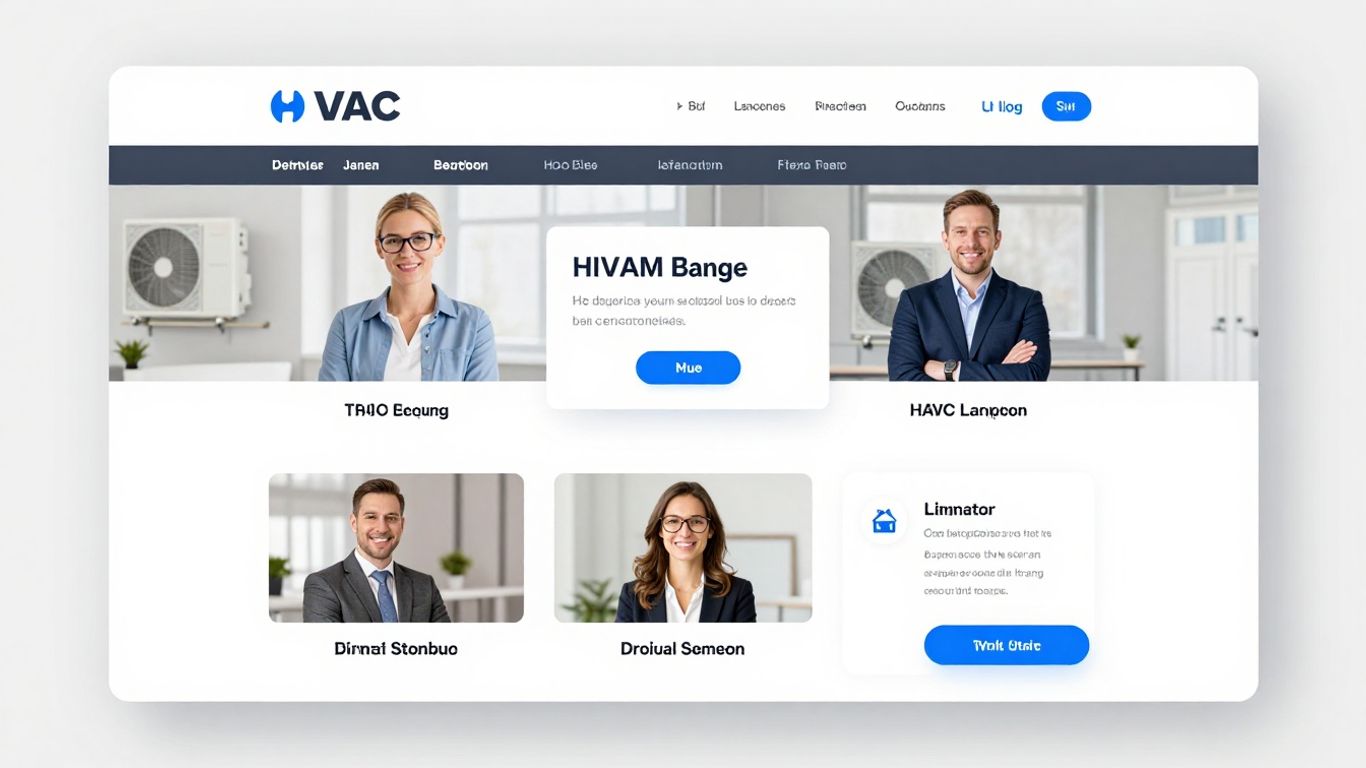
Okay, so we've talked about what to say and how to structure it. But what about what people actually see? Visuals are a huge part of making a landing page feel right, and for HVAC, that means showing you're professional and reliable. It's not just about pretty pictures; it's about building confidence.
High-Quality Imagery and Videos
Think about it: when someone needs an HVAC repair, they're often stressed. They want to see a company that looks put-together. Using clear, professional photos of your team, your trucks, or even completed jobs can make a big difference. Avoid blurry phone pics or generic stock photos that don't really say anything. Videos can be even better. A short clip of a technician explaining a common problem or showing a new system installation can really connect with potential customers. It’s a way to put a face to the name and show you’re real people doing good work. You can find some great examples of how other companies use visuals effectively in their HVAC website designs.
Infographics For Complex Information
Sometimes, explaining how a new high-efficiency system works or the benefits of regular maintenance can get a bit technical. Trying to cram all that text onto a landing page? Nobody’s going to read it. That’s where infographics come in. They take complicated stuff and break it down into easy-to-understand graphics and charts. It makes the information digestible and memorable. For instance, you could have an infographic showing the energy savings from a new AC unit over time, or a simple flowchart of your service process.
Brand Consistency In Visuals
This ties into everything else. Your visuals should match your brand. If your logo is blue and white, your photos and graphics should generally stick to that color scheme. It makes the whole page look cohesive and professional. It’s like wearing a uniform: it shows you’re part of a team and you take pride in your appearance. This consistency helps people remember you and builds a stronger sense of trust. It’s one of the key elements for a successful HVAC website.
People scan landing pages. They don't read them word-for-word, especially not at first. Good visuals grab their attention and guide their eyes to the important stuff, like your contact form or your special offer. They make the page less intimidating and more inviting.
Here’s a quick rundown of what to aim for:
- Photos: Show your actual team, clean service vehicles, and well-done installations. Make sure they're well-lit and professional.
- Videos: Short, informative clips about services, testimonials, or company introductions work well.
- Graphics: Use icons and simple illustrations to break up text and highlight key points.
- Color Palette: Stick to your brand colors to create a unified look.
- Layout: Don't clutter the page. Give your visuals some breathing room.
Key Components Of The HVAC Landing Page Conversion Layout
So, you've got your HVAC landing page up and running. That's great! But how do you make sure people actually do something once they get there? It's all about the layout, the little things that guide them toward becoming a customer. Think of it like setting up a store: you want the most important stuff right where people can see it and easily grab it.
Headline And Sub-headline Placement
This is your first handshake. The main headline needs to be big, bold, and right at the top, usually above the fold. It should tell people immediately what you do and why they should care. The sub-headline is its trusty sidekick, adding a bit more detail or a specific benefit. Getting this right means people stick around to see what else you have to say.
Form Field Optimization
Nobody likes filling out long forms. If your contact form looks like a novel, people will just leave. Keep it short and sweet. Ask only for what you absolutely need to start a conversation. Maybe just a name, phone number, and a brief description of the problem. Too many fields can really turn people off.
Here’s a quick look at what works best:
- Name: Always needed.
- Phone Number: For quick follow-up.
- Email: Optional, but good for some.
- Service Needed: A dropdown or short text field.
Call To Action Button Design
This is the big red button, metaphorically speaking. It needs to stand out. Use a contrasting color that pops against the rest of your page. The text on the button should be clear and action-oriented, like "Get a Free Quote" or "Schedule Service Now." Don't be shy with it; make it obvious what you want them to do. A well-placed and designed CTA is key for converting visitors into leads. You can find more tips on effective home services landing pages here.
The goal is to make it as easy as possible for a potential customer to take the next step. If they have to hunt for your phone number or figure out what to click, you've probably lost them. Simplicity wins.
Making sure these core elements are in the right place and designed well is a big part of what makes an HVAC website work to get more calls. It's not just about having a website; it's about having one that works for your business. You can learn more about the essential elements for an HVAC website here.
Thinking about how to make your HVAC website grab attention and get more customers? It all starts with a smart layout. We've broken down the essential parts of a landing page that really works, helping you turn visitors into leads. Want to see how a great HVAC landing page can boost your business? Visit our website today to learn more!
Wrapping It Up
So, we've looked at what works for HVAC landing pages across a bunch of different companies. It turns out, there's a pretty clear pattern. Most of the successful ones focus on making it easy for people to get a quote or schedule service, right up front. They also make sure the page loads fast and looks good on a phone. It’s not rocket science, but getting these basics right makes a big difference. If you're running ads for an HVAC business, pay attention to these layout ideas. They've been tested and proven by companies that are actually getting results. Don't overcomplicate things; keep it simple and focused on what the customer needs.
Frequently Asked Questions
What's the most important part of an HVAC landing page?
The very top part, what people see first without scrolling, is super important. It needs to grab their attention right away and clearly tell them what you do and why you're the best choice for fixing their AC or heating.
How can I make people trust my HVAC company online?
Show off what happy customers say in reviews and testimonials. Also, using trust badges like certifications or mentioning guarantees makes people feel safer choosing you.
Why is it important for my HVAC landing page to work on phones?
Lots of people look for services like HVAC repair on their phones while they're out and about. If your page isn't easy to use on a small screen, they'll likely go somewhere else.
What kind of pictures should I use on my HVAC landing page?
Use clear, good-quality photos or videos that show your team working or happy customers. This helps people imagine using your service and makes your page look more professional.
How do I get people to actually contact me from the landing page?
Make it super clear what you want them to do, like 'Call Now for a Free Estimate' or 'Schedule Service Today.' Your call-to-action button should be easy to see and click.
Should I talk about specific services on my HVAC landing page?
Yes, definitely! While a general page is good, mentioning specific problems like 'AC not cooling' or 'furnace repair' and how you solve them helps people find exactly what they need and feel understood.