Key Takeaways
Adult children often guide the research for aging-in-place renovations, even when a parent makes the final decision. Effective marketing respects that family dynamic while making safety, process, cost, and local expertise easy to understand.
- Speak to adult children without excluding the homeowner.
- Separate urgent safety work from planned improvements.
- Build campaigns around specific renovation needs and intent.
- Use proof, process details, and realistic creative to reduce hesitation.
- Measure qualified projects and revenue, not just inexpensive leads.
Understand the adult-child decision-maker journey
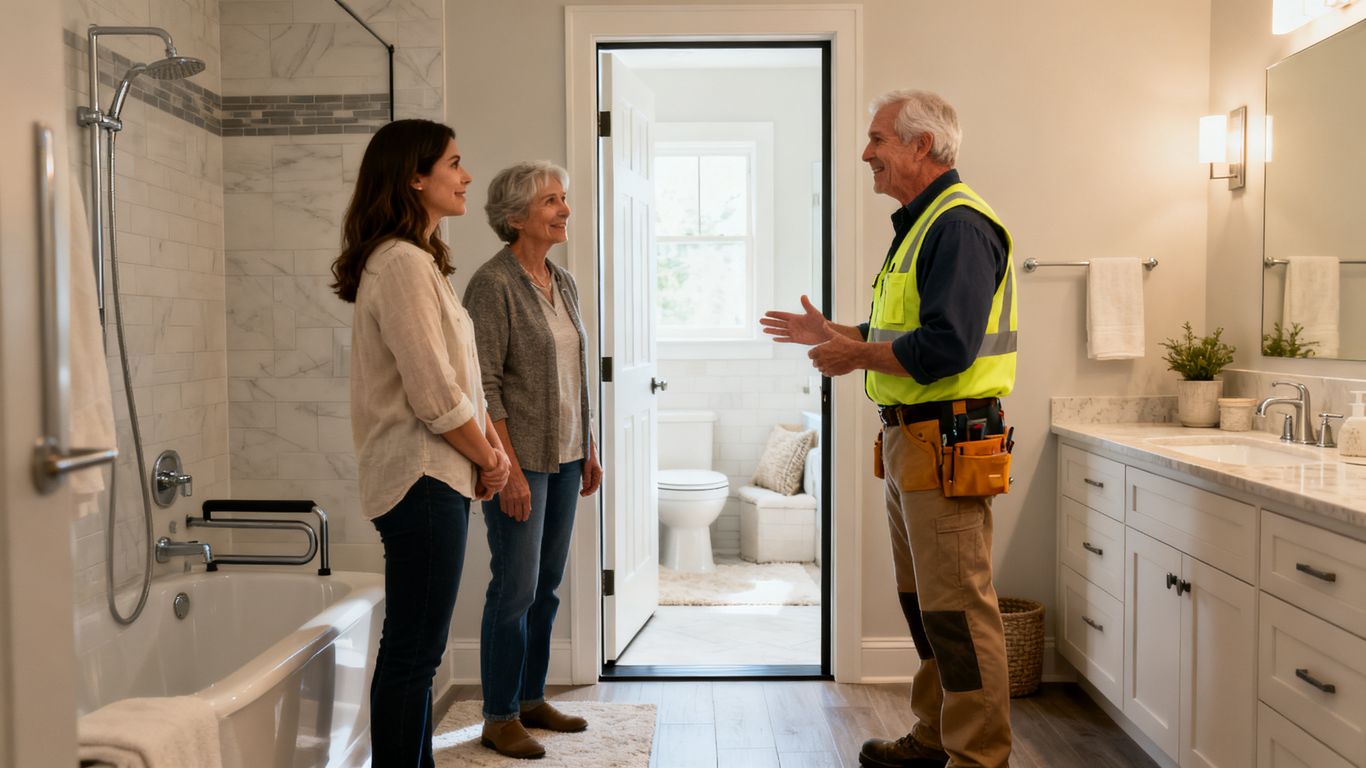
A family renovation decision rarely follows a straight line. An adult child may notice a problem, research solutions from another city, and bring a shortlist of contractors to a parent who still controls the home. Your marketing should support that shared decision instead of assuming the person searching is the person signing the contract.
Identify who researches, influences, and approves the renovation
Start by separating the roles involved in the inquiry. The adult child may be the researcher and initial contact, while the parent, spouse, sibling, caregiver, or financial advisor can influence timing and scope. The homeowner often remains the final approver, so landing pages and sales conversations should make it comfortable for someone to gather information on another person’s behalf.
Use forms that ask who the project is for, where the home is located, and whether the homeowner is involved yet. Those questions help a sales team respond appropriately without treating an adult child as an unqualified lead.
Address the emotional and practical reasons families take action
Families may act after a fall, a difficult shower transfer, a hospital discharge, or a caregiver’s growing concern. Others begin planning because they want to remain in a familiar home for years. The emotional driver is often a desire to preserve choice and dignity, while the practical driver is making daily movement safer and easier.
Messaging should acknowledge both. A page about bathroom work can discuss safer access and easier routines, while a page about entrances can focus on arriving home with less strain. A useful overview of aging-in-place remodels can also help contractors understand the broader motivations behind these projects.
Map urgent projects against planned accessibility upgrades
Not every inquiry has the same timeline. An urgent request may involve a bathroom that has become difficult to use, while a planned project may begin with a family conversation about future mobility. Advertising and follow-up should distinguish those paths rather than sending every visitor to the same generic renovation offer.
A simple lead framework can keep the conversation practical:
- Immediate safety concern requiring a prompt assessment.
- Planned modification tied to a known mobility change.
- Preventive upgrade being considered over several months.
- Broader renovation with accessibility included in the scope.
After the form is submitted, use the stated timeline to set expectations. A family facing an urgent problem needs a clear next step; a family still discussing options needs useful education without pressure.
Recognize the local and financial factors shaping the decision
Location affects more than service radius. Housing styles, permitting requirements, contractor availability, weather, and the distance between an adult child and the parent’s home can all shape the buying process. Budget conversations also tend to be gradual, especially when the project is being funded by more than one family member.
Build location-specific pages that explain the service area and consultation process without promising costs that have not been assessed. Content about home renovation financing can help families think through planning questions, but your own estimate should remain tied to the property, materials, labor, and scope.
Build messaging around safety, independence, and peace of mind
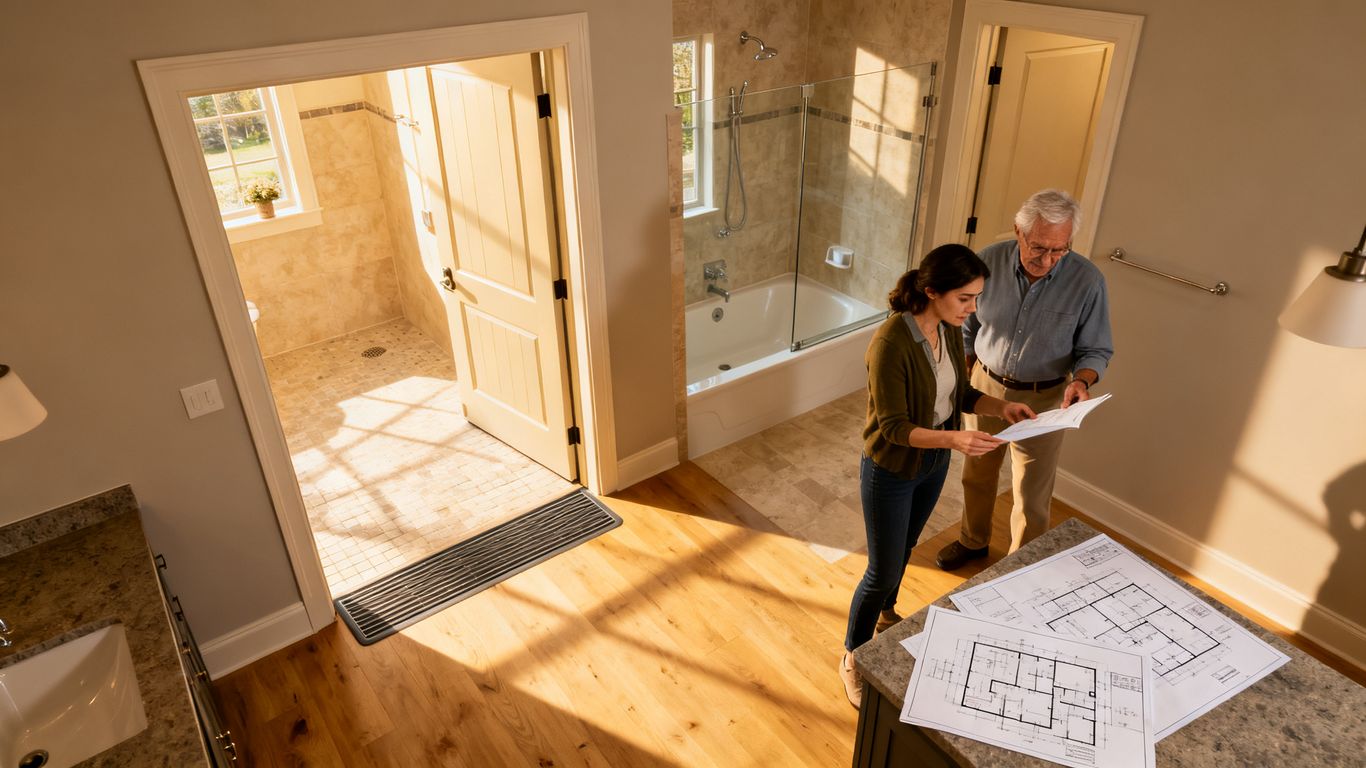
Accessibility marketing works best when it describes what changes in everyday life, not just what gets installed. A wider doorway is useful because it can make movement easier; a curbless shower matters because it can reduce a difficult transition. The strongest message connects the improvement to a homeowner’s routine and a family’s confidence.
Translate renovation features into family-focused outcomes
Turn technical features into plain, observable outcomes. Instead of stopping at “grab bars,” explain how properly placed support can make bathroom routines feel more manageable. Instead of listing “lever handles,” describe easier door operation for someone with limited hand strength.
Use specific language that does not overpromise. Phrases such as “make the entry easier to navigate” or “plan a bathroom around safer movement” are more credible than guarantees about preventing every accident. This approach gives adult children something concrete to discuss with their parents.
Balance respectful language with the urgency of preventing accidents
Fear can attract attention, but excessive fear can make a parent feel judged or managed. Lead with practical improvements and then explain why early planning may reduce stress when a sudden need arises. Respectful urgency builds trust because it acknowledges risk without turning the homeowner into a problem to be fixed.
A contractor can frame the conversation around options: what would help now, what could wait, and what preparation would avoid a rushed decision later. The goal is not to imply that every older adult is frail. It is to make the home more adaptable to changing needs.
Explain aging-in-place improvements without making parents feel diminished
Many homeowners hear “aging in place” and worry that the renovation will make their home look institutional. Creative and copy should show attractive, ordinary spaces with thoughtful details rather than medicalized rooms. Talk about comfort, flow, ease of use, and staying in a preferred home.
The NAHB remodeling guidance offers useful background on common modifications such as wider doorways, curbless showers, and grab bars. For a contractor, that information can become educational content that starts a conversation without diagnosing the reader or assuming a particular health condition.
Use proof points that reduce perceived cost and disruption
Families want to know who will enter the home, how long the work may take, what areas will be affected, and how decisions are handled if the scope changes. Reviews, project photographs, licensing details, clear proposals, and a step-by-step explanation often do more to reduce hesitation than a broad “family-owned” claim.
A contractor can also explain whether work is completed in stages, how dust and access are managed, and when the homeowner will be able to use the space again. For broader home-service marketing lessons, a professional painter guide illustrates why credentials, proposals, preparation, and final walkthroughs deserve a visible place in the buyer journey.
Target high-intent audiences with aging in place renovation marketing
A strong aging in place renovation marketing plan separates people actively searching for a solution from those only beginning to learn. Search campaigns usually capture the clearest immediate demand, while social and educational content can keep a contractor familiar until relatives have talked through the project. The account structure should reflect those different levels of intent.
Capture searches for accessibility, safety, and independent living
Build keyword themes around the problem and the service: accessible bathroom renovation, walk-in shower installation, doorway widening, wheelchair ramp construction, and aging-in-place remodeling. Add location modifiers where they reflect the actual service area, and review search terms regularly for irrelevant medical, rental, or product-only queries.
Avoid forcing every phrase into one ad group. Someone searching for a bathroom conversion needs a different headline and landing page from someone researching a whole-home accessibility assessment. The closer the message matches the search, the easier it is for the visitor to decide whether to call.
Structure Google Search campaigns around specific renovation services
Google Ads can organize demand around individual services, locations, and decision stages. Give high-value projects their own campaigns when budget and search volume justify it, then align each ad with a focused page and a call option. Use negative keywords and location settings carefully so spend does not drift toward low-fit inquiries.
Track calls, forms, and consultation requests separately. An ad that produces fewer leads may still be stronger if it brings in larger bathroom or entrance projects with realistic timelines. Broader digital marketing planning, including CRM connection and analytics, is also covered in this developer marketing guide, even though the application here is home renovation.
Use Local Services Ads and location targeting to reach nearby families
Local Services Ads can help contractors appear when nearby people are seeking a local provider, while standard location targeting supports more controlled service-specific campaigns. Keep the business profile, service categories, hours, and phone handling accurate. A distant adult child may search on behalf of a parent, so the ad and landing page should make the contractor’s local coverage immediately clear.
Do not treat proximity as the only qualification. Verify that the company serves the property’s address, handles the requested type of work, and has capacity for the expected timeline before treating the inquiry as a sales opportunity.
Retarget visitors who need time to discuss the project with relatives
A family may visit several times before contacting a contractor. Retargeting can return them to a project page, consultation option, planning guide, or process explanation rather than repeating the same hard-sell ad. Set sensible frequency limits and exclude people who already submitted a form when possible.
The sequence should answer the questions that emerge after the first visit: What happens during an assessment? Can the parent remain at home during construction? How detailed is the estimate? These answers make the second visit more useful than a generic reminder.
Test Meta and Facebook audiences without relying on sensitive personal attributes
Meta and Facebook campaigns should use broad, contextual creative and legitimate marketing signals rather than implying knowledge of a person’s age, disability, or family situation. Promote helpful content about planning, design options, and contractor questions. Let the visitor self-identify through the page they choose and the information they request.
Test different creative angles, such as a calm bathroom walkthrough, a process-focused contractor video, or a guide for families planning from out of town. Judge the audience by qualified inquiries and downstream project quality, not by cheap clicks alone.
Create campaigns for different renovation needs and decision stages
A single “accessible home renovation” campaign is usually too broad for both the customer and the sales team. Bathrooms, entrances, flooring, lighting, and mobility improvements have different triggers, search language, images, and levels of urgency. Campaign segmentation makes the experience more relevant without requiring a separate brand for every service.
Promote bathrooms, entrances, flooring, lighting, and mobility upgrades separately
Create a clear service path for each major need. Bathroom visitors may want shower access and support features, while entrance visitors may be considering steps, thresholds, or door operation. Flooring and lighting audiences may be planning broader improvements with safety as one consideration rather than the sole reason for the renovation.
Each page should show the relevant project type, explain the assessment, and include examples that match the work. Separate service pages also make it easier to compare cost per qualified inquiry and identify where the sales process needs improvement.
Match ad copy to urgent repairs versus long-term planning
Urgent searches need direct language: request an assessment, discuss a difficult entrance, or ask about a safer bathroom layout. Planning-stage searches respond better to options, checklists, timelines, and questions to bring to a contractor. Mixing both messages in one ad can leave each audience feeling that the page was not written for them.
Use the landing page to continue the promise made in the ad. If the ad offers help planning a future modification, do not send the visitor to a page that only asks for an immediate emergency call.
Use educational content to reach families before they are ready to request a quote
Educational content can introduce the topic while a family is still gathering opinions. Explain which rooms are commonly assessed, what questions affect scope, and why an on-site evaluation matters. The aging-in-place renovation overview is an example of the kind of planning context that can support early-stage content.
End each resource with a modest next step, such as saving a planning guide, reviewing project examples, or requesting a conversation. Not every reader needs a quote today, but a useful experience can make the contractor the first call later.
Build remarketing sequences around consultations, estimates, and project planning
Remarketing should reflect what the visitor has already done. Someone who downloaded a guide needs a different follow-up from someone who requested an estimate but has not scheduled an assessment. Use separate audiences and exclusions so messages do not become repetitive or insensitive.
A practical sequence may begin with process education, continue with relevant project examples, and then offer a consultation. Where scheduling is the next barrier, include a simple schedule a call option that lets an adult child coordinate a conversation around the family’s availability.
Develop creative that makes accessibility improvements feel achievable
Creative has to lower the emotional temperature of the project. Families may already feel worried, guilty, or overwhelmed, so an image of a clean, lived-in home can work better than an exaggerated stock photo. Show the work as a series of understandable improvements, with enough detail to help a visitor picture the result.
Show real-life use cases instead of relying on generic senior imagery
Photograph actual rooms, hands using fixtures, clear walking paths, and design choices that fit the home’s style. If people appear, show them participating naturally in the space rather than posing beside a contractor. Captions can explain the problem addressed and the homeowner’s intended use without making medical claims.
This also gives search and social ads more variety. A close view of an entry threshold may be more informative for an entrance campaign than a smiling family image that does not show the renovation at all.
Demonstrate how contractors minimize disruption inside occupied homes
Show protection for floors and furniture, organized materials, clean work areas, and a crew communicating with the homeowner. Explain what happens before demolition, how access is maintained, and how the room is left at the end of the day when that reflects the contractor’s actual process.
Process footage is particularly useful for adult children who cannot be present. It gives them practical questions to ask and helps the family evaluate whether the contractor understands the realities of working in an occupied home.
Use before-and-after visuals responsibly and explain the improvement
Before-and-after images should show comparable angles and identify what changed. Avoid implying that a visual result guarantees a particular safety outcome. A short caption can state that a threshold was reduced, a doorway widened, or a shower layout changed, while leaving personal results to the homeowner’s circumstances.
Pair the image with scope and process details where possible. That turns a dramatic visual into evidence of workmanship rather than a vague promise.
Test testimonials from adult children, homeowners, and caregivers
Different voices answer different objections. A homeowner may speak to comfort and appearance, an adult child may describe communication and scheduling, and a caregiver may focus on day-to-day usability. Obtain permission, keep the wording accurate, and avoid publishing health details that are not necessary.
Test these testimonials against process-led creative, not only against one another. A strong testimonial can earn attention, but clear information about the work and the next step is what helps a family move forward.
Design landing pages that help families make a confident decision
The landing page should help a visitor answer three questions quickly: Is this contractor relevant to my project, does the company serve the home’s location, and what happens if I reach out? Adult children often review pages on a phone and forward them to a parent or sibling, so the copy needs to be scannable without becoming thin.
Lead with the renovation outcome and the contractor’s service area
Open with the room or access problem, the intended improvement, and the locations served. “Plan a safer, easier-to-use bathroom in the greater service area” is more useful than a vague statement about quality craftsmanship. Keep the service area visible near the headline, proof, and form so visitors do not have to hunt for it.
Use separate pages for high-intent services when the business can support them. That gives paid traffic a closer match and gives an adult child something specific to share with the homeowner.
Explain the consultation, assessment, and installation process step by step
Describe what happens after the inquiry: initial conversation, property assessment, recommendations, proposal, scheduling, installation, and final walkthrough. Be clear about which steps are estimates and which depend on the home’s structure, permits, materials, or selected scope.
A process section reduces uncertainty without promising a fixed timeline before the property is reviewed. It also gives the sales team a consistent framework for answering questions on the phone.
Include accessibility expertise, licensing, reviews, and project examples
Trust elements should be specific and verifiable. Include relevant licensing and insurance information, review platforms, project photographs, service history, and examples of the types of modifications the contractor actually performs. If a credential or specialty does not apply, leave it out rather than padding the page.
The same principle applies to adjacent home services. A family researching Laconiko olive oil is not evaluating a renovation contractor, but the linked brand story illustrates how clear background and provenance can make a company feel more understandable. For a renovation business, that context should come from real experience, documented work, and transparent process.
Make it easy for an adult child to request information on a parent’s behalf
Use form language that welcomes family coordination: “Tell us about the home and the improvements you are considering.” Offer a field for the homeowner’s location and a preferred contact method. Do not require the person submitting the form to claim that they are the homeowner.
Phone staff should be prepared for questions from someone who is still gathering facts. A helpful first conversation can clarify scope and next steps without pressuring the caller to make a decision for another adult.
Add calls to action for consultations, estimates, and downloadable planning guides
Give visitors more than one appropriate next step. A consultation suits a family ready to talk, an estimate request suits someone with a defined project, and a planning guide suits someone still comparing options. Keep the primary action prominent while allowing lower-commitment visitors to stay engaged.
Test form length, click-to-call placement, scheduling availability, and confirmation-page instructions. A conversion is more useful when the next operational step is clear to both the family and the contractor.
Track and optimize the full lead-to-sale process
Lead generation is only the first measurement layer. A campaign can appear efficient while producing calls outside the service area, requests for work the contractor does not perform, or projects too small to support the acquisition cost. The reporting setup should follow the inquiry from first interaction through qualification, consultation, estimate, and booked revenue.
Define primary conversions for calls, forms, consultations, and booked projects
Choose conversion events that reflect meaningful progress. A completed form, a connected call of sufficient duration, a scheduled consultation, an accepted estimate, and a booked project should not all be treated as identical. Assign primary and secondary status deliberately so bidding and reporting do not optimize toward the easiest action.
Document the event definitions for the whole team. If marketing counts every form while sales counts only property-specific inquiries, the disagreement will appear as a performance problem even when the data is simply inconsistent.
Track phone leads and distinguish qualified renovation inquiries from low-intent calls
Call tracking should capture source, campaign, landing page where available, duration, and disposition. Sales staff can mark whether the caller is in the service area, has a relevant renovation need, has a workable timeline, and is willing to discuss an assessment. Record those outcomes consistently rather than relying on memory.
The goal is not to reject early conversations. It is to identify which campaigns create genuine opportunities and which need better targeting, negative keywords, copy, or qualification questions.
Connect Google Ads, Meta Ads, CRM data, and closed-revenue reporting
Google Ads and Meta Ads data become more useful when matched with CRM stages and closed-project revenue. Use consistent campaign naming, source fields, and lifecycle definitions. Where privacy, consent, or platform rules limit data sharing, report within those boundaries and avoid importing sensitive personal information.
The CRM should preserve enough context to compare the original service interest with the final project. A bathroom inquiry that becomes a whole-home renovation is valuable learning, not a tracking error, provided the change is recorded clearly.
Measure lead quality by project type, timeline, location, and decision-maker role
Break performance down by the factors that affect sales value. Compare urgent bathroom work with planned entrance upgrades, nearby homeowners with out-of-town adult children, and direct homeowner inquiries with family-led research. These views often explain why a campaign with a higher cost per lead produces better revenue.
A useful reporting table might look like this:
| Dimension | What to compare | Why it matters |
|---|---|---|
| Project type | Bathroom, entrance, flooring, or whole home | Scope and margin can differ substantially |
| Timeline | Immediate, planned, or exploratory | Follow-up speed and nurture needs change |
| Location | City, ZIP code, or service zone | Travel and local demand affect economics |
| Decision-maker role | Homeowner, adult child, or caregiver | Messaging and sales response may need adjustment |
Review these dimensions with sales, not just marketing. The patterns become actionable when the team can connect them to capacity, close rate, average project value, and the reasons opportunities were lost.
Optimize campaigns for profitable projects rather than inexpensive form fills
Once enough conversion data exists, shift budget toward campaigns that create qualified consultations and profitable booked work. Do not pause a service simply because its leads cost more before checking project value and close rate. Conversely, do not celebrate low-cost forms if they consume staff time without producing viable opportunities.
Run tests with a clear question: a tighter service page, a different qualification field, a new call-to-action, or a revised audience. Give each change enough time to produce meaningful sales feedback, then update budgets and creative based on revenue quality rather than surface-level volume.
Get Families Ready to Talk
If your renovation company wants a simpler way to coordinate consultations, use Calendly to offer families a clear scheduling step after they have reviewed the project information. Make the invitation feel helpful and low-pressure, with times that work for the homeowner and the adult child when possible.
Conclusion
Marketing aging-in-place renovations requires more than describing accessible features: it means guiding a family through uncertainty with respectful language, relevant campaigns, credible proof, and a measurable path from research to a completed project.
Frequently Asked Questions
Should renovation companies market directly to adult children?
Yes, but the message should welcome the homeowner as an equal participant. Adult children often research and coordinate, while the parent may approve the work and live with the result.
What renovation services should have separate campaigns?
Separate campaigns are usually useful for services with different search intent, such as accessible bathrooms, entrance modifications, doorway changes, flooring, lighting, and mobility-related upgrades.
How can contractors avoid fear-based accessibility marketing?
Describe practical improvements, options, and next steps without assuming a diagnosis or exaggerating risk. Respectful language can still explain why planning before a crisis may reduce stress.
What should an aging-in-place landing page include?
Include the service area, relevant project types, consultation process, qualifications, reviews, project examples, clear contact options, and a way for an adult child to inquire on a parent’s behalf.
Is educational content useful if a visitor is not ready to hire?
Yes. Planning guides and explanatory articles can answer early questions, build familiarity, and create a reasonable follow-up opportunity without demanding an immediate quote request.
How should contractors measure campaign success?
Track qualified calls, forms, consultations, estimates, booked projects, revenue, close rate, and project margin. Lead volume alone cannot show whether advertising is producing sustainable growth.
What should happen after an adult child submits a form?
Respond promptly, confirm the property location and project need, ask about the decision process and timeline, and explain the next step. The initial conversation should make coordination easier rather than pressure the family.