Key Takeaways
Smart home enthusiasts are not simply shopping for window coverings that move on command. They are evaluating control, compatibility, installation, privacy, comfort, and whether the product fits into routines they already use.
- Lead with real household scenarios instead of generic automation language.
- Separate premium automation prospects from shoppers seeking a simple gadget.
- Build campaigns and landing pages around ecosystems, rooms, and buying intent.
- Track consultations, measurements, calls, and sales—not just form fills.
- Use SEO and follow-up to educate prospects who need more time to decide.
Understand what smart home buyers actually value
Smart home buyers tend to think in systems rather than isolated products. They may already have connected lighting, climate controls, security devices, or voice assistants, so a shade campaign has to explain where window treatments fit. The strongest motorized shade smart home integration marketing connects the product to daily behavior, not just to a motor and an app. It also respects the difference between a curious DIY shopper and a homeowner planning a professionally installed project.
Go beyond convenience and lead with control
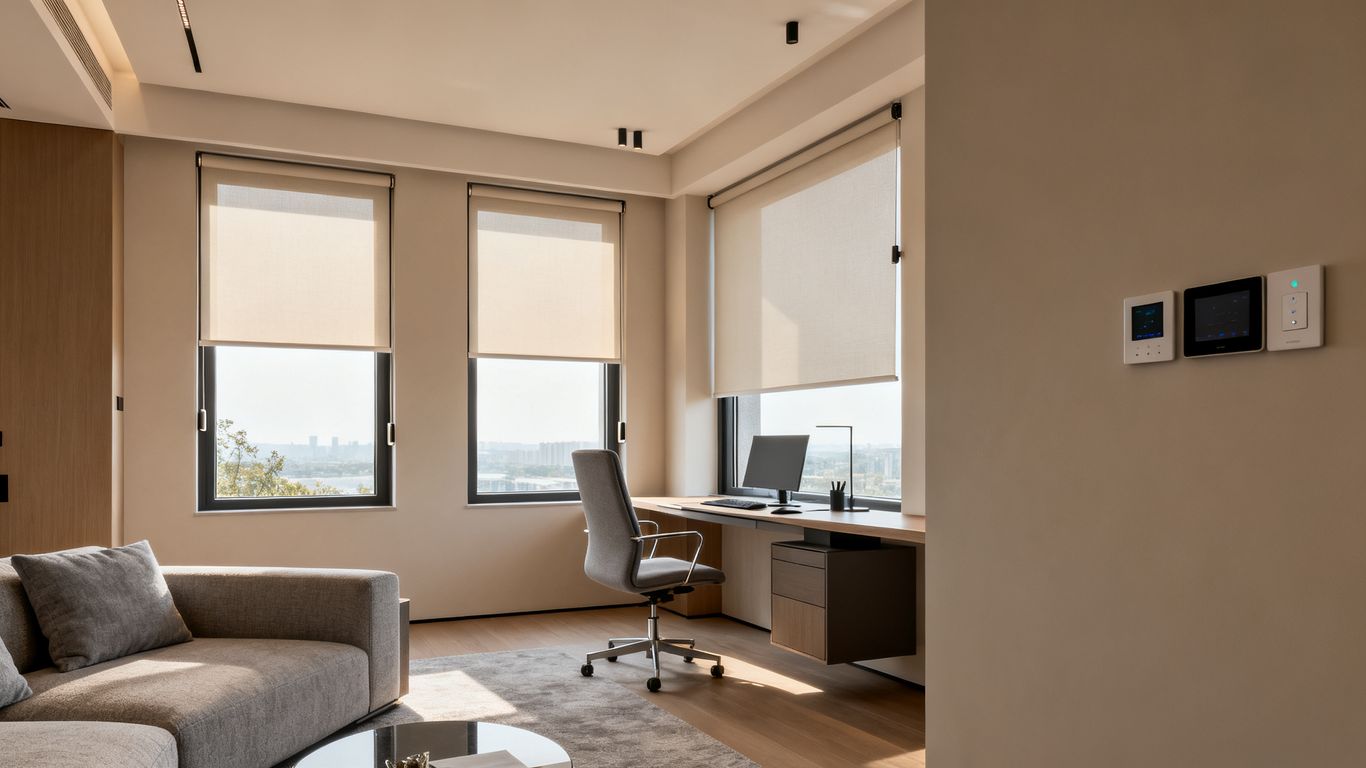
Convenience is an easy opening, but it is rarely a complete reason to buy. Prospects want to know whether shades can follow a schedule, respond to a command, or help them manage several rooms without walking from window to window. Frame control as a practical part of the home: morning light in the bedroom, glare reduction in a workspace, or privacy at a predictable time each evening.
The copy should make the outcome tangible. “Set the bedroom shades to open with your morning routine” gives the reader something to picture, while “upgrade to smart shades” leaves too much work to the imagination. Control should feel personal, repeatable, and connected to the way the household already operates.
Address privacy, comfort, energy use, and accessibility
Different members of the buying committee may care about entirely different benefits. One person may want privacy after sunset, another may be tired of screen glare, and someone else may need controls that do not require reaching a cord or manually adjusting every window. Treat those concerns as distinct motivations rather than compressing them into one vague promise.
Energy language also needs restraint. Explain that shades can help manage light and heat when used as part of a considered home routine, but avoid guaranteed savings unless the business has verified evidence for that exact claim. A useful landing page gives each motivation its own proof, example, and next step.
Separate DIY gadget shoppers from premium automation buyers
A low-commitment shopper often searches for a quick retrofit, a basic control method, or a product they can install without help. A premium buyer may be comparing fabrics, window sizes, power options, programming, and the quality of measurement and installation. Both audiences can be valuable, but sending them to the same page usually creates weak qualification and muddled messaging.
Use language that signals the level of service early. “Custom consultation and professional measurement” will attract a different prospect from “simple smart shade upgrade.” The distinction should also appear in ad groups, forms, pricing context, and follow-up so the sales team knows what kind of conversation to have.
Map buying triggers to the customer journey
Most prospects do not move directly from a broad idea to a booked installation. They may first notice glare, privacy problems, or awkward manual controls, then research compatibility and power, and only later request a quote. Campaign structure should reflect those stages rather than treating every search as equally ready.
At the awareness stage, educational room examples can earn attention. Comparison and integration pages serve solution-aware visitors, while measurement and consultation calls usually indicate stronger intent. This journey map gives creative and reporting a shared vocabulary, which makes it easier to see where demand is stalling.
Position motorized shades as part of the connected home
A shade should be presented as one component in a coordinated home, not as a disconnected appliance with a novelty remote. That means explaining controls, routines, power, installation, and the limits of compatibility in plain language. Readers are often technically curious and will notice when a page skips the practical details. A clear explanation builds more trust than a sweeping claim about effortless integration.
Explain compatibility with major smart home ecosystems
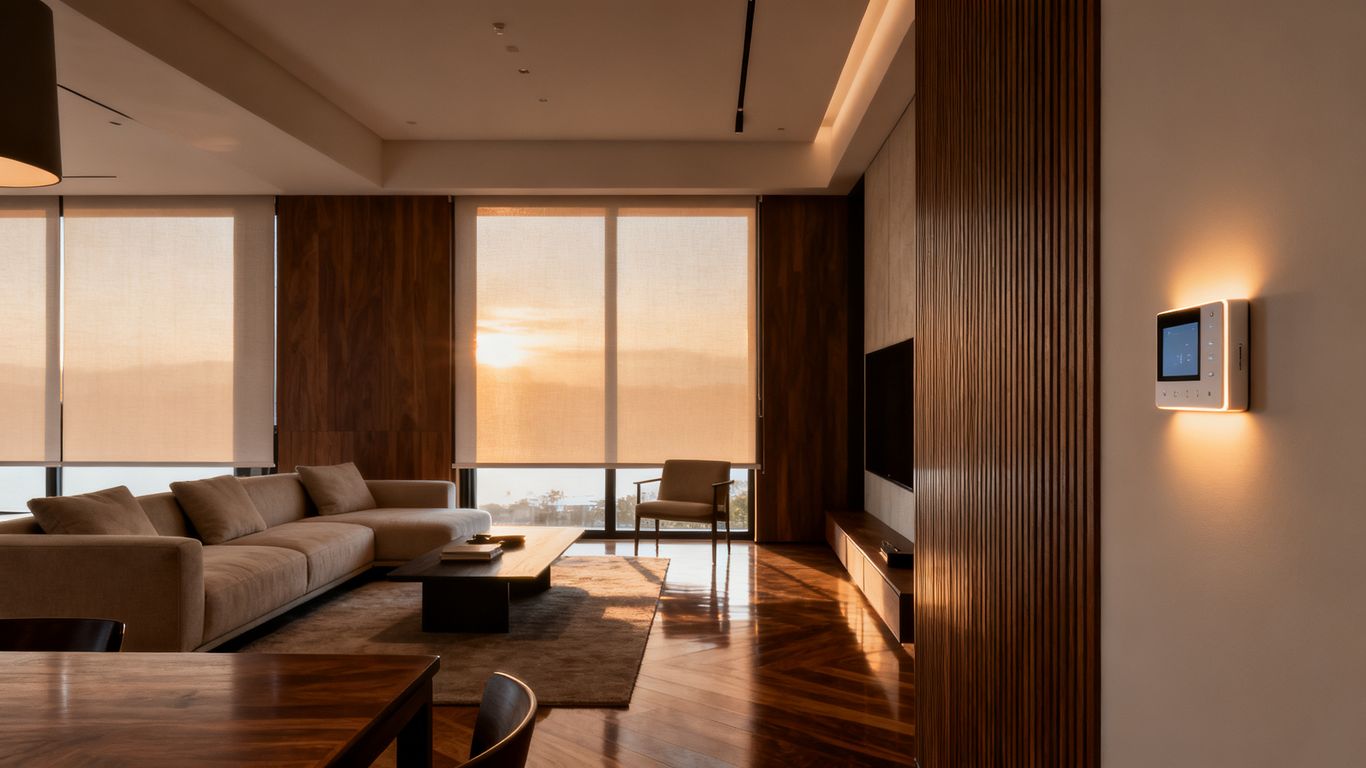
Compatibility belongs near the top of the page because it is a qualification question, not a footnote. Describe which control systems are supported, what may require an additional bridge or hub, and whether the desired commands work through the homeowner’s existing setup. Keep the wording tied to verified documentation rather than implying universal support.
For a product example, Pulse PRO is described as offering Matter compatibility, voice commands, remote access, and intelligent scheduling. That kind of specific capability is more useful in an ad or landing page than the broad phrase “works with every smart home.”
A comparison table can help readers understand what they need to confirm before contacting the business:
| Buyer question | Why it matters | What the page should clarify |
|---|---|---|
| Which ecosystem is already installed? | It affects control and setup | Supported systems and requirements |
| How will the shades receive power? | Power affects placement and maintenance | Battery, rechargeable, or wired options |
| Who handles installation? | Window size and access vary widely | Measurement, installation, and service scope |
| What routines are desired? | Not every control method supports every routine | Scheduling, voice, remote, or sensor use |
The table should lead to a practical next step, such as checking the homeowner’s current equipment during a consultation. It is not a substitute for site-specific advice, but it makes the first conversation more productive.
Show how shades work with lighting, HVAC, and security routines
Avoid presenting automation as a list of disconnected features. Instead, show a routine from beginning to end: shades adjust for morning light, rooms become more comfortable during the day, and privacy increases when evening arrives. The campaign does not need to promise that every device communicates directly with every other device; it needs to explain the intended household experience accurately.
Creative can use simple “when this happens, then that happens” scenarios. A homeowner may care more about reducing afternoon glare in a media room than about the technical label attached to the routine. Tie each example to a room, a trigger, and a visible result.
Clarify retrofit options, wiring, power, and installation requirements
Power is one of the fastest ways to distinguish a serious buyer from a casual click. Explain whether an existing home can be upgraded, what battery or rechargeable options involve, and when wiring or professional installation may be relevant. Prospects also need to know whether window access, shade size, trim, and the number of rooms affect the quote.
The Pulse PRO page describes battery-powered, rechargeable motors and says they do not require wired power or space for external battery packs. Use that wording only when the advertised product is the one being discussed. For other products, keep the copy general until the technical details are confirmed.
Use interoperability without overpromising a seamless setup
“Compatible” can mean several things: native control, integration through a hub, limited commands, or support for a particular voice platform. Define the relationship in everyday terms and include a short compatibility checklist. If the customer needs an installer or an additional component, saying so early may reduce low-quality leads while increasing confidence among qualified ones.
A useful page sets boundaries without making the system sound fragile. Invite prospects to share their current ecosystem, window count, and preferred controls so the business can confirm the right path before installation.
Build channel-specific campaigns for high-intent prospects
High-intent campaigns work best when each channel has a job. Search captures an expressed problem, Performance Max can use visual assets and conversion signals, Local Services Ads can qualify nearby service demand, and social platforms can create desire through room transformations. The account should not use one generic message everywhere. Intent deserves its own treatment from query to landing page to sales follow-up.
Capture solution-aware searches with Google Search Ads
Search campaigns should separate broad symptoms from specific solutions. Queries about glare, privacy, or hard-to-reach windows may need educational copy, while searches for motorized shades, smart shade compatibility, or professional installation can support a more direct offer. Build tightly themed ad groups and send each to a page that answers the same question the query raises.
Use negative keywords to filter out irrelevant research and low-value intent where appropriate. Ad copy should mention the service model—custom, measured, installed, or consultation-based—only when that is accurate. The goal is not maximum traffic; it is a useful first conversation.
Use Performance Max to showcase products and completed installations
Performance Max needs strong inputs, not just a daily budget. Supply clean product imagery, room photography, short videos, audience signals, and conversion actions that reflect qualified demand. Completed installations can help prospects understand finish quality and scale, provided the images show real work and the accompanying claims are supportable.
Do not judge the campaign solely by inexpensive leads. Review search categories, lead recordings, appointment rates, and downstream sales. If the campaign is optimizing toward weak form fills, better creative will not solve the measurement problem.
Qualify local demand through Local Services Ads
Local Services Ads are most useful when the business can respond quickly and serve the areas being targeted. The profile, service categories, photos, and review process should make the local offer clear. Shade buyers often want reassurance about measurement and installation, so the first response should answer those concerns rather than simply repeating the ad.
Monitor lead relevance by neighborhood, project size, and service type. If calls are consistently outside the business’s scope, tighten the profile and intake process before increasing spend.
Turn room transformations and automation demos into Meta and TikTok creative
Short-form video should show a problem, a movement, and a reason the movement matters. A darkened media room, a glare-free office, or a bedroom shifting into an evening privacy routine gives viewers a fast visual story. Keep the opening seconds understandable with sound off, and use close-ups that show both the shade and the room outcome.
Rotate hooks rather than producing dozens of nearly identical videos. Test room, problem, and lifestyle variations separately so performance data can reveal what actually earns qualified attention. Retarget engaged viewers with installation details and consultation messaging instead of showing the same inspiration clip forever.
Reach affluent design and technology audiences with paid social
Premium social campaigns need visual discipline and credible specificity. Pair fabric, trim, and room design with practical information about controls, power, and installation. Audience targeting can help find design-conscious or technology-interested prospects, but creative still has to qualify them; an attractive room alone does not establish project intent.
Use lead forms selectively. For higher-ticket work, a landing page may produce fewer but more informative conversions because it gives the prospect room to understand the process before sharing project details.
Speak the language of smart home enthusiasts in your creative
Smart home enthusiasts are comfortable with technical concepts, but they do not want a product manual in an advertisement. They want to see how a device behaves inside a routine and what happens when the setup is not perfectly simple. Strong creative translates specifications into scenes while leaving enough detail for an educated buyer to keep researching. This balance is central to credible motorized shade smart home integration marketing.
Replace generic “automated blinds” copy with scenario-based messaging
Generic labels describe a category but rarely create urgency. Build hooks around the moments that cause a homeowner to search: afternoon glare during video calls, windows that are difficult to reach, early morning light, or the desire for privacy without walking room to room. Each scenario can lead to a different page and a different qualification question.
The language should sound like a homeowner describing a problem, not like a catalog naming a mechanism. “Set the upstairs shades before the sun reaches the nursery” is more vivid than “advanced motorized window treatments.”
Demonstrate scenes, schedules, sensors, and voice commands
Demonstrations work when the viewer can follow the trigger and the response. Show the command, the shade movement, and the room-level result in one clean sequence. If sensors or schedules are part of the advertised setup, explain what initiates the change rather than implying that the shade makes independent decisions beyond its documented controls.
Voice and remote control can be useful examples, but they should be framed as control methods, not magic. Include a second shot of the finished room so the benefit is visible after the movement ends.
Use technical details without making the product feel complicated
Technical details reduce anxiety when they answer a likely objection. Mention compatibility, power, installation, and control requirements in short sections, then offer a consultation for the parts that depend on the home. Avoid stacking protocol names or abbreviations into the first frame of an ad.
A good rule is to lead with the homeowner’s desired outcome and place the specification immediately after it. That gives a technically minded visitor something concrete to verify without making a less technical buyer feel excluded.
Create video hooks around problems smart routines solve
The first frame should show the problem clearly. A hand struggling with a hard-to-reach window, a bright reflection across a laptop, or a bedroom washed in morning light can all work as visual openings. The next beat should demonstrate a relevant routine, followed by a simple explanation of how the homeowner can learn whether the setup fits.
Keep the promise narrow. One video about glare is easier to understand and measure than one video that claims to improve privacy, energy use, security, comfort, and every other possible outcome at once.
The same footage can be adapted for YouTube, Meta, and TikTok, but the edit should respect each platform’s pace and audience behavior. Use comments and engagement patterns as creative research, not as a replacement for lead-quality reporting.
Test premium design, security, and energy-efficiency angles
Testing should compare one meaningful idea at a time. Premium design may perform best with finished-room photography, while security or privacy may need a time-of-day scenario. Energy-efficiency messaging should remain careful and contextual unless the business has substantiated figures for the specific installation.
Build a testing matrix with different hooks, visuals, and calls to action, then hold the audience and landing page reasonably steady. That makes the result more useful than changing every campaign element simultaneously.
Create landing pages that convert educated, comparison-focused buyers
A smart home prospect often arrives with a list of questions already open in another tab. The landing page should help them compare control methods, installation paths, and use cases without forcing a call before they understand the basics. It should also make the professional service visible, because measurement and installation can be as important as the product itself. A page that answers practical questions earns better conversations.
Match each page to an ecosystem, product type, or use case
One page cannot speak equally well to a homeowner researching a single bedroom shade and a builder planning automation throughout a property. Create focused pages around the ecosystem or control method when search demand supports it, and around rooms or project types when the customer’s problem is more visual. Match the ad’s promise to the page’s first screen.
Use internal linking to help visitors move from inspiration to technical detail and then to consultation. This creates a natural path without making every page carry every possible keyword.
Make compatibility and installation details easy to scan
Readers should be able to find compatibility, power, installation, and control information without hunting through long paragraphs. Use short sections, descriptive labels, and plain qualification language. If a bridge, hub, wiring decision, or site visit may be required, say so before the form.
The page should also distinguish what is confirmed from what depends on the home. That distinction prevents overpromising and gives the sales team better context when the lead arrives.
Show real projects with room-specific outcomes
Project photography gives premium buyers a way to judge proportion, finish, and how the shades sit within a room. Caption images with the problem solved and the work completed, rather than relying on vague claims about transformation. A media room, nursery, office, and open living area each call for different visual proof.
Do not turn one customer’s result into a universal promise. Use real project context and invite the visitor to discuss how their windows, furnishings, and routines differ.
Set expectations for consultation, measurement, and installation
A consultation page should answer what happens after the form is submitted. Explain the likely sequence: an initial conversation, review of rooms and controls, measurement where appropriate, product selection, and installation planning. The exact process can vary, but silence creates uncertainty and attracts people who are not ready for the service model.
A short scheduling option can help ready prospects move forward. For visitors who need more education, keep a secondary path available through guides, project galleries, or a follow-up email.
Use qualification forms to capture project scope and budget
A form should collect information the team can actually use. Ask about the number of windows or rooms, the property type, desired controls, project timing, and whether the visitor has a budget range in mind. Keep the first step manageable; an exhausting form can reduce completion without improving qualification.
Explain why the questions are being asked and what the prospect receives next. You can also offer a direct consultation request for people who prefer to discuss scope before completing detailed fields.
Track the signals that show whether campaigns are working
Lead volume is only the beginning of the measurement model. Motorized shade projects may involve a call, a showroom visit, a measurement, product selection, and a later sale, so the reporting window must accommodate a longer decision process. Campaigns should be evaluated on the quality and progression of opportunities. This is where a paid media strategy becomes an operating system rather than a dashboard of surface metrics.
Define qualified leads beyond form submissions
A qualified lead has enough fit and intent to merit sales attention. That may mean a service-area match, an appropriate project type, a realistic timeline, and interest in professional measurement or installation. Define those criteria with the sales team before launching optimization changes.
Review recordings, notes, and disposition reasons regularly. If “qualified” means something different to marketing and sales, platform reporting will make the disagreement look like a performance problem.
Track calls, consultations, showroom visits, and booked measurements
Assign a value to each meaningful stage, even if the values are provisional at first. A booked measurement generally signals more progress than a brochure download, while a consultation may still need qualification. Track missed appointments and cancellations too, since they reveal friction that a lead count hides.
Use consistent source and campaign fields across forms, calls, and scheduling tools. The cleaner the handoff, the easier it becomes to compare channels fairly.
Import offline sales data into Google Ads and Meta
Offline conversion imports help ad platforms learn which leads became real opportunities or customers. The setup requires disciplined identifiers, timestamps, consent practices, and CRM status changes. Do not upload vague outcomes or duplicate events simply to make the account look active.
Start with a small, verified conversion path and reconcile it against the CRM. Once the data is trustworthy, campaigns can optimize toward outcomes that are closer to revenue than a basic form submission.
Compare lead quality by platform, audience, and automation need
A platform may produce fewer inquiries but a higher rate of booked measurements. Another may generate more calls that require extensive screening. Compare cost per qualified lead, appointment rate, close rate, project value, and time to sale rather than using cost per lead as the final score.
Break results down by the need expressed in the ad: retrofit, whole-home automation, privacy, design, or integration. These segments often behave differently even when they share the same channel.
Use CRM data to identify profitable smart home customer segments
CRM analysis can reveal which rooms, property types, control preferences, and project sizes lead to profitable work. Feed those insights back into landing page content, creative, and audience exclusions. The objective is not to build a complicated model before the basics work; it is to make each reporting cycle more useful than the last.
Keep sales notes structured enough to analyze, but do not force the team to document fields nobody uses. A small set of reliable fields beats a large form full of guesses.
Turn SEO and follow-up into a long-term demand engine
Paid campaigns capture active demand, but many homeowners need time to understand compatibility, power, style, and installation. SEO can answer those questions before the visitor is ready to call, while follow-up keeps the business present during the comparison period. Together, they lower the pressure on every individual click. The goal is a connected demand engine that supports both immediate and future opportunities.
Build content around motorized shade compatibility and integration questions
Start with the questions salespeople hear repeatedly. Can existing windows be upgraded? What controls are available? How do schedules work? What information is needed for a quote? These topics attract readers with a real project problem and give the business a chance to explain its service approach.
Use the site’s product and service pages as destinations, not just as keyword containers. A compatibility article should guide a reader toward the relevant consultation or project page once the basic question has been answered.
Create comparison pages for ecosystems, controls, and power options
Comparison content is valuable when it defines the criteria instead of declaring one universal winner. Discuss control experience, installation requirements, power, room coverage, and the role of professional support. The Pulse PRO page, for example, documents Matter compatibility and rechargeable, battery-powered motors; those details can inform a comparison without being generalized to every shade product.
Keep comparison pages current and make the limits clear. Readers will trust a page more when it identifies what still needs to be confirmed for their home.
Use installation guides to capture homeowners earlier in the decision process
Installation guides can reach prospects before they have chosen a product or installer. Cover measurement, window access, power planning, trim, room-by-room considerations, and what a professional visit involves. A helpful guide reduces uncertainty while showing why an accurate site assessment matters.
The guide should end with a practical next step rather than a hard sell. Invite readers to share photos, window count, or project timing so the business can give more relevant advice.
Retarget visitors based on the rooms and features they viewed
Retargeting works better when it reflects the visitor’s behavior. Someone who viewed bedroom examples should not necessarily receive an ad about a large living room installation, and a visitor who read about power should see an answer to that concern rather than another generic product image.
Use sensible frequency limits and exclusions for converted leads. Retargeting should be a reminder and a service, not a persistent interruption.
Nurture unready prospects with project education and design inspiration
Not every interested visitor is ready to book. A short email sequence can explain the consultation process, share room-specific inspiration, answer compatibility questions, and remind the prospect what information will make a quote more useful. Keep the cadence respectful and give recipients a clear way to request help or stop receiving messages.
Measure nurture by return visits, replies, booked consultations, and eventual revenue. The best follow-up content feels like assistance during a considered purchase, not a string of increasingly urgent promotions.
Book Better Shade Consultations
Make the next step easy for homeowners who want professional guidance. Offer a clear way to schedule a conversation about rooms, controls, installation, and project scope, then use the information gathered to prepare a more relevant consultation.
Conclusion
Marketing motorized shades to smart home enthusiasts works when the campaign respects how they buy: they investigate systems, compare details, picture routines, and look for confidence that installation will be handled well. Connect each message to a real household problem, send each audience to a focused page, and measure progress through qualified opportunities rather than clicks alone.
Frequently Asked Questions
What makes smart home enthusiasts different from ordinary shade buyers?
They are more likely to ask about compatibility, routines, control methods, power, and how the shades fit with devices already installed in the home. They often need both an appealing use case and enough technical detail to verify the purchase.
Which benefits should motorized shade campaigns emphasize?
The strongest benefits depend on the audience and room. Privacy, glare control, comfort, accessibility, design, and scheduled operation can all be relevant, but each should be tied to a specific household scenario rather than presented as an undifferentiated list.
Should campaigns target broad or highly specific keywords?
Use both, but separate them by intent. Broad problem-based searches can support education and discovery, while specific searches about motorized shades, compatibility, or installation usually deserve more direct copy and a focused landing page.
What information should a landing page include about compatibility?
Explain supported control systems, possible hubs or bridges, power choices, installation requirements, and which details depend on the home. Readers should be able to identify what they know and what they need to confirm during a consultation.
How can a business qualify shade leads?
Ask about rooms or windows, project timing, desired controls, property type, service area, and budget range when appropriate. Keep the form understandable and explain why the information helps the business recommend a suitable path.
Which campaign metrics matter most?
Track qualified leads, calls, consultations, booked measurements, showroom visits, opportunities, sales, close rate, and project value. Cost per lead is useful for diagnosis, but it should not be the final measure of campaign quality.
How long should follow-up continue for an unready prospect?
Follow up long enough to answer the questions that delay the decision, while keeping the cadence respectful. Educational emails, installation guidance, comparison content, and design inspiration are usually more useful than repeated requests to book immediately.