Key Takeaways
Plumbing attribution gets clearer when every meaningful customer milestone is tracked, not just the first click or the last call.
- Separate awareness, inquiry, booked work, and completed revenue.
- Connect online campaigns with calls, CRM records, and offline sources.
- Judge channels by qualified jobs and profit, not lead volume alone.
- Use different attribution assumptions for emergencies and planned projects.
- Treat incomplete data as a decision aid, not perfect evidence.
Why plumbing leads are harder to attribute than they look
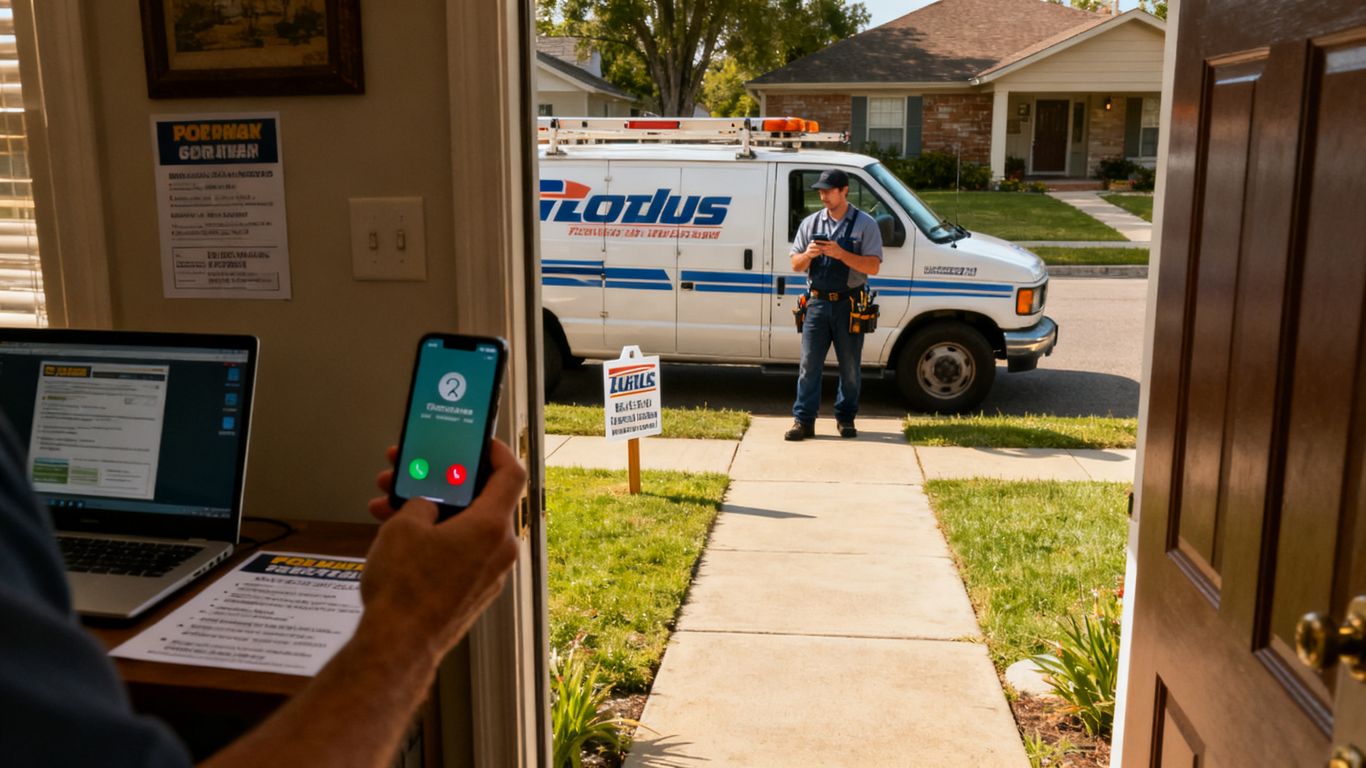
A homeowner may see a truck, hear a neighbor’s recommendation, search a company name, and then call from a paid result. The reporting system may credit only the final interaction. That makes plumber multi-channel attribution less about finding one “correct” answer and more about building a reasonable account of influence across the journey.
The gap between first touch, last touch, and the call that closes
First-touch reporting answers where demand may have started. Last-touch reporting answers what interaction immediately preceded the inquiry. Neither necessarily explains why the customer trusted one plumber, called at that moment, or ultimately approved the work.
A practical report keeps those questions separate. Record the first known source, the most recent source, the call or form that created the opportunity, and the job outcome. Revenue belongs near the decision, but it should not erase the earlier interactions that created demand.
How urgent jobs create short and unpredictable customer journeys
A burst pipe can compress the journey into two minutes: a search, a click, and a phone call. A water-heater replacement may involve several searches, reviews, estimates, and conversations over weeks. Treating both inquiries as the same conversion makes campaign performance look tidier than the buying process really is.
For emergency work, measure speed to answer, qualified-call rate, dispatch opportunity, and completed job. For planned work, preserve more touchpoints and allow time for estimates, follow-up, financing questions, and scheduling decisions.
Why branded searches often hide earlier marketing influence
A branded search frequently looks like a strong final touch, but the name may have been learned from a yard sign, a vehicle, an earlier nonbranded search, or a recommendation. Brand campaigns still matter because they help a ready customer find the right phone number and landing page. They simply should not receive automatic credit for creating all of the demand.
Separate branded and nonbranded queries, then compare the paths that lead into branded searches. This gives owners a better view of whether awareness activity is feeding high-intent demand or merely taking credit for it.
Where yard signs, trucks, referrals, and repeat customers fit into the journey
Offline sources are often undercounted because they do not create a browser session. A customer can see a truck in the morning, ask a neighbor for the company name at lunch, and search it that evening. The CRM needs a source field that can capture those answers directly instead of forcing every lead into “organic” or “direct.”
Ask callers how they heard about the company, but keep the question natural and short. A referral, repeat customer, neighbor recommendation, or vehicle impression can coexist with a later paid click; source capture should not make the record choose an obviously false single story.
Map the plumbing customer journey across every channel
The first useful map is not a media plan. It is a sequence of customer decisions, from noticing a problem to requesting help and deciding whether the job is worth accepting. Include paid, owned, earned, and offline touchpoints, then mark where each one can be observed reliably.
A channel map also prevents a common reporting error: treating every phone call as a completed lead. Calls, forms, booked estimates, dispatched jobs, and paid invoices are different milestones and need different values.
Google Search, Local Services Ads, and Performance Max touchpoints
Google Search can capture a stated need, while Local Services Ads can put a provider in front of a nearby homeowner seeking a service. Performance Max may appear across several Google surfaces, so its contribution should be assessed alongside actual calls, qualified inquiries, and job outcomes rather than impressions alone.
At the mapping stage, record campaign, query or service category where available, landing page, device, location, and call outcome. The purpose is not to force every touchpoint into a perfect path; it is to show which interactions can be connected to business results.
Meta, TikTok, and Spotify exposure before a homeowner searches
Meta Ads, TikTok Ads, and Spotify Ads may reach people before they have an urgent search in mind. A homeowner might notice a seasonal maintenance message, remember the company later, and then use a search engine or direct navigation. That later action can conceal the earlier exposure.
Use campaign-level naming, geographic consistency, audience notes, and lift-oriented comparisons where practical. Do not assume that a later branded search proves a particular exposure caused the call; treat it as supporting evidence alongside changes in branded demand and qualified job volume.
Organic search, Google Business Profile, and direct website visits
Organic search, a Google Business Profile interaction, and a direct visit often sit close to the conversion while still reflecting earlier work. A customer may find a service page through search, open the profile for hours and reviews, and call from a tracked number. Direct traffic may also include people who already know the company.
Keep these sources distinct in analytics and CRM exports. If they are merged too early, the company loses useful context about discovery, validation, and return visits.
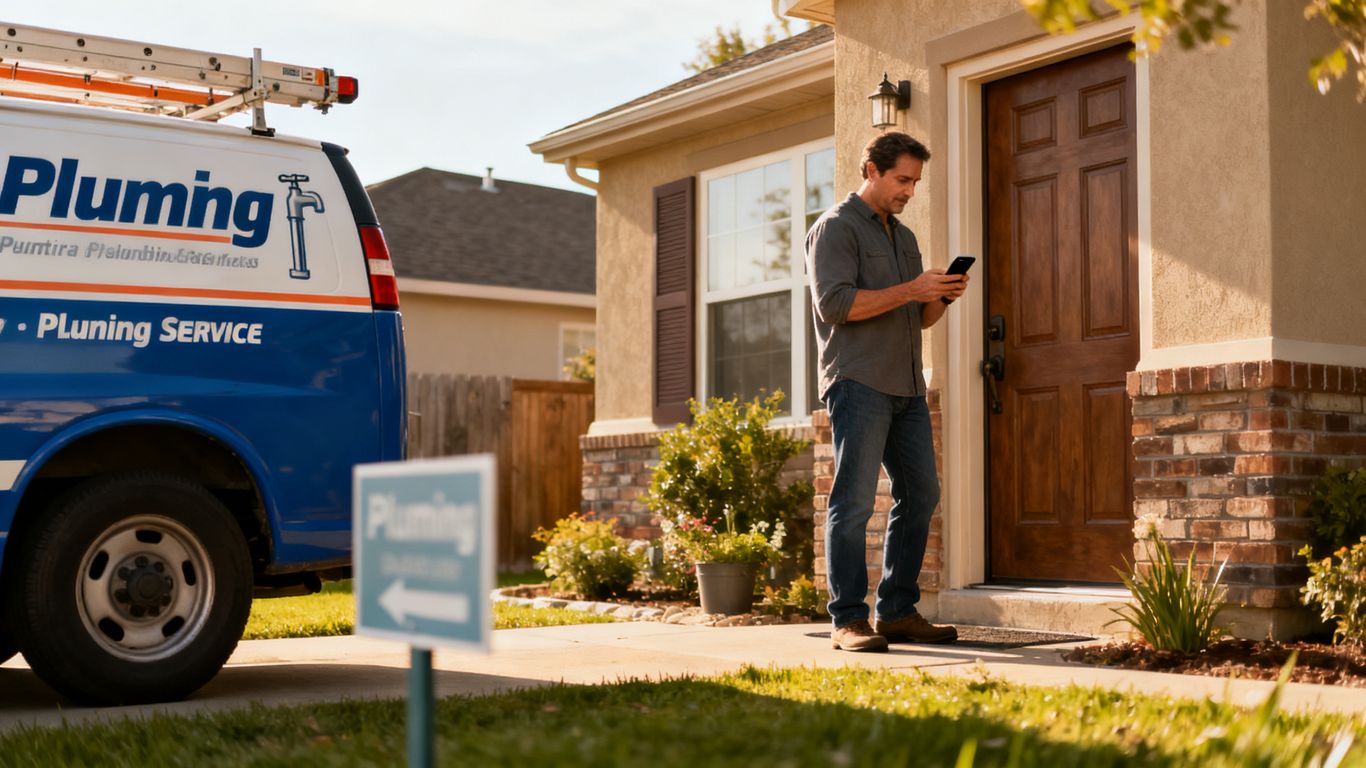
Offline influences such as yard signs, trucks, mailers, and referrals
Offline marketing deserves a defined method rather than a vague adjustment at the end of the month. Give each placement or campaign a source label, ask every new lead a source question, and compare timing against geographic distribution. The resulting data will be incomplete, but it will be more useful than ignoring the channel.
A simple source taxonomy can include yard sign, vehicle, mailer, referral, repeat customer, neighbor, and unknown. Keep “unknown” available; pressuring staff or callers into a guess creates false precision.
Phone calls, form fills, booked estimates, and completed jobs as separate milestones
A form fill is an inquiry, not a job. A phone call may be a wrong number, a price shopper, or a valuable emergency opportunity. Your journey map should preserve each stage so marketing reports can distinguish activity from commercial value.
A useful operating definition is: lead created, lead qualified, estimate booked, job won, invoice collected. Once those stages are visible, channel comparisons become more grounded and sales follow-up becomes part of attribution rather than a separate mystery.
Build the tracking foundation for plumber multi-channel attribution
Attribution cannot repair missing identifiers. Before comparing campaigns, make sure forms, calls, scheduling tools, ad platforms, and the CRM use compatible source fields and preserve timestamps. A small, consistent tracking system usually beats a complex setup that technicians and office staff rarely maintain.
Start with the fields the business will actually use in weekly decisions. Then document ownership: who labels a lead, who marks it qualified, who enters revenue, and who checks duplicates.
Use consistent UTM parameters across paid and owned campaigns
Use a stable convention for source, medium, campaign, content, and landing page. Keep capitalization consistent and avoid changing campaign names halfway through a promotion. The goal is to make exports readable months later, when someone is comparing a seasonal campaign with its actual booked work.
Do not use UTMs as a substitute for platform data. Store them with the lead record while also preserving click identifiers and the original landing page when available.
Connect call tracking numbers to campaigns, landing pages, and locations
Call tracking should distinguish dynamic website numbers, ad numbers, location-specific numbers, and offline numbers. Each call record should retain the source context, landing page or placement when available, caller number, time, duration, and disposition.
The office team also needs a short call outcome list. “Qualified,” “wrong number,” “existing customer,” “booked,” and “not serviceable” are more actionable than a single connected-call count.
Preserve the original source through forms, chats, and scheduling tools
A customer may begin with a paid click and book through a separate scheduling page. Hidden fields, first-party cookies where appropriate, and server-side or platform-supported integrations can help carry source information forward. Test the path as a homeowner would, including mobile devices and abandoned forms.
Preserve both original source and latest source. The first explains discovery; the latest can explain conversion timing. Losing either one makes later attribution debates depend on memory.
Import qualified calls and booked jobs into Google Ads
Google Ads reporting becomes more useful when the account receives conversion signals tied to meaningful outcomes, such as qualified calls or booked jobs, rather than every connected call. The business must define those outcomes consistently before importing them.
Use a reasonable delay for offline updates and check that duplicate conversions are not being sent from both the call platform and CRM. A conversion action should reflect a business event the team can identify and defend.
Match CRM records to marketing touchpoints without creating duplicate leads
Matching requires practical keys: phone number, email, appointment ID, timestamp, and location. Normalize phone formats, preserve a lead ID, and decide whether a repeat call updates an existing opportunity or creates a new service request.
Review edge cases monthly. One household can have several jobs, and one customer can call from different numbers; deduplication should remove reporting noise without hiding legitimate revenue.
Measure how Google Ads and Local Services Ads contribute to calls
Calls are often the central conversion for plumbing companies, but call volume alone can reward poor answering practices, repeat callers, or low-intent inquiries. A stronger report connects the source of the call with qualification, booking, revenue, and service type.
Use platform reports for delivery context and CRM records for business outcomes. When the two disagree, investigate the handoff before changing budgets.
Separate branded and nonbranded searches in attribution reports
Brand and nonbrand searches answer different questions. Branded terms often capture existing awareness and navigational intent; nonbranded terms may reveal active demand that the company still needs to earn. Report them separately by service, location, device, and outcome.
Also look at the sequence. A nonbranded search followed later by a branded call is not necessarily two unrelated leads. It may be one customer moving from discovery to confidence.
Compare Google Search, Performance Max, and LSAs by lead quality
Compare these sources using the same downstream definitions. A source with fewer inquiries can be more valuable if its calls are serviceable, booked, and profitable. Keep emergency calls separate from replacement work because their close rates and economics can differ sharply.
Avoid comparing platform-reported conversions as though each platform owns an exclusive customer. Use CRM deduplication and a shared reporting window before drawing conclusions.
Track calls from ads, call assets, location assets, and landing pages
A call may begin from an ad interaction, a call asset, a location asset, or a website landing page. Tag each path where possible and verify that forwarding numbers, landing-page numbers, and profile numbers are not being counted twice.
Review recordings or dispositions according to privacy policy and local requirements. The useful question is whether the call created a viable opportunity, not merely whether a phone rang.
Account for missed calls, repeat callers, and calls outside business hours
A missed call is a marketing signal and a revenue risk. Report missed calls by source and time, then compare callbacks, booked appointments, and lost opportunities. Repeat callers should be joined to the existing customer or opportunity when appropriate.
A weekly operational review should include:
- Answer rate by hour and source.
- Callback speed for missed calls.
- Qualified-call rate by campaign.
- Repeat-call and existing-customer share.
These measures connect media performance with front-office execution. A campaign can look weak simply because its calls arrive when nobody answers.
Evaluate emergency plumbing leads differently from replacement and remodel inquiries
Emergency leads are usually judged by speed, service area, availability, and dispatch outcome. Replacement and remodel inquiries may require an estimate, site visit, financing discussion, and several follow-ups. One universal lead value will distort at least one of those categories.
Create separate conversion actions or CRM stages where volume supports it. If volume is limited, use a shared framework with service-type fields and analyze the segments monthly.
Account for offline marketing and assisted conversions
Offline attribution will never be as granular as a tagged click, but it can still be managed. The key is to record what the customer says, where the company appeared, and what it cost to maintain the channel. This turns “the sign probably helped” into a testable working assumption.
Offline sources are also useful as assists. A truck may not produce a directly reported call, yet it can improve recognition when a homeowner later sees a search ad or profile.
Create a trackable system for yard signs and vehicle graphics
Assign sign placements and vehicle campaigns simple source codes in the CRM. Ask new callers and form submitters whether they saw a truck, sign, mailer, or other offline message. For larger territories, compare areas with and without a recent placement while controlling for seasonality as much as possible.
Keep the process easy for staff. A dropdown and one optional note field will usually produce more usable data than a long questionnaire.
Use unique phone numbers, QR codes, and vanity URLs without hurting trust
Unique numbers can help isolate a campaign, while QR codes and memorable URLs offer another path into a landing page. Use them selectively; too many numbers can confuse customers, weaken consistency, or make a company look less established.
The tracking device should support trust, not compete with it. Keep the company name, service promise, and contact experience consistent across the sign, truck, page, and phone call.
Record referral, repeat-customer, and neighbor-generated leads in the CRM
Referral and repeat sources should be first-class CRM values, not comments buried in a call note. Capture who referred the customer when the information is volunteered, and distinguish a true repeat service request from a new household reached through a recommendation.
That distinction helps owners understand retention and word of mouth without assigning every returning customer to the last ad they happened to see.
Estimate exposure from untrackable channels without overstating performance
For channels that cannot be directly measured, use ranges and comparisons rather than invented conversion counts. Compare geographic timing, branded search movement, direct traffic, self-reported sources, and lead volume before and after a placement.
State the uncertainty plainly. An estimate can guide a test budget, but it should not be presented as observed revenue.
Compare offline cost per qualified lead with paid media benchmarks
Calculate placement cost, production cost, maintenance, qualified inquiries, booked work, and revenue where available. For paid media, use the same definitions and include management or creative costs when comparing total investment.
Offline channels may have slower payback and broader exposure. The comparison is still useful if the time window, qualification rules, and cost categories are consistent.
Choose an attribution model that matches how a plumbing company sells
No model can observe every conversation, impression, recommendation, or privacy-limited interaction. The right model is the one that supports a decision without pretending to know more than the data allows. Many plumbing companies should keep more than one view available.
Use a simple model for operating meetings and a richer diagnostic view for monthly analysis. Change the model only when the business question changes, not because one channel looks better under a new formula.
When first-touch attribution is useful for measuring demand generation
First touch is helpful when the question is which channels introduce the company to new prospects. It can support awareness planning, content decisions, and geographic expansion. It is less useful for deciding which campaign should receive the next dollar when several later interactions matter.
Keep first touch tied to a defined observation window. Otherwise an old, weakly recorded source can receive credit indefinitely.
What last-touch reporting gets right and where it misleads
Last touch is clear and operational. It can show what brought a ready customer to the phone or form, which helps with landing-page and conversion-path decisions. But it often overcredits branded searches, direct visits, and retargeting-like final interactions.
Treat it as a conversion-path report, not a complete account of demand creation. Pair it with first touch, assisted interactions, and booked-job outcomes.
How position-based and data-driven models distribute credit
Position-based models assign more credit to selected points, often the first and last interactions, while sharing the remainder across the middle. They are understandable but depend on the chosen weights. Data-driven models use observed paths and conversion patterns, though they need enough clean data to be credible.
For small service areas or low conversion volume, a transparent rule may be more dependable than a complex model. Explain the assumptions beside every report.
Use qualified calls, booked jobs, revenue, and profit as primary conversion values
The business outcome should become more specific as the customer moves through the funnel. A qualified call can receive an estimated value, a booked job a stronger value, and collected revenue the clearest financial value. Profit is even more useful when labor, materials, dispatch costs, and discounts vary materially.
Avoid assigning the same value to every lead. Instead, use historical close rates and average economics by service category, then revisit those estimates as the CRM improves.
Apply different models to emergency service, maintenance, and high-ticket projects
Emergency service often rewards last-touch and operational measures because speed determines whether the opportunity survives. Maintenance can benefit from retention and repeat-customer analysis. High-ticket projects need longer paths, estimate stages, and revenue or margin tracking.
A single dashboard can still serve the owner if it labels these segments clearly. The model should follow the sales process rather than forcing every job into identical attribution rules.
Turn attribution data into better budget and campaign decisions
Attribution matters only when it changes a decision: budget allocation, call coverage, landing-page design, follow-up, or service mix. Start with a consistent report, look for patterns over a suitable period, and make one or two controlled changes at a time.
The goal is not to reward the channel with the prettiest dashboard. It is to fund reliable access to profitable work while protecting technician capacity and customer experience.
Identify channels that generate calls versus channels that generate profitable jobs
Build separate views for inquiries, qualified calls, booked jobs, completed revenue, and estimated profit. A channel can be excellent at creating calls but weak at serviceability or close rate. Another can create fewer opportunities that are far more valuable.
Use call dispositions and CRM stages to explain the gap. The difference is often caused by geography, service type, response time, or sales handling rather than media alone.
Shift budget using revenue, close rate, and technician capacity
Budget decisions should account for available crews and scheduling constraints. If the business is full for emergency work but has room for replacement projects, the right campaign mix may change even when cost per lead has not.
Review marginal performance, not only blended averages. A channel that works at one spend level may produce weaker opportunities when expanded beyond the areas or services it can support.
Test landing pages, call handling, and follow-up alongside ad campaigns
Campaign changes are only one source of performance movement. Test the service page, form length, trust elements, phone greeting, missed-call callback process, estimate follow-up, and scheduling availability. Otherwise a media team may keep changing bids to compensate for a broken handoff.
A useful experiment has one primary outcome and a defined window. For example, compare qualified-call rate after improving the landing page while holding targeting and budget as steady as practical. Schedule a strategy call when the tracking system needs an outside review before the next test.
Build a weekly dashboard for owners and a deeper monthly performance review
The weekly dashboard should be short enough to use: spend, calls, answer rate, qualified calls, booked jobs, revenue, capacity, and major tracking issues. The monthly review can examine search terms, channel paths, service categories, geographic pockets, offline responses, and changes in close rate.
Keep definitions and date ranges visible. A report that changes its conversion rules each month makes trends impossible to trust.
Recognize attribution limits caused by privacy changes, offline gaps, and small sample sizes
Some interactions will be missing, modeled, delayed, or merged. Offline referrals may be forgotten, browsers may limit identifiers, and a small service area may not generate enough conversions for a sophisticated model. These are measurement limits, not reasons to abandon disciplined reporting.
Use directional evidence, longer windows, and conservative decisions. When the data cannot distinguish two channels confidently, preserve the uncertainty and run a test rather than inventing a precise winner.
Book Better Plumbing Appointments
A clear attribution system works best when interested homeowners can move quickly from intent to a scheduled conversation. Make scheduling easy for the team and the customer, then use the resulting appointment data to strengthen the connection between marketing and revenue.
Conclusion
The Google ad and the yard sign do not have to fight for one winner-takes-all credit. By mapping the journey, preserving sources, separating milestones, and judging channels by qualified work and profit, a plumbing company can make better budget decisions even when the data remains imperfect.
Frequently Asked Questions
What is plumber multi-channel attribution?
It is the process of connecting a plumbing customer’s interactions across paid media, search, website visits, calls, referrals, offline marketing, and CRM outcomes so the business can assess how different channels contribute to work.
Why is the last click not enough for plumbing attribution?
The last click may capture the final search or call while missing earlier exposure from a sign, referral, nonbranded search, or social campaign. It is useful for conversion-path analysis but incomplete as a measure of total influence.
Should emergency calls and replacement leads use the same model?
Usually not. Emergency work tends to have a compressed journey and depends heavily on response speed, while replacement and remodel work may involve estimates, follow-up, and longer consideration.
How can a plumbing company track yard signs?
Use source questions in the CRM, placement codes, selective unique numbers, QR codes, or memorable landing-page addresses. Compare the results with geographic timing and cost, while keeping estimates clearly labeled as estimates.
What conversion should a plumbing company optimize for?
Use the deepest reliable milestone available, such as a qualified call, booked estimate, completed job, collected revenue, or profit. The best choice depends on data volume and how consistently the team records outcomes.
How often should attribution reports be reviewed?
Review core operational measures weekly and conduct a deeper analysis monthly. Longer windows are often necessary for high-ticket work or small service areas where conversion volume is limited.
Can attribution ever be completely accurate?
No. Privacy restrictions, offline influence, repeat interactions, missing CRM fields, and shared devices create gaps. A consistent, transparent system can still provide strong directional evidence for better decisions.