Key Takeaways
A fence project can make nearby homeowners curious, but neighborhood referrals take time and are never automatic. A trustworthy profile, useful posts, focused promotion, and careful tracking give that interest a better chance to become a real inquiry.
- Treat a completed fence as a conversation starter, not a promise of more work.
- Make it easy for neighbors to understand your service area and specialties.
- Ask customers for honest recommendations and permission before sharing project details.
- Share practical, locally relevant posts alongside occasional promotional messages.
- Track leads through booked estimates and closed jobs to judge profitability.
Why fence projects can spread through a neighborhood
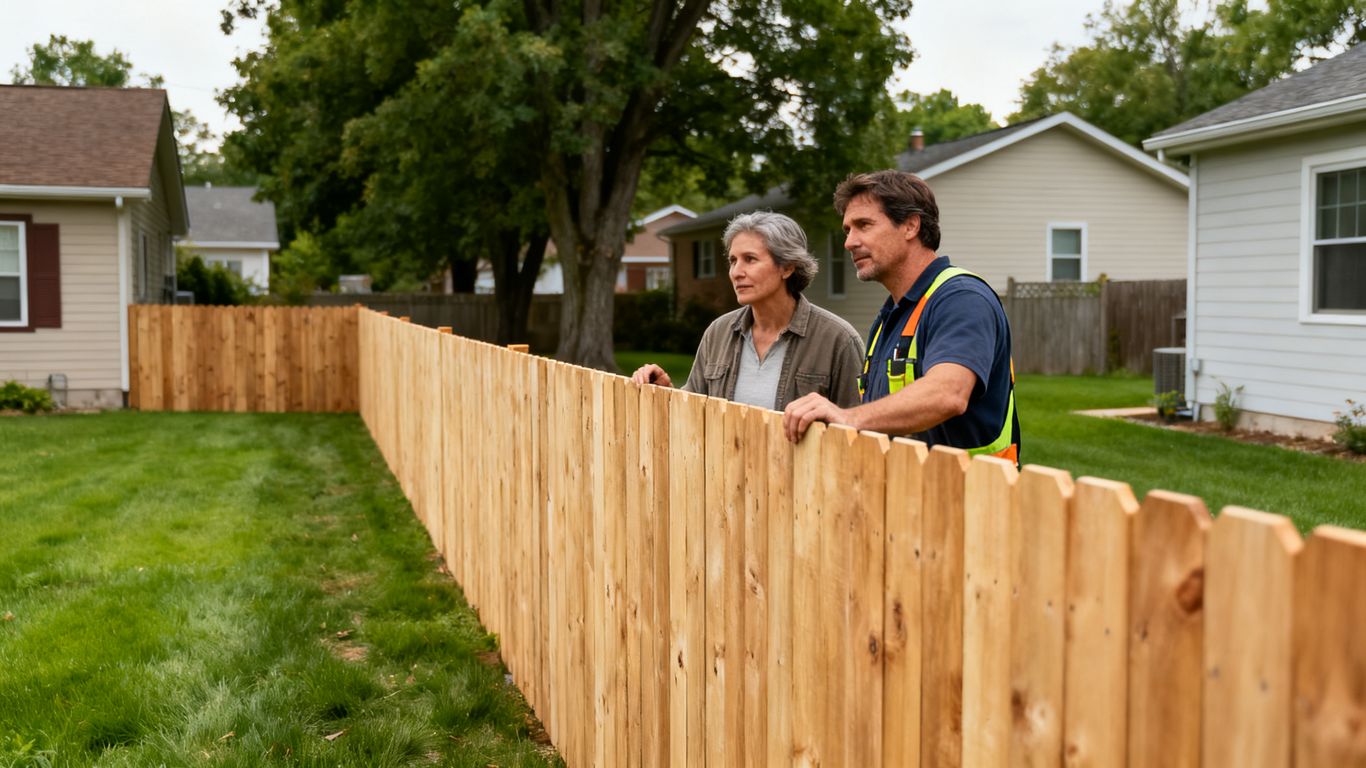
Fence work happens in public view, and a finished project can prompt a neighbor to picture a similar improvement at home. That visibility gives fence companies a natural opening for local word of mouth. It does not mean every installation will generate inquiries, though. The useful goal is to make it easy for interested neighbors to learn who did the work and what options might suit them.
A finished fence is visible proof of quality and style
A fence is part of the everyday view from nearby homes, sidewalks, and yards. People can see how its lines meet the property, whether the style fits the house, and how the finished space feels. That kind of visual proof often answers an early question better than a list of claims: can this company build something that looks right here?
When you share a project, include enough context for the result to be understood. A close-up of a gate or material can help, but a wider view shows how the fence relates to the yard and home. Keep the description specific about the work without suggesting that one customer's result is typical for every property.
Nearby homeowners often share similar property needs
Homes on the same block may have similar lot shapes, privacy concerns, pets, or exposure to weather. A project nearby can therefore make a fence feel relevant to another homeowner, even when the properties are not identical. The strongest conversations start with listening: what does this neighbor need, and what constraints does their yard have?
A local post or conversation can help surface those needs, but avoid assuming that every nearby homeowner wants the same material or layout. Invite questions and explain that estimates depend on the property and scope. That keeps the exchange useful instead of turning a neighbor's project into a blanket pitch.
One installation can prompt questions about cost, timing, and materials
People who notice a new fence tend to ask practical questions before they ask for a quote. They may wonder how long the work took, what material was used, or whether the project involved replacing an old fence or starting from scratch. A simple way to prepare is to connect common questions with the kind of information you can share responsibly.
| Neighbor question | Helpful response | Detail to confirm first |
|---|---|---|
| What material is this? | Name the material and describe its care needs. | Confirm the exact product used. |
| How long did the project take? | Give context about the job's scope. | Avoid implying every job follows the same schedule. |
| What might a similar fence cost? | Explain the factors that affect an estimate. | Request property details before quoting. |
| Can you work on my lot? | Ask about layout, access, and goals. | Check the site before promising a solution. |
Use the table as a prompt for a helpful conversation, not as a fixed script. Clear expectations build confidence because they show that pricing and timing depend on real project details. If a neighbor's needs differ from the visible example, say so and guide them toward a more appropriate assessment.
Treat the “five more follow” effect as an opportunity, not a guarantee
The idea that one neighbor gets a fence and five more follow is a memorable way to describe local visibility, not a forecast. A good-looking installation may catch attention, but awareness alone does not create a qualified lead. Homeowners still have to be ready to act, trust the contractor, and find a fit between the project and their budget.
Plan around the possibility of interest without building your monthly numbers on it. Keep a record of which inquiries mention a nearby job, then compare that activity with other lead sources over time. That gives you a grounded view of whether neighborhood visibility is helping, rather than turning a catchy phrase into a business assumption.
Set up your Nextdoor presence to earn local trust
A neighborhood presence works best when a homeowner can quickly understand who you serve and what kinds of fence work you take on. Make the basics easy to find before worrying about posting frequently. Use real project imagery and accurate descriptions, and keep your information aligned wherever potential customers look. A complete profile is a foundation for trust, not a substitute for good work or follow-up.

Complete your business profile with service areas and contact details
A neighbor who is ready to ask a question should not have to hunt for a way to reach you. Review the business information displayed on your profile and make sure it reflects the areas you actually serve, along with current contact details. If you travel only within a defined radius or have particular scheduling limits, clarity helps avoid inquiries that are a poor fit.
A short review routine can keep the profile useful as the business changes. Check the key details whenever your service coverage, phone number, or website changes, and make sure any description matches what your crew can deliver.
- State the neighborhoods or towns you genuinely serve.
- Confirm that the phone number and website are current.
- Describe the types of projects you accept in plain language.
- Remove outdated details that could confuse a prospective customer.
After checking these basics, read the profile as if you were a homeowner seeing the company for the first time. It should answer the first round of questions without making a visitor piece together information from several places.
Choose project photos that show the fence in its neighborhood context
Photos work harder when they show more than a material sample. A wide, clear image can show the fence in relation to the yard, home, and neighboring property, while a closer image can make a gate or finish easier to inspect. Use images from completed work that you have permission to share, and choose examples that resemble the projects you want to book.
A handful of relevant images is usually more useful than a large gallery with no context. Briefly explain the project type or challenge, and avoid sharing details that identify a customer or their home unless they have agreed. The aim is to help neighbors picture the work, not to expose someone's private space.
Explain your specialties, from repairs to full replacements
Homeowners may be looking for a small repair, a new gate, or a full replacement. If your business handles a range of work, describe those services plainly rather than relying on broad claims like “we do it all.” Specific language helps the right prospects recognize a fit and gives others a reason to ask before assuming.
Think through how a homeowner might describe the problem, then use familiar words in your profile. If you do not take on a type of project, it is better to say so or clarify the limitation than to leave the impression that every request is covered.
Keep your profile consistent with your website and other listings
Inconsistent business names, service descriptions, or contact details can create doubt. A neighbor may move between a profile, website, and other listings before reaching out, so check that the core facts agree. Consistency does not require identical wording everywhere; it means the same business details and service boundaries are clear across each destination.
Your website can provide more room for project photos, service explanations, and a quote request path. Make sure a visitor who arrives there after seeing a neighborhood post can still recognize the company and find a relevant next step without starting over.
Turn completed jobs into neighborhood conversations
A completed project can lead to a recommendation when the homeowner is pleased and has an easy, honest way to share that experience. Ask at an appropriate moment, respect the customer's privacy, and let their own words carry the story. The point is not to manufacture praise; it is to make it simple for a satisfied customer to tell a neighbor what happened.
Ask happy customers for an honest recommendation after the work is done
Wait until the job is complete and the customer has had a chance to see the finished work. A brief, low-pressure request for an honest recommendation feels more natural than a repeated demand during installation. Make clear that the customer can share their experience in their own words, including what went well and what mattered to them.
A recommendation is most persuasive when it reflects the customer's real priorities. One homeowner may value privacy, another a careful repair, and someone else the way a gate fits the yard. Let those differences remain visible rather than asking every customer to repeat the same talking points.
Request permission before sharing project photos or customer details
A finished fence may be visible from the street, but that does not automatically make every project photo or customer detail appropriate to publish. Ask before posting images, naming a neighborhood, or describing a customer's situation. Give the homeowner a clear idea of what you plan to share and where it may appear.
If permission is limited, respect that limit. You can often describe the type of work in general terms without naming a customer or showing identifying features. Treating privacy carefully protects the relationship and signals to future clients that their property will be handled with consideration.
Give customers a simple way to mention the neighborhood and project type
A neighbor's recommendation can be more useful when it gives a little context, such as the area and whether the job involved a repair or replacement. You can suggest those details as optional prompts, not as required language. The customer's own account should remain the center of the recommendation.
When homeowners do share context, it can help another prospect recognize a similar need. Keep the request brief and practical: what work was done, what they appreciated, and whether they are comfortable identifying the general area. Never pressure someone to reveal more than they want to.
Avoid scripted reviews or incentives that can undermine trust
A polished testimonial can sound less believable if every customer uses the same phrases. Avoid writing a recommendation for someone to copy, and do not condition a reward on a positive review. Honest feedback has more value than wording that looks uniform but gives readers little reason to trust it.
If you invite feedback, keep the request neutral and allow customers to choose whether and how to respond. A straightforward process protects the credibility of the conversation and makes room for genuine experiences, including details that may not match your preferred marketing message.
Share useful posts that make neighbors want to engage
A steady stream of sales pitches can make a local presence feel like another ad feed. Useful posts give homeowners a reason to pause, learn something, or ask a question, even when they are not ready to request an estimate. Aim for a mix of project examples, practical answers, and occasional invitations to talk. Relevance matters more than posting just to keep a calendar full.
Show before-and-after projects with a brief explanation of the work
Before-and-after images help people understand what changed, especially when an old or damaged fence was replaced. Add a short explanation of the customer's goal and the type of work, while sharing only details you have permission to disclose. One or two useful specifics are enough; the photo should not need a long sales pitch to make sense.
Keep the comparison honest and visually clear. If the two images were taken in different light or from different angles, say so when needed rather than implying a dramatic difference that the photos do not support. The most useful examples help a neighbor judge whether the work resembles their own project.
Answer common questions about materials, maintenance, and fence planning
Questions about durability, upkeep, and material choices are good subjects for short posts because they help homeowners prepare before requesting an estimate. Answer in plain terms, explain tradeoffs where they matter, and avoid presenting one option as right for every yard. Rizen includes social media in its fence marketing coverage, alongside other channels; its fence marketing strategies offer a broader reference point for thinking about useful business content.
An answer can be brief and still useful if it identifies what depends on the property or the homeowner's priorities. Invite a follow-up when a question needs a site-specific answer, rather than guessing about a fence you have not seen.
Tie posts to local conditions such as weather, lot layouts, or regulations
A post feels more relevant when it reflects conditions homeowners recognize in their area. A sloped lot, seasonal weather, or a local planning question may change what someone should consider before starting a fence project. Keep any guidance accurate and distinguish general planning considerations from rules that need to be checked with the appropriate local authority.
Do not assume that every neighborhood shares the same restrictions or property conditions. When details vary, say what the reader should verify and where to seek a definitive answer. That restraint is useful: it builds trust without pretending a general post can replace project-specific advice.
Use a clear next step without making every post feel like an ad
Some posts can simply answer a question, while others can invite readers to see more project examples or ask about their own yard. A direct next step should match the post's purpose. If the content is educational, a low-pressure invitation to ask a follow-up may fit better than a hard push for an immediate quote.
Rizen also lists social media among its marketing channels, but that does not make every social post a sales message. Let the value of the post come first, then make the next action easy to understand for readers who are ready to continue the conversation.
Use paid promotion to reach the right nearby homeowners
Paid promotion can put a relevant project or offer in front of more people, but spending broadly is not the same as reaching likely customers. Start with the neighborhoods your team can serve and an ad message that fits a real homeowner need. Before launching, confirm what options are currently available in your market and how you will tell whether the campaign is producing useful inquiries.
Check current Nextdoor ad options and availability in your market
Advertising products and availability can change, so review the current options directly before building a plan around a particular format. Confirm what geographic controls, creative placements, and reporting are offered where you operate. Do not assume that a feature available in one market or account will be available everywhere.
Set a small, measurable test only after you know what the platform permits and what action you want a homeowner to take. Rizen lists Google Ads among the channels it covers for fence contractors; that is a separate option to consider in a broader channel mix, not a substitute for checking Nextdoor's current details.
Focus targeting on serviceable neighborhoods rather than an overly broad area
Choose a geographic area that matches your real dispatch range, crew capacity, and project economics. A large radius may produce more impressions while pulling in homeowners you cannot serve efficiently. Narrowing the test to workable neighborhoods makes it easier to evaluate whether the message connects with the intended audience.
Review the area against actual service boundaries before spending. If the business has distinct crews or coverage limits, account for those realities in the campaign plan. Strong geographic fit is practical, not just a platform setting: it affects whether an inquiry can turn into a site visit and a completed job.
Match the promoted project or offer to the audience’s likely needs
A message about a full replacement may not resonate with homeowners who are mainly looking for repairs, and a broad “fencing” claim may not clarify what you do. Choose a project example or offer that reflects the work you want to book and the needs common in the selected area. Be specific enough to help the right person self-identify.
Avoid promising a price, schedule, or outcome that depends on information you do not yet have. A focused message can still invite a conversation and explain what the prospect should share to get a useful answer. If the offer is limited, state its terms clearly.
Send clicks to a relevant page with a clear quote-request path
An ad should lead to a page that continues the same conversation. If the promotion features a privacy fence project, the destination should give homeowners a relevant explanation and a clear way to ask about their own property. A generic homepage can add friction when visitors have to search for the service they saw in the ad.
Check the destination on a phone and make sure the form or contact option is easy to find. Rizen describes websites as part of lead generation for fence contractors, a useful reminder that the destination matters as much as the ad itself. Keep the page focused, and ask only for information your team needs to respond.
Measure whether Nextdoor is generating profitable fence leads
A campaign can attract attention without producing jobs that make financial sense. Track the path from first inquiry to completed work, and include the time spent managing posts or responding to prospects when reviewing the result. A simple, consistent measurement habit is more useful than a single impressive engagement number. The goal is to learn which activity brings qualified opportunities at an acceptable cost.
Ask every new prospect how they heard about the company
Add a brief source question to your intake process, whether the prospect calls or uses a form. Record the answer in the same place each time, and allow for more than one influence when a neighbor, post, or ad all played a part. Some people will not remember exactly where they first saw the business, so do not treat every response as perfect attribution.
Review the answers periodically for patterns. Rizen discusses SEO and lead generation as parts of fence marketing; tracking where prospects first encountered you can help put neighborhood activity in context alongside other sources. The purpose is to make better decisions, not to claim certainty where the customer cannot provide it.
Track calls, form submissions, booked estimates, and closed jobs
A count of inquiries alone can hide important differences in lead quality. Keep separate records for initial contacts, estimates scheduled, estimates completed, and jobs won. If possible, note whether an inquiry was serviceable and whether the project matched the kind of work the business wants to grow.
Use the same definitions from month to month so comparisons remain meaningful. A rise in calls is less useful if booked estimates or closed work do not follow. Reviewing each step can also reveal where follow-up or the quote process needs attention.
Compare lead quality and revenue with the time and media spend invested
Include both direct media spend and the time required to create posts, answer questions, and follow up. Then compare that investment with the value and quality of the jobs that actually close. One good project can make a short period look unusually strong, so avoid treating a small sample as a dependable long-term result.
Look for patterns across a reasonable span of activity and consider seasonality, crew capacity, and the type of project promoted. A channel that creates fewer inquiries may still be useful if the prospects are a better fit; a busy inbox is not automatically a profitable pipeline.
Use results to refine neighborhoods, creative, and follow-up speed
Once records are consistent, use them to make measured changes. You might narrow the service area, adjust the project featured in a post, or improve how quickly the team responds. Change one meaningful element at a time where practical, so you can learn what appears to affect the outcome.
Rizen covers SEO and paid channels in its fence marketing material, but any channel decision should be grounded in your own lead and job records. If you want to explore Calendly as a next step, take a look and decide whether it belongs in your process. Keep the review focused on profitable work, not activity for its own sake.
Conclusion
The “one neighbor gets a fence, five more follow” idea is best treated as a useful possibility, not a promise. Show completed work with care, make your local presence clear, share answers neighbors can use, and measure what turns attention into booked and profitable jobs. With consistent follow-up and realistic expectations, neighborhood visibility can become one thoughtful part of a fence company's marketing mix.
Frequently Asked Questions
Does one fence installation usually lead to more neighborhood jobs?
It can prompt questions or recommendations, especially when nearby homeowners have similar needs, but it does not guarantee additional work. Track inquiries over time to see whether local visibility is contributing to your business.
What should a fence company include in its local profile?
Use accurate contact details, clearly state the areas you serve, describe your main project types, and add relevant photos you have permission to share. Keep those basics consistent with your website and other listings.
How can a contractor ask customers for a recommendation without pressure?
Ask after the project is complete, make the request optional, and invite the customer to share an honest account in their own words. Avoid scripts or rewards tied to positive feedback.
What kinds of fence posts are useful to homeowners?
Before-and-after projects, answers about material and maintenance choices, and practical planning considerations can all be useful. Keep explanations accurate and clarify when a question depends on a particular property or local rule.
Should a fence company pay to promote every neighborhood post?
No. First confirm the advertising options available in your market, then test promotion where you can serve customers and where the message fits a likely need. Compare the results with your business goals before expanding spend.
What should a fence company measure from a local advertising campaign?
Track inquiries, booked and completed estimates, closed jobs, lead quality, revenue, media spend, and the time spent managing follow-up. Those measures give a fuller picture than impressions or reactions alone.
How long should a fence company test a neighborhood marketing approach?
There is no universal test period because demand, seasonality, job size, and local activity vary. Gather enough consistent information to spot patterns, and avoid making a major decision based on a single lead or short burst of activity.