Key Takeaways
A kitchen remodel influencer partnership can help a remodeling company earn attention before a homeowner is ready to call. The results depend less on follower count than on audience fit, clear tracking, and a useful offer.
- Local relevance usually matters more than a creator’s total reach.
- Renovation stories can make a complex project easier to understand.
- Every campaign needs a defined goal, service area, and conversion path.
- Creator content may remain useful after the original post goes live.
- Consultation quality and closed revenue matter more than views alone.
What influencer partnerships can do for a kitchen remodeling business
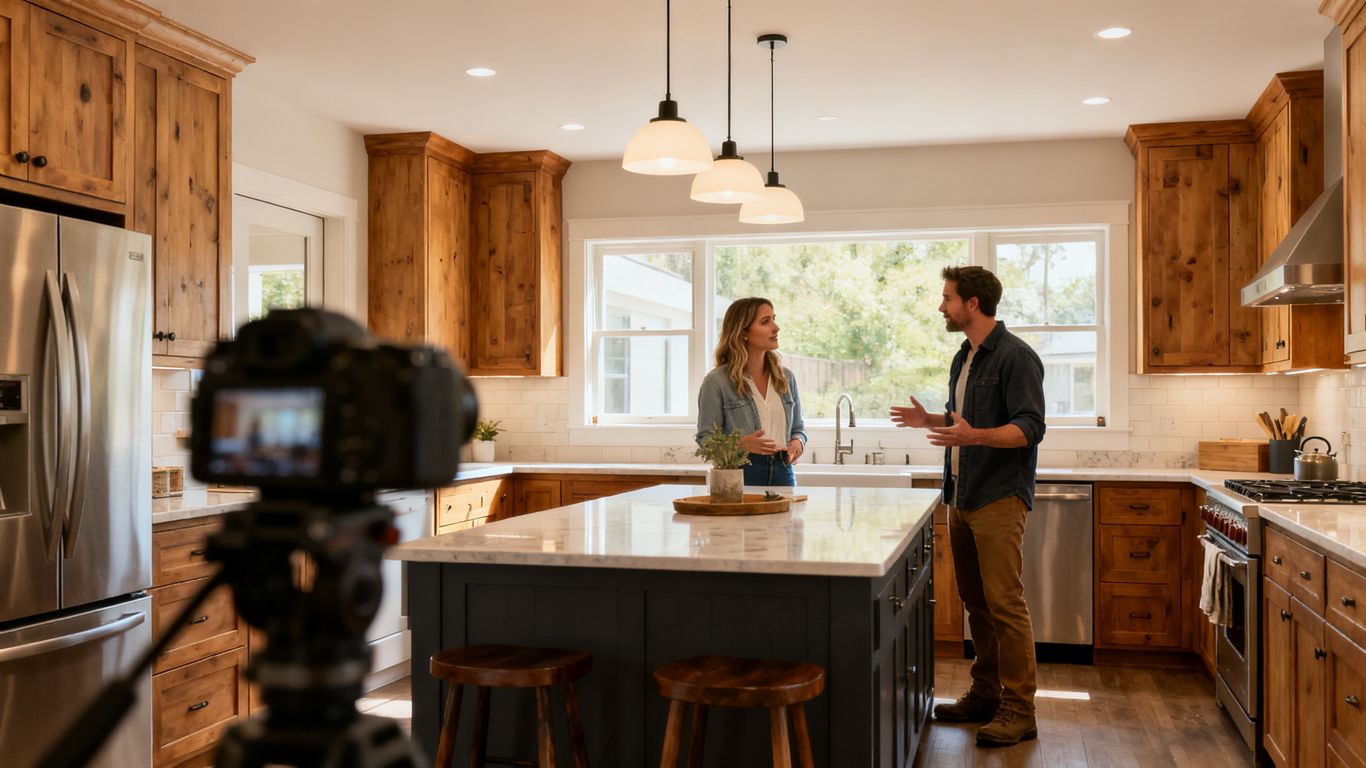
Kitchen remodeling is visual, expensive, and personal. Homeowners often spend weeks or months saving ideas, comparing finishes, and deciding whether they trust a contractor. A creator who documents that decision process can give your company a warmer introduction than a standard ad, provided the partnership feels credible and the path to contact is simple.
Build trust before a homeowner requests a consultation
A homeowner may not be ready to schedule a consultation the first time they see your company. They may, however, remember a contractor who appeared helpful, transparent, and comfortable explaining tradeoffs. An influencer partnership gives that first impression a human voice, especially when the creator discusses what they liked, questioned, or changed during the project.
Trust still requires restraint. Do not ask a creator to promise a perfect experience or make claims they cannot personally support. A candid explanation of the process is often more persuasive than a polished endorsement.
Show the design and renovation process in a relatable way
Finished kitchens are attractive, but they hide much of the work homeowners worry about: layout decisions, material samples, scheduling, dust, delays, and final adjustments. A short renovation series can show those details in a way that makes the project feel more understandable. It also gives the remodeler several opportunities to explain why a recommendation was made.
The strongest footage usually includes ordinary moments alongside the reveal. A creator walking through cabinet planning or discussing temporary cooking arrangements can answer questions that a gallery page cannot.
Reach homeowners during the inspiration and planning stage
Influencer content is particularly useful before a homeowner has selected a contractor. At that stage, people are collecting references and forming a rough budget rather than searching only for a phone number. A video about storage, lighting, or workflow can introduce your team while the audience is still defining the project.
That does not mean every viewer is a lead. Treat early exposure as a chance to enter the consideration set, then use a relevant landing page or follow-up ad to reach people who show stronger intent.
Generate content that can support SEO, paid ads, and social media
A partnership can produce more than one post. With permission, useful footage may become short clips, website examples, retargeting creative, or material for an FAQ. Content reuse needs written permission and clear limits, so agree on usage rights before filming rather than trying to negotiate after a post performs well.
The topic should also fit the search questions your customers ask. For example, a walkthrough can support content about kitchen layouts, while a planning conversation can inform a page about remodeling timelines. A broader bathroom remodel guide can also be a useful editorial reference when planning adjacent home-improvement content, though it should not be presented as kitchen-specific advice.
Understand where influencer marketing fits in the remodeling funnel
Influencer activity generally sits near awareness and consideration, while the website, calls, and consultations handle conversion. That distinction prevents unrealistic expectations. A creator may introduce your company, but the landing page still needs proof, service-area clarity, qualification questions, and a sensible next step.
Think of the partnership as one layer in a larger system. It can create demand and provide creative assets, but paid search, local visibility, follow-up, and sales discipline determine whether that attention becomes revenue.
When a kitchen remodel influencer partnership is worth testing
Not every remodeling company needs an influencer campaign immediately. The test makes more sense when the business has a clear service area, enough project value to support acquisition costs, and a team that can respond quickly to inquiries. Start with a defined hypothesis instead of paying for exposure and hoping leads appear.
Match the partnership to your service area and project value
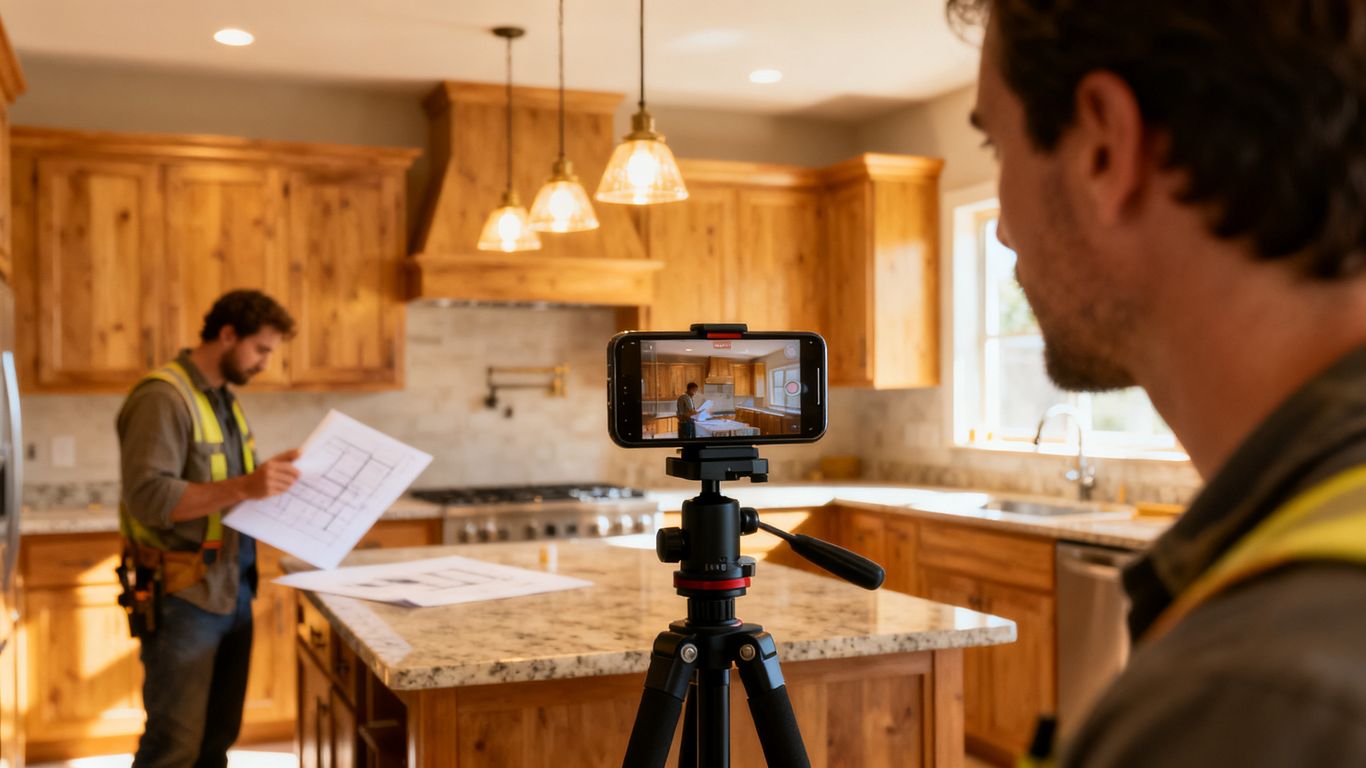
A creator with a highly local audience may be more valuable than a national account for a contractor who only serves a few counties. Check where viewers live, not just where the creator lives. Then compare the expected cost of the partnership with your average gross profit and realistic consultation-to-sale rate.
If most followers are outside your market, awareness may still have value, but direct lead generation becomes harder to justify. A smaller regional creator can sometimes provide better commercial fit and more believable access to local homeowners.
Evaluate audience quality instead of relying on follower count
Follower totals are a weak buying signal on their own. Review recent posts, comments, story activity, audience geography, and the creator’s ability to prompt meaningful questions. A modest account with homeowners asking about materials and timelines may be more useful than a large account whose engagement comes from unrelated viewers.
Ask for platform analytics where available. You want enough information to estimate whether the audience overlaps with your ideal client and whether people pay attention beyond the first few seconds of a video.
Compare local creators with national home and design influencers
Local creators offer geographic relevance and may be comfortable featuring a real project nearby. National creators can offer stronger production quality or broader reach, but their audiences may not be able to hire you. The right choice depends on whether your first test is designed to create local consultations, build a content library, or increase general familiarity.
A simple comparison keeps the decision grounded:
| Creator type | Main advantage | Main limitation | Best initial use |
|---|---|---|---|
| Local homeowner creator | Strong market relevance | Smaller reach | Consultation generation |
| Regional design creator | Relevant style and geography | May have mixed audience intent | Awareness and consideration |
| National home creator | Broad visibility and polished production | Low service-area overlap | Content and brand exposure |
After comparing the options, select the creator whose audience and format match the campaign goal. Reach is useful only when it can plausibly support the outcome you are buying.
Identify signs that the audience is ready to hire a remodeler
High-intent signals include questions about budgets, timelines, permitting, contractor selection, and whether a design works in a particular type of home. Comments that ask for product links alone may indicate inspiration rather than readiness to hire. Look for recurring conversations about making a project real.
The creator’s past partnerships can offer clues, too. A history of thoughtful renovation content is generally more useful than a sudden series of unrelated sponsored posts. For broader research on creator economics, a beauty influencer monetization guide illustrates why sponsorship structure and audience trust deserve scrutiny, even though its niche is different.
Decide whether the campaign should focus on leads, awareness, or content
Choose one primary objective. Lead campaigns need unique tracking and a clear offer; awareness campaigns need reach and qualified attention; content campaigns need usage rights and a production plan. Trying to optimize equally for all three makes the test difficult to judge.
Set a secondary objective only after the main one is measurable. For example, you might seek consultations first and retain the footage as a secondary benefit if the content meets your quality standards.
How to find and vet the right home influencers
Finding candidates is easy; finding a creator who is both credible and commercially useful takes more work. Search widely, then narrow the list by audience, content quality, and risk. A short, well-vetted list is better than dozens of names gathered from follower counts.
Search Instagram, TikTok, YouTube, and local Facebook communities
Search platform-native terms tied to your market, such as local renovation, kitchen design, home projects, and neighborhood names. YouTube can reveal creators who explain decisions in depth, while TikTok and Instagram often surface transformation content quickly. Local Facebook groups may identify active homeowners, although group rules and privacy expectations must be respected.
You can also study existing collaboration models. FORTIS partnerships show how renovation-related creators may combine project experience with blog and social content, which is a useful pattern to consider without copying the arrangement.
Review audience location, engagement, and demographic data
Request screenshots or exported analytics before agreeing to a fee. Focus on audience location, age ranges, watch time, saves, shares, and comment quality. The numbers should support the story the creator tells about their audience.
Be cautious when analytics are vague or limited to impressive top-line figures. A clear answer about who watches and how they respond is part of the vetting process, not an unreasonable demand.
Check whether the creator’s style fits your kitchens and ideal clients
A creator’s aesthetic should be compatible with the type of work you want to sell. If your ideal clients value practical storage and durable materials, a feed focused only on luxury styling may attract attention without producing a good fit. Review how the creator explains cost, compromises, and function.
Fit also includes personality. A calm, detailed communicator may work better for a complex remodel than someone whose content depends entirely on fast reveals.
Look for authentic renovation, design, and home improvement content
The creator should already have a reason for discussing homes. Examine several months of content rather than one attractive post. Consistency, firsthand experience, and useful commentary help distinguish an established voice from an account built mainly to collect sponsorships.
A collaboration should add to that existing conversation. If the partnership feels unrelated to the creator’s normal subject matter, the audience may notice immediately.
Spot fake engagement, undisclosed sponsorships, and brand-safety risks
Look for repetitive comments, sudden unexplained spikes, suspicious follower geography, and engagement that does not match video views. Review whether prior sponsored posts were clearly disclosed and whether the creator handles criticism responsibly. Also check older content for subjects or language that could create a brand-safety concern.
Put expectations in writing, including disclosure requirements and approval rights. The trusted online slot sites page, for example, is unrelated to remodeling but highlights why audience and brand context should be reviewed before placing a link or partnership beside your business.
How to structure an effective influencer campaign
A campaign brief should give the creator enough direction to protect the business without turning the content into an advertisement read word for word. Define the commercial details first, then leave room for the creator’s natural delivery. That balance is where credibility usually comes from.
Choose between a renovation series, walkthrough, tutorial, or testimonial
Each format supports a different job. A renovation series builds anticipation, a walkthrough explains the finished result, a tutorial answers a practical question, and a testimonial shares personal experience. Choose based on the project stage and the audience’s likely level of intent.
A series often gives the audience more context, but it also requires reliable scheduling and several filming windows. A single walkthrough may be easier to execute, though it has less room to establish the process.
Define the offer, service area, timeline, and lead qualification criteria
The brief should state where you work, what the audience receives, how long the offer lasts, and what qualifies as a useful inquiry. If you offer a consultation, say what that means and what information the homeowner should provide. Avoid vague calls to action that create confusion for both the viewer and your office.
Qualification questions might cover location, approximate project timing, property type, and the homeowner’s goals. Keep the form manageable; the purpose is to improve sales follow-up, not create unnecessary friction.
Give creators a clear brief without scripting every word
Provide key facts, prohibited claims, visual priorities, contact instructions, and examples of questions the audience may ask. Do not dictate every sentence. The creator understands their audience’s rhythm better than the contractor does.
A useful brief protects accuracy while preserving an authentic explanation. Ask for clear discussion of the project rather than a string of superlatives.
Plan content approvals, usage rights, exclusivity, and disclosure language
Before production, agree on the number of deliverables, revision limits, posting dates, paid usage, raw footage, and exclusivity. Specify whether you may edit clips for ads and how long those rights last. Disclosure language should be conspicuous and consistent with applicable platform and advertising rules.
Approval should verify factual accuracy and legal requirements, not erase every personal observation. Over-editing can make the finished piece look less trustworthy.
Build a landing page and consultation process for influencer traffic
Send viewers to a page that repeats the offer, confirms the service area, and explains what happens after submission. Use a dedicated form, phone number, or scheduling path so the office can recognize the source. The page should load quickly on mobile because most social traffic will not arrive from a desktop.
The follow-up process matters just as much as the post. Decide who responds, how quickly they respond, and how the lead is marked in the CRM before the campaign launches.
Which platforms and content formats work best
There is no universal best platform for kitchen remodeling. Each channel gives the audience a different amount of context and creates different tracking challenges. Choose the format that matches how homeowners consume information at each stage of the decision.
Use Instagram Reels and Stories to combine discovery with direct response
Reels can introduce a transformation or answer one focused design question, while Stories can handle reminders, polls, links, and follow-up prompts. A sequence may work better than a single post because it gives the viewer both inspiration and a next step.
Make the call to action specific. “See whether your address is in our service area” is more useful than a generic instruction to learn more.
Test TikTok for project transformations and educational renovation content
TikTok can work well for quick explanations, sequencing, and problem-solving clips. The opening seconds need to establish the question or tension, but the content should still provide a real takeaway. A kitchen reveal without context may earn views while giving a homeowner little reason to inquire.
Test several angles rather than judging the platform from one video. Educational clips may attract a different, more qualified audience than purely visual transformations.
Use YouTube for detailed kitchen tours and higher-intent research
Longer videos allow a creator to explain layout choices, materials, workflow, and the experience of working through a remodel. That depth can help viewers who are actively researching contractors or planning a future project. Include chapters, a clear description, and a trackable consultation path.
A useful video should answer practical questions, not simply display the final room. For broader home content, SwappaHome discusses home-exchange market trends, but its unrelated subject is a reminder to keep channel partnerships tightly aligned with the audience you want to reach.
Repurpose influencer footage for Meta Ads and remarketing campaigns
With the right permissions, creator footage can become a strong variation for Meta Ads. It may feel more native than a formal commercial and give a warm audience a reason to return. Cut several versions with different openings, lengths, and calls to action rather than running one edit everywhere.
Keep the original context in mind. A clip that works organically may need a clearer offer and stronger first frame when used in paid distribution.
Understand why polished before-and-after images may not generate leads alone
Before-and-after images prove that a visual change occurred, but they rarely answer the questions that stop someone from contacting a remodeler. Viewers may still wonder about cost, timing, disruption, communication, and whether the result suits their own home.
Pair the reveal with a short explanation or customer perspective. The added context turns a portfolio moment into a more useful decision aid.
How to measure the return from influencer partnerships
Measurement should begin before the first post. Influencer traffic can be difficult to identify when people watch on one device and search your company later on another. That is why direct attribution and assisted-conversion analysis should be treated as complementary, not competing systems.
Track unique landing pages, promo codes, phone numbers, and form submissions
Give each creator a distinct destination or tracking method. A unique landing page is usually the clearest starting point, while a dedicated phone number or form field can capture people who do not click. Promo codes may be less natural for high-ticket remodeling, but they can still help identify certain responses.
Record the campaign name consistently across forms, calls, and office notes. Incomplete source data makes a promising campaign look unproductive and a weak campaign look better than it is.
Separate assisted conversions from leads directly attributed to the creator
Some homeowners will view a video, leave, and later search for the company by name. If you count only the final click, you may miss the creator’s influence; if you credit every later inquiry to the creator, you may overstate performance. Use available analytics, surveys, and CRM notes to separate direct and assisted activity.
The goal is not perfect certainty. It is a consistent attribution method that lets you compare tests fairly over time.
Measure consultation quality, booked appointments, and closed-project revenue
Views and clicks are early indicators. The business outcome is a qualified conversation that progresses toward a profitable project. Track contact rate, qualification rate, booked consultations, show rate, proposal rate, and revenue by source.
Review lead quality with the sales team. A campaign that produces fewer but better inquiries may outperform one that generates a large volume of low-fit forms.
Compare influencer acquisition costs with Google Ads and Meta Ads
Calculate total campaign cost, including creator fees, production time, landing-page work, and follow-up labor. Then compare the resulting qualified leads and closed revenue with other acquisition channels. The comparison should account for the different roles of each channel: influencer content may also create reusable creative and assist future conversions.
Avoid forcing every channel into the same short-term standard. Still, an influencer test should have a financial boundary and a decision date.
Use UTM parameters and CRM stages to connect content with sales outcomes
Use consistent UTM values for creator, platform, campaign, and content variation. Map those values into the CRM and preserve them as the lead moves from inquiry to consultation and sale. This creates a practical record of which content generated attention and which content generated business.
Review the data after enough time has passed for the sales cycle. Kitchen projects may not close immediately, so premature judgment can hide later revenue.
How to improve results and scale what works
Scaling should follow evidence, not excitement. First identify the creator, message, and format that produced the strongest combination of qualified attention and commercial results. Then expand the parts that worked while keeping the tracking and follow-up process stable.
Turn high-performing creator content into paid social ad creative
If viewers respond to a particular explanation or opening, adapt it into several paid variants. Keep the creator’s natural voice where possible, but test a clearer first frame, shorter cut, and direct consultation prompt. Confirm that the contract allows paid use before launching the ads.
Creative performance should be evaluated alongside lead quality. A cheap click is not a win if the resulting inquiries fall outside your service area.
Retarget viewers and site visitors with project-specific offers
People who watched a renovation video or visited its landing page have shown more interest than a cold audience. Retarget them with related proof, a planning resource, or a consultation offer that matches the original topic. Avoid repeating the same reveal without adding information.
Frequency matters. A small audience can become tired of an ad quickly, so monitor delivery and rotate useful variations.
Combine influencer campaigns with Local Services Ads and Google Search
Influencer content can create demand that later appears as branded or nonbranded search. Make sure your search coverage, landing pages, call handling, and local profiles are ready before driving more awareness. Someone who remembers the creator but searches your business name should find a consistent experience.
The channels should support one another rather than compete for credit. Search can capture active demand while creator content helps shape preference earlier.
Build repeat partnerships around multiple renovation projects
A repeat relationship can reduce onboarding time and help the creator tell a more complete story. Consider different homes, design challenges, or project stages instead of asking for the same reveal repeatedly. The audience gets continuity, while the business builds a deeper library of credible material.
Keep reviewing fit. A long-term relationship is valuable only while the creator remains trusted and relevant to the market.
Set performance benchmarks before increasing the partnership budget
Define acceptable ranges for qualified leads, consultation cost, booked appointments, and revenue before spending more. Also set a minimum content standard and a deadline for review. These benchmarks turn a subjective decision into a repeatable investment process.
If the test misses its target, identify whether the problem was audience fit, offer clarity, creative quality, tracking, or follow-up. Fix the correct variable before simply paying for more reach.
Schedule Better Consultations
If influencer traffic is producing interest, give homeowners a straightforward way to choose a consultation time. A scheduling service can reduce back-and-forth for your team and make the next step feel easier after someone watches a project story.
Conclusion
A kitchen remodel influencer partnership can work when it is treated as a measurable part of the remodeling funnel rather than a popularity contest. Choose a creator whose audience fits your market, build content around real homeowner questions, and judge the campaign by qualified consultations and revenue—not views alone.
Frequently Asked Questions
Do influencer partnerships work for kitchen remodelers?
They can, especially when the creator reaches homeowners in the remodeler’s service area and the campaign has a clear conversion path. Results vary with audience fit, offer quality, content credibility, and follow-up speed.
What type of influencer is best for a remodeling company?
A local or regional creator with an engaged home-focused audience is often a practical starting point. The best match depends on your service area, ideal client, project value, and campaign objective.
How much should a kitchen remodeler spend on an influencer campaign?
There is no universal amount. Set a test budget based on expected project economics, creator deliverables, production costs, and the number of qualified consultations needed to make the test useful.
Should a remodeler choose a creator with a large following?
Not necessarily. Audience location, engagement quality, subject-matter fit, and signs of purchase intent are usually more relevant than total followers.
What should an influencer show during a kitchen renovation?
Useful content can include planning, layout decisions, material selection, project disruption, progress updates, problem-solving, and the finished walkthrough. The goal is to answer questions that affect a homeowner’s decision.
How can influencer leads be tracked?
Use unique landing pages, UTM parameters, dedicated phone numbers, form fields, scheduling links, or campaign-specific offers. Preserve the source in the CRM so later consultations and sales can be connected to the original interaction.
How long should a remodeler test influencer marketing?
Allow enough time to publish the agreed content, collect responses, and observe the sales cycle. Review early engagement quickly, but wait longer before judging revenue from high-value remodeling projects.