Key Takeaways
Premium roofing positioning is not a higher price tag with nicer colors attached. It is a clear promise about who you serve, what you do differently, and how reliably you deliver the experience.
- Define premium through customer outcomes, standards, and communication.
- Research local expectations before choosing a market position.
- Make every brand touchpoint reinforce trust and specialization.
- Use websites and advertising to qualify for better-fit opportunities.
- Track revenue quality and customer experience, not only lead volume.
Define what premium means for your roofing company
Premium positioning starts with a decision about value, not design. A homeowner should understand why your company is the right fit before comparing the last dollar on an estimate. That requires a focused roofing company branding premium positioning strategy, supported by service standards the team can actually maintain. The goal is not to appeal to everyone; it is to become the obvious choice for a particular kind of customer.
Separate premium positioning from simply charging more
Charging more does not create a premium brand by itself. A higher price only works when the customer can connect it to lower risk, better communication, more careful workmanship, or a more dependable process. If the estimate is higher but the explanation, scheduling, and follow-up feel ordinary, homeowners will see the difference as markup rather than value.
Premium positioning also does not require pretending every project is a luxury installation. It means making a deliberate promise and delivering it consistently. A company might be premium because it handles complex replacements carefully, communicates clearly with busy homeowners, or provides a notably organized experience from inspection through final cleanup.
Choose the customers and projects you want to attract
A broad service list can make a roofing company easy to find, but it rarely makes the company memorable. Decide whether you want more full replacements, higher-end residential work, insurance-related projects, commercial maintenance, or a defined geographic market. The answer affects your photography, case studies, ad language, sales process, and even which calls you decline.
Study the projects that produce healthy margins and satisfied customers. Those patterns reveal the customers most likely to value your standards. A focused position is not a restriction on growth; it gives your marketing a useful center of gravity.
Identify the service standards that justify a higher price
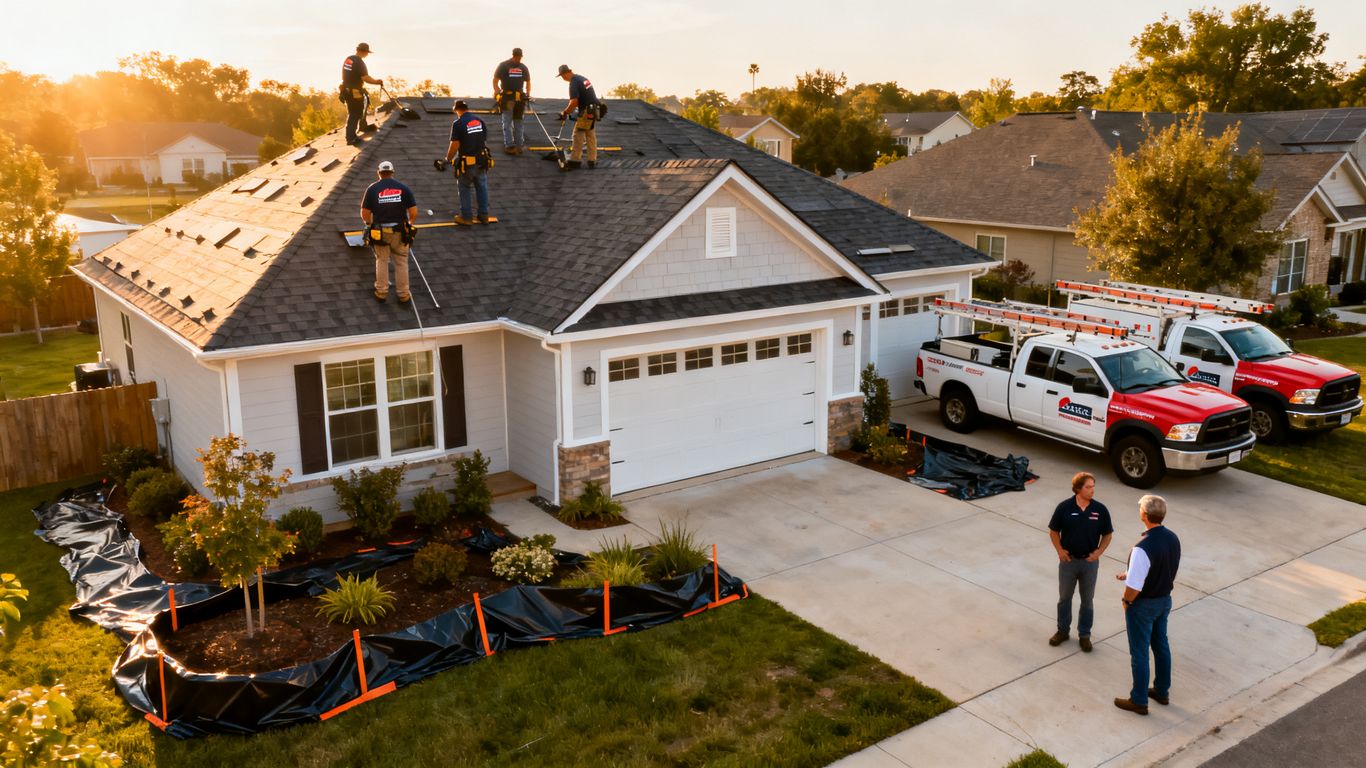
Write down the behaviors customers can observe. These might include a defined inspection process, clear written recommendations, punctual appointments, daily project updates, careful site protection, documented cleanup, and a final walkthrough. The list should describe real operating practices, not vague claims about excellence.
Then assign ownership. If the office promises a same-day response but nobody monitors incoming calls after hours, the promise is decorative. Premium value is built when the experience remains dependable during the stressful parts of a roofing project.
Build a positioning statement around outcomes, not materials
Materials matter, but most homeowners are buying confidence that the home will be protected and the project will not become a prolonged disruption. Frame the position around outcomes such as clarity, durability, reduced uncertainty, or a smoother replacement process. Mention products where they help explain the recommendation, but do not make a material name carry the whole brand.
A useful positioning statement can follow this structure: we help a defined type of homeowner achieve a defined result through a distinctive process. For example, a company may serve homeowners planning long-term replacements and provide careful assessments, transparent options, and tightly managed installation. That is more persuasive than simply calling itself the best roofer.
Research the market before shaping your roofing brand
Brand strategy becomes much sharper when it is grounded in local evidence. Review search results, competitor websites, call recordings, estimates, and customer feedback before settling on a slogan or visual system. You are looking for patterns in what companies promise and what homeowners still worry about. This research can reveal a valuable gap that a new logo would never find.

Analyze how local competitors present their services
Review the first page of local search results as a homeowner would. Note the language used in page titles, offers, service areas, financing messages, credentials, reviews, and calls to action. Also look at what is missing: perhaps every company leads with “free estimates,” while none explains its inspection method or project communication process.
Do not copy the loudest claim. Instead, compare how easily each company answers basic questions about fit, quality, timing, and risk. A useful market positioning guide can help organize this exercise, but the final position still needs to come from your own customers and operating strengths.
Find gaps in reviews, guarantees, communication, and customer experience
Reviews are not only a reputation score. Read the language customers use when describing the experience. Look for recurring praise about cleanliness, updates, punctuality, explanation, or problem solving, as well as recurring complaints about unanswered calls and unclear estimates.
The strongest differentiator may be operational rather than visual. If competitors mention guarantees but explain little, make your protection policy easier to understand. If they show finished roofs but not the process, document the steps that make customers feel safe. Specific proof beats broad promises when a homeowner is deciding whether a higher price is justified.
Use customer interviews and sales calls to uncover buying priorities
Ask recent customers what made them call, what almost stopped them, and what they remember about the buying process. Listen for exact phrases rather than polished marketing language. The same questions should be asked of lost opportunities, because a lost estimate often reveals a concern that your current message never addressed.
Create a short interview record with the project type, urgency, decision factors, objections, and final reason for choosing or rejecting the company. Over time, this becomes a practical message library for landing pages, ads, sales scripts, and follow-up emails.
Map homeowner objections to premium differentiators
Price objections are often shorthand for uncertainty. A homeowner may be asking whether the work will last, whether the crew will arrive, whether the estimate will change, or whether someone will answer if a problem appears later. Your job is to connect each concern to a visible part of the offer.
A simple map keeps the team aligned:
| Homeowner concern | Evidence to provide | Premium differentiator |
|---|---|---|
| “How do I know the problem is real?” | Inspection photos and plain-language findings | Transparent recommendations |
| “Will the project disrupt my home?” | Schedule, site-protection plan, and updates | Organized project management |
| “What happens if something goes wrong?” | Written warranty terms and contact process | Accountable post-installation support |
| “Why is this estimate higher?” | Scope comparison and workmanship standards | Clear value, not unexplained markup |
The map should influence the website and sales process, not sit in a strategy document. If an objection appears repeatedly, make the answer easy to find before the homeowner has to ask.
Build a roofing company brand that signals trust
Trust is formed through repeated small signals. A clear visual system helps, but it cannot compensate for confusing copy, inconsistent trucks, or a call experience that feels improvised. Every public touchpoint should make the company seem like the same organization, with the same standards, whether a homeowner sees a vehicle, a search ad, or an estimate.
Create a visual identity that feels established and dependable
Choose colors, type, photography, uniforms, vehicle graphics, and proposal layouts as one system. The identity should be easy to recognize at neighborhood distance and easy to read on a phone. Avoid filling every surface with badges and claims; restraint often feels more established than visual noise.
Use original project photography whenever possible. Consistent images of crews, protected work areas, finished details, and clean sites can communicate care more effectively than generic roof stock photography. The visual system should support the position you chose rather than imitate the look of every other contractor in town.
Use messaging that communicates expertise without industry jargon
Homeowners need enough technical detail to make a sound decision, but they do not need a lecture. Explain what the issue means for the home, what options exist, and what trade-offs affect the recommendation. Replace unexplained terms with short definitions and practical consequences.
Strong messaging also admits where a repair may be sufficient. A company that recommends the smallest appropriate solution can sound more credible than one that treats every inspection as a replacement opportunity. Expertise is easier to believe when it includes judgment.
Develop a consistent voice across trucks, yard signs, ads, and social media
Use the same basic promise and vocabulary everywhere, adjusting the amount of detail to the medium. A truck needs a short, legible reason to remember the company. A service page can explain the process. A social post can show the people and decisions behind the work.
Create a small voice guide with preferred phrases, words to avoid, response expectations, and examples of how to explain common roofing problems. This is especially useful when office staff, salespeople, and outside partners all publish or answer customers.
Avoid branding shortcuts that make a company look interchangeable
A generic house icon, a broad “quality you can trust” slogan, and a phone number do not give homeowners much to remember. The issue is not that these elements are forbidden; it is that they rarely communicate a specific reason to choose one company over another.
Start with the customer and the operating promise, then design around it. Guidance on building a lasting roofing brand is useful here because it treats branding as the feeling and expectation attached to the business, not merely the logo on a truck.
Turn premium positioning into a compelling roofing offer
Positioning becomes real when it changes what a customer receives and understands. The offer should make the process visible, reduce uncertainty, and give the sales team a clear way to discuss value without immediately cutting price. A premium offer can still be simple; clarity is often more persuasive than an oversized package.
Package inspections, recommendations, and installation standards clearly
Describe the journey in the order a homeowner experiences it. Explain what the inspection covers, how findings are documented, how recommendations are prepared, and what the installation team does to protect the property. This turns a vague promise of quality into a sequence people can picture.
Use the same structure in the estimate, website, and sales conversation. When the language changes from one touchpoint to another, customers may assume the process is less organized than it really is.
Explain warranties, certifications, and workmanship protections
A warranty is useful only when the homeowner understands what it covers, how long it lasts, and whom to contact. Separate manufacturer coverage from workmanship protection, and explain any requirements that affect eligibility. Certifications should also be relevant to the work being proposed rather than displayed as decorative badges.
Keep the explanation accessible. A short comparison, plain-language summary, and link to fuller terms will usually build more confidence than a dense paragraph of legal language. Credibility grows when the company is precise about the limits of its protection.
Use tiered options without making the lowest tier the default
Three options can help a homeowner compare scope, longevity, appearance, and protection. The tiers should be meaningfully different, not cosmetic variations designed to make the middle option look attractive. Name the trade-offs clearly so the customer can choose based on priorities.
Present the option that best fits the home and stated goals first, then show alternatives. If the salesperson leads with the cheapest line item, the conversation becomes a price comparison before the customer understands the consequences of each choice.
Make the sales process feel consultative rather than price-driven
A consultative estimate asks questions before recommending work. What prompted the inspection? How long does the homeowner expect to stay? What concerns matter most: appearance, lifespan, timing, budget, or minimal disruption? Those answers should shape the recommendation.
Give the homeowner room to consider the decision and provide a clear next step without pressure. The salesperson is not trying to win an argument about price. They are helping the customer understand the relationship between the proposed work and the outcome they want.
Make the website prove your premium value
The website is often the first place a homeowner tests whether a premium claim is believable. It should answer practical questions quickly while giving careful buyers enough detail to investigate. Strong design helps, but the persuasive work comes from proof, organization, and a conversion path that respects the visitor's urgency.
Create service pages focused on homeowner outcomes and risks
Build separate pages for the services and project types that matter to the business. Each page should explain symptoms, likely risks, available approaches, process expectations, and the next step. A page about replacement should not read like a generic company brochure with a few keywords added.
Use headings that reflect real homeowner questions. Explain what happens if a problem is postponed, but avoid exaggerated fear. The goal is informed urgency: enough context for a visitor to act without feeling manipulated.
Show project quality through detailed case studies and original photography
A case study should connect the starting problem to the work performed and the finished result. Include the project type, constraints, decisions, preparation, installation details, and final condition. Original photographs of the property and crew make the story more credible than a gallery of uncaptioned images.
Keep the claims specific and verifiable. A short project narrative can show how the company handles complexity, protects landscaping, communicates changes, or solves an unusual issue. Those details give premium positioning something tangible to stand on.
Use reviews, credentials, guarantees, and team expertise throughout the site
Do not hide all proof on one testimonials page. Place relevant reviews near service explanations, credentials near the claims they support, and guarantee details near calls to action. Introduce the people responsible for inspections, project management, and customer support where their expertise is relevant.
The page should also make clear which statements are general policies and which are individual customer experiences. That distinction protects trust and keeps the site from sounding like it promises an identical result for every property.
Improve lead forms, calls to action, and mobile conversion paths
A premium website should make contacting the company feel as organized as the proposed work. Use a short first-step form, a visible phone option, and a confirmation message that explains what happens next. Ask only for information that helps route or qualify the request.
Test the experience on a phone while standing outside in bright light, because that is how many urgent searches happen. Check tap targets, page speed, form errors, and whether the visitor can tell the service area before submitting. Remove unnecessary fields that create friction without improving follow-up.
Align local SEO content with high-intent roofing searches
SEO content should reflect the jobs the company wants, not just generate visits. Build pages around service-plus-location searches, project-specific questions, and decision-stage concerns. Keep service areas accurate, use consistent business details, and make each local page genuinely useful rather than swapping city names into the same copy.
Content can support paid campaigns by answering questions that do not fit in an ad. It can also show where the company has relevant experience. The best local SEO is not a pile of articles; it is a well-organized explanation of why the company fits a particular market.
Use paid advertising to attract better roofing leads
Paid media can amplify a clear position, but it cannot repair an unclear offer. Before increasing spend, make sure the ad, landing page, tracking, and follow-up all describe the same service and customer promise. Premium acquisition is usually a qualification problem as much as a traffic problem.
Match ad messaging to premium customer concerns on Google Search
Google Ads Search campaigns should reflect the intent behind the query. A homeowner searching for emergency repair may need speed and availability, while someone researching replacement may care about process, longevity, and confidence in the recommendation. Separate campaigns and landing pages where the decision context is different.
Use headlines and descriptions to filter as well as attract. Mention the relevant service area, project type, inspection approach, or consultation format when those details are true. Avoid using a low price as the only hook if the business is trying to change the conversation toward value.
Qualify demand with service areas, project types, and pricing context
Ad traffic becomes expensive when every click is treated as equally valuable. State the areas served and the work accepted. If minimum project sizes or consultation requirements apply, communicate them in a calm, useful way rather than surprising the caller later.
Landing pages should continue that qualification. A form can ask about property location, service needed, project timing, and a brief description of the issue. These questions should improve routing, not create an interrogation before a homeowner can reach someone.
Use Local Services Ads to reinforce reputation and trust signals
Local Services Ads can be a useful channel when the business has the required setup and genuine reputation signals. Keep the profile accurate, respond promptly, and make sure the service categories and areas match the work the company can handle. Reviews should reflect real customer experiences and be managed consistently.
The ad is only the beginning of the interaction. Missed calls, weak intake, or slow follow-up can waste the advantage of appearing in a trusted local placement. Treat every lead from the channel as a customer experience test, not merely a notification.
Build Meta and YouTube creative around transformations and proof
Meta Ads can introduce the company to homeowners before an urgent need becomes a search. Use short videos, project sequences, crew footage, and educational explanations that make the brand familiar without overstating outcomes. The creative should show what careful work looks like, not simply repeat a discount.
YouTube creative can provide more room for a project story or an explanation of the inspection process. Keep the opening clear, show the property and people early, and make the next action appropriate to the viewer's awareness. A helpful video may ask for a consultation; it does not need to force an immediate estimate.
The strongest creative is connected to proof on the landing page. If an ad shows organized site protection, the page should explain that standard. If it features a project transformation, the page should provide context rather than leaving the image to do all the selling.
Track qualified opportunities instead of optimizing only for lead volume
A form submission is not the same as a qualified roofing opportunity. Track calls, booked inspections, estimates issued, jobs won, revenue, and cancellation or no-show patterns where the systems allow it. Review performance by campaign, search theme, service, and geography.
Start with a definition of a qualified lead that sales and marketing both accept. Then send useful downstream signals into reporting so budget decisions reflect business value. High volume from poor-fit projects can look successful until the team measures the time and revenue those leads actually produce.
Deliver an experience that protects the premium position
Marketing creates an expectation that operations must fulfill. A polished website cannot protect a premium price if calls go unanswered, appointments drift, or the customer has to chase updates. The experience after the lead arrives is part of the brand and should be managed with the same care as the advertising.
Standardize response times, appointment setting, and follow-up
Set practical response standards for new inquiries, missed calls, estimate requests, and post-appointment follow-up. Give staff templates that sound human while covering the essentials: who is responding, what happens next, when the appointment is, and how to prepare.
Review the handoff from ad or website to office team. A homeowner should not have to repeat basic information several times. Small moments of continuity can make a growing company feel more dependable than a larger one with a fragmented process.
Train estimators to sell expertise instead of discounting
Estimators should be able to explain findings, alternatives, scope, and risk in plain language. Role-play common objections without teaching the team to argue. A good conversation acknowledges budget pressure while returning to the homeowner's priorities and the consequences of each option.
Discounts should not be the default rescue tactic. If price is consistently the objection, investigate whether the offer is unclear, the wrong leads are arriving, or the sales presentation is failing to explain the difference. Training should address the cause rather than giving away margin.
Connect CRM data to campaign and revenue reporting
The CRM should preserve the path from inquiry to outcome. Capture source, campaign, service type, appointment status, estimate value, close status, and revenue when possible. Even imperfect data is useful if definitions are consistent and the team understands how to maintain it.
This connection lets marketing see which messages attract real opportunities and lets operations identify bottlenecks. It also prevents the common mistake of scaling a channel because it produces inexpensive contacts that never become viable projects.
Monitor close rates, average job value, and lead quality by channel
Review performance at a useful cadence, separating short-term fluctuations from actual trends. Compare close rate, average job value, sales cycle, cancellation rate, and gross contribution by channel and project type. A channel that produces fewer leads may be the better growth source if its customers fit the premium offer.
Use the findings to adjust targeting, landing pages, intake questions, and sales coaching. Reporting should lead to decisions, not become a monthly collection of numbers no one acts on.
Refresh the brand as the company expands into new markets
A position that works in one service area may need adjustment in another. Local housing stock, weather, customer expectations, and competitive language can change. Preserve the core promise, but validate the proof points, service mix, and imagery before duplicating the brand across markets.
Expansion is also a good time to review whether the operating standards still hold. If the company cannot deliver the original experience at a larger scale, the answer may be better systems, narrower promises, or a phased launch rather than a louder campaign. When the foundations are ready, book a strategy call to discuss the next practical marketing step.
Conclusion
Premium roofing positioning is earned through alignment: a focused customer, a credible promise, visible standards, useful proof, and an experience that keeps its word. When branding, website content, paid media, sales, and operations all reinforce the same value, the company has a better chance of competing on fit and trust instead of racing toward the lowest estimate.
Frequently Asked Questions
What does premium positioning mean for a roofing company?
It means offering a clearly defined customer experience and outcome that justify a higher price for the right customers. The distinction comes from standards, communication, expertise, proof, and dependable delivery rather than price alone.
Is premium roofing positioning only for expensive projects?
No. A company can position itself as premium around process, responsiveness, specialized knowledge, cleanliness, or risk reduction even when serving ordinary residential projects. The promise must match what the company can consistently deliver.
How can a roofing company compete without lowering prices?
It can clarify the scope of work, explain trade-offs, document quality, improve communication, and target customers who value those differences. Better qualification also reduces the number of conversations where price is the only meaningful comparison.
What should a roofing brand research before choosing a position?
Research local competitors, customer reviews, sales calls, lost estimates, project margins, service strengths, and recurring homeowner concerns. The goal is to find a valuable and believable gap, not simply a slogan that sounds different.
What proof helps homeowners trust a premium roofer?
Useful proof includes detailed reviews, original project photography, clear warranty explanations, relevant credentials, case studies, inspection documentation, and evidence of organized communication. Proof is strongest when it appears near the claim it supports.
Which paid advertising channels can support premium roofing leads?
Search advertising can capture active demand, local service placements can support reputation-based discovery, and social or video advertising can build familiarity through project proof. The right mix depends on service area, project type, tracking quality, and follow-up capacity.
How should a roofing company measure premium marketing?
Measure qualified opportunities, booked inspections, estimates, close rates, average job value, revenue, cancellation patterns, and lead quality by channel. Lead volume alone can hide poor fit and make an inefficient campaign look successful.