Key Takeaways
A plumber slow season marketing sewer campaign can turn quieter winter weeks into a steady source of preventive-service bookings. The strongest campaigns connect a specific offer with fast follow-up and revenue-based tracking.
- Promote inspections before spring backups create emergency demand.
- Package the service clearly so homeowners understand what they receive.
- Match search, local, social, and retargeting campaigns to intent.
- Send every ad to a focused page with simple booking options.
- Measure booked inspections and repair opportunities, not raw leads alone.
Turn the plumbing slow season into a sewer inspection opportunity
Winter often gives plumbing companies more room to sell preventive work instead of reacting to emergencies. That makes it a useful planning window for a plumber slow season marketing sewer campaign. Rather than waiting for spring backups, build awareness while homeowners have time to consider maintenance, inspection, and repair options.
Why winter is the right time to promote preventive sewer services
Cold weather can make customers more aware of drainage problems, but the quieter season also gives your team time to plan a thoughtful offer. Homeowners may have noticed slow drains, gurgling fixtures, or occasional backups without treating them as urgent. A winter campaign can frame an inspection as a practical next step before a minor warning becomes a disruptive service call.
The offer should be useful even when the customer is not ready for excavation or replacement. A camera inspection, clear findings, and a conversation about next steps create a lower-pressure entry point than advertising a major repair first.
How spring demand creates urgency before customers recognize the problem
Spring rain, heavier household water use, and renewed yard growth can bring hidden drainage issues to the surface. Many homeowners do not search for a sewer inspection until water is already backing up, so advertising needs to explain the connection between small symptoms and later disruption. The goal is not to predict a failure; it is to help people make a decision earlier.
Use seasonal language carefully. “Get ahead of recurring backups before spring projects begin” is more credible than promising that an inspection will prevent every sewer problem.
Which property types are most likely to need sewer line inspections
Older homes, properties with mature trees, and houses that have experienced repeated backups are natural audiences. Rental property owners and buyers of older homes may also value documentation before approving a repair or completing a transaction. Segmenting these audiences lets you adjust the message without implying that every property has the same risk.
Local data should guide targeting. Review past service calls by neighborhood, home age, and problem type, then use those patterns to refine location settings and landing-page language. A seasonal plumbing marketing plan can help organize this work across the year without treating every month as identical.
How to position inspections as protection against expensive repairs
An inspection should be presented as information that helps the homeowner understand condition, location, and possible next steps. Avoid suggesting that the service guarantees savings. Instead, explain that earlier information may help a customer compare repair options before a rushed emergency decision.
This is also where your campaign can distinguish professional diagnosis from generic lead buying. Strategies for high-intent plumbing leads are most useful when the ad, phone conversation, and service actually align around a real customer need.
Build a sewer inspection offer that converts
A sewer offer converts when the customer can quickly understand what happens, what it costs, and what the appointment is meant to accomplish. Vague promises create calls that dispatchers cannot qualify efficiently. Spell out the service boundary, the expected deliverable, and the next step after findings are reviewed.
Choosing between a standalone inspection and an inspection-plus-repair promotion
A standalone inspection is usually easier to explain and can appeal to homeowners who are still researching. An inspection-plus-repair promotion may work when the business has a clear process for applying a credit or discount, but the terms need to be visible before the appointment. Do not make the inspection feel like a disguised sales visit.
Choose one primary conversion goal for each campaign. If the ad promises an inspection, the form and call script should focus first on booking that inspection rather than pushing an uncertain repair package.
Packaging camera inspections, locating, and written findings
Describe the components in plain language. Customers may understand “camera inspection,” but they may not know whether locating the line or receiving written findings is included. Listing each part reduces surprises for both the homeowner and the technician.
The package can be explained in a short sequence:
- Confirm the access point and property details.
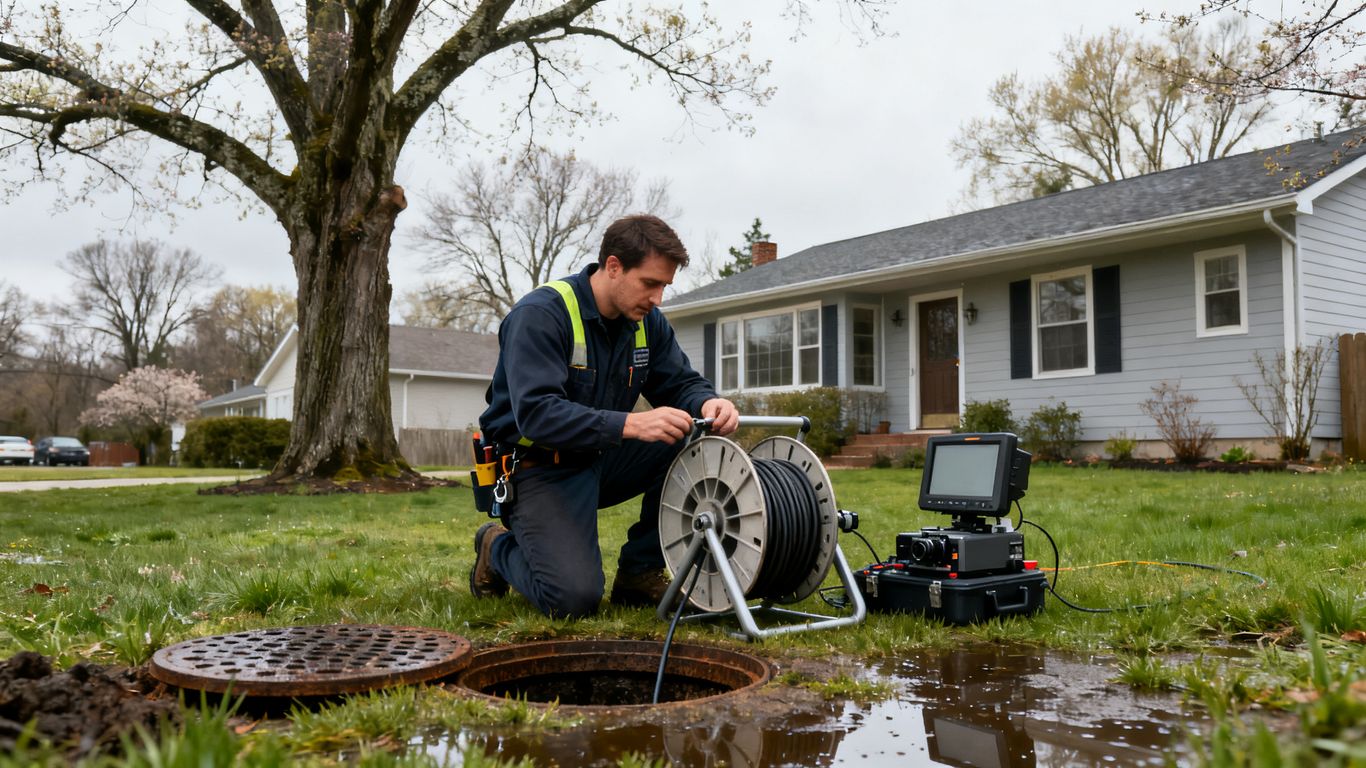
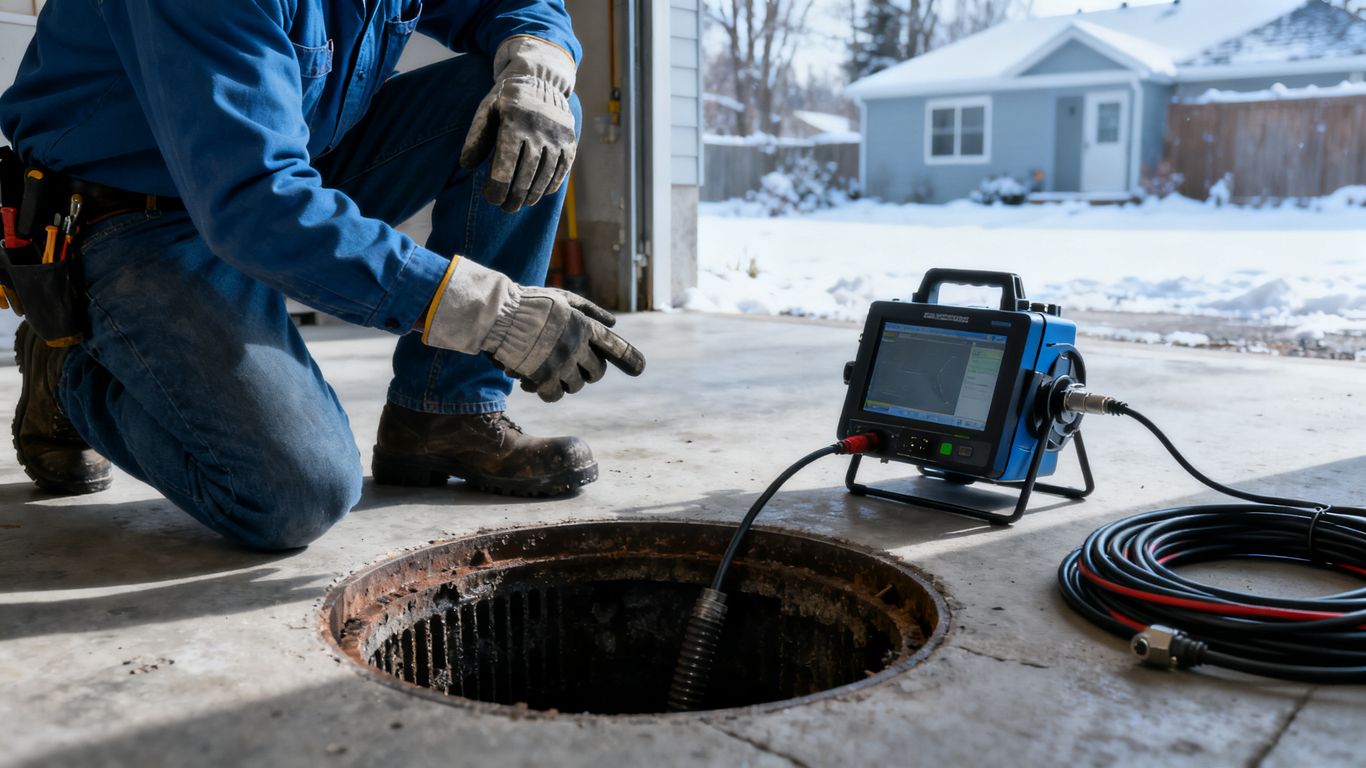
- Inspect the line with the available camera equipment.
- Locate relevant sections when that service is included.
- Review findings and outline reasonable next steps.
This sequence gives the dispatcher a consistent qualification framework. It also helps the landing page answer the question behind many clicks: what exactly am I paying for?
Using seasonal incentives without attracting unprofitable leads
A discount is not automatically a good offer. If the incentive attracts customers outside your service area, people seeking unrelated drain work, or callers who will not accept the regular price, it can consume the slow-season capacity you were trying to protect. Consider a fixed-value add-on, a clearly defined inspection rate, or a credit with transparent conditions.
Track the quality of promoted appointments separately from ordinary calls. An offer that produces fewer leads but more completed inspections and repair estimates may be the better campaign.
Setting service-area, eligibility, and scheduling expectations
Put practical details near the booking form. State the towns served, access requirements, property limitations, and the likely appointment window. If a cleanout or accessible entry point is needed, say so before the technician arrives.
Clear expectations improve close rates because the caller is less likely to feel surprised. They also give the team a reason to decline poor-fit requests before ad spend turns into an unproductive dispatch.
Target homeowners across the right advertising channels
Channel selection should follow intent rather than habit. Someone searching for a sewer camera inspection needs a different message from someone who watched a home-maintenance video or visited your website last week. Build separate audiences and campaigns where the platform allows it, then compare qualified bookings rather than impressions.
Capturing high-intent searches with Google Search campaigns
Google Search is a natural starting point for terms such as sewer line inspection, sewer camera inspection, and recurring sewer backup. Keep the keyword groups tight enough that the landing page can answer the exact question behind the search. Add negative keywords for jobs you do not want, including unrelated cleaning, employment, or do-it-yourself searches.
Write separate ads for inspection intent and emergency intent. An inspection campaign can emphasize clear findings and scheduled appointments, while an emergency campaign needs different availability language and dispatch expectations.
Using Local Services Ads to reach homeowners ready to book
Local Services Ads can fit searches from people looking for a nearby plumbing provider and prepared to contact one. Treat the profile, service categories, reviews, and response process as part of the campaign rather than as background details. If sewer inspection is not represented accurately in the available service setup, do not assume the channel will filter every inquiry correctly.
Calls from local placements should be answered or returned quickly. A missed call can erase the advantage of appearing at the moment a homeowner is ready to act.
Retargeting website visitors on Facebook and Instagram
Meta Ads can retarget visitors who viewed the inspection page but did not submit a form or call. Keep the follow-up message helpful rather than repetitive: explain what the appointment includes, answer an access question, or offer a short seasonal reminder. Exclude people who already booked when the tracking setup supports that audience.
The creative can use a technician, inspection equipment, or a simple explanation of warning signs. It should not imply that a visit to the page proves a property has a sewer defect.
Reaching older homeowners and property investors with audience-specific messaging
Older homeowners may respond to messages about protecting a long-held property and avoiding disruptive surprises. Investors and property managers may care more about documentation, scheduling, and understanding a line’s condition before making a decision. These are messaging differences, not reasons to make unsupported assumptions about an individual.
Use location, first-party customer lists where permitted, and relevant creative rather than overly narrow personal profiling. The landing page still needs to serve the core inspection intent for every audience.
Deciding when Performance Max supports or complicates lead generation
Performance Max can extend reach across Google inventory, but it may make it harder to understand which placements and queries are producing sewer-specific opportunities. It is worth testing when conversion tracking is mature and the business has enough reliable conversion volume. For a new seasonal offer, Search may provide cleaner early feedback.
Set exclusions, audience signals, and conversion actions carefully. If the account counts every page visit or low-quality form as a success, automation can optimize toward activity instead of booked work.
Create campaign messaging around spring sewer risks
Good seasonal copy gives a homeowner a reason to act without pretending to know the condition of a private line. It names recognizable symptoms, explains why timing matters, and offers a reasonable next step. The best ads sound like useful guidance, not a disaster forecast.
Writing ad copy for tree roots, aging pipes, and recurring backups
Mention tree roots, older sewer lines, slow drains, and recurring backups when those issues are relevant to the service. Keep each ad focused on one or two ideas so the benefit is easy to scan on a phone. A headline such as “Investigate Recurring Sewer Backups” is more precise than a broad promise about total plumbing protection.
Landing-page copy should expand on the ad rather than introduce a different service. That continuity usually makes qualification easier for the person answering the phone.
Connecting winter warning signs to spring inspection demand
Winter symptoms can become the bridge between awareness and action. A homeowner who noticed a slow basement drain or a toilet that gurgled after heavy use may not need an emergency visit today, but may appreciate a scheduled inspection before spring work begins. Build that logic into ads, email reminders, and retargeting creative.
A short educational video can support the campaign when it answers one practical question. Place it after the page has established the offer, not above the booking path.
The video should reinforce the same expectations as the written page. If it introduces a different price, service area, or scope, it creates confusion instead of trust.
Testing urgency, cost protection, and peace-of-mind angles
Run a small set of message variations rather than changing every element at once. One ad can focus on booking before spring demand rises, another on understanding repair options, and a third on documenting the line’s condition. Keep the offer and audience stable long enough to learn which angle produces qualified appointments.
Measure the booked outcome, not just the click-through rate. A softer peace-of-mind message may generate fewer clicks while producing customers who answer qualification questions and accept the inspection price.
Avoiding guarantees and fear-based claims that reduce trust
Do not promise that an inspection will find every defect, prevent a backup, or eliminate future repair costs. Avoid language that suggests a homeowner is in immediate danger based only on the age of a house or the presence of nearby trees. Accurate qualification is more persuasive than exaggerated urgency.
The campaign can still be direct. Explain what the technician will inspect, what the customer receives, and when an emergency service is more appropriate than a preventive appointment.
Send paid traffic to a conversion-focused landing page
A dedicated landing page gives the campaign one job: help an interested homeowner decide whether to request an inspection. It should not force visitors to navigate a general plumbing menu or search for the promised service. The page needs enough detail to qualify the lead while keeping the booking action obvious.
Matching the page headline to the sewer inspection search intent
Use the same core language that appears in the ad and keyword group. If the visitor searched for a sewer camera inspection, the headline should confirm that service rather than switching to a generic “full-service plumbing” statement. A short supporting line can explain the service area, appointment format, or findings review.
Keep the first screen focused. The phone number and booking action should be visible without requiring a visitor to scroll through a long company history.
Showing the inspection process, technician credentials, and service area
A three-step process can make an unfamiliar service feel more manageable: schedule, inspect, review findings. Add real information about technician qualifications, licensing where applicable, and the locations served. Do not use credentials as decoration; connect them to why the homeowner can trust the appointment.
Photos of actual equipment and technicians are generally more useful than generic household imagery. They help a visitor understand what will happen when the crew arrives.
Using click-to-call and short booking forms for mobile visitors
Mobile users should be able to call with one tap or submit a short form without typing a full history of the property. Ask only for details needed to respond and qualify the request, such as name, phone number, address, and a brief description of symptoms. Longer forms may be appropriate for commercial or investor workflows, but test them separately.
The confirmation state matters too. Tell the visitor what happens next and when someone is likely to respond. A silent submission creates doubt and can lead to duplicate inquiries.
Answering common questions about cost, access, and inspection time
Use an FAQ area on the page to address the questions that stall bookings. Explain whether pricing depends on access or scope, whether someone needs to be present, and how long the appointment usually takes if you can state that accurately. If an exact answer varies, say what determines the variation.
This content also gives the dispatcher a useful reference point. The customer arrives with expectations that match the conversation rather than a vague promotional promise.
Building trust with reviews, licenses, financing details, and local proof
Use authentic reviews tied to the services you actually advertise, and show licensing or insurance information where relevant and current. Local proof can include neighborhoods served, real project photos, and a clear business identity. Financing information belongs on the page only when it is accurate and applicable to the inspection or later repair.
A broader plumbing marketing foundation can support this page through reviews, local visibility, and a consistent website experience. Keep the inspection page focused even when the wider site offers many services.
Track the leads and bookings that make sewer marketing profitable
A form fill is not the same as a booked inspection, and a booked inspection is not the same as a repair estimate. If those actions are combined into one conversion, ad platforms cannot distinguish useful demand from low-value activity. Build the measurement plan before increasing budget.
Defining calls, form submissions, booked inspections, and repair estimates as separate conversions
Create separate events for calls, completed forms, confirmed appointments, completed inspections, and repair estimates. Where possible, record whether the appointment was inside the service area and matched the advertised scope. This hierarchy lets you optimize toward a meaningful business result without discarding earlier funnel signals.
Use clear naming conventions across campaigns. A dispatcher and a marketing manager should be able to tell the difference between a tracked call and a completed booking when reviewing the account.
Using call tracking to identify qualified sewer leads
Call tracking can show which campaign or keyword drove a call, but the recording or disposition process still needs human judgment. Mark calls as qualified, unqualified, booked, missed, or needing follow-up according to a simple shared definition. Review a sample regularly to catch misclassification.
Do not treat call duration alone as proof of value. A long call may be a poor-fit request, while a short call may end in a high-value scheduled inspection.
Connecting ad platforms with CRM stages and revenue data
Pass meaningful stages back into the advertising system when the business has the technical setup to do so. A CRM stage such as “inspection booked” is more useful than a generic lead status, and a later repair estimate can help evaluate campaign quality. Keep privacy, consent, and platform policies in view when sharing data.
The reporting view should connect source, location, service type, appointment status, and revenue. That makes budget decisions less dependent on whichever channel reports the most inexpensive leads.
Measuring cost per booked inspection instead of cost per raw lead
Cost per lead is a useful diagnostic, but cost per booked inspection is closer to the operational question: how much does it take to put a real appointment on the calendar? Compare that figure with completion rate, average inspection revenue, and downstream repair opportunities. A campaign can tolerate a higher lead cost if its booking and close rates are materially stronger.
A simple review table keeps the decision grounded in business outcomes:
| Metric | What it reveals | Action to consider |
|---|---|---|
| Cost per qualified call | Whether targeting attracts relevant conversations | Refine keywords or service areas |
| Cost per booked inspection | Whether leads become appointments | Improve response speed or page clarity |
| Inspection completion rate | Whether booked work reaches the schedule | Review expectations and confirmations |
| Repair estimate rate | Whether the offer finds useful opportunities | Audit inspection quality and follow-up |
Read the rows together rather than optimizing one metric in isolation. Cheap leads with poor completion may be less valuable than a smaller stream of well-qualified bookings.
Reviewing lead quality by keyword, audience, location, and device
Break performance down far enough to find patterns without creating tiny samples that mislead you. Search terms, neighborhoods, device type, and audience source can all affect the quality of a sewer inquiry. Look for repeated evidence across several weeks before making large exclusions or budget shifts.
Document changes in the account. Seasonal campaigns move quickly, and a short note about why a location or keyword was adjusted makes later analysis much easier.
Improve results through follow-up and seasonal optimization
The campaign does not end when a form arrives or a call is missed. Slow-season leads often need a clear next step because they are considering preventive work rather than responding to an immediate emergency. Follow-up should be prompt, useful, and consistent with the promise made in the ad.
Responding quickly to inspection inquiries during the slow season
Set a response standard for new calls and forms, then monitor whether the team meets it during field hours. A caller who cannot reach anyone may contact another provider before the office has a chance to return the message. If immediate answering is not possible, provide a realistic callback expectation and keep the request visible to the dispatcher.
Speed does not replace qualification. Ask about symptoms, property location, access, and the customer’s preferred timing before confirming the appointment.
Automating confirmations, reminders, and missed-call text messages
Automated confirmations can restate the appointment time, address, access requirements, and preparation steps. Reminders reduce avoidable no-shows, while a missed-call text can acknowledge the inquiry and invite the person to reply. Keep the language conversational and provide a path to reach a real person.
Review the messages periodically. A reminder written for emergency plumbing may feel inappropriate for a scheduled sewer inspection and can undermine the calm, preventive tone of the campaign.
Retargeting prospects who did not schedule after the first visit
Visitors who leave without booking may still be good prospects. Retarget them with answers to unresolved questions rather than the same headline they already saw. Exclude people who submitted a booking or completed an appointment when the audience setup allows it.
Use frequency limits so the campaign stays present without becoming intrusive. If a visitor repeatedly returns but does not convert, the issue may be price, eligibility, or unclear scope rather than insufficient ad exposure.
Turning inspection findings into repair and replacement opportunities
A completed inspection should lead to a clear findings conversation, not a vague recommendation to “keep an eye on it.” Explain what was observed, what options may address it, and which items can wait. Provide estimates or next-step appointments according to the company’s normal process.
This is where accurate campaign qualification pays off. Customers who expected an honest inspection are more likely to engage with a repair discussion when the recommendation is tied directly to documented findings.
Adjusting budgets as spring search volume and emergency demand increase
Use early winter data to identify the campaigns that generate qualified appointments, then plan how budget will shift as spring demand changes. Preventive inspection traffic may need less emphasis once emergency searches rise, but do not shut off a profitable offer simply because another service becomes busier. Watch capacity as closely as cost per lead.
Google Ads and Meta Ads can both support seasonal testing, but each should be judged by the conversion stages it can reliably measure. Reallocate gradually, protect coverage for high-intent searches, and keep enough budget for follow-up audiences.
Conclusion
A sewer inspection campaign gives plumbing companies a practical way to use the slow season before spring demand arrives. Build a specific offer, match each channel to intent, send traffic to a clear page, and connect marketing data to booked work and repair opportunities. For the final setup, book a planning call to turn the seasonal campaign into a workable schedule for your team.
Frequently Asked Questions
When should a plumbing company start marketing sewer inspections?
Start several weeks before the spring increase in demand so homeowners have time to notice symptoms, compare providers, and choose an appointment. The exact timing depends on local weather, property patterns, and available technician capacity.
What homeowners are most likely to book a sewer inspection?
Common prospects include owners of older homes, properties with mature trees, and households experiencing recurring slow drains or backups. Buyers, landlords, and property managers may also want condition information before making a decision.
Should a sewer inspection be offered as a discount?
A discount can work when its terms are clear and the regular service remains profitable. A fixed-value add-on or transparent seasonal rate may qualify customers more effectively than a large discount with confusing restrictions.
What should a sewer inspection landing page include?
It should explain the service, process, area served, access requirements, expected deliverables, pricing conditions, technician credentials, and booking options. A prominent phone number and short form are especially useful for mobile visitors.
How should sewer inspection leads be tracked?
Track calls, forms, booked appointments, completed inspections, and repair estimates as separate stages. This shows where campaigns are producing real business value and where leads are dropping out.
Are Google Search campaigns enough for this service?
Search can capture strong intent, but local listings, retargeting, and audience-specific follow-up may reach homeowners earlier in the decision process. Use the channels your team can measure and respond to well.
How quickly should a plumbing company follow up with a sewer inquiry?
As quickly as practical, especially during business hours. A prompt response confirms availability, answers access or pricing questions, and reduces the chance that a homeowner contacts another provider before the appointment is scheduled.