Key Takeaways
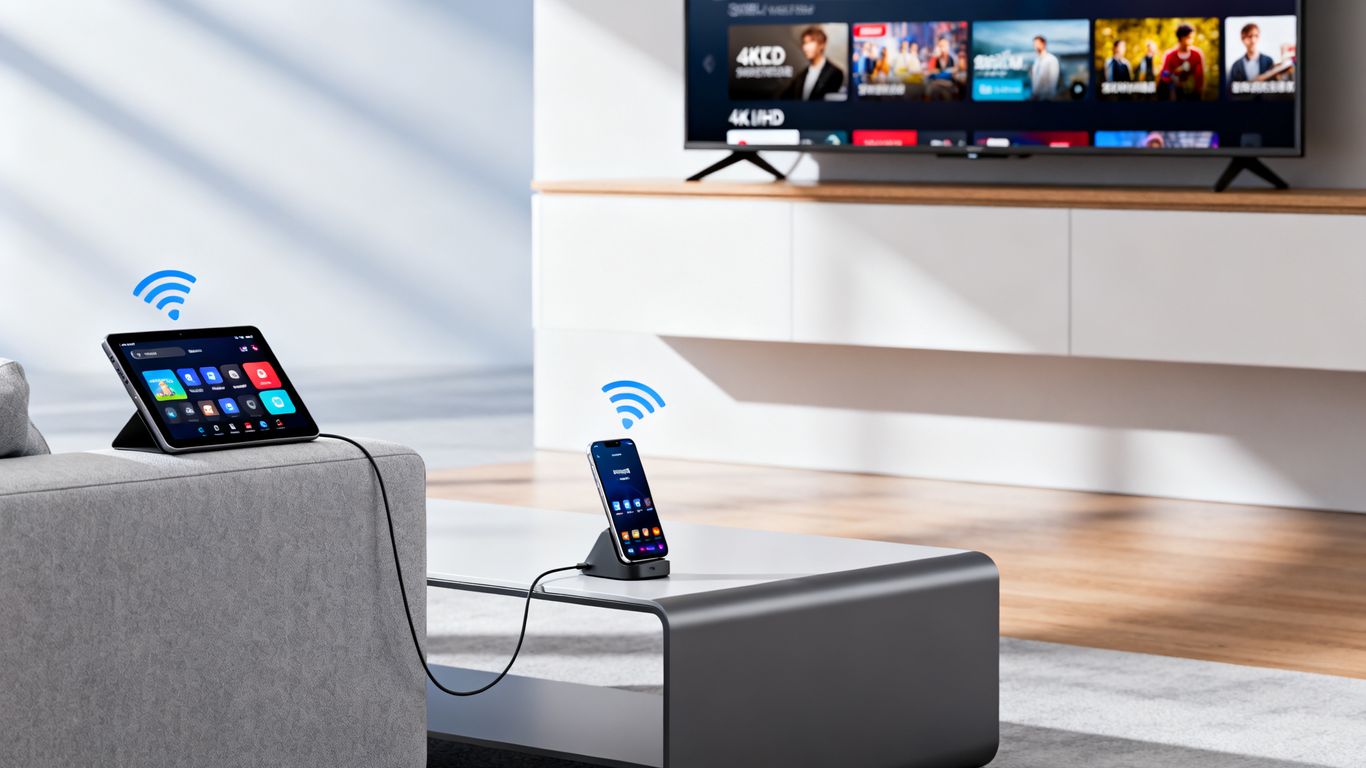
Connected TV advertising offers a sophisticated way to reach homeowners who have migrated away from traditional cable television. By aligning media buys with data-driven audience segments, HVAC companies can improve their brand resonance before peak seasonal shifts begin.
- Precise household-level targeting enables direct reach to local property owners.
- Streaming ads allow for better performance tracking compared to disjointed broadcast buys.
- Seasonal preparation ensures brand presence during high-intent service windows.
- Integrating streaming with existing digital channels creates a comprehensive marketing funnel.
- QR codes and search lift analysis help quantify reach and viewer interest.
The strategic shift to connected TV for HVAC
Transitioning from traditional broadcast advertising to digital streaming represents a significant evolution in how contractors find and connect with homeowners. Many businesses previously relied on linear TV slots that hit a broad, often irrelevant audience, but the shift towards internet-delivered content offers more granular control.
Distinguishing between OTT, CTV, and linear TV
Modern advertising jargon often confuses the delivery methods with the devices themselves, complicating your media strategy. Understanding OTT & CTV advertising requires a clear look at how signals reach the screen. Linear TV relies on scheduled broadcast infrastructure, whereas OTT delivers video over any internet connection, and CTV specifically targets the television sets themselves. You are essentially moving from a passive broadcast model to an audience-centric delivery system.
Why streaming replaces cable for local awareness
As consumer behavior shifts, your ad budget should follow the eyes of your potential customers. Streaming platforms have effectively captured the time that homeowners used to spend watching local news or appointment-based programming. By moving into this space, you stop paying premiums for wide-market coverage that includes people who will never need your services.
Key advantages of digital targeting over traditional TV buys
Digital platforms provide a level of data granularity that standard TV spots can only dream of matching. You no longer have to guess if a suburban household is likely to care about furnace repair. With sophisticated targeting, you can ensure your message reaches viewers based on their specific behaviors and recent online activity, making every dollar work harder.
Preparing for seasonal demand spikes
Timing your ad campaigns around the physical needs of local homes creates a natural affinity for your service. By the time the temperature hits extreme lows or highs, customers are already searching for solutions. The goal is to reach these prospects long before the emergency calls overwhelm your dispatch team.
Why winter or early spring is the optimal window for branding
Brand equity is built in the off-season, which is why smart HVAC managers push early when the market is quiet. By establishing brand recall early, you become the top-of-mind choice when the first heatwave forces residents to look for maintenance. This is the ideal time for increasing visibility in your specific geographic zone.
Aligning creative messaging with pre-summer maintenance calls
Your creative messaging must rotate based on the calendar to remain relevant to current home conditions. The difference between a maintenance reminder and a cooling emergency is night and day.
| Seasonality | Focus Area | Goal |
|---|---|---|
| Early Spring | Maintenance | Prevention |
| Early Summer | Efficiency | Conversion |
| Late Summer | Emergency | Acquisition |
This table illustrates how to prioritize your messaging strategy. By focusing on maintenance in the spring, you drive lower-pressure conversion cycles that keep your technicians busy without the total panic of mid-July repair spikes.
Calculating your initial CTV budget for local market penetration
Setting a budget for a new channel requires identifying the reach-to-frequency ratio needed to impact your service area. Start by evaluating these factors:
- Average audience size within your target ZIP codes.
- Cost per completed view on major streaming platforms.
- Number of households required for effective frequency.
- Expected ROI from seasonal service lead volume.
Starting small allows you to test localized inventory before committing to widespread coverage, ensuring that every dollar spent aligns with actual territory performance.
Developing creative assets that convert
Creative quality is the primary lever in streaming, as viewers are unaccustomed to the hyper-repetitive nature of cable commercials. Production value matters, but it does not need to be cinematic to be effective for a local business.
High-fidelity versus low-cost production for local ads
While polished video production is excellent, local viewers often prioritize authenticity in home services. High-fidelity spots are great for establishing initial brand status, yet simpler, direct-to-camera ads often perform just as well. Your goal is to keep the production costs proportional to the potential customer value of the service being advertised.
Balancing brand storytelling with emergency service calls
The tension between long-term branding and urgent calls is constant in the HVAC industry. When a unit fails, customers do not care about your brand story, they care about speed. Use storytelling in streaming segments to build familiarity, reserve your most urgent call-to-action for the final seconds of the ad build-out.
Best practices for length and pacing in streaming spots
Keeping your ads tight and visually active is crucial for maintaining viewer retention on streaming platforms. Avoid slow, drawn-out introductions that get skipped or cause the user to check their phone. Your message should be delivered within the first three seconds to ensure impact regardless of viewer engagement level.
Advanced audience targeting for service areas
Targeting is the bridge between a broad audience and a profitable customer base. By narrowing down the specific regions you actually serve, you avoid the waste inherent in traditional television broadcasting.
Leveraging household-level data for residential targeting
Utilizing data-driven CTV advertising platforms allows you to target at the home level rather than just the device level. This ensures that your ads are hitting actual homeowners in your service territory rather than renters who may not have control over their HVAC systems. This level of precision is the cornerstone of modern localized market penetration.
Using geofencing to protect your specific service territory
Geofencing prevents your ads from appearing in regions where you cannot reasonably dispatch a technician or profitably serve a community. By drawing digital boundaries around your service region, you keep your costs confined to high-probability areas. This method is incredibly effective for maintaining the focus of your targeted streaming commercials in competitive zones.
Filtering by home ownership status and property age
Older homes often require more frequent HVAC maintenance, making them highly valuable segments for your list. By filtering your reach based on property age and ownership status, you can create customized messages for owners of vintage or older construction homes. This demographic often deals with unique mechanical challenges that your team is better equipped to handle than generalist competitors.
Analyzing performance and attribution
Measurement is the missing piece in most traditional television campaigns. With digital streaming, you can finally close the loop between exposure and revenue, allowing your agency to optimize spend based on real outcomes.
Tracking lift in organic search following ad exposure
One of the most reliable metrics for streaming ad success is the spike in organic search volume for your brand name. After a campaign launches, monitor your search trends to see if potential customers are self-selecting to look for your business after seeing your spots. This lift indicates that your brand message is successfully moving through the awareness funnel.
Incorporating QR codes for direct measurement of interest
QR codes provide a simple way to transition a viewer from the screen to your website. By placing a trackable code on the screen during your CTA, you get immediate confirmation that a viewer is interested in your service. The CTV advertising guide emphasizes that these metrics are essential for optimizing your creative and proving the value of your streaming spend to your internal teams.
Setting KPIs for brand awareness versus lead acquisition
Distinguish clearly between KPIs that measure brand status and those that measure lead success. Brand awareness is best tracked via search lift and reach, while lead acquisition is measured through form completions and inbound calls. You cannot expect a fifteen-second spot to deliver a finalized lead; focus instead on how it sets the stage for the search or phone call that follows.
Building a cohesive cross-channel strategy
Your stream strategy should not exist in a vacuum; it must fit within your broader digital presence. When streaming TV advertising is combined with search and retargeting, the cumulative effect on your conversion rate is substantial.
Coordinating CTV ads with Google LSA and Search campaigns
Streaming ads should act as the top-of-funnel fuel that makes your Google LSA and search campaigns perform better. When people see your brand on their favorite streaming app, they are far more likely to click your search ads when they experience an issue. This alignment results in lower cost-per-click and higher quality inquiries.
Retargeting streaming viewers on Meta and TikTok
Once a viewer is exposed to your streaming ad, pull them back into your ecosystem through social platform retargeting. If a user did not click your QR code, remind them of your brand with specific, service-oriented ads on their social feeds. This multi-touch approach keeps your business at the forefront of their mind.
Using landing page testing to capture streaming-driven traffic
Your landing page is the place where your streaming traffic converts. Test several variations of headers and call-out offers to see which hook the TV viewer best. By constantly improving this page, you turn a high volume of streaming-driven visitors into qualified appointments, allowing you to book a discovery call with your team to refine the journey.
Conclusion
As the media landscape moves permanently toward streaming, forward-thinking HVAC companies are finding massive opportunities to capture local home service demand through digital TV solutions. By moving beyond traditional broadcast constraints, you secure a competitive advantage that scales with your business capacity. Integrating these channels today ensures your team is ready when the market shifts toward the next big surge in service demand.
Frequently Asked Questions
What makes streaming TV different from cable advertising?
Streaming TV relies on internet-based delivery and granular targeting rather than broad, scheduled broadcast time slots. This allows advertisers to show their messaging directly to specific households within defined geographic and demographic parameters, making the spend much more efficient.
How soon should I expect to see results from advertising on streaming?
While brand awareness metrics often improve quickly, conversion-based results usually build over a period of weeks as frequency increases. You should track early indicators like branded searchlift and interactions with your website to monitor performance before high-intent volume peaks.
Is the creative production for streaming expensive?
It can be as budget-friendly or as expensive as you choose to make it, depending on your goals. Many successful local businesses use clean, professional video content that fits their budget without needing massive film production budgets to get results.
Can I stop my ads from showing in areas I do not service?
Yes, geolocation and geofencing are standard features of digital television advertising. You can restrict your ad delivery to specific ZIP codes or cities to ensure your budget is used exclusively on prospects who live within your official service territory.
What should my primary KPI be for a streaming campaign?
For most home service companies, a hybrid approach of measuring reach, branded search lift, and lead conversions works best. Focus on brand recall metrics initially, followed by tracking how streaming exposure influences your total organic traffic and lead intake over time.
Does streaming advertising support small budgets?
Yes, because the programmatic buying model is flexible and scalable. You can start with a modest budget to test your messaging and audience targeting before deciding to scale your investment across your entire service area.
Why are QR codes used in these advertisements?
They bridge the gap between passive TV consumption and active lead-generation behavior. By including a QR code, you give viewers an immediate, measurable way to visit your landing page or schedule a service call without having to remember a phone number or website address.
Ready to grow your home service business?
Getting started with a modern streaming strategy is the best way to capture market share before the seasonal rush hits your dispatch line. Book a strategy call with our team to map out your local market approach and begin building your brand today.