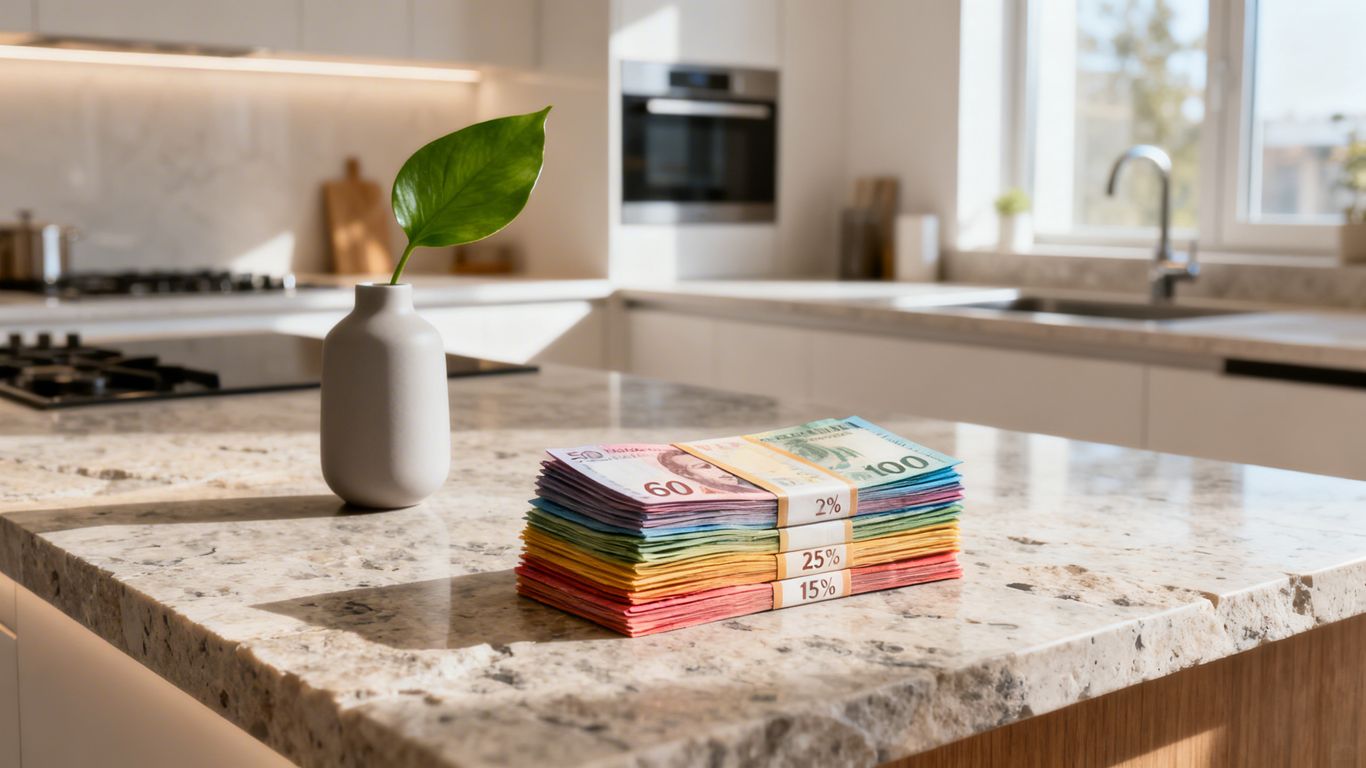
Budgeting for countertop marketing can get overwhelming, especially with so many channels out there. The countertop 60-25-15 budget split is a simple way to make sure your ad dollars are working in the right places. Most of the home service business owners I talk to want something straightforward that actually gets leads. In this article, I’ll break down what each part of the split means and how it applies to the main platforms and strategies we use every day for countertop businesses.
Key Takeaways
- The countertop 60-25-15 budget split helps you focus most of your spend on proven channels, while still leaving room to test new ideas.
- Google Ads and Meta Ads (Facebook & Instagram) usually take up the biggest share of the budget, since they drive the most leads for countertop companies.
- Don’t ignore newer platforms like TikTok and Spotify—they’re great for building brand awareness, but don’t expect instant results.
- Good landing pages, solid conversion tracking, and smart bidding are just as important as the ads themselves.
- Keep your strategy flexible. If something’s working, shift more budget there. If a channel is flopping, cut your losses and move on.
1. Google Ads
Google Ads are often the first place countertop businesses put their marketing budget because people search for remodeling and renovation services every day. If you want to be seen at the exact moment someone searches, this is your tool.
A good approach is to set up search campaigns targeting specific keywords, like “granite countertop installation” or “quartz countertops near me.” You can also use display ads to catch homeowners doing research. If you’re dealing with a tighter budget, Google Ads let you control spending with daily and monthly caps, so you don’t go over.
Key Steps for Running Google Ads:
- Set up search campaigns for high-intent keywords.
- Use location targeting to serve ads only in your service area.
- Write short, direct ad copy that matches what people are looking for.
| Example Budget Split | Suggested Percentage | Monthly Spend ($10,000 total) |
|---|---|---|
| Google Ads | 60% | $6,000 |
Paid search can bring quick results if your offer matches what the customer wants, and getting started doesn’t have to be complicated—just start with a few keywords, check the results, and adjust along the way.
2. Meta Ads
Alright, let's talk Meta Ads. This covers Facebook and Instagram, which are still huge for countertop businesses. You can reach a lot of people here, and the targeting options are pretty good.
Think about who you want to show your ads to. Are they homeowners looking to renovate? People who just bought a new house? Meta lets you get pretty specific.
Here’s a quick breakdown of what you can do:
- Targeting: You can go by location (super important for local businesses), age, interests (like home improvement, interior design), and even behaviors (like recently moved).
- Ad Formats: You've got your standard image ads, video ads, carousel ads (great for showing off different countertop materials or finished projects), and even collection ads.
- Campaign Objectives: What do you want to happen? More website visits? Leads? Phone calls? Meta has options for all of that.
It's not just about throwing money at it, though. You need to know what you're doing. For instance, running ads for kitchen remodels might work best in the spring and fall when people are thinking about home projects. Summer might be slower, but maybe good for people planning ahead for fall renovations.
You really need to test different ad creatives and audiences. What looks good to you might not grab someone scrolling through their feed. Keep an eye on your results and be ready to tweak things. It's an ongoing process, not a 'set it and forget it' kind of deal.
Here's a rough idea of how you might split your Meta budget, depending on your goals:
| Campaign Goal | Suggested Budget % | Notes |
|---|---|---|
| Lead Generation | 60% | Focus on forms, calls, and messages |
| Brand Awareness | 25% | Reach more people, build recognition |
| Website Traffic | 15% | Drive clicks to your site or landing page |
Remember, these are just starting points. Your actual results will depend on your specific market, your offers, and how well you manage your campaigns. Don't be afraid to experiment!
3. TikTok Ads
TikTok has really blown up, hasn't it? It’s not just for teenagers dancing anymore. For countertop businesses, it's a surprisingly good place to get your name out there, especially if you're trying to reach a younger crowd or just want to show off some really cool kitchen or bathroom transformations. The platform thrives on short, engaging video content, which is perfect for showcasing before-and-after shots of your work.
Think about it: you can create quick videos of a stunning granite installation, a sleek quartz countertop being fitted, or even a time-lapse of a whole kitchen remodel. People scroll through TikTok fast, so you need to grab their attention right away. Bright colors, satisfying installation clips, and maybe even a bit of humor can go a long way.
Here’s a quick breakdown of why it’s worth considering:
- Visual Appeal: Countertops are inherently visual. TikTok is the ultimate visual platform.
- Trend Driven: You can hop on popular sounds or video formats to make your ads feel current.
- Engagement: Users are actively looking for entertainment and inspiration, making them more receptive to creative ads.
- Reach: While known for younger users, its demographic is broadening, offering access to a wider audience.
When setting up your campaigns, you'll want to focus on clear calls to action. What do you want people to do after seeing your ad? Visit your website? Request a quote? Make it super obvious. You can also experiment with different ad formats, like in-feed ads that look like regular user videos or branded hashtag challenges if you have a bigger budget and want to get really creative.
Don't just slap a picture of a countertop on there and expect magic. You need to think about what makes people stop scrolling. Is it the smooth finish? The way the light hits it? The happy homeowner? Show that.
It’s also a good idea to look at what your competitors are doing, or even other home improvement businesses. See what kind of videos are getting views and engagement. You can learn a lot by just watching. If you're worried about spending money without seeing results, start with a small budget and test different video styles. You might be surprised at what works. For more on managing your budget and avoiding common pitfalls, check out ways to uncover hidden spending traps.
Remember, TikTok ads are about being authentic and creative. Show off the quality of your work in a way that feels native to the platform. It’s a different ballgame than traditional advertising, but the payoff can be pretty significant if you get it right.
4. Spotify Ads
So, Spotify. It's not just for your morning commute playlist anymore. It's a real advertising space, and for countertop businesses, it can be a surprisingly good spot to get your name out there. Think about it: people are listening while they're driving, cooking, or just relaxing at home. That's prime time to plant a seed about new kitchen counters.
You can reach people when they're in a receptive mood, not actively searching but still thinking about their homes.
Spotify offers a few ways to get your message across:
- Sponsored Sessions: This is where you offer users an ad-free listening experience for a set period (like 30 minutes) in exchange for listening to your ad. It's a nice trade-off for the listener.
- Audio Ads: These are standard ads that play between songs. They're short and to the point.
- Video Takeovers: If you want something more visual, these ads pop up on the screen when a user opens the app. They can include a clickable link.
- Homepage Takeovers: This is the big one, where your brand gets featured prominently on the Spotify homepage for a day. It's pricey, but it gets a lot of eyeballs.
When you're setting up Spotify ads, you can get pretty specific with who you target. You can go by:
- Demographics: Age, gender, location – the usual suspects.
- Interests: Are they into home improvement? DIY projects? Interior design? Spotify has data on this.
- Contextual Targeting: You can even target based on the type of playlist they're listening to. Imagine advertising kitchen renovation ideas on a 'Home Makeover' playlist.
It's a bit different from search ads, where people are actively looking for countertops. With Spotify, you're reaching them during their downtime. It's more about building brand awareness and getting your name in their heads for when they do start thinking about renovations.
The key is to make your ad memorable and relevant. Since people are often doing something else while listening, your message needs to cut through the noise quickly. A catchy jingle or a clear, concise offer works best. Don't try to cram too much information in; just get them interested enough to look you up later.
It's worth testing out, especially if you're looking to broaden your marketing reach beyond just the usual digital suspects. You might be surprised at the results.
5. Landing Pages
Landing pages are the first thing people see after they click your countertop ad. It’s easy to overlook the details, but these pages can make or break your marketing. A strong landing page keeps people interested and helps turn clicks into real leads.
Here’s what matters most for countertop landing pages:
- Keep forms short and easy to fill out
- Use photos and examples of past projects
- Add real customer reviews, not just generic quotes
If you want a quick way to check if your landing page is set up for success, here’s a handy checklist:
| Feature | Is it present? |
|---|---|
| Call-to-action | ✅ |
| Mobile friendliness | ✅ |
| Fast load speed | ✅ |
Aim for simple headlines, clear contact options, and proof that your company does quality work. If you wouldn’t fill out your own form, customers probably won’t either.
6. Search Ads
Search ads keep your business right in front of folks who are actively looking for countertops. They've got their phones or laptops out, they type in "granite countertops near me" or "best kitchen counters," and there you are, sometimes right at the top. That's your chance to grab them while they're interested.
Many countertop businesses use search ads because they're straightforward, flexible, and can fit a lot of budgets. Unlike display or video ads that catch people off guard, these reach people pretty much in buying mode. Your headline matters a lot, and so does the description. If you mess up your keywords, you might waste money, so keep an eye on those search terms every week.
Here's a simple breakdown of a typical monthly search ads budget if you're splitting your marketing:
| Funding Percentage | Monthly Ad Spend (example: $5,000 total) |
|---|---|
| Search Ads | $1,250 |
A few things to keep in mind when setting up your search ads:
- Start with local keywords: "countertops [your city]" or "quartz installation [nearby city]."
- Adjust bids based on time of day—calls in the morning might actually convert better.
- Always add negative keywords to keep out the irrelevant clicks.
Sometimes, even with a small budget, search ads can bring in high-quality leads because people are already searching for your service. Don't ignore what people are actually typing into Google—that's where the best insights come from.
7. Performance Max
Performance Max is Google's latest ad campaign type, and it's a big deal for businesses wanting to reach customers across all of Google's channels. Think of it as a single campaign that can show up everywhere – Search, Display, YouTube, Gmail, Discover, and Maps. It uses automation to find your best customers, no matter where they are on Google.
Setting up a Performance Max campaign is pretty straightforward. You give Google your assets – like headlines, descriptions, images, and videos – and tell it about your goals, like conversions or conversion value. Then, Google's machine learning takes over to show your ads to the right people at the right time.
Here's a quick look at what goes into it:
- Assets: This is your ad copy and visuals. The more varied and high-quality assets you provide, the better Performance Max can test and optimize.
- Audiences: You can give Google signals about who you want to reach. This could be custom segments, remarketing lists, or even just general interests.
- Goals: What do you want to achieve? Usually, it's about getting more leads or sales, but you can also focus on specific actions.
- Budget & Bidding: You set your daily budget and choose a bidding strategy, often focused on maximizing conversions or return on ad spend.
It's designed to simplify campaign management by automating many of the manual tasks. This means less time spent tweaking bids and targeting, and more time focusing on the creative and overall strategy.
Performance Max campaigns are built to find conversions across all of Google's inventory. They work by using machine learning to match your assets with the right audience and placement, aiming to get you the best results for your budget. It's a powerful tool, but it does mean giving Google a lot of control over your ad delivery.
8. Local Services Ads
Local Services Ads, or LSA, is a Google product specifically for service-area businesses. Think plumbers, electricians, house cleaners, and, of course, countertop installers. It's different from regular Google Ads because you pay per lead, not per click. This means you only pay when someone contacts you directly through the ad, like a phone call or a message.
Here's how it generally works:
- Google Guarantee: To use LSA, your business needs to pass Google's background check and get the Google Guarantee. This is a big deal because it means Google stands behind your business, offering a refund to customers if they aren't satisfied with the service you provided.
- Profile Setup: You create a business profile that highlights your services, service area, hours, and reviews. This profile is what shows up in the ads.
- Ad Placement: Your ads appear at the very top of Google search results for local service queries, above regular ads and organic listings.
- Lead Management: When a customer contacts you, you get the lead directly. You can then manage these leads through the LSA app or dashboard.
It's a pretty straightforward system, and for businesses that rely on local customers, it can be a really effective way to get in front of people who are actively looking for what you do right now. The pay-per-lead model can be attractive, but you need to make sure your follow-up process is solid to convert those leads into actual jobs.
The key here is that LSA connects you with customers who have immediate needs. It's not about building brand awareness; it's about getting booked for jobs today. This makes it a powerful tool for businesses focused on direct service delivery.
9. Facebook Ads
Facebook Ads, even with the rise of other platforms, still holds a strong position for countertop businesses. It's a place where a lot of potential customers spend their time, and the targeting options are pretty good. You can reach people based on their interests, behaviors, and even life events, which is super helpful for selling something like kitchen countertops.
Think about it: someone might be browsing Facebook because they're planning a home renovation, or maybe they just moved into a new house. Facebook's ad system can pick up on these signals. You can show them ads for beautiful granite or sleek quartz countertops right when they might be thinking about it.
Here's a quick look at how you might break down your Facebook Ad budget:
- Awareness Campaigns: Get your brand name out there. Show off your best work with eye-catching photos and videos. This is about making people aware that you exist and what you offer.
- Consideration Campaigns: These ads aim to get people thinking about choosing you. You might highlight specific materials, special offers, or customer testimonials. The goal is to get them to visit your website or learn more.
- Conversion Campaigns: These are the money-makers. You'll target people who are closer to making a decision, perhaps those who have visited your site before or shown interest in similar products. The aim is to get them to request a quote or book a consultation.
It's also worth remembering that Facebook owns Instagram. So, when you're setting up ads on Facebook, you often have the option to run them on Instagram too. This gives you even more reach without having to manage two separate ad accounts from scratch.
When setting up your Facebook Ads, don't just throw up any old picture. Use high-quality images of finished countertop projects. Show different angles, lighting, and styles. People want to see what their own kitchen could look like. Also, make sure your ad copy is clear and tells people exactly what you want them to do next, like 'Get a Free Quote Today' or 'Browse Our Gallery'.
10. Instagram Ads
Instagram ads are a big deal for countertop businesses, and for good reason. It's where a lot of people spend their time scrolling, looking for inspiration, and yes, checking out new kitchens and bathrooms. If you're not advertising here, you're probably missing out on a huge chunk of potential customers.
Think about it: people are often on Instagram when they're in a relaxed mood, maybe dreaming about home renovations. This is the perfect time to show them what you've got. You can use stunning photos and videos of your countertops, finished projects, and happy clients. It’s all about visual appeal, and Instagram is the king of visuals.
When setting up your campaigns, you've got a few options for ad formats:
- Image Ads: Simple, clean photos that get straight to the point. Great for showcasing a single countertop style or a beautiful finished product.
- Video Ads: Short videos can really bring your countertops to life. Show the material up close, demonstrate its durability, or feature a quick tour of a stunning kitchen installation.
- Carousel Ads: Let people swipe through multiple images or videos. This is perfect for showing different angles of a countertop, various color options, or a series of completed projects.
- Stories Ads: These appear between users' Stories. They're full-screen and can be very engaging if done right. Think quick, impactful visuals.
Targeting is where Instagram really shines. You can get pretty specific about who sees your ads. Want to reach homeowners in a certain zip code who are interested in interior design? You can do that. You can also target based on demographics, interests, and even behaviors. This means your ad budget is spent showing your beautiful countertops to people who are actually likely to be interested.
Setting up your Instagram ads effectively involves understanding your audience and what kind of visuals will grab their attention. It's not just about posting a picture; it's about telling a story and making them imagine that countertop in their own home.
Don't forget about the call to action. What do you want people to do after seeing your ad? Visit your website? Request a quote? Send a direct message? Make it clear and easy for them. Instagram ads are a powerful tool for businesses to connect with new customers, increase brand visibility, and ultimately drive sales. This guide provides comprehensive information on how to effectively advertise on the platform. effective advertising on the platform.
11. Audience Targeting
Okay, so you've got your budget split, and you're ready to spend it. But where does that money actually go? It goes to people, right? And not just any people, but the right people. That's where audience targeting comes in. It’s like being a detective for your ideal customer.
Figuring out who you're talking to is the first step to making sure they actually listen. You don't want to waste your ad spend talking to folks who will never buy a countertop from you. Think about who needs a new kitchen, who's renovating, or who's just moved into a new place. These are the folks you want to reach.
Here’s a breakdown of how to think about it:
- Demographics: This is the basic stuff – age, location, income level. Are you selling high-end granite or budget-friendly laminate? This will shape who you target.
- Interests: What are people into? Do they follow home renovation blogs? Are they interested in interior design? Do they search for kitchen ideas?
- Behaviors: What are they actually doing online? Are they actively shopping for home goods? Have they recently moved? This gives you clues about their buying intent.
- Custom Audiences: You can even upload lists of your existing customers or website visitors to target them again, or create lookalike audiences that share similar traits.
It's not just about casting a wide net; it's about casting it in the right spot. You can get pretty specific with platforms like Google and Meta. For example, you might target homeowners in a specific zip code who have shown interest in kitchen remodeling within the last 90 days. That's a much smarter use of your money than just showing ads to everyone.
Getting your audience right means your ads have a better chance of being seen by people who actually care about what you're selling. It’s about being relevant. If your ad pops up when someone is already thinking about new countertops, you're way ahead of the game. This foundational understanding is key for effective outreach and engagement.
Think about your current customers. What do they have in common? Use that information to build out your target audience profiles. You can refine these profiles over time as you gather more data from your ad campaigns. It’s an ongoing process, not a one-and-done thing. Check out resources on marketing strategies to get a better sense of how this fits into the bigger picture.
12. Conversion Tracking
So, you're running ads, spending money, and hoping for the best. But how do you actually know if it's working? That's where conversion tracking comes in. It's basically how you tell your ad platforms what a 'win' looks like for your business. Did someone fill out a form? Did they make a purchase? Did they call you? Tracking these actions tells you which ads are actually bringing in customers, not just clicks.
Without proper conversion tracking, you're essentially flying blind, making it impossible to know your true return on ad spend. It's like trying to bake a cake without a recipe – you might end up with something edible, but you won't know why it turned out that way or how to repeat it.
Here’s a quick rundown of why it matters:
- Measure What Matters: See which campaigns, ad groups, and even individual ads are driving actual business results.
- Optimize Your Spend: Focus your budget on the efforts that are proven to convert, cutting out the noise.
- Improve Ad Performance: Platforms like Google Ads use conversion data to learn and show your ads to people more likely to take action. This is how you get better results over time.
- Understand Your Customer Journey: See the path people take from seeing your ad to becoming a customer.
Setting up tracking usually involves adding a small piece of code to your website. This code 'fires' when a specific action happens. For example, after someone submits a contact form, a 'thank you' page appears, and the tracking code on that page tells the ad platform, 'Hey, this was a conversion!' Different platforms have their own tracking tags, like the Meta Pixel for Facebook and Instagram, or the Google Ads tag. Getting this right is key to understanding your campaign success. The 'Conversions' column in Google Ads is where you'll see the results of your setup.
It's not just about counting clicks; it's about counting the actions that actually grow your business. Think of it as the scoreboard for your marketing efforts. If the scoreboard is broken, you can't tell who's winning or how to improve your game.
For countertop businesses, this could mean tracking form submissions for quote requests, phone calls initiated from ads, or even online purchases if you sell directly. Making sure your tracking is accurate means you're making decisions based on real data, not just guesses. This is how you get the most out of your advertising budget and see real growth.
13. Bidding Strategies
Alright, let's talk about bidding. This is where you tell the ad platforms how much you're willing to pay for a click, an impression, or a conversion. It's not just about throwing money at the problem, though. Choosing the right bidding strategy can make or break your campaign's performance.
Think about what you want to achieve. Are you trying to get as many people as possible to see your ad (impressions)? Or are you more focused on getting actual leads or sales (conversions)? Your goal will heavily influence your bidding.
Here are some common approaches:
- Maximize Clicks: This is pretty straightforward. You set a maximum amount you're willing to pay per click, and the platform tries to get you as many clicks as possible within your budget.
- Target CPA (Cost Per Acquisition): Here, you tell the platform your target cost for each conversion (like a lead or a sale). The system then tries to get you conversions at or below that target cost.
- Target ROAS (Return on Ad Spend): This is for when you know how much revenue you want to get back for every dollar you spend on ads. You set a target ROAS, and the platform aims to achieve that.
- Manual CPC (Cost Per Click): This gives you the most control. You set the maximum bid for each keyword or placement yourself. It takes more time and attention, but you can really fine-tune things.
It's also worth noting that different platforms have their own names and variations for these strategies. For example, Google Ads has things like 'Maximize Conversions' and 'Target Impression Share'.
The key is to align your bidding strategy with your overall marketing objectives. If your goal is brand awareness, you might focus on impressions. If you need immediate sales, then conversion-focused bidding is probably the way to go. Don't be afraid to experiment a little, either. What works for one campaign might not work for another.
Keeping an eye on your bids and adjusting them based on performance is super important. If a particular keyword or audience is bringing in great results, you might want to bid a bit higher there. Conversely, if something isn't performing, you might lower the bid or pause it altogether.
14. Ad Creatives
Okay, so you've got your budget split and your platforms picked out. Now, what do you actually show people? That's where ad creatives come in. Think of them as the first handshake your business makes with a potential customer online. They need to be good.
The goal is to grab attention fast and make people want to learn more about your countertops. It’s not just about pretty pictures; it’s about showing the value and the transformation a new countertop brings to a home.
Here’s a quick breakdown of what makes a good creative:
- High-Quality Images/Videos: Show off your best work. Use clear, well-lit photos or short videos that highlight the material, the craftsmanship, and how the countertop looks in a real kitchen or bathroom setting. Close-ups of the texture and edges can make a big difference.
- Clear Value Proposition: What makes you different? Is it price, speed of installation, unique materials, or a special offer? Make sure this comes across quickly.
- Strong Call to Action (CTA): Tell people exactly what you want them to do next. Phrases like "Get a Free Quote," "Shop Now," or "Visit Our Showroom" are direct and effective.
- Mobile-First Design: Most people will see your ads on their phones. Make sure your creatives look good and are easy to read on a small screen.
We're talking about different types of ads here, too. For example, a carousel ad on Facebook might show a few different countertop styles or before-and-after shots of kitchen remodels. A video ad on TikTok could be a quick time-lapse of an installation or a customer testimonial. Even static image ads need to be compelling enough to stop someone from scrolling.
Don't just throw up any old picture. Think about the feeling you want to evoke. Is it luxury? Practicality? Modernity? Your visuals should match that. It's about selling a dream, not just a slab of granite.
Testing is key here. What works for one audience might not work for another. Try different images, different headlines, and different CTAs to see what gets the best response. Keep an eye on your click-through rates and conversion data to figure out which creatives are actually bringing in business.
15. SEO Best Practices
Okay, so we've talked a lot about paid ads, but let's not forget about the organic side of things. Search Engine Optimization, or SEO, is how you get found when people are actively looking for what you offer without you paying for every click. It’s about making your website the best answer to a searcher's question.
The goal is to rank higher in search engine results pages (SERPs) for terms related to countertops. This means when someone types "quartz countertops near me" or "granite installation cost," your business shows up prominently. It's a long game, for sure, but the payoff in consistent, free traffic is huge.
Here’s a breakdown of what really matters:
- Keyword Research: You gotta know what people are searching for. Tools can help, but think like your customer. What problems are they trying to solve? What questions do they have? Getting this right is the first step to any good SEO plan. You can find out more about keyword research for businesses to get started.
- On-Page Optimization: This is about making your website content and structure work for search engines. Think clear titles, descriptive headings, well-written content that uses your keywords naturally, and image alt text. Every page should have a purpose and clearly communicate what you do.
- Technical SEO: This covers the behind-the-scenes stuff. Is your site fast? Does it work well on mobile phones? Are there broken links? Search engines like a site that's easy for their bots to crawl and index. A good user experience often translates to good technical SEO.
- Local SEO: For countertop businesses, this is super important. It's about optimizing for local searches. This includes things like setting up and optimizing your Google Business Profile, getting local citations (mentions of your business name, address, and phone number online), and encouraging customer reviews.
- Content Creation: Regularly adding fresh, helpful content to your site—like blog posts about different countertop materials, design trends, or maintenance tips—can attract visitors and signal to search engines that your site is active and authoritative.
Building a strong SEO foundation takes time and consistent effort. It's not a one-and-done task. Think of it as tending a garden; you need to water it, weed it, and give it sunlight regularly to see it flourish. The results might not be immediate, but they are often more sustainable and cost-effective in the long run compared to solely relying on paid advertising.
Don't forget about building quality backlinks from other reputable websites. This signals to search engines that your site is trustworthy and a good resource. It's like getting a vote of confidence from other parts of the internet. Focus on earning these links through great content and outreach, rather than trying to buy them, which can actually hurt your rankings.
Want to make sure your website gets noticed online? Following good SEO tips is super important. It's like giving your site a secret map so search engines can find it easily. Want to learn more about making your website shine? Visit our site today for all the best tips!
Putting It All Together
So, that's the 60/25/15 breakdown for your countertop marketing budget. It's not some magic formula, but it's a solid way to think about where your ad money is going. You've got your main push, your testing ground, and your safety net. Stick with it, watch what works, and don't be afraid to tweak things. We've seen this approach help a lot of countertop businesses get more leads without just throwing money at the wall. Give it a shot and see how it works for your shop.
Frequently Asked Questions
What is the 60/25/15 budget split for countertop marketing?
The 60/25/15 budget split is a way to divide your marketing money. You spend 60% on ads that reach new people, 25% on ads that remind people about you, and 15% on making sure your website is easy to use and find. It's like a recipe for getting more customers for your countertop business.
Why is Google Ads important for countertop businesses?
Think about when someone needs new countertops. They usually type 'countertops near me' into Google. Google Ads lets you show your business right at the top of those search results, so people looking for what you offer see you first. It's like having a sign right where people are already looking.
How do Meta Ads (Facebook & Instagram) help sell countertops?
Meta Ads are great for showing off beautiful pictures and videos of your countertop projects. You can show these ads to people who like home decorating or have recently bought a house. It helps people imagine how great new countertops would look in their own homes.
What's the point of TikTok Ads for countertop companies?
TikTok is where younger people hang out, but also homeowners looking for inspiration. You can create fun, short videos showing off cool countertop designs or before-and-after transformations. It's a way to catch people's eye in a different, more entertaining way.
Why should I care about landing pages for my countertop ads?
A landing page is the specific page on your website that people see after they click your ad. It needs to be super clear and make it easy for them to take the next step, like filling out a form or calling you. A bad landing page means you waste ad money.
How does tracking conversions help my countertop marketing?
Tracking conversions means knowing when your ads lead to a real customer, like someone filling out a contact form or calling your business. This helps you see which ads are working best and where to put more of your money to get the most results.