The AC Installation Walk-Through Video That Builds Trust Before the Estimate
Key Takeaways
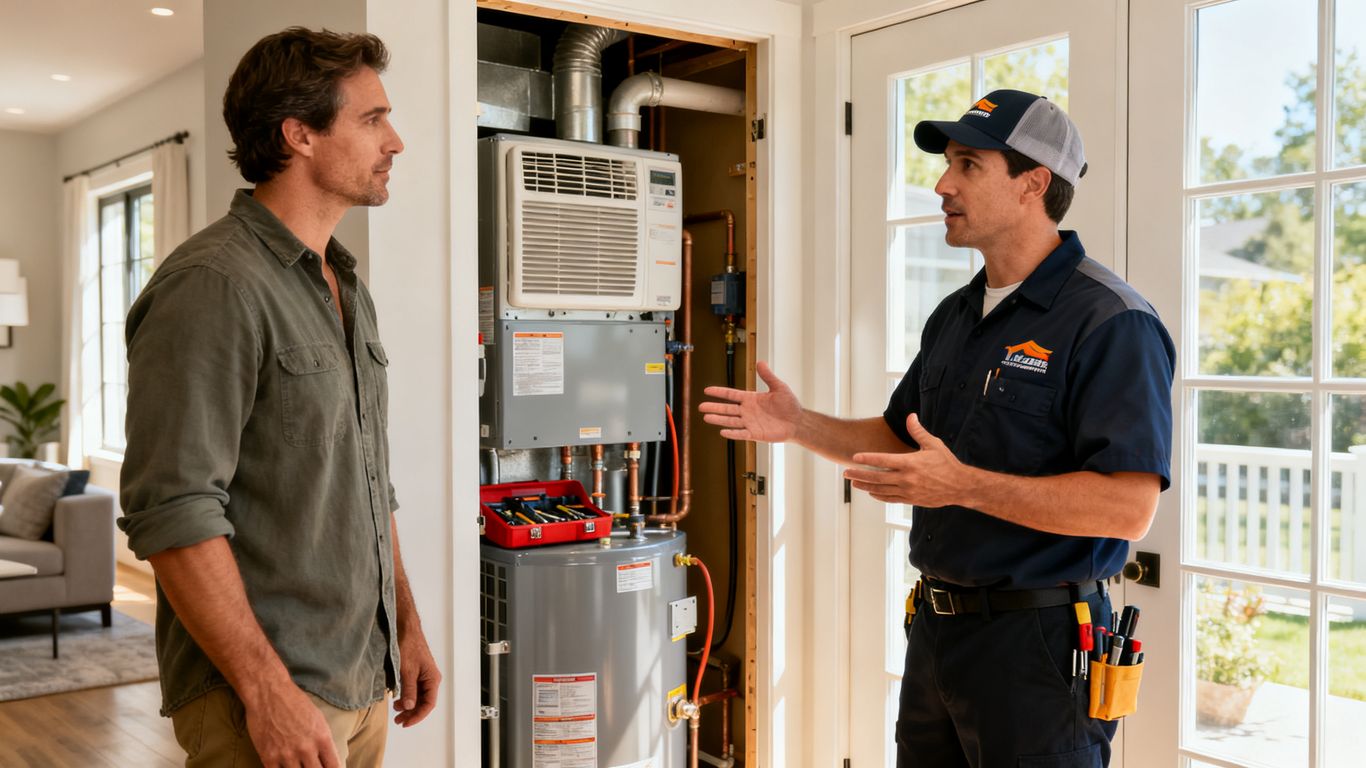
A well-made installation walk-through can answer the questions that usually make homeowners hesitate. It also gives paid campaigns and service pages a more useful job than simply repeating a phone number.
- Show the real installation process, not a polished sequence of vague promises.
- Explain site conditions, options, and variables without pretending to provide a remote quote.
- Use a clear structure that moves viewers from concern to estimate request.
- Place the video across service pages, ads, follow-up messages, and retargeting campaigns.
- Judge performance by qualified opportunities and booked work, not views alone.
Why an installation walk-through works before the estimate
An estimate request is a trust exchange before it is a pricing conversation. The homeowner is inviting a company into the home, making a costly decision, and trying to avoid an unpleasant surprise. A useful walk-through gives that person context before the first visit, which is why AC installation company video marketing can support both organic content and paid acquisition.
The trust gap between a lead form and an in-home appointment
A lead form captures intent, but it says very little about confidence. Someone may submit the same short form to several contractors simply because the companies appear similar on the page. A walk-through lets the homeowner see how the work is approached, what the technician explains, and whether the company feels organized enough to invite inside.
That does not replace the appointment. It makes the appointment less of a blind commitment, especially when the video acknowledges that every home has different equipment, access, and ductwork conditions.
What homeowners want to know before choosing an AC installation company
Most homeowners are not asking for a technical lecture. They want to know what will happen, how long the disruption may last, what could change the scope, and how the finished system will be checked. They also want clues about cleanliness, communication, and whether the crew will respect the home.
Answer those questions in plain language. A short explanation of why a drain line, electrical connection, or airflow test matters can be more reassuring than a long list of certifications that the viewer cannot interpret.
How showing the process reduces perceived risk and price-only shopping
Price shopping becomes easier when every company looks interchangeable. Showing the work creates a more useful comparison: the homeowner can consider preparation, testing, protection of the property, and communication alongside the equipment price. The goal is not to hide cost, but to make the scope behind the cost visible.
Visible process builds context. When a video calmly explains why two installations may not have the same labor or materials, a higher estimate has a better chance of being evaluated on its own terms.
Where video fits in the AC buyer journey
Video can introduce the company when someone is researching, clarify the decision while a person compares estimates, and answer practical questions after a form submission. It should have a job at each stage rather than being copied everywhere without a reason.
A service-page visitor may need a full walk-through. A retargeting viewer may need a 20-second reminder about the estimate process. A follow-up email may need one specific segment about what happens during the home visit.
What to show in the AC installation company video
The strongest installation video follows the work in a believable order. It does not need to reveal every proprietary detail, but it should show enough of the job to help a homeowner understand what the crew is evaluating and doing. Film around the customer’s real questions, not around a list of equipment features.
A realistic walkthrough from equipment selection to final testing
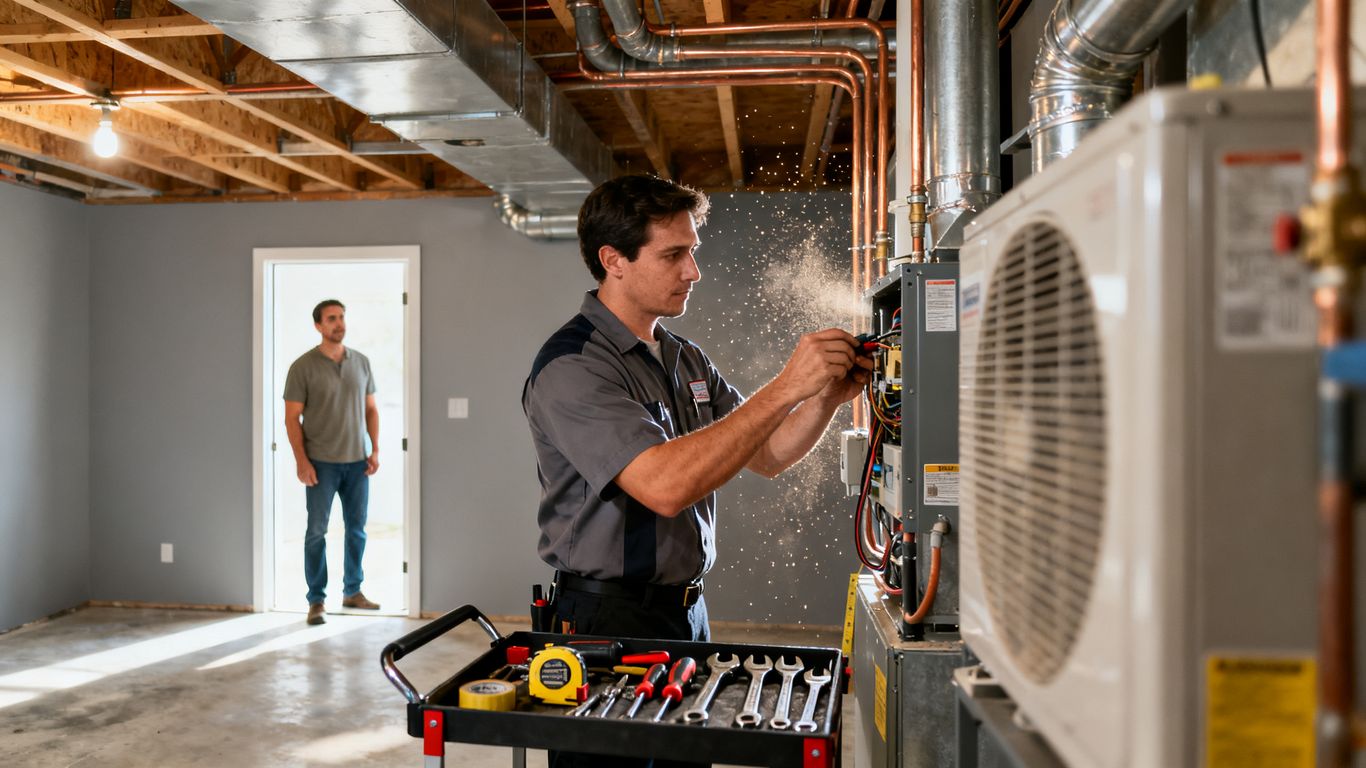
Begin with the assessment: existing equipment, comfort concerns, access, and the homeowner’s goals. Then move through selection, preparation, removal where relevant, installation, cleanup, startup, and final testing. The sequence should feel like a visit a homeowner could recognize, not a staged montage.
Keep transitions simple. A technician pointing out a real decision at the equipment location often teaches more than several close-ups of tools.
The site conditions that affect installation scope and pricing
Show the kinds of conditions that can change the work, such as a tight mechanical room, attic access, equipment location, line-set routing, electrical needs, drainage, or ductwork configuration. Avoid turning those examples into a remote quote. The point is to explain why an in-home assessment remains necessary.
A useful line is, “This is something we inspect on site,” followed by a brief explanation of what the technician is looking for. That language protects accuracy while making the estimate process feel more transparent.
Details that signal quality, including airflow, drainage, wiring, and code compliance
Viewers may not know what good workmanship looks like, so show the checks that matter after the equipment is set. Airflow readings, secure wiring, proper drainage, neat line routing, and attention to applicable requirements can all be explained without turning the video into a code seminar.
Use close-ups sparingly and pair each one with a reason. “We test this because…” is more useful than simply showing a meter or a finished connection.
The technician explanations that make technical work understandable
The technician should explain decisions as they happen, using everyday comparisons where they help. Keep the camera close enough to see the work, but let the explanation lead the shot. If a term is necessary, define it immediately rather than assuming the audience knows it.
A good presenter does not need to sound scripted. A few planned questions, what are you checking, why does it matter, and what would change the scope, can create a natural conversation.
Mistakes to avoid, such as staged reactions and unexplained jargon
Overacting is easy to spot in a home-service video. So are unexplained acronyms, dramatic claims about savings, and shots that imply every installation is identical. These choices can make a technically competent company seem less trustworthy.
Before publishing, remove anything that sounds like a guarantee unless the claim can be supported for the specific situation. Authenticity is not a camera style; it is consistency between what the video promises and what the crew does.
How to structure the video for qualified leads
A viewer should understand the promise of the video within a few seconds. From there, the edit needs to answer questions in an order that feels natural: concern first, process second, variables third, and next step last. This structure filters for homeowners who want an informed estimate rather than a quick entertainment hit.
The opening hook that answers the homeowner’s biggest concern
Open with the concern that brought the viewer there. It may be uncertainty about price, disruption, equipment choice, or the condition of the home after the crew leaves. A direct statement such as “Here is what we inspect before we price an AC installation” gives the viewer a reason to continue.
Do not begin with a long logo animation. The company name can appear quickly, but the homeowner’s question should carry the opening.
A visual sequence that keeps viewers watching through the process
Use a clear visual progression: assessment, preparation, installation, verification, and handoff. Each stage should introduce something new, while brief transitions remind viewers where they are in the job. The result can still be calm; retention does not require frantic editing.
Show the hands, the equipment location, and the finished area. Those details make the sequence easier to follow and give the viewer useful evidence rather than generic atmosphere.
How to address options, exclusions, and variables without giving a misleading quote
Explain what the video can and cannot establish. Equipment choices, access, electrical work, duct modifications, permits, and disposal may vary by home and local requirements. Present these as items the company evaluates, not as a universal price menu.
A simple scope table can help the audience understand the difference between what is commonly included and what may require a closer inspection.
| Video topic | What to explain | What the viewer should expect |
|---|---|---|
| Equipment selection | Factors considered before recommending a system | Options depend on the home and comfort goals |
| Access and preparation | Where the crew needs room to work | Site conditions can affect labor and timing |
| Connections and drainage | Why routing and testing matter | The technician verifies the completed work |
| Final handoff | What is checked and explained afterward | The homeowner receives a clearer next step |
The table is not a substitute for an estimate. It gives sales and marketing teams a consistent way to describe scope without promising that every project follows the same path.
Calls to action that drive estimate requests instead of low-intent views
The call to action should match the video’s promise. If the video explains the installation process, invite viewers to request an in-home assessment or ask about their project, not to “learn more” in the abstract. Use one primary action and repeat it at the end with a short explanation of what happens next.
A form can ask for the address, preferred contact method, and a brief description of the comfort issue. Keep the request focused so qualified homeowners do not abandon it because the next step feels like a second interview.
Using chapters, captions, and on-screen labels for silent viewing
Many people encounter service videos without sound, especially in feeds and retargeting placements. Captions should carry the essential explanation, while on-screen labels identify stages such as assessment, installation, and testing. Chapters are especially helpful for a longer version on a service page.
Make text large enough for a phone and keep each label on screen long enough to read. Accessibility improvements often make the technical story clearer for everyone.
How to produce the video without making it feel like an ad
Production quality matters, but polish should support understanding rather than conceal the work. A clean image, steady framing, and intelligible sound are enough to create confidence when the subject itself is useful. The best footage often comes from a real job with thoughtful preparation.
Choosing a real installation, technician, and customer setting
Choose a job that illustrates meaningful decisions without exposing private information. The technician should be comfortable explaining the work and answering ordinary homeowner questions. With written permission, capture the setting as it is, including the constraints that make the process real.
A real installation gives the editor details that cannot be invented easily: the access route, the protection used on the floor, the conversation about placement, and the checks performed at startup.
Recording clear audio in mechanical rooms and unfinished spaces
Mechanical rooms are full of competing sounds, and unfinished spaces can create harsh echoes. Use a close microphone, record room tone, and capture short explanations more than once if necessary. A technically impressive shot is not useful when viewers cannot understand the technician.
Record a clean version of key explanations after the active work if the location is too loud. That preserves the authenticity of the setting without forcing the audience to decode every word.
Showing proof of workmanship while protecting customer privacy
Ask before filming the property, occupants, personal documents, addresses, or identifying details. Blur or remove labels that reveal private information. The homeowner’s comfort should matter as much as the marketing value of the footage.
Proof can come from process details rather than faces: protective coverings, organized materials, careful routing, testing instruments, and a clean handoff. Those shots remain useful even when the customer prefers not to appear on camera.
Balancing professional editing with an authentic jobsite feel
Edit out dead time and confusing movement, but keep the small signs of real work. A technician pausing to check a measurement or explaining a change in plan can make the piece more credible than a perfectly choreographed sequence. Music should stay beneath the voice and never set a mood that the footage cannot support.
A restrained edit also makes the company easier for salespeople to describe consistently. The video becomes a shared explanation, not a promise that only exists in advertising.
Creating shorter cutdowns for ads, social posts, and landing pages
One full walk-through can produce several focused edits: a hook about the assessment, a clip about site variables, a testing segment, and a direct estimate invitation. Each cutdown should stand on its own and point to an appropriate next step.
Keep the first seconds useful, add captions, and avoid trimming away the context that makes the claim accurate. Short does not mean vague.
Where to deploy the video to influence estimate requests
Placement determines whether the video answers a question or merely collects views. Put the full version where people are already evaluating installation services, then use shorter versions where attention is less certain. The same footage can support search, social, email, and follow-up when each placement has a defined role.
Embedding it on AC installation service and location pages
Place the full walk-through near the explanation of the installation process, not below a long page where few visitors will reach it. The surrounding copy should tell visitors what they will learn and what action to take afterward. Location pages can use the same core video if the service area and claims remain accurate.
A transcript or supporting summary can make the page more useful to visitors who prefer reading. It also gives the sales team a dependable reference when answering common questions.
Using it in Google Ads landing pages and follow-up campaigns
Google Ads can send high-intent searchers to a landing page where the video clarifies what an estimate involves. Keep the message aligned from keyword to ad to page: someone searching for installation should not land on a general brand video with no explanation of the next step.
Use the video again in follow-up only when it answers the lead’s likely concern. A person who already requested an estimate may need preparation guidance rather than another broad introduction.
Retargeting engaged viewers on Meta and YouTube
Meta Ads and YouTube can support follow-up audiences based on meaningful engagement, provided consent, platform rules, and tracking settings are handled correctly. A viewer who watched the installation sequence may be ready for a practical invitation, while someone who stopped during the opening may need a shorter, clearer hook.
Do not assume every viewer has the same intent. Sequence creative by engagement level and exclude people who have already converted when the campaign objective no longer fits them.
Sharing it through email and SMS after a lead submits a form
A confirmation message can link to the relevant section of the video and explain what the homeowner should expect next. Keep SMS concise and make the link destination obvious. Email can carry more context, including preparation questions or a reminder to note access concerns before the appointment.
The message should reduce uncertainty, not create another sales pitch. That makes the video feel like part of the service experience.
Connecting the video to Google Business Profile and organic search content
Short clips can support posts and articles that answer installation questions, while the full video can remain the deeper resource. Link the content to a relevant service page and keep titles and descriptions specific to the homeowner’s question. A useful HVAC video marketing guide can provide additional ideas for connecting video with search and website traffic.
Treat organic placement as a compounding asset, but do not rely on rankings alone. The video still needs a clear page experience and a practical path to request an estimate.
How to turn video engagement into better campaign performance
Video data is most useful when it is connected to the actions that keep an installation company busy. Views and watch time can reveal whether the creative earns attention, but they do not show whether the audience is commercially valuable by themselves. Measurement should follow the person from exposure through lead, call, appointment, and revenue where possible.
Tracking watched video, estimate requests, calls, and booked appointments
Set up events for meaningful video engagement, form submissions, calls, appointment requests, and booked appointments. Record the campaign, landing page, and creative associated with each lead. Make sure phone calls and offline outcomes are not disappearing from the same report.
The tracking plan should be agreed on before launch. Otherwise, the team may optimize toward the easiest event to count instead of the outcome the business actually needs.
Separating vanity metrics from revenue-driving KPIs
A high view count can be encouraging, but it may reflect broad reach rather than demand. Compare completion or threshold views with estimate requests, qualified calls, appointment rate, close rate, and revenue. Cost per qualified opportunity is usually more useful than cost per three-second view.
A practical dashboard might include these measures:
- Cost per engaged viewer
- Cost per estimate request
- Contact rate and booked-appointment rate
- Qualified lead rate by campaign
- Closed revenue and return on ad spend
Use the list as a decision tool, not a reporting ritual. If engagement rises while qualified appointments fall, the creative may be attracting curiosity without setting the right expectations.
Building audiences from viewers who reach meaningful watch thresholds
Create audience groups around thresholds that reflect genuine interest, such as viewers who reach the process explanation or final-testing segment. The exact threshold depends on video length and platform behavior. Keep the audience definitions consistent enough to compare creative over time.
These viewers can receive a more direct estimate invitation, while shallow viewers may be better served by a different opening or a shorter explanation.
Comparing video-assisted leads with leads that never watched
Use a reasonable comparison rather than claiming that every watched lead was caused by the video. Compare lead quality, appointment rate, and close rate among similar campaigns or landing-page experiences. Note differences in season, service area, budget, and audience before drawing a conclusion.
Assisted influence still matters, but it should be labeled honestly. A video that helps a homeowner choose the appointment may not be the final tracked click.
Using CRM data to measure lead quality and close rate
Send campaign and engagement details into the CRM when the setup allows it, then connect them to disposition and revenue fields. Sales notes can reveal whether viewers arrive better prepared, ask different questions, or understand the estimate process sooner.
Review those observations with the people answering calls and running estimates. Their feedback often identifies improvements that a platform report cannot.
How to improve the video after launch
The first version is a useful starting point, not a permanent asset. Homeowners will reveal which explanations help and which sections lose attention. A monthly or quarterly review can turn those signals into practical edits instead of a complete restart.
Identifying drop-off points and confusing sections
Look for sharp retention declines alongside the spoken line and visual on screen at that moment. A long equipment shot, an unexplained term, or a sudden change in pace may be enough to lose a viewer. Pair platform data with comments, form questions, and sales feedback.
Do not edit every small dip. Prioritize sections that affect understanding of scope, trust, or the estimate request.
Testing different hooks, thumbnails, and calls to action
Test one meaningful change at a time when possible. A concern-led hook may outperform a company introduction; a clear image of the technician may outperform a generic equipment close-up; a specific estimate invitation may outperform “learn more.” Give each version enough exposure to produce a useful comparison.
Keep the underlying promise consistent. Testing should find a clearer way to communicate the same service, not create a new claim for every audience.
Updating claims when equipment, incentives, or installation standards change
Review language whenever available equipment, rebates, financing terms, or local requirements change. Remove outdated offers promptly and re-record statements that could now mislead a homeowner. Date-sensitive information belongs in flexible page copy when possible, not in footage that will be hard to replace.
The same review should check captions, descriptions, landing-page text, and sales scripts. Consistency protects both the campaign and the customer experience.
Repurposing customer questions into new video segments
Questions from calls and estimates are a ready-made editorial calendar. If several homeowners ask about attic access, replacement timing, or post-installation testing, create a short answer that can stand alone and link back to the full walk-through.
This approach keeps content close to real demand. It also lets the team respond to uncertainty before it becomes a reason to delay the appointment.
Aligning the video with sales scripts and estimate follow-up workflows
Give the sales team a short description of what the video covers and where it stops. Follow-up messages can then refer to the same stages and expectations without overpromising. If the video says the technician evaluates a condition on site, the script should not imply that the answer was already determined online.
For broader campaign planning, the team can review video campaign strategy alongside its own call and CRM data. The useful measure is whether creative, page experience, and follow-up are working as one system.
Conclusion
An AC installation walk-through earns trust by making the unfamiliar visible: the assessment, the variables, the workmanship, and the final checks. When it is structured around real homeowner questions and measured against qualified estimate requests, it becomes more than a brand asset: it becomes a practical part of the buying journey.
Frequently Asked Questions
How long should an AC installation walk-through video be?
A full service-page version can be long enough to explain the process clearly, while shorter edits should focus on one concern or decision. Use audience retention to remove repetition rather than cutting useful context simply to reach a target length.
Should the video show a real customer’s home?
A real setting can make the process easier to understand, but only with clear permission and careful protection of personal information. The company can also film a suitable work area without revealing an address or identifying details.
Can a video provide an accurate AC installation quote?
Usually not. A video can explain common variables and why an assessment matters, but equipment, access, electrical needs, ductwork, and local requirements may differ from one home to another.
What should the call to action say?
Use a direct next step tied to the video, such as requesting an in-home assessment or asking about an installation. Tell viewers what information they will provide and what happens after they submit it.
Where should an installation video be published first?
Start with the AC installation service page and a relevant landing page, then adapt the footage for follow-up, social placements, and retargeting. The first placement should match the viewer’s intent and the video’s level of detail.
How do you measure whether the video is working?
Track meaningful watch thresholds alongside estimate requests, calls, booked appointments, qualified lead rate, close rate, and revenue. Views help diagnose attention, but they should not be treated as the main business outcome.
How often should the video be updated?
Review it whenever equipment, incentives, processes, or installation requirements change, and use retention and sales feedback for regular improvement. Small targeted updates are often more useful than replacing the entire video without evidence.
Make Estimate Requests Easier
Once the video has done its job, remove friction from the next step. Give serious homeowners a simple way to choose a conversation time and book a consultation while their questions and intent are still fresh.