The 'Shutters vs Blinds' Article Framework That Captures 2,000 Monthly Searches
Key Takeaways
A useful shutters-versus-blinds article should help readers make a decision while also helping a local window treatment company attract serious inquiries.
- Explain the practical differences in light control, privacy, maintenance, and durability.
- Compare plantation shutters, wood blinds, and faux wood blinds without treating one option as best for every home.
- Organize the page around room needs, budget, installation, and long-term value.
- Use real photos, local examples, reviews, and clear service information to build trust.
- Connect comparison content to measurable consultation and quote-request actions.
Define the search intent behind “shutters vs blinds”
People searching for a shutters vs blinds comparison SEO article are rarely asking only for a definition. Some are gathering ideas, while others are already comparing prices before replacing window coverings. The page needs to serve both groups without making the reader work through generic filler. A clear structure can move someone from curiosity to a sensible next step.
Separate comparison research from purchase-ready searches
Research-oriented visitors want to understand how shutters and blinds differ in daily use. They may search for light control, cleaning, insulation, or style before they know which product belongs in a particular room. Purchase-ready visitors tend to add terms such as cost, custom sizing, installation, or a city name. Address both intents, but give high-intent questions a visible path toward measurement or consultation.
Address homeowners comparing plantation shutters, wood blinds, and faux wood blinds
The comparison becomes more useful when it names the choices homeowners actually encounter. Plantation shutters often feel more architectural, while wood blinds bring natural texture and faux wood can be a practical choice where moisture or a lower price matters. The wording should describe trade-offs rather than imply that material alone settles the decision.
Match content depth to the questions appearing in Google results
Search results can reveal the questions that deserve a direct answer: which option blocks more light, whether either treatment helps with drafts, and how difficult each is to clean. Those questions should become useful subtopics, not a string of thin keyword variations. A plantation shutter and blind guide can support the comparison, but the page itself still needs original room-by-room judgment.
Map comparison sections to different stages of the buying journey
A reader at the awareness stage needs plain definitions and visual context. Someone evaluating products needs a table, material discussion, and realistic cost factors. Near the decision stage, they need to know what happens during a site visit, how measurements work, and what information to provide when requesting an estimate. Structuring the article around those stages makes it easier to read and easier to convert.
Create the core shutters vs blinds comparison
A strong comparison starts with use, not with a list of product adjectives. Shutters and blinds can both provide privacy and light management, but their construction, operation, and visual weight create different experiences. The best answer depends on the window, the room, and how the household lives. Readers should be able to see both the strengths and the compromises.
Compare light control, privacy, and room-darkening performance
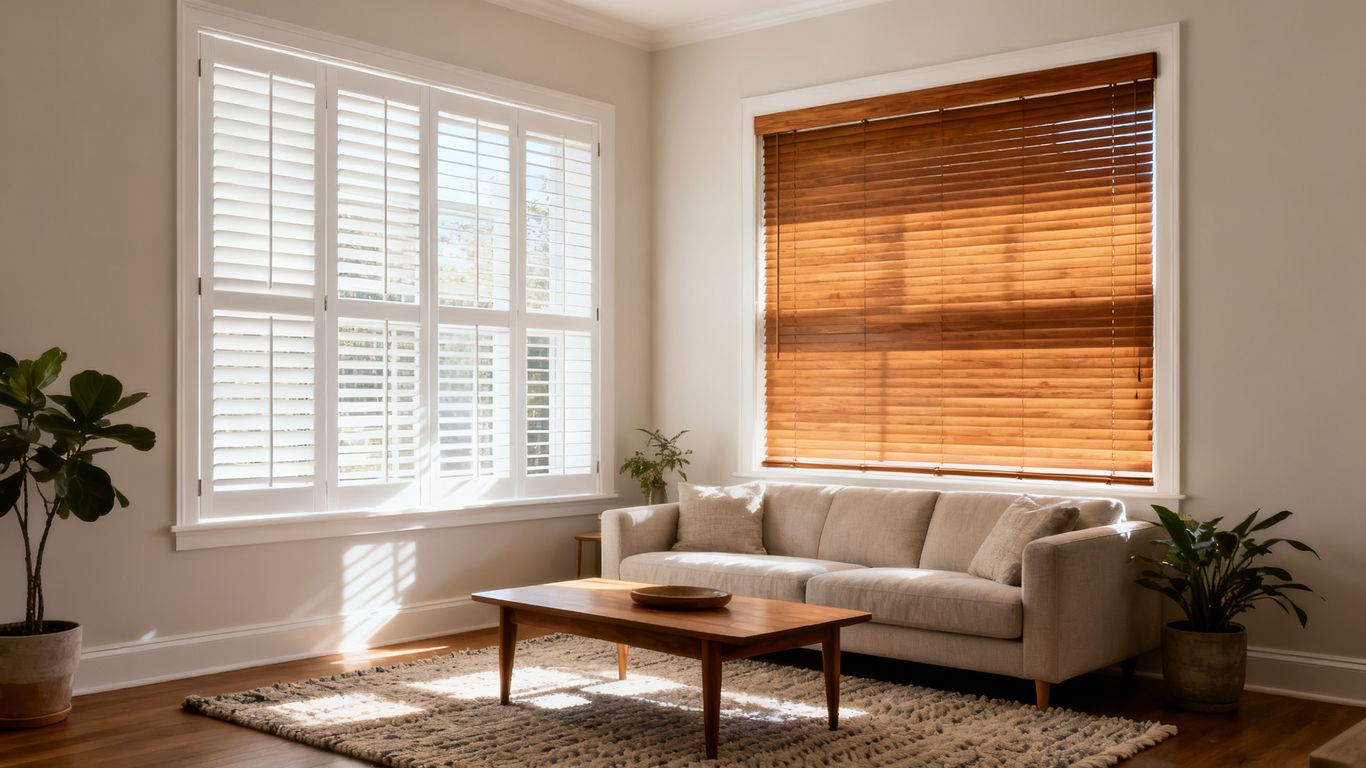
Both treatments can change the amount of daylight entering a room. Adjustable blind slats allow fine changes in direction and openness, while shutter louvers create a more substantial, built-in covering. For bedrooms or media rooms, discuss the difference between reducing glare and achieving a genuinely dark environment; product construction, fit, and edge gaps matter as much as the category name.
Explain insulation, energy efficiency, and noise reduction
A treatment fitted close to the window may help moderate the room, particularly when it reduces direct sun or limits air movement around the opening. Shutters can have a more solid presence, while blinds vary considerably by material and design. Avoid promising a specific energy saving. Instead, explain that window orientation, glazing, fit, and the rest of the building envelope affect the result.
Contrast durability, cleaning, and long-term maintenance
Durability is partly a material question and partly an operating-habit question. A treatment that is opened and closed frequently, exposed to children or pets, or installed in a damp room needs a different assessment from one in a quiet guest room. Readers also appreciate practical details: dusting louvers, wiping slats, checking operating parts, and asking how repairs are handled.
Show how materials affect appearance, moisture resistance, and lifespan
Real wood offers visible grain and warmth, but moisture exposure deserves careful consideration. Faux wood and other composite choices may be easier to place in kitchens or bathrooms, depending on the specific product. Color, frame style, louver or slat size, and finish influence how a treatment sits beside flooring, cabinetry, and trim. Material choice changes more than appearance; it can affect cleaning expectations and replacement timing as well.
Summarize the differences in a scannable comparison table
A table is useful after the detailed explanations because it gives readers a quick way to revisit the main trade-offs. It should remain qualified rather than presenting broad categories as universal guarantees.
| Decision factor | Shutters | Blinds |
|---|---|---|
| Light control | Louvers provide controlled adjustment with a substantial frame | Slats can tilt, raise, or lower for flexible adjustment |
| Visual character | More built-in and architectural | Often lighter, simpler, and available in many materials |
| Moisture planning | Depends on the shutter material and room conditions | Depends on material, finish, and exposure |
| Installation | Usually treated as a more permanent window treatment | May offer more flexible replacement and installation choices |
| Budget | Often a higher initial investment | Broad range from economical to premium options |
The table is a starting point, not a verdict. A consultation should connect these general differences to the actual window depth, operating clearance, sun exposure, and finish the homeowner wants.
Help readers choose by room and lifestyle
The same treatment can behave very differently from one room to another. A sunny living room has different priorities from a steamy bathroom, and a household with toddlers may care more about operating safety than a home office does. Room-based advice lets readers imagine the products in their own homes. It also creates natural entry points for local service pages and consultations.
Recommend options for living rooms, bedrooms, and home offices
Living rooms often benefit from a balance of privacy, daylight, and visual consistency across several windows. Bedrooms may place greater weight on glare reduction and nighttime privacy, while home offices need control over reflections on screens. Rather than assigning one product to each room, explain which performance priority should guide the choice.
Compare moisture-resistant treatments for kitchens and bathrooms
Humidity, splashes, ventilation, and cleaning routines all matter in wet areas. A moisture-resistant material may be preferable, but readers should confirm the manufacturer's instructions instead of assuming every faux wood or composite treatment is suitable. In a kitchen, clearance from sinks and cooking areas also affects practical placement.
Explain child and pet safety considerations
Safety should be discussed before color and style. Ask about accessible cords, operating controls, furniture placement, and whether a treatment can withstand curious hands or active pets. A home service business can make this conversation part of the measurement process rather than leaving the homeowner to discover limitations after installation.
A compact room-and-lifestyle checklist keeps this advice actionable:
- Identify who uses the room and how often the window treatment is operated.
- Note exposure to water, heat, direct sun, dust, and household traffic.
- Decide whether glare control, privacy, darkness, or easy cleaning comes first.
- Check for furniture, handles, radiators, and other clearance issues.
That checklist helps narrow the product category without pretending that every window in a house needs the same answer. It also gives a salesperson better information before an in-home visit.
Match window treatments to traditional, modern, and transitional interiors
Traditional rooms may suit natural finishes, divided-light proportions, and more formal trim. Modern interiors often favor clean lines, restrained colors, and minimal visual clutter. Transitional spaces can combine a substantial frame with a simpler finish. The article should show how the treatment relates to the whole room rather than describing style labels in isolation.
Account for unusual window shapes and oversized openings
Arched, angled, bay, and extra-wide windows may limit standard choices or require special operating plans. Large openings also raise questions about panel weight, stacking, access, and consistency across adjoining windows. The right comparison should tell readers when an on-site measurement is more reliable than an online dimension guide.
Explain pricing, installation, and long-term value
Price comparisons are most credible when they explain what drives the number. A homeowner may see a low retail price and still face sizing, delivery, mounting, and replacement questions. Custom work can cost more at the start, but the relevant comparison is often the total ownership experience. Keep estimates framed as variables unless verified pricing is available.
Break down the cost factors behind shutters and blinds
Material, size, shape, finish, operating method, mounting configuration, and the number of windows all influence cost. Labor and travel may vary by location, while difficult access or removal of existing treatments can add time. A useful article separates product cost from installation cost so readers know what to ask for in a quote.
Compare custom, made-to-measure, and off-the-shelf products
Off-the-shelf treatments may suit standard windows and straightforward budgets. Made-to-measure products account for individual dimensions, while fully custom work may offer more choices in materials, frames, and operation. The comparison should explain that a closer fit can improve appearance and usability, but it does not eliminate the need to select the right product for the room.
Explain professional installation versus DIY installation
DIY installation can be reasonable for a confident homeowner with accessible, square windows and clear instructions. Professional installation is more attractive when openings are large, irregular, high, or part of a coordinated whole-home project. Measurement errors can affect alignment and operation, so the article should describe the risk without overstating it.
Show how durability and replacement costs affect total value
Initial price is only one part of value. Consider how often the treatment will be used, how easily individual parts can be serviced, whether the material suits the room, and how likely the homeowner is to replace it during a renovation. A less expensive choice that fails early may not be the economical choice, while a premium product is not automatically worthwhile in every space.
Set realistic expectations for lead times and installation appointments
Lead times depend on product availability, customization, manufacturing, shipping, and the installer’s schedule. Set expectations in stages: consultation, measurement, product confirmation, order, delivery, and installation. A clear business should explain what can delay an appointment and what the homeowner should prepare before the installer arrives.
Use evidence to make the comparison credible
Comparison content earns trust when it shows rather than merely asserts. Product photos should be taken in real rooms, with enough context to reveal the window size, trim, furniture, and daylight conditions. Reviews and installation examples can add human detail, but they should be presented accurately and with permission. Evidence makes the article useful long after the reader has skimmed the headline.
Include product photos that show real differences in light and privacy
Use consistent angles and similar lighting when comparing treatments. A photo with the louvers or slats open, partially closed, and fully closed can communicate more than a paragraph of sales language. Alt text should describe what is visible, not stuff the focus keyword into every image description.
Add installation examples from local homes and common window types
Local examples help readers understand scale and setting. Show treatments on standard bedroom windows, wide living-room openings, bay windows, and office windows when those examples are available. Explain the installation context honestly, including whether the image shows an inside mount, outside mount, replacement project, or new construction.
Use customer reviews to support claims about quality and service
Reviews are strongest when they describe a specific experience: communication, measuring, punctuality, installation quality, or how the finished treatment operates. Do not turn one customer’s praise into a universal promise. Pair review excerpts with the service context and keep them separate from unsupported claims about performance.
A short video can also make operation easier to understand than static copy. It should demonstrate opening, tilting, closing, and the finished appearance in a real setting rather than relying on dramatic claims.
After the video, return to the buyer’s question: which details did the reader actually see, and which still require a measurement or product discussion? That distinction keeps visual evidence helpful instead of making it a substitute for accurate specifications.
Explain manufacturer warranties and workmanship guarantees
Warranty information should identify what is covered, for how long, and whether exclusions apply to moisture, misuse, installation, or normal wear. Workmanship coverage is a separate question from the manufacturer's product warranty. Encourage readers to request the terms in writing and to ask who handles a service issue.
Address common objections about shutters being expensive or blinds being less durable
A fair article can acknowledge both objections without accepting either as a rule. Shutters may carry a higher initial price because of their construction and fitting, while blinds span a wide range of materials and quality levels. The better question is whether the selected treatment matches the room, expected use, and ownership horizon.
Optimize the article for local and comparison-based SEO
SEO should support the reader’s decision, not make the article sound like a keyword exercise. Put the primary phrase in a natural title, introduction, relevant heading context, and metadata, then build depth around the questions people ask next. For a window treatment company, local relevance matters because a useful comparison should lead to a service that is actually available nearby.
Place the shutters vs blinds comparison keyword naturally in key page elements
Use the focus phrase in the title tag or a close, readable variation, the meta description, the opening copy, and one relevant image or internal-link context where appropriate. The exact phrase shutters vs blinds comparison SEO belongs naturally in the strategy discussion, but it should not be repeated in every heading. Readability remains a ranking asset because it supports engagement and conversions.
Build related sections around cost, maintenance, insulation, and room suitability
Supporting topics create a stronger topical map than repeating the main comparison phrase. Cost answers a commercial question, maintenance reduces uncertainty, insulation addresses comfort, and room suitability helps readers self-qualify. Each section should answer something specific and link forward to the next decision rather than becoming a standalone keyword paragraph.
Add location-specific service language without making the copy repetitive
Mention the service area where it adds useful context: measurement availability, showroom access, installation coverage, or typical local housing stock. Dedicated city pages should provide distinct information rather than swapping one place name into identical copy. A local window treatment SEO strategy can connect product searches, city terms, service pages, and Google Business Profile work more coherently.
Strengthen internal links to product, service-area, and consultation pages
Internal links should appear when the reader naturally needs more detail. Link a comparison explanation to a product page, a local-service discussion to a service-area page, and a ready-to-buy moment to a consultation path. Keep anchor text descriptive and avoid placing links in every sentence; one useful link is better than several distracting ones.
The action path should be equally clear on mobile. A visitor who searches from a phone may want to call, request a measurement, or save the page for later. Make those next steps visible without interrupting the comparison before the reader has enough information.
Use descriptive image filenames, alt text, and comparison schema where appropriate
Name images for what they show, such as a living-room-shutter comparison, and write concise alt text for accessibility. Structured data should reflect the page’s actual content and eligibility; do not add comparison markup merely because it sounds useful. Test the page technically, then review it as a homeowner who wants an answer quickly.
Turn comparison traffic into qualified window treatment leads
Traffic from a comparison page is valuable only when the business can learn what the visitor needs and make the next step easy. A generic contact button leaves too much ambiguity. The page should offer a low-friction action after the reader understands the trade-offs, with language that matches the room or project being considered.
Position a consultation offer after the reader understands the trade-offs
Place the first strong offer after the core comparison, not in the opening sentence. At that point, the reader has learned enough to see why measurements and material advice could matter. Keep the offer specific: discuss window sizes, room conditions, operation, and budget with someone who can assess the project.
Use room-specific calls to action instead of generic contact buttons
A bedroom reader might respond to help with privacy and darkness, while a kitchen visitor may need moisture guidance. Calls to action can reflect those concerns without promising a particular product. Examples include “Plan bedroom window coverings” or “Discuss kitchen-safe options,” followed by the same simple inquiry path.
Design a landing-page path for quote requests and in-home measurements
The landing page should carry the comparison’s context forward. Ask for the service area, number of windows, rooms involved, preferred timing, and whether measurements are already available. Keep the form short enough for mobile users, explain what happens after submission, and make phone contact easy for visitors who prefer to talk.
Track phone calls, form submissions, booked consultations, and assisted conversions
A lead report should distinguish browsing from business outcomes. Track calls from the page, completed forms, booked consultations, and later conversions influenced by the article. Use analytics events and call tracking consistently, with clear source and campaign naming. Otherwise, comparison traffic may appear successful while producing little qualified demand.
Retarget visitors who compare options but do not request an estimate
Retargeting can remind undecided visitors about useful next steps, but the message should reflect their stage. A reader who viewed pricing may need a measurement explanation; someone who read room advice may respond to an installation example. Cap frequency, exclude converted leads, and send each audience to a relevant page rather than showing the same ad repeatedly.
Schedule a Consultation
Once the trade-offs are clear, the practical next step is to discuss the windows themselves. Book a consultation so the project can move from general comparison to a more informed conversation about fit, style, and installation.
Conclusion
A shutters-versus-blinds article performs best when it respects both sides of the search: homeowners want honest guidance, and window treatment businesses need qualified opportunities. Compare the products by room, material, operation, cost, and long-term use, then support the advice with real evidence and a measured local SEO plan. The result is more useful than a generic product list and more likely to turn search interest into a productive consultation.
Frequently Asked Questions
Are shutters better than blinds?
Neither is universally better. Shutters may suit homeowners who prefer a more permanent, architectural treatment, while blinds offer broad material and operating flexibility. The right choice depends on the room, window, budget, and maintenance priorities.
Which option gives better light control?
Both can control light, but they do so differently. Blinds can tilt, raise, or lower their slats, while shutters adjust through louvers and a more substantial frame. Fit, window orientation, and the desired level of darkness also affect performance.
Are shutters more energy efficient than blinds?
A well-fitted treatment may help reduce heat gain, glare, or drafts, but results vary. Window glazing, installation quality, climate, and the rest of the building envelope matter. Avoid treating one category as a guaranteed energy-saving solution.
Are blinds easier to clean?
Many blinds can be dusted or wiped relatively quickly, but cleaning depends on the material, slat design, and condition. Shutters also require routine dusting and wiping. The best choice is the one whose maintenance fits the household’s habits and room conditions.
Are faux wood blinds suitable for bathrooms?
They may be suitable when the specific product is designed for moisture exposure, but homeowners should confirm the manufacturer's guidance. Ventilation, splashing, mounting position, and cleaning products still affect service life.
Do shutters cost more than blinds?
Shutters often have a higher initial price, while blinds cover a wider range of price points. The final cost depends on material, dimensions, customization, installation, and the number of windows. Compare complete quotes rather than product prices alone.
Should window treatments be professionally installed?
Professional installation is especially helpful for irregular, oversized, high, or difficult-to-access windows. DIY may work for straightforward standard openings when the homeowner can measure and mount accurately. The decision should account for fit, safety, and the cost of correcting mistakes.