TikTok for Countertop Companies: The Fabrication Videos Getting 500K Views
Key Takeaways
Fabrication content gives countertop companies a practical way to earn attention before asking for a quote. The strongest strategy combines satisfying shop footage with local targeting, clear follow-up, and revenue tracking.
- Show the transformation, not just the finished countertop.
- Use quick visual hooks built around cutting, polishing, reveals, and installation.
- Add service-area context naturally so broad reach can become local demand.
- Treat comments, profile visits, calls, and consultation requests as buying signals.
- Repeat videos that produce qualified conversations, not merely impressive view counts.
Why countertop fabrication videos perform on TikTok
Countertop work has an advantage on short-form video: the process is naturally visual, physical, and easy to understand without a long explanation. Stone changes shape in front of the viewer, machinery creates clean lines, and an ordinary kitchen can look entirely different by the final shot. That combination gives countertop company tiktok marketing a strong creative foundation.
The visual tension behind cutting, polishing, and installation
A good fabrication video makes viewers wait for a visible result. The blade approaches the mark, the edge gradually smooths, or a heavy slab settles into place with almost no gap. Each step creates a small question in the viewer's mind: will the cut land correctly, will the polish become even, and will the installation fit?
That tension works best when the camera stays close enough to show the material changing. A wide shop shot establishes scale, but detail footage of the edge, water, tooling, and seam gives the process its satisfying payoff.
Why process content earns more watch time than showroom photos
A showroom photo asks people to admire a finished surface. Process footage gives them a reason to keep watching. It has sequence, movement, and an ending, so even someone who is not ready to remodel may stay for the reveal.
This does not make project photography irrelevant. Photos help buyers compare colors and styles later, while video introduces the craftsmanship behind the purchase. A useful TikTok ad statistics guide can provide broader context, but your own retention and inquiry data should determine which formats deserve more production time.
The countertop moments that trigger replays and shares
Replays usually come from moments that are either unusually precise or visually surprising. A tight seam disappearing, a patterned slab opening up after the cut, or a sink cutout dropping cleanly from the sheet can all reward a second look.
Keep the payoff visible for a beat rather than cutting away immediately. Viewers may share a clever fabrication detail with a partner, designer, or contractor, especially when the clip explains just enough to make the work understandable.
How local relevance turns broad reach into potential buyers
A video can travel far beyond your service area and still be useful, but views alone do not make a local pipeline. The bridge is context: mention the type of kitchens you build, show recognizable regional design preferences, or add a simple service-area reference in the caption.
The goal is not to turn every post into a commercial. It is to help a nearby homeowner recognize that the shop shown in the video works on projects like theirs. For a wider acquisition plan, pair social content with a local countertop marketing plan that supports search visibility, reviews, and follow-up.
The fabrication video formats worth testing first
Not every job needs a custom concept. A repeatable set of formats makes it easier for a shop to film consistently while still giving viewers variety. Start with moments that have a clear beginning, a visible transformation, and a natural reason to watch until the end.
Slab selection and dramatic pattern reveals
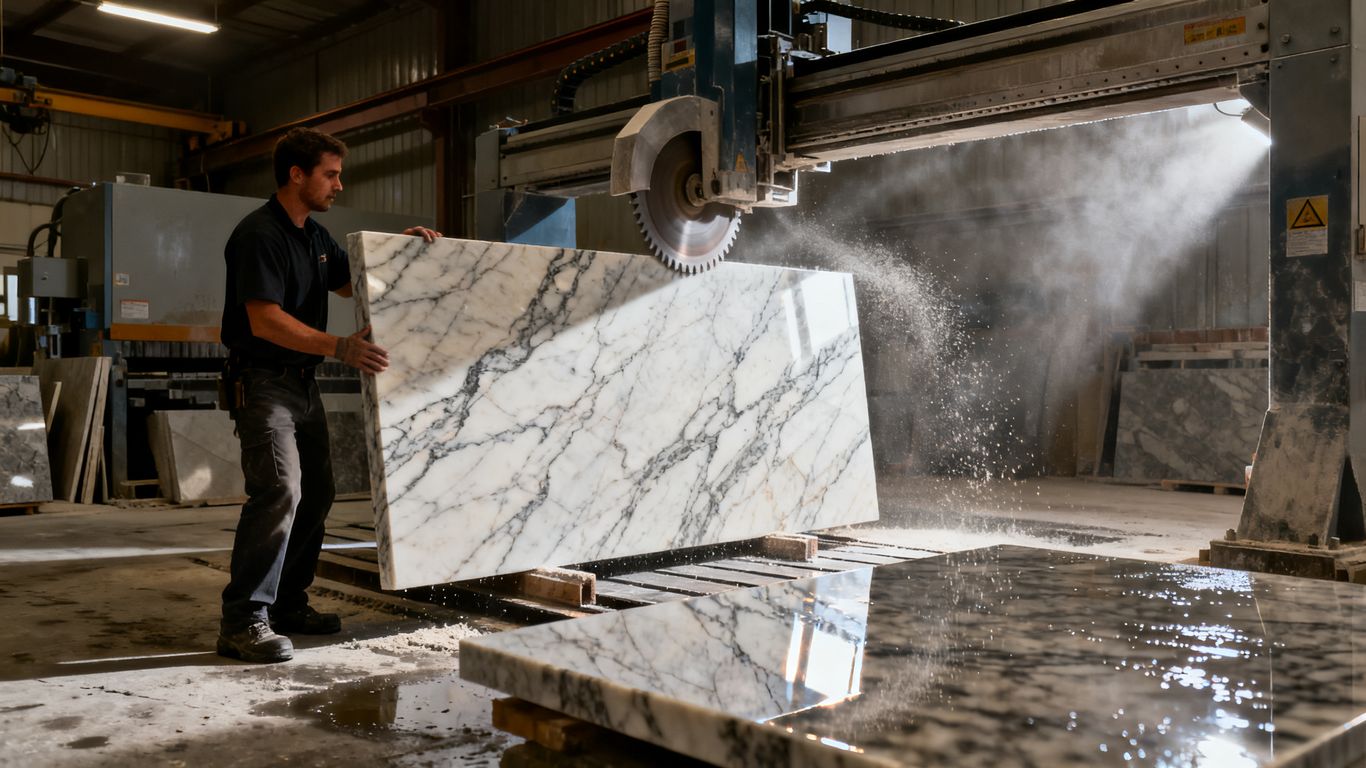
Slab content works because buyers often struggle to imagine a full sheet becoming a finished kitchen. Begin with the raw material, move across the veining, and then show how the layout will use the strongest part of the pattern. A hand, tape measure, or template can add scale without distracting from the stone.
Avoid presenting every reveal as a luxury fantasy. Explain practical choices such as direction of movement, bookmatching, or where an island will sit when those details are visible. That makes the video useful to someone actively comparing materials.
CNC cutting, waterjet work, and edge profiling
Machinery footage earns attention when the viewer can see both the tool and the result it is creating. Use a wide angle for the machine's movement, then cut to a close shot of the line, edge, or finished profile. The contrast helps nontechnical viewers understand why the step matters.
A short caption can identify the purpose of the operation without burying the video in jargon. Focus on what changed: a precise opening, a shaped edge, or a surface ready for the next stage.
Sink cutouts, waterfall edges, and seam installation
Sink cutouts and waterfall edges offer strong visual boundaries. The viewer sees a marked area become an opening or watches a vertical piece align with the island top. Seam installation is compelling for a similar reason: small adjustments determine whether two large pieces read as one surface.
Film these steps from a safe distance and include the completed detail afterward. The finished shot gives the technical action a point, while the close-up reassures potential buyers that the craftsmanship is visible beyond the machinery.
Before-and-after transformations from template to finished kitchen
A template-to-installation story is one of the easiest formats to repeat. Show the empty or outdated space, the template or fabrication stage, and the finished kitchen in the same general direction so the change is easy to follow.
The best version does not rush past the middle. Include one or two shots of fabrication, then let the final kitchen breathe. This format also creates useful material for a home improvement marketing service when a company wants outside help coordinating short-form content and broader campaign work.
How to plan videos that hold attention
Planning does not mean scripting every gesture. It means deciding what the viewer should notice first, what question the middle should answer, and what visual payoff arrives at the end. That small amount of structure prevents a useful shop moment from becoming a slow, unfocused clip.
The first-second hooks that stop local homeowners from scrolling
The opening frame should show motion, contrast, or a result that needs explaining. A blade already approaching a marked cut is stronger than a logo animation, and a close-up of a dramatic vein is stronger than a slow walk through the shop.
Write the hook around the visual rather than making a broad promise. Phrases such as “watch this island edge come together” or “this vein changes the layout” give viewers a reason to stay without sounding like an infomercial.
Shot sequences for filming a complete fabrication process
A simple sequence can turn one job into a coherent story. Capture the material, the key operation, the detail inspection, and the installed result. Keep each shot long enough to edit cleanly, even if the final video uses only a second or two from each clip.
For jobs with several fabrication stages, collect these four moments:
- The raw slab or template before work begins.
- The main cut, polish, profile, or shaping operation.
- A close inspection of an edge, opening, or seam.
- The finished countertop in its installed setting.
This sequence keeps the narrative intact while leaving room for different edits. One version can emphasize machinery; another can focus on the design transformation.
On-screen text, captions, and voiceovers for technical work
Technical footage needs a little translation. On-screen text can name the operation, while a voiceover explains why the step affects fit, finish, or daily use. Keep the language plain and let the visuals carry the proof.
Captions should also answer the questions buyers commonly ask: what material is this, how long does the process take, and where does the company work? You do not need to answer all three in every post. One useful answer is usually better than a paragraph of copy competing with the cut.
Video lengths and pacing for satisfying process content
There is no single ideal length for every fabrication clip. A quick edge-polishing moment may be complete in seconds, while a full template-to-installation story needs more room. Cut whenever the action stops changing, but do not remove the final result just to make the video shorter.
Use faster pacing for repetitive machinery movement and slower pacing for the reveal or final inspection. That contrast creates rhythm. A viewer should feel that each shot either advances the process or increases anticipation.
How to film countertop content in the shop
A phone is enough to build a useful library if the footage is stable, well exposed, and captured safely. The shop itself supplies texture: water, stone dust, tooling, slabs, templates, and the controlled movement of skilled hands. The main job is to make those details legible.
Camera angles that make machinery and detail work clear
Use a wide shot to establish where the operator and machine are positioned, then move closer for the cut or finish. A low three-quarter angle can show the thickness of a slab, while a straight-on detail shot makes a seam or edge easier to judge.
Avoid standing directly in the path of moving equipment or forcing an operator to work around the camera. The best footage comes from a repeatable safe position, not from chasing dramatic angles during an active operation.
Lighting, dust control, and safety considerations
Hard overhead light can flatten veining and make polished edges look dull. When possible, use existing light from the side and expose for the stone surface rather than the brightest reflection. Wipe the lens often; a small amount of dust can make an otherwise sharp clip look hazy.
Safety comes before content. Follow shop procedures, keep clear of machinery and wet areas, and never ask someone to remove protective equipment for a better shot. A clean, calm frame is more credible than footage that appears careless.
How to capture usable footage with a phone
Record vertically, lock focus on the material, and hold the phone steady with both hands or a simple mount. Capture a few seconds before and after the main action so an editor has room to make clean cuts. Check the first clips immediately for glare, focus, and unwanted vibration.
Sound is optional when the shop is loud. Natural machine audio can work for short satisfying clips, but captions or a later voiceover may communicate the story more clearly. Consistency matters more than expensive equipment.
B-roll to collect during every fabrication job
A small B-roll routine prevents the need to revisit a completed project. Film hands checking an edge, water moving across a cut, the slab being cleaned, the template being positioned, and the finished surface catching light. These details can support several edits over time.
Store clips by project and stage, not only by date. That makes it easier to assemble a before-and-after video weeks later, when the installation photos and consultation follow-up are ready.
How to turn viral reach into local countertop leads
Reach creates an opportunity, not a booked job. A homeowner still needs to understand what you make, where you work, and what to do next. The strongest lead path feels like a continuation of the video rather than a sudden switch to a generic sales pitch.
Adding service areas without making videos feel like ads
Use local context in captions, replies, and occasional spoken lines. Mention a nearby service area when the project genuinely took place there, or describe the kinds of homes and remodels your shop commonly serves. This filters attention without interrupting the fabrication story.
Keep the first line about the visual event and place location details after it. Someone may stop for the cut, then continue reading because the project is relevant to their area. For broader social planning, a follower strategy comparison can help clarify why reach and local intent should be evaluated separately.
Calls to action for quotes, slab consultations, and showroom visits
A call to action should match the stage of the buyer. Someone admiring a slab may be ready for a material consultation, while someone watching an installation may want a quote. Ask for one next step rather than listing every service.
Use plain language: invite viewers to send dimensions, request a consultation, or visit the showroom. Repeat the action in the caption and profile so interested viewers do not have to search for it after watching.
Using comments to identify buying intent
Comments often reveal more than likes. Questions about price, lead time, service areas, material availability, and sink options indicate that a viewer is moving from entertainment toward evaluation. Reply publicly when the answer is broadly useful, then offer a private path for project details.
Track recurring questions in a simple document and turn them into future videos. A comment asking whether a seam will show can become a close-up explanation; a question about slab selection can become the next reveal.
Connecting TikTok viewers to a conversion-focused landing page
The landing page should continue the promise made in the video. If the post features custom islands, show island projects, explain the consultation process, and make the contact form easy to complete on a phone. Do not send every viewer to a crowded homepage with no obvious next action.
Include service areas, project photography, a short qualification form, and a clear response expectation. The page should make it simple to call, submit dimensions, or request a consultation while the video is still fresh in the visitor's mind.
How to use TikTok Ads with organic fabrication content
Paid distribution works best when it extends a creative idea that has already shown signs of audience interest. Organic posts provide a practical testing ground for hooks, edits, and visual themes before a local company assigns them a larger budget. The paid campaign still needs its own targeting, tracking, and follow-up plan.
When to promote an organic post through Spark Ads
Spark Ads are a useful option when an organic fabrication post already has strong watch behavior or meaningful comments. Promoting the existing post preserves the social context around it, which can make the ad feel closer to a real project update than a polished commercial.
Do not select a post only because it has a large view count. Look for evidence that the audience understood the work and that at least some viewers asked relevant questions. The creative should also make sense to someone seeing the company for the first time.
Retargeting video viewers with project and offer creative
People who watched a fabrication video may need a second message before they submit their information. Retargeting creative can show finished kitchens, explain the consultation process, or answer a common material question. The follow-up should add information rather than replaying the same hook.
Separate warm viewers from broader prospecting audiences when possible. Their familiarity with the shop changes the message: a warm viewer may need a direct invitation, while a new viewer first needs proof of quality and service area.
Geographic targeting for countertop service areas
Keep targeting aligned with the area the company can actually serve profitably. A wide radius may produce cheap views from people who cannot become customers, while a tighter area can reduce waste even if the audience is smaller.
Use the ad, profile, landing page, and sales process together. Geographic targeting cannot fix unclear service-area language or a form that fails to ask where the project is located.
Budget, bidding, and creative testing for a local company
Start with a budget that can generate enough delivery to compare several creative angles without spreading spend across too many audiences. Test the hook, first frame, offer, and proof separately where possible. Otherwise, a winning or losing result is difficult to diagnose.
TikTok Ads can support paid campaign management, but the business still needs a clear definition of a qualified lead and a reliable handoff to the sales team. Review performance weekly, then move budget toward creative that produces useful conversations rather than simply the lowest-cost clicks.
How to measure whether TikTok marketing is producing revenue
A 500K-view video is a strong distribution event, but it is not a revenue report. Countertop projects involve planning, material choices, scheduling, and a meaningful sales process, so the measurement system must connect the first interaction to the eventual opportunity. That is where many social campaigns become either useful or misleading.
Reach and watch time versus qualified engagement
Reach and average watch time help diagnose creative quality. Saves, shares, profile visits, service-area questions, and project-specific comments are closer to commercial intent. No single metric should decide whether a format continues.
A practical reporting view can separate the stages like this:
| Stage | Useful signals | What it helps answer |
|---|---|---|
| Attention | Reach, views, first-second retention | Did the opening stop the scroll? |
| Interest | Watch time, replays, shares, saves | Did the process hold attention? |
| Intent | Profile visits, comments, calls, form starts | Did viewers consider the company? |
| Opportunity | Qualified consultations and estimates | Did interest become a real project? |
| Revenue | Won jobs and gross margin | Did the campaign pay back? |
The table keeps reporting grounded in business movement. A post can be excellent at attention and weak at intent, which is a creative lesson rather than an automatic reason to increase spend.
Tracking profile visits, calls, forms, and consultation requests
Use a consistent source label for every inquiry, and have staff ask how the person found the company. Track phone calls separately from form submissions because a viewer who calls may never appear in website analytics. Record whether each lead is in the service area and whether the project fits the company's work.
Review lead quality with the sales team, not only inside the ad platform. A campaign that generates fewer but better consultations may deserve more investment than one producing a large volume of unqualified forms.
Using UTM parameters and CRM source data
UTM parameters help distinguish traffic from individual campaigns, creative themes, and retargeting groups. Pair them with CRM fields for source, project type, location, estimated value, appointment status, and close outcome. Keep naming conventions stable so month-to-month comparisons remain meaningful.
TikTok Ads reporting can show what happened before the click, while website and CRM data show what happened afterward. Neither view is complete alone. Reconcile the two regularly and investigate gaps instead of quietly treating every form as a successful lead.
Deciding when a 500K-view video is worth scaling or repeating
Scale a high-view video when it also produces qualified engagement, affordable visits, and evidence that the sales team can convert the resulting demand. If it creates attention but no local response, repeat the visual idea with stronger service-area context or a clearer next step instead of simply spending more.
The most valuable outcome may be a repeatable format rather than one viral post. Save the opening frame, shot order, caption structure, and audience response, then make a new version around another slab, edge, or installation.
Book a Consultation
If you want help turning fabrication content into a measurable home-service marketing process, book a conversation through schedule a consultation and discuss the next practical step for your company.
Conclusion
TikTok can give countertop companies an unusually clear way to show skill before a homeowner ever requests a quote. Film the work honestly, shape each clip around a visible payoff, add local relevance, and judge success by qualified opportunities and won jobs rather than views alone.
Frequently Asked Questions
How often should a countertop company post fabrication videos?
A sustainable schedule is more useful than a burst of daily posting followed by silence. Choose a cadence the shop can maintain, then reuse dependable formats such as slab reveals, edge work, and installation transformations.
What countertop projects make the best TikTok videos?
Projects with visible change and a clear payoff usually perform well. Dramatic veining, custom islands, sink cutouts, waterfall edges, detailed seams, and before-and-after installations are all strong starting points.
Should fabrication videos include prices?
Prices can qualify interest, but they are not required in every video. If material, scope, and location vary widely, explain the factors that affect cost and invite viewers to request a project-specific consultation.
How can countertop companies reach viewers in their service area?
Mention service areas naturally in captions, replies, profile information, and selected videos. Pair that context with geographic ad targeting and a landing page that clearly lists where the company works.
Are viral views enough to judge a countertop video?
No. Views show distribution, but profile visits, relevant comments, calls, forms, consultations, qualified estimates, and won jobs provide a stronger view of commercial value.
Should a company show machinery or finished kitchens?
Use both. Machinery explains craftsmanship and creates motion, while finished kitchens help potential buyers imagine the result in their own homes.
What should a viewer do after watching a fabrication video?
Give one clear next step, such as requesting a quote, sending project dimensions, booking a slab consultation, or visiting the showroom. Make that action visible in the caption, profile, and linked landing page.