Key Takeaways
A wrapped van and Facebook Ads do different jobs, so the better question is how they work together. The right comparison depends on lead quality, tracking discipline, driving patterns, and the value of repeated local exposure.
- A vehicle wrap creates recurring visibility wherever the installation van travels.
- Facebook Ads offer faster testing, tighter audience controls, and clearer short-term attribution.
- Wrap ROI depends on design, mileage, service-area density, and completed-job revenue.
- Dedicated tracking numbers, landing pages, and intake questions make offline leads easier to measure.
- The strongest marketing system usually combines physical visibility with paid and search campaigns.
How vehicle wraps generate leads for blind companies
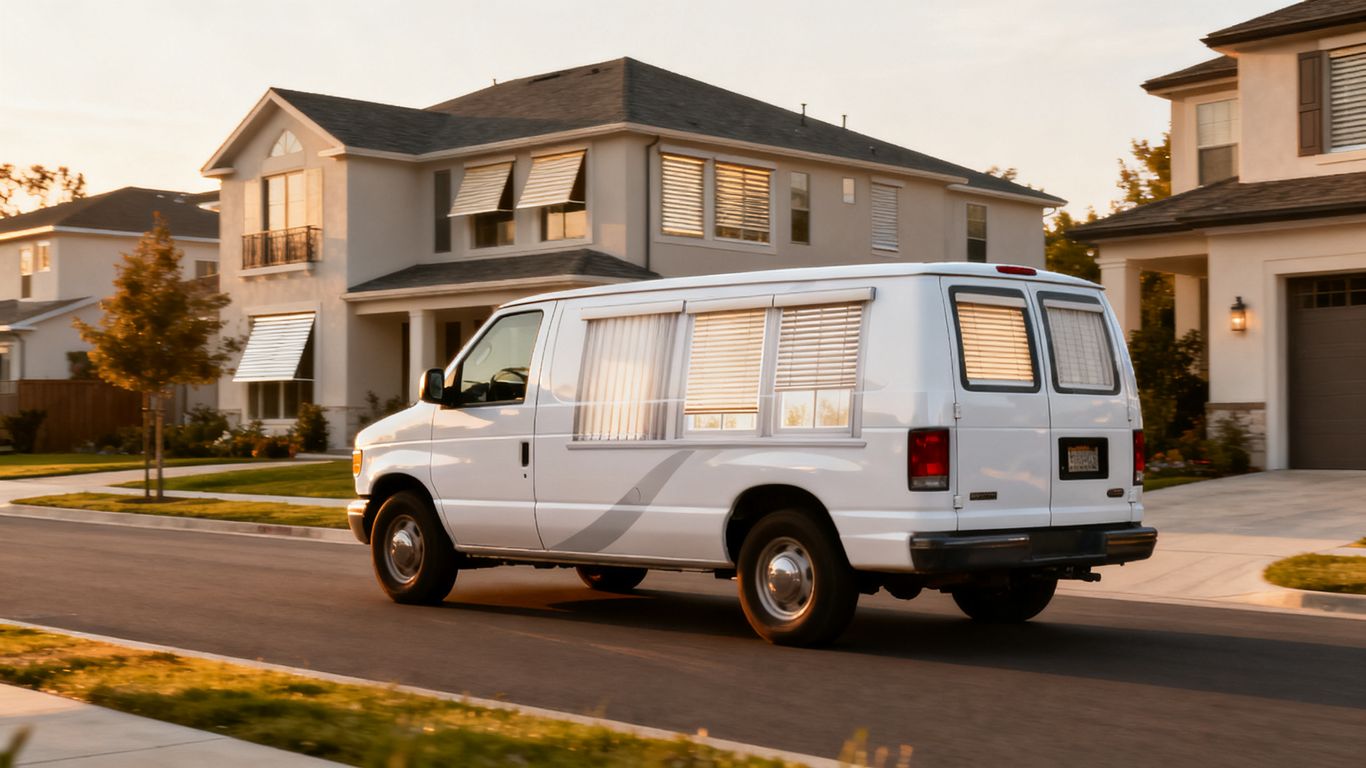
A blind company vehicle wrap turns an existing business asset into a recurring local advertisement. The van is already traveling to consultations, installations, supply stores, and neighborhoods where potential customers live. Unlike an ad that disappears when its budget ends, the message remains available whenever the vehicle is visible. That does not guarantee a lead, but it can make the company familiar before a homeowner starts comparing providers.
The local reach advantage of a branded installation van
An installation van reaches the exact geography a blind company already serves. It may pass a row of established neighborhoods in the morning, sit outside a client’s home during an installation, and travel through commercial areas later in the day. That movement gives the brand more chances to be noticed than a fixed sign in one location.
The value is especially practical for owner-operators. There is no separate media placement to schedule for every route, and the van’s exposure naturally follows the company’s operating territory. A commercial vehicle wrap can therefore support awareness while the vehicle is performing its normal work.
Why wrapped vans build familiarity before a homeowner needs blinds
Most homeowners do not need blinds on a predictable weekly schedule. They may notice a van several times before moving into a new home, renovating a room, or finally deciding that bare windows have gone on long enough. Those earlier impressions can reduce the feeling that the company appeared out of nowhere.
Familiarity also helps branded search. Someone who remembers a color, logo, phone number, or distinctive image may later search for the company rather than beginning with a generic query. The wrap is not closing the sale by itself; it is creating a useful memory that other channels can capture.
The role of visibility near affluent neighborhoods and job sites
Window treatments often involve considered purchases, in-home consultations, and installation decisions. Visibility near neighborhoods with active remodeling, larger homes, or strong home-improvement activity may put the brand in front of households more likely to investigate the category. Still, driving near an affluent area is not the same as reaching a qualified prospect.
Route context matters. A van parked at a job site can be more relevant than one passing quickly on a distant arterial, while a clean, legible design can make a short exposure count. Treat these locations as opportunities for repeated recognition, not proof that every impression has equal commercial value.
How wraps compare with other offline marketing channels
Vehicle wraps have a mobility advantage over many traditional offline placements, but they also have limits. A postcard can carry a detailed offer into a home, a yard sign can signal activity on a specific street, and local sponsorships can create community familiarity. A van generally offers less room for explanation and more repetition over time.
A useful mobile advertising guide is helpful when deciding between a full wrap and more limited graphics. The choice should follow the vehicle’s exposure, the company’s budget, and how quickly the design communicates the service category. No offline channel should be judged only by how attractive it looks.
What determines blind company vehicle wrap ROI
Blind company vehicle wrap ROI is shaped by more than the invoice for vinyl and installation. The calculation has to account for what the van looks like, where it travels, how long it stays in service, and whether inquiries become profitable installations. It also needs a measurement plan, because many people will not call immediately after seeing the vehicle.
Wrap design, vehicle type, and daily driving distance
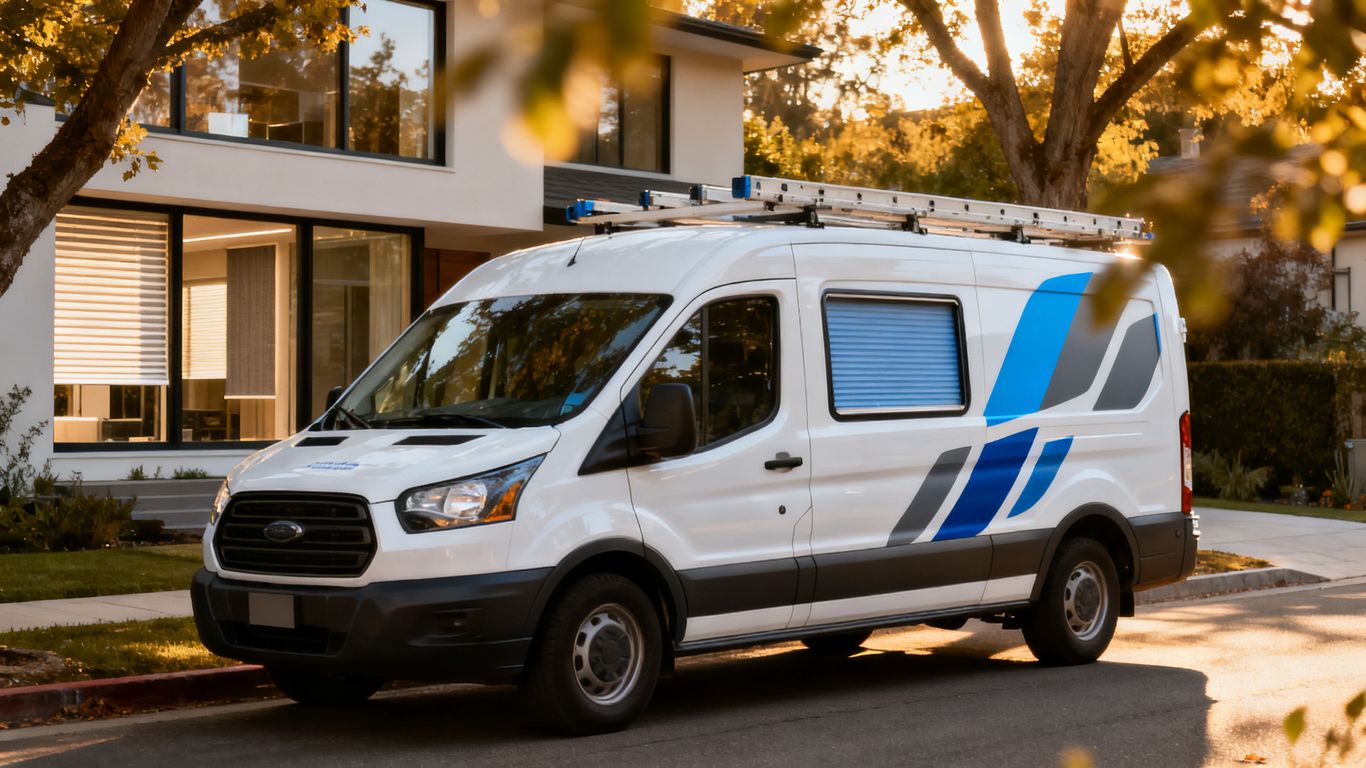
A large van with broad side panels has more usable visual area than a compact vehicle, but size alone does not create value. A vehicle that drives 20 miles through the target market each day has a different exposure pattern from one that spends most of its time parked. Parking location, route frequency, traffic speed, and visibility from multiple angles all affect the practical reach.
Design quality is just as consequential. The company name, service category, phone number, and service area need to register quickly. A visually impressive wrap that requires a driver to study it is unlikely to perform well in motion.
Brand impressions versus measurable lead conversions
Impressions are a useful awareness signal, not revenue. A wrapped vehicle may be seen by many people who are outside the service area, renting their home, or simply not shopping for window treatments. Counting exposure can explain why recognition grows, but it cannot replace lead and sales data.
That is why measurement must follow the money. Track calls, forms, consultations, estimates, deposits, and completed installations separately. A lift in branded searches can support the case for the wrap, but the strongest evidence comes when those searches and inquiries connect to actual revenue.
Lead quality, booked consultations, and closed installations
A lead from a wrapped van is only useful if it can progress through the sales process. A homeowner asking for custom shades in the service area may be valuable; a vague inquiry from outside the market is not. The same distinction applies to Facebook Ads, where a low cost per lead can conceal poor fit.
Use a simple funnel so the comparison stays honest:
- Raw inquiries, including calls, forms, messages, and walk-ins.
- Qualified leads that match the service area and product scope.
- Booked consultations or in-home appointments.
- Deposits, completed installations, and gross profit.
This prevents the wrap from receiving credit for attention that never became a sales opportunity. It also reveals whether the problem is media, intake, follow-up, or closing.
The break-even point for a wrap investment
Break-even is the number of incremental profitable jobs required to recover the wrap expense. If the total investment is $4,000 and the average contribution after direct job costs is $1,000, four additional jobs would cover it. That is a planning example, not a forecast.
The timeframe matters too. A wrap might break even in a few months, or it might take several years if the van has limited mileage and the company has weak follow-up. Compare the expected contribution from wrap-attributed work with the full cost of producing and maintaining the asset.
How Facebook Ads compete with a wrapped van
Facebook Ads and wrapped vans compete for attention in different environments. Meta can place an offer in front of selected audiences while they are browsing, whereas a van reaches people during commutes, errands, and neighborhood activity. One is adjustable and auction-based; the other is a physical asset with a largely fixed cost.
For a blind company, the decision should not be framed as either-or by default. A paid campaign can generate demand quickly, while the van supports recognition and credibility over a longer period. The question is how each channel contributes to profitable consultations.
Targeting homeowners by location, demographics, and intent
Meta Ads allow marketers to define geographic areas, build creative around homeowner problems, and test messages such as privacy, light control, child safety, or room upgrades. Audience settings can narrow delivery, but targeting signals are not the same as purchase intent. A person who fits a demographic profile may still have no current need.
The landing page and offer have to do the qualifying. Ask for the service area, project type, and preferred timing when appropriate. This creates a cleaner comparison with van leads, which may arrive with less context but sometimes with stronger local familiarity.
Comparing paid impressions with recurring vehicle exposure
A paid impression is purchased through an auction and can be reported inside the ad platform. A vehicle impression is harder to count precisely, but it may recur as the van follows familiar routes. The two should not be compared using a single cost-per-impression figure without considering frequency and intent.
A useful framework separates the channels by role. Facebook may create an immediate response from a homeowner actively thinking about a project, while the wrap may help the same homeowner recognize the name later. The combined effect can be real even when the original exposure is not credited perfectly.
Differences in speed, scalability, and budget control
Facebook offers fast creative testing. A company can change the offer, pause an ad set, shift geography, or move budget toward a better-performing audience. A wrap requires design, production, scheduling, and installation, and its message is less flexible once applied.
The tradeoff is durability. A paid campaign stops delivering when spending stops, while the wrapped van continues to travel during ordinary operations. That makes Facebook more controllable week to week and the wrap potentially more efficient over a multi-year operating period.
When Facebook produces more trackable short-term leads
Facebook is often the clearer choice when a company needs leads this month, has a strong offer, and can respond quickly. The platform can report form submissions and ad interactions, while a dedicated landing page can record the next steps. This makes short-term testing easier than waiting for enough wrap exposure to create a measurable pattern.
A marketing budget planning resource can help frame the broader tradeoff between recurring physical exposure and ongoing digital spend. Keep the analysis grounded in booked consultations and revenue, not just platform-reported leads.
How to measure leads from a wrapped vehicle
Measurement begins before the wrap is installed. Decide what a wrap-driven inquiry should look like in the CRM, how staff will ask about source, and which phone or page will identify the campaign. Without that setup, the company will likely classify many inquiries as direct, organic, or unknown.
Attribution will never be perfect. Someone may see the van, search the company later, click a branded ad, and call from the website. The goal is not artificial certainty; it is a consistent process that makes patterns visible.
Using a memorable phone number and dedicated landing page
A memorable tracking number can separate calls generated by the van from the main line, provided it forwards reliably and is answered the same way. The number should be short enough to read from a parked vehicle and large enough to remain legible at a glance. A dedicated landing page can use the same campaign language and ask how the visitor heard about the company.
Do not send every visitor to a page with a confusingly different brand. The page should match the wrap’s colors, category, service area, and call to action. Otherwise, the measurement mechanism may weaken the trust the vehicle was meant to build.
Tracking branded search growth in Google Search Console and GA4
Search Console can show changes in queries containing the company name, while GA4 can help analyze organic landing pages, engaged sessions, and conversions. Look for patterns by week, geography, and vehicle activity where the data is available. A rise in branded search is supporting evidence, not a standalone attribution certificate.
Compare the period before the wrap with a reasonable post-installation baseline. Also watch for seasonality, promotions, press coverage, and changes in other ad campaigns. Those factors can create branded demand independently of the vehicle.
Asking every caller and form submission how they found you
A plain intake question often catches what analytics misses: “How did you hear about us?” Train the team to ask it naturally and record the answer using consistent categories. If someone says they saw a van, capture the location or neighborhood when possible.
The answer should not be treated as an annoyance or a test. It is a useful customer signal, especially when the person saw the vehicle days earlier and later searched the business. Consistency matters more than elaborate wording.
Connecting offline leads to estimates, deposits, and completed jobs
The CRM should preserve the original source as the lead moves forward. A wrap-attributed call that becomes an estimate and then a deposit is much more valuable than a raw call count suggests. Revenue reporting should also distinguish gross sales from contribution after installation and product costs.
Review the data monthly rather than reacting to one anecdote. If wrap-sourced inquiries close at a higher rate than other sources, that may justify continued investment even when the lead count is modest. If they never progress, the issue may be design, routing, qualification, or follow-up.
How to calculate and compare marketing ROI
ROI comparisons become clearer when every channel uses the same definitions. Decide whether the calculation uses revenue, gross profit, or contribution margin, then apply that choice to both the van and Meta Ads. Otherwise, one channel may look better simply because its costs are being counted more narrowly.
A simple model can still be useful. Start with total cost, identify attributable outcomes, and test conservative, expected, and optimistic scenarios. The result should guide a decision, not pretend to eliminate uncertainty.
Estimating total wrap costs beyond the vinyl installation
Include design, production, installation, vehicle preparation, downtime, repairs, removal, and future replacement. If the vehicle is leased or frequently changed, confirm that the wrap fits the ownership horizon. Maintenance also matters: a damaged panel or faded section can reduce the quality of every later impression.
The fleet graphics options page illustrates why the scope can range from a full transformation to partial graphics or spot treatments. For a small company, a well-designed partial treatment may be a better test than committing every vehicle to a full wrap.
Calculating cost per lead and cost per booked consultation
Divide total channel cost by the number of valid leads to get cost per lead, then repeat the calculation using booked consultations. The second figure usually tells a more useful business story because it reflects a meaningful sales opportunity. Continue the same logic through completed installations when enough data accumulates.
For example, a $3,600 wrap producing 12 qualified inquiries costs $300 per qualified lead. If four book consultations, the cost per booked consultation is $900. Those figures only become persuasive when compared with expected profit per booked and completed job.
Comparing customer acquisition cost across wraps and Meta Ads
Customer acquisition cost should include ad spend, management, creative, landing-page work, software, and sales labor where those costs are material. For the van, allocate the wrap over the period you expect to use it rather than assigning the entire expense to its first month. Then compare completed customers, not just inquiries.
Meta Ads may have a lower immediate cost per lead, while the wrap may produce fewer but more familiar and locally qualified prospects. The winning channel is the one that creates profitable customers at an acceptable rate, not necessarily the one with the cheapest first conversion.
Accounting for repeat exposure and multi-year asset value
A wrap can keep generating exposure while the vehicle is used for its core purpose. That recurring value is difficult to attribute but should not be ignored. Estimate it conservatively by reviewing route density, service-area overlap, and how many months the vehicle is expected to remain active.
Avoid using unsupported impression guarantees in the financial model. Instead, build a range and update it with branded search, source-survey, and CRM data. A multi-year asset deserves a multi-year review window.
Designing a van wrap that converts for blind and shade services
The design has one job before anything else: make the company and service category understandable quickly. Drivers, pedestrians, and homeowners usually see the van for only a few seconds. Clarity beats decoration when the vehicle is moving.
A strong design also has to work while parked outside a home. That is when a nearby neighbor may have enough time to notice the category, remember the number, and search later. The best creative serves both fast exposure and slower consideration.
Making the service category obvious at driving distance
Use plain language such as blinds, shades, shutters, or window treatments if those are the services the company actually sells. Put the category near the company name, not hidden in a paragraph of copy. A recognizable product image can help, but it should reinforce rather than replace the words.
Test the design at thumbnail size and from the opposite side of a street. If the logo and category disappear when reduced, the layout needs work. The viewer should not have to infer that a general contractor offers window treatments.
Choosing photos, product messages, and calls to action
A single high-quality product image is often stronger than a collage of tiny room scenes. Pair it with one practical message and one action, such as calling for an in-home consultation or visiting a short web address. Too many offers create visual noise and dilute recall.
The call to action should match the next step the sales team can handle. If consultations are the goal, do not make an online catalog the only destination. If the business wants phone calls, prioritize a readable number and train staff to answer it consistently.
Showing service areas without overcrowding the design
List a few recognizable cities or neighborhoods only when they are genuinely important to the service area. A short regional phrase may be enough. Trying to fit every suburb onto the van makes the design harder to read and can make the company appear less focused.
Service-area information also needs to match the website and ad targeting. Inconsistent geography creates confusion for both homeowners and campaign data. Keep the vehicle broad enough to support normal routing, while using digital campaigns for tighter location tests.
Avoiding weak branding, tiny text, and generic contractor graphics
A logo placed on a blank door is technically branding but rarely makes a memorable advertisement. Likewise, generic tools, houses, and gradients can make a blind company look interchangeable with unrelated trades. The visual system should feel specific to light control, privacy, comfort, and interior design.
Before production, inspect the design from 10 feet away and in a moving mockup. Remove anything that cannot be read or understood quickly. Pureblind describes its commercial vehicle wraps as high-quality, eye-catching wraps intended to maximize visibility; that is a useful standard for judging whether the finished work has enough visual presence without inventing claims about lead volume.
Building a marketing system around the wrapped van
A wrap works best as one part of a local demand system. Its visibility can make later digital contact feel familiar, while paid campaigns and search pages give interested homeowners a convenient next step. The system should preserve the same name, colors, service language, and geography across every touchpoint.
The operational side matters just as much. Someone must answer calls, respond to forms, schedule consultations, and record sources. Marketing cannot recover opportunities that disappear in an unanswered inbox.
Retargeting website visitors who saw a branded vehicle
You cannot reliably build an audience of people who physically saw a van, but you can retarget visitors who later reach the website. A visitor may have noticed the vehicle, searched the company, and browsed without submitting a form. Follow-up ads can remind them of the service and offer a clear next action.
Keep the retargeting message helpful rather than repetitive. Show relevant room or product imagery, explain the consultation process, and use a frequency limit so the reminder does not become noise. The campaign should support the memory created offline, not claim to know how the visitor first found the company.
Using Meta Ads to reinforce local brand recognition
Meta Ads can repeat the same visual cues that appear on the van: logo, color palette, product category, and service area. That consistency reduces the mental work required when a homeowner sees the brand again online. Creative tests can then focus on the offer, image, or pain point rather than changing the identity every week.
For a business evaluating Pureblind as a commercial vehicle wrap provider, the same principle applies: the physical creative should be treated as part of the broader brand system. Keep claims in the ads and on the vehicle accurate, specific, and easy to verify.
Matching Google Ads campaigns to wrap-driven branded searches
Branded search campaigns can capture people who remember the company name after seeing the van. Build a clean branded campaign, monitor search terms, and make sure the landing page answers the immediate question: what does the company install, where does it work, and how does a consultation begin?
Do not assume every branded search came from the wrap. Compare trends before and after installation and annotate other marketing changes. The useful outcome is a clearer view of assisted demand, not an inflated attribution report.
Refreshing creative, tracking performance, and deciding whether to wrap more vehicles
Review the van’s condition and the funnel at the same time. If the wrap remains sharp but calls are weak, revisit the message and tracking. If calls are healthy but consultations are not being booked, improve response speed, qualification, and scheduling before adding another vehicle.
A second wrapped vehicle makes sense when the first has a repeatable route, consistent source data, and enough profitable work to justify expansion. Pureblind presents its commercial wraps as scalable from one vehicle to larger fleets, but the decision should still come from the company’s own economics. When a prospect is ready, make it easy to book a consultation rather than forcing them through a long inquiry path.
Book More Consultations
Give interested homeowners a simple way to choose a time for a consultation, then connect that appointment flow to the source data your team is already collecting. A shorter path from interest to calendar can help turn both wrap-driven and paid traffic into real sales opportunities.
Conclusion
A wrapped van is not automatically a better lead source than Facebook Ads; it is a durable local awareness asset whose value appears through repeated exposure, branded demand, and profitable jobs over time. Facebook offers faster testing and cleaner short-term controls, while the van can keep working during ordinary operations. Measure both against booked consultations, completed installations, and contribution margin before deciding which deserves more investment.
Frequently Asked Questions
Is a vehicle wrap worth it for a small blind company?
It can be worthwhile when the vehicle travels regularly through the service area, the design is easy to understand, and the company has a reliable way to handle inquiries. A smaller company should model conservative job volume and consider partial graphics if a full wrap creates too much risk.
How long does it take for a wrapped van to generate leads?
There is no universal timeline. Some inquiries may happen quickly, while much of the value comes from repeated exposure that later leads to a branded search or direct call. Track results over several months rather than judging the investment from the first few weeks.
Are Facebook Ads easier to measure than vehicle wraps?
Usually, yes. Digital campaigns can report clicks, form submissions, and other interactions within the platform and analytics setup. Vehicle-wrap attribution requires source questions, tracking numbers, landing pages, and CRM follow-through, so it is less precise but still measurable enough for directional decisions.
What should a blind company put on its van wrap?
The company name, clear service category, readable phone number or web address, and a simple visual associated with blinds or shades are the essentials. Add a limited service-area reference if it remains legible. Avoid filling the vehicle with long lists of products or cities.
Should a company wrap one van or its whole fleet?
Start with one vehicle when the company has not yet established its baseline. Measure inquiries, qualified leads, appointments, and completed jobs, then consider more vehicles if the route and economics support expansion. Fleet consistency matters only after the first vehicle proves operationally useful.
How can a wrapped van’s ROI be calculated?
Add the full cost of design, production, installation, downtime, maintenance, and eventual removal. Divide that amount by qualified leads, booked consultations, or acquired customers, and compare the result with profit rather than revenue alone. Use a multi-month or multi-year view when the asset remains active.
Can a vehicle wrap and Facebook Ads work together?
Yes. The wrap can build local recognition while Facebook Ads reinforce the same identity and offer online. Search campaigns, retargeting, consistent landing pages, and careful source collection can help capture demand that began with an offline impression.