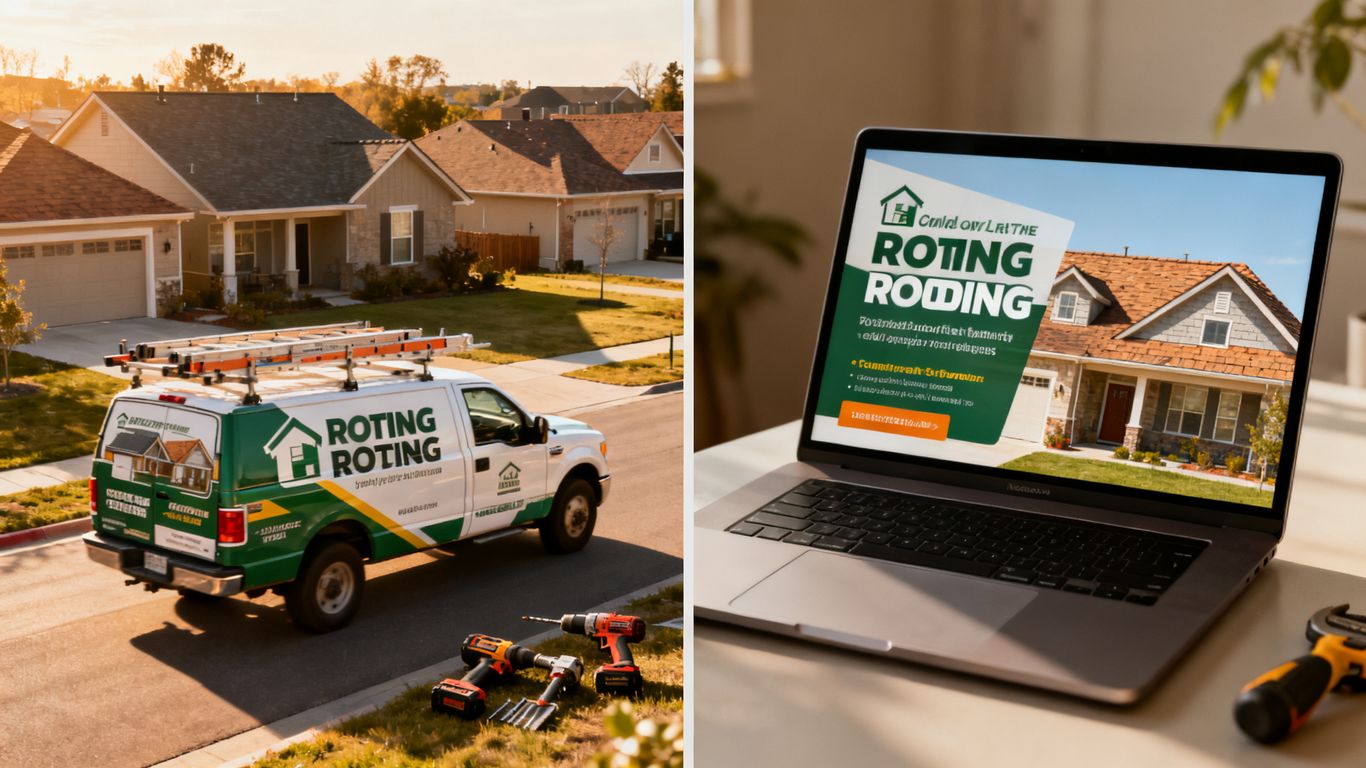
Key Takeaways
Vehicle wraps and digital ads solve different parts of a roofing company’s demand problem. The better channel is the one that produces qualified opportunities and profitable jobs, not simply the cheapest impressions.
- Vehicle wraps create repeated local visibility with a large upfront cost and little ongoing media spend.
- Digital ads can capture immediate, high-intent demand, but costs continue as campaigns run.
- Compare qualified opportunities, booked inspections, and closed revenue rather than raw inquiries.
- Wrap performance depends on route density, vehicle usage, design clarity, and repeated exposure.
- A tracked combination of both channels is often more useful than choosing one permanently.
Define the lead-generation economics before comparing channels
A roofing company vehicle wrap vs digital ads comparison becomes misleading when one channel is measured in impressions and the other in booked inspections. Start with the business outcome you actually need: more emergency calls, more inspections, more replacement estimates, or more profitable work. Then use the same definitions and time window for both channels.
Separate reach, inquiries, qualified leads, and booked inspections
Reach is exposure, not demand. A person who sees a wrapped truck is not equivalent to a homeowner who calls about a roof leak, and an online form is not automatically a qualified opportunity. Keep each stage separate so a large audience does not hide weak intent.
For roofing, a useful funnel runs from exposure to inquiry, qualified lead, booked inspection, estimate, and closed job. A storm-damage homeowner who owns the property and wants an inspection belongs in a different category from a renter asking for a general price. That distinction makes the eventual channel comparison much more honest.
Calculate cost per lead, cost per qualified opportunity, and cost per job
The basic cost-per-lead formula is total channel cost divided by inquiries attributed to that channel. It is only a starting point. A stronger analysis divides spend by qualified opportunities, booked inspections, and finally closed jobs, because those later stages reflect sales value rather than contact volume.
For wraps, total cost includes design, production, installation, vehicle downtime, maintenance, and eventual removal or replacement. For digital campaigns, include media spend, management, landing-page work, call tracking, and creative production. Cost per profitable job is usually the clearest final comparison when both channels have enough data.
Account for roofing job value, gross margin, and close rate
A lead for a small repair and a lead for a full replacement do not have the same economics. Estimate expected revenue and gross margin by service category, then connect those values to each channel’s close rate. A higher cost per qualified lead may still be sensible if that channel produces more replacement work or better-margin projects.
Do not treat average ticket as guaranteed revenue. Use historical ranges, separate insurance-related work from retail work where relevant, and account for jobs that never reach an estimate. The question is not merely which channel generates more contacts; it is which one leaves more contribution after acquisition and fulfillment costs.
Set a measurement period that reflects each channel’s buying cycle
Digital ads can create a call within minutes, especially for an active leak or storm concern. A wrap may be noticed several times before someone remembers the company, searches for it, or calls after a problem appears. Comparing seven days of paid traffic with seven days of wrap exposure will usually favor the channel with direct response.
Use a period long enough to include estimates and closed jobs, while still recording weekly trends. A quarterly review is often more useful than a single-week snapshot, particularly when weather, storms, and seasonal replacement demand change the mix of roofing inquiries.
Compare the upfront and ongoing costs of vehicle wraps
A wrap is a capital-like marketing expense attached to an operating asset. You pay most of the cost before the first impression, then the truck can continue appearing in neighborhoods, driveways, supply yards, and traffic for as long as it remains in service. That durability is attractive, but it does not make every impression equally valuable.
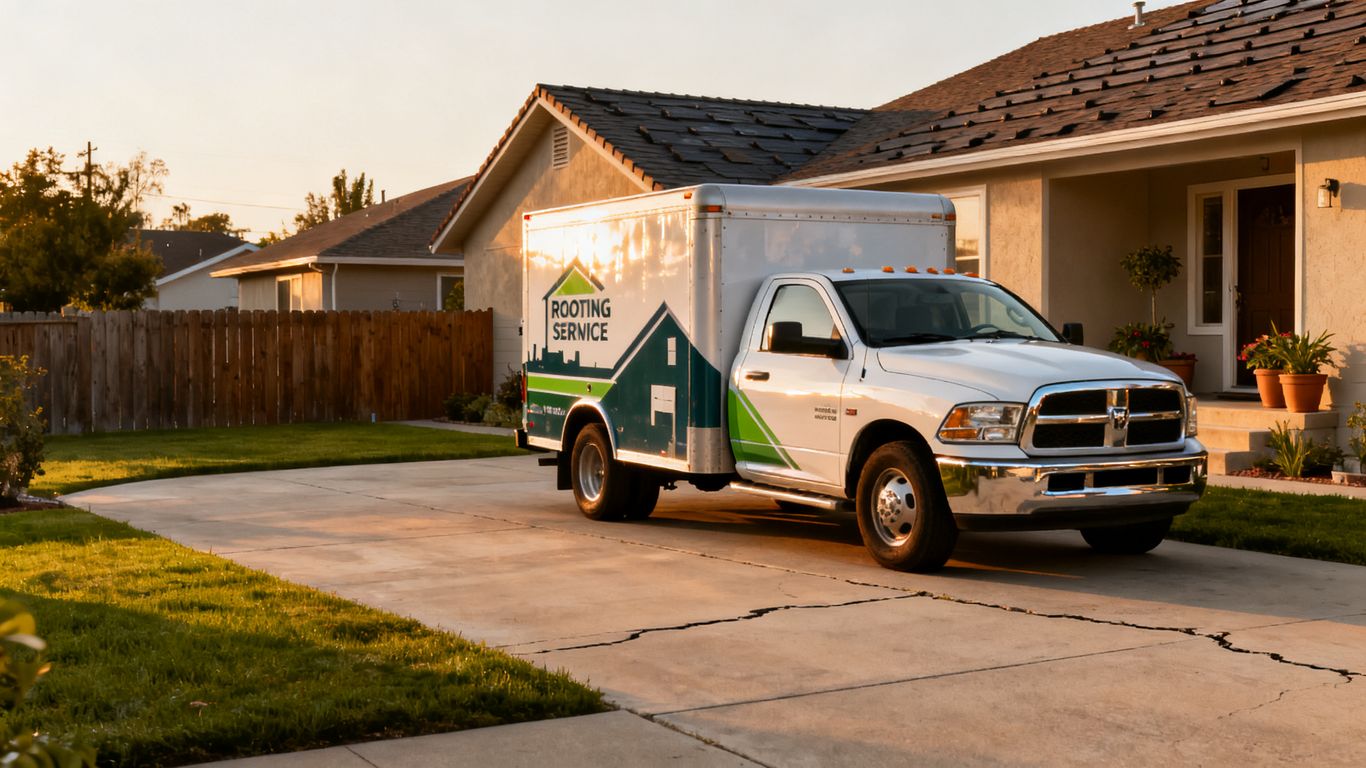
The most useful wrap budget includes both the invoice and the conditions that determine whether the vehicle will actually be seen by likely customers. Route frequency, parking habits, fleet turnover, and the visual quality of the design matter as much as the square footage of vinyl.
Price the wrap by vehicle type, coverage, and design complexity
A compact service vehicle, cargo van, and large box truck require different amounts of material and labor. Full coverage generally costs more than partial graphics, while intricate layouts, specialty finishes, difficult body contours, and additional windows can increase production time. Get a written quote that states the coverage, materials, artwork, installation, and warranty terms.
A roofing truck wrap guide can help organize the early questions around vehicle size, wrap type, design complexity, and material quality. Treat published prices as planning ranges rather than promises, since the actual vehicle and finish determine the final quote.
Include installation, repairs, removal, and replacement costs
The initial wrap is not the entire ownership cost. Installation can take a vehicle out of service, and damaged panels may require repair after a collision or worksite incident. If a truck is sold, repurposed, or rebranded, removal and replacement become part of the calculation.
Build a simple annualized cost by spreading the expected total investment across the months you expect to use the wrap. This does not turn exposure into leads, but it gives you a fair denominator when comparing a durable asset with recurring media spend.
Estimate impressions from routes, service areas, and vehicle usage
Wrap impressions depend on where the vehicle travels and how long it remains visible. A truck that spends every weekday in dense neighborhoods may create more relevant exposure than one that travels long distances through areas the company does not serve. Parked vehicles at active jobs can also be valuable, provided the branding is legible from the street.
Use route logs, service-area maps, average daily mileage, and parking patterns to create a conservative exposure estimate. Avoid borrowing a broad industry impression claim and applying it to a specific roofing fleet without local evidence. The mobile visibility approach is most persuasive when the company can explain why its own routes produce repeated exposure.
Understand how fleet size changes the cost per impression
One wrapped truck has a concentrated reach pattern; several vehicles can create frequency across different neighborhoods. Fleet size also spreads design and campaign planning costs, but each additional vehicle still carries production, downtime, and maintenance expenses. The economics improve only if the vehicles are active and distributed through useful service areas.
A fleet owner should compare incremental reach, not just total reach. If two trucks follow nearly identical routes, the second may add less unique exposure than a truck assigned to a new suburb. Conversely, a larger fleet can make the brand familiar across a market when vehicles appear consistently over months.
Evaluate how digital ads generate roofing leads
Digital advertising is strongest when a homeowner has a recognizable problem and wants a next step. Search campaigns can meet that demand directly, while social and video campaigns can create familiarity or bring previous visitors back. The tradeoff is ongoing cost, ongoing management, and the need for accurate conversion data.
The platform is only one part of the system. Service selection, geography, budget pacing, call handling, landing-page relevance, and sales follow-up often determine whether a click becomes revenue. A campaign that produces cheap form fills but poor inspections is not efficient simply because its dashboard looks busy.
Compare Google Search, Local Services Ads, and Performance Max
Google Search is suited to keyword-driven demand, such as a homeowner looking for a roofer after finding a leak. Local Services Ads can place a roofing business in a local lead environment, while Performance Max uses multiple Google placements and automated delivery. Each requires its own conversion definitions, budget expectations, and quality review.
Do not combine their results into one blended number if one campaign is generating calls and another is generating low-intent visits. Review service, location, search terms where available, call quality, and booked inspections by campaign type. The right mix changes with market competition and the company’s ability to answer and sell incoming inquiries.
Use Meta and YouTube for awareness and retargeting
Meta Ads can support awareness and retargeting when the creative gives homeowners a reason to remember the company. YouTube can provide video exposure and help reconnect with people who have already visited the website or engaged with content. Neither should be judged by the same immediate-intent standard as a search ad.
The creative should show a credible service process, useful proof, or a clear next action rather than a generic image of a roof. Keep prospecting and retargeting results separate. A retargeting audience already knows the company, so its response rate cannot be used as evidence that the same message will work on cold homeowners.
A video placement may assist later demand without receiving the final click. That possibility is worth testing, but assisted influence should be reported separately from direct lead generation rather than folded into the same cost-per-lead figure.
Match campaign budgets to emergency repairs and planned replacements
Emergency repair demand is time-sensitive and often needs a fast response, clear service areas, and phone coverage outside a narrow office schedule. Planned replacement demand may need more education, stronger project photography, financing information where applicable, and repeated follow-up. Budget allocation should reflect the value and urgency of each service line.
Useful budget controls include:
- Separate campaigns for repairs, replacement, and storm-related services.
- Location settings that reflect actual dispatch areas rather than a broad radius.
- Dayparting or bid adjustments based on answer rates and booked inspections.
- Dedicated budgets for testing new creative without disrupting proven demand capture.
This structure makes it easier to identify whether a budget problem is really a targeting problem, a service-mix problem, or a missed-call problem. It also prevents a strong replacement campaign from masking weak emergency coverage.
Factor in landing pages, call tracking, management fees, and creative costs
A digital lead cost should include the parts that make the click useful. A relevant roofing landing page, fast mobile experience, clear service area, form, call tracking, and follow-up process all affect conversion. Add agency or management fees, photography, video, copy, and testing costs when calculating the channel’s true expense.
Google Ads provides the media buying environment, not the entire customer journey. A well-targeted campaign can still waste money if calls go unanswered or the landing page sends every visitor to a generic home page. Measure the whole path from click to conversation and from conversation to inspection.
Build a fair leads-per-dollar comparison
Attribution is where many wrap-versus-digital comparisons become unreliable. A homeowner may see a truck, later search the company name, click a paid ad, and call from the website. A platform may claim the conversion while the wrap helped create the original memory. The goal is not to force every interaction into one channel, but to document what is known and what remains uncertain.
Use the same financial definitions for both channels and keep a record of direct, assisted, and unknown sources. A modest tracking system maintained consistently is more valuable than a sophisticated dashboard populated with inconsistent labels.
Use unique phone numbers, forms, and tracking URLs for attribution
Assign a dedicated tracking number to wrap-driven campaigns where practical, and use a memorable vanity URL or QR code that leads to a channel-specific page. Digital campaigns should use platform tracking, analytics events, call tracking, and form fields that preserve the source. Train the office team to ask how the caller heard about the company without leading the answer.
Every method has limitations. People may call the main number, type the company into a search engine, or forget the truck entirely. Still, unique numbers and URLs provide evidence that can be compared with call recordings, CRM entries, and sales outcomes.
Distinguish branded searches from leads created by the wrap
A rise in branded searches after vehicles are wrapped may indicate stronger awareness, but it does not prove every search came from a truck. Other causes include referrals, yard signs, public reviews, local sponsorships, and prior advertising. Compare branded search trends with route changes, vehicle deployment, direct-call reports, and other marketing activity.
The cleanest interpretation is usually directional: the wrap may be increasing recognition, while digital search captures some of the resulting demand. Avoid assigning all branded conversions to either channel without supporting evidence.
Track calls, missed calls, lead quality, estimates, and closed revenue
A lead log should connect marketing source to operational outcome. Record whether the call was answered, whether the property and service area fit, whether an inspection was scheduled, whether an estimate was issued, and whether revenue was collected. This turns marketing reporting into a sales and operations conversation.
At minimum, review these fields consistently:
- Source or best available source detail.
- Call outcome and missed-call status.
- Service requested and geographic fit.
- Inspection, estimate, and close status.
- Revenue, gross margin, and cancellation status.
The list is intentionally practical. It helps expose problems that media metrics cannot, such as a campaign that generates excellent leads while the phone is regularly missed or inspections are not followed up.
Avoid overstating results from view-through and last-click attribution
View-through reporting can suggest that an ad was present before a later conversion, but it does not establish that the ad caused the conversion. Last-click reporting gives the final measurable interaction too much credit when several touches preceded it. Both can be useful reporting lenses, but neither should be treated as a complete account of causality.
Use multiple views: direct response, assisted conversions, branded demand, customer surveys, and revenue by source. When the evidence is mixed, say so. A careful estimate is more actionable than a precise-looking return figure built on assumptions.
Identify when vehicle wraps outperform digital ads
Wraps can be the better investment when the business has steady local movement and enough time for recognition to build. Their strength is repeated visibility without a bid auction, daily budget cap, or ad fatigue in the traditional sense. Their weakness is that exposure is passive and difficult to connect to a single call.
The channel is particularly useful as a long-term presence in a defined service territory. It works best when the trucks are clean, active, and visually clear, rather than parked at a warehouse most of the week.
Use wraps when trucks spend consistent time in dense service areas
A wrap has more practical value when vehicles regularly pass through neighborhoods with the right homeowners and property types. Dense routes, recurring job clusters, and visible parking locations create more opportunities for recognition. A truck serving a distant rural territory may still help, but the exposure pattern will be harder to repeat and measure.
Map actual service calls against vehicle routes before investing in multiple wraps. If the company already has strong route density, the wrap can turn ordinary travel into an additional awareness layer without changing dispatch behavior.
Assess the value of repeated exposure to homeowners and neighborhoods
Most homeowners do not need a roofer every day. Repetition matters because a familiar name may come to mind months after the first exposure, when a leak or replacement decision finally occurs. This delayed response is one reason a wrap should be evaluated over its useful life rather than a short campaign window.
Frequency alone is not enough. Repeated exposure to the wrong audience or an unreadable design creates little commercial value. Look for routes that place the vehicle near residential areas, home improvement activity, and neighborhoods the company can actually serve.
Make the design memorable enough to drive direct calls later
A strong design makes the company name, roofing category, service area, and contact path easy to understand at a glance. Too many services, tiny phone numbers, or complex imagery reduce recall. The vehicle should look credible from a distance and remain recognizable when parked beside a job.
A simple test is to show the design briefly and ask what viewers remember. If they cannot identify the company or service, adding more information will probably not solve the problem. Clear hierarchy and a short call to action usually serve a moving audience better than a crowded list of claims.
Recognize the limits of passive impressions and weak intent
A wrap cannot target a homeowner who searched for “roof repair near me,” and it cannot automatically increase exposure when demand spikes after a storm. It also cannot guarantee that viewers are homeowners, in-market, or within the company’s profitable service radius. These limitations make it a weak sole channel for a company that needs immediate lead volume.
Use wrap exposure as durable awareness, not as a substitute for response capture. If the business needs appointments this week, a passive channel should support an active demand strategy rather than carry the entire burden.
Identify when digital ads outperform vehicle wraps
Digital ads tend to win when speed, intent, and controllability matter more than long-term visibility. Budgets can be shifted between services and locations, messages can be tested, and demand can be captured when a homeowner is already looking for help. The costs recur, but the feedback loop is much faster.
That advantage depends on disciplined execution. Poor targeting, weak landing pages, missed calls, and vague conversion goals can erase the benefit of immediacy. The channel is measurable, not automatic.
Prioritize digital ads when immediate lead volume is the goal
A company opening a new territory, responding to a seasonal surge, or trying to fill an inspection calendar usually needs a channel that can change quickly. Search and local campaigns can be adjusted as capacity changes, while wrap exposure accumulates more gradually. This makes digital a practical first test for urgent volume goals.
Set a realistic capacity limit before increasing spend. More leads are not helpful if crews cannot respond, sales staff cannot inspect, or the company begins accepting unprofitable jobs outside its service area.
Capture high-intent searches for leaks, repairs, and storm damage
Searchers describing an active leak, missing shingles, or storm damage are expressing a problem and often want a next step. Build campaigns and landing pages around the exact service the company can deliver, with clear geographic coverage and an obvious phone or form option. Search terms and call recordings should be reviewed for irrelevant intent.
Google Search is especially useful when the message matches the problem the homeowner is trying to solve. The campaign still needs negative keywords, budget controls, and a responsive intake process. Otherwise, high intent simply creates more expensive missed opportunities.
Adjust targeting, budgets, and bids by service, location, and season
Roofing demand is uneven. A storm can change call volume in one area, while planned replacements may rise during a different season. Separate campaigns by meaningful service and territory so budget can follow actual opportunity rather than being distributed evenly across every message.
Review impression share or delivery constraints alongside lead quality. A campaign that spends fully may be limited by budget, but increasing it is sensible only if the added inquiries can become profitable work. Conversely, low volume may reflect narrow targeting or weak demand rather than insufficient spend.
Improve conversion rates with dedicated roofing landing pages
A dedicated page should answer the visitor’s immediate questions: what service is offered, where the company works, how to request help, and what happens next. Use a prominent phone option, a short form, proof that fits the service, and language that matches the ad. Keep the page fast and easy to use on a phone.
Send repair traffic to repair-focused pages and replacement traffic to replacement-focused pages. A generic page forces the visitor to do more interpretation, which can reduce both conversion rate and lead quality. Test headlines, calls to action, form length, and proof rather than changing everything at once.
Choose the right channel mix for a roofing company
The best mix depends on cash flow, fleet usage, service area, sales capacity, and how quickly the company needs work. A smaller operator may start with tightly controlled digital demand capture, while an established fleet may gain meaningful recognition from wraps over time. Neither decision should be made from impressions or clicks alone.
Treat the channels as potentially complementary. A homeowner may notice a wrapped truck, later search the name, and then convert through a tracked landing page. The reporting challenge is real, but the customer journey can still benefit from both presence and intent capture.
Start with tracking and a test budget before scaling either channel
Before committing to several vehicles or a large media budget, define the source fields, call outcomes, qualified-lead rules, and revenue measures. Then run a test that is large enough to reveal operational patterns but small enough to stop if quality is poor. Document service area, staffing, season, and capacity during the test.
For a wrap, test one vehicle or a clearly defined group of routes. For digital, isolate campaigns by service and location where possible. The goal is not perfect statistical certainty; it is a clean enough baseline to support the next budget decision.
Use wraps to reinforce trust after prospects see digital ads
A wrapped truck can make a digital-first company feel more tangible when a homeowner later sees it at a neighbor’s property or on a familiar route. The reverse can also happen: someone remembers the vehicle and feels more confident clicking a search ad when a roofing need arises. Consistent colors, name, and service language help connect the experiences.
Do not assume this reinforcement is measurable as a direct conversion. Use branded search trends, survey questions, route exposure, and assisted-path analysis as supporting evidence. The practical benefit may be greater familiarity even when the final click belongs to digital.
Retarget website visitors and past leads with proof-driven creative
Retargeting can remind previous visitors about inspections, repair availability, or the next step in a replacement decision. Use project photos, process explanations, reviews where properly substantiated, and clear service-specific calls to action. Segment recent visitors from older leads so the message does not feel repetitive or mistimed.
Meta Ads can be used for this kind of audience-based follow-up, provided the campaign and audience setup match the intended purpose. Keep the creative helpful and frequency controlled. Retargeting should support a decision, not chase every visitor indefinitely.
Reallocate spend based on qualified opportunities and revenue per dollar
Review channel performance at the level where the business makes money. Compare qualified opportunities, booked inspections, estimates, gross margin, and collected revenue by service and market. If a channel produces volume but weak fit, reduce it or repair the intake process before adding budget.
A wrap may remain worthwhile as a long-term awareness asset even when it cannot be assigned a precise revenue number. Digital may deserve more immediate budget when it is producing measurable, profitable demand. Revisit the allocation after major route, staffing, service, or seasonal changes rather than leaving the mix untouched for years.
Plan Your Next Test
If you want a clearer acquisition plan, use the book a consultation link to start a conversation about tracking, campaign structure, and the next sensible test for your roofing company.
Conclusion
Vehicle wraps provide durable local visibility, while digital ads provide faster feedback and stronger access to active intent; comparing them fairly means measuring qualified opportunities and revenue over a buying cycle that fits both channels. For many roofing companies, the practical answer is a tracked mix: use digital to capture demand now and wraps to build familiarity that can support future demand.
Frequently Asked Questions
Are vehicle wraps cheaper than digital ads for roofers?
They can be cheaper over a long useful life because most of the expense is upfront, but the answer depends on vehicle usage, route density, design cost, and the number of qualified jobs generated. Digital ads have recurring spend but offer faster testing and more direct measurement.
How long should a roofing company test a vehicle wrap?
Evaluate it over several months at minimum and continue tracking for the expected life of the wrap. Include direct calls, branded searches, customer surveys, route exposure, inspections, and closed work rather than judging performance from a single week.
What should a roofing company count as a lead?
Count an inquiry only when it represents a real contact opportunity, then separate qualified leads from general questions, duplicate contacts, out-of-area requests, and unrelated calls. Booked inspections and closed jobs should be tracked as later funnel stages.
Which digital channel is best for emergency roof repairs?
Channels that capture active search or local service intent are usually the first places to test because they reach people already looking for help. Results still depend on targeting, budget, call handling, landing pages, and the company’s ability to respond quickly.
Can a wrapped truck be tracked directly?
Use a dedicated phone number, memorable URL, QR code, customer-source question, and CRM notes where practical. These methods will not capture every influenced lead, but they can reveal direct responses and provide supporting evidence alongside branded search and sales data.
Should roofing companies use both wraps and digital ads?
Many can benefit from both because the channels serve different purposes. Digital ads can capture immediate demand, while wraps can build repeated local recognition. The right balance depends on fleet activity, territory, cash flow, lead capacity, and measured business results.
What is the most important roofing marketing metric?
Revenue and gross margin from qualified opportunities are more useful than impressions or raw lead volume. A company should also monitor booked inspections, close rate, missed calls, speed to response, and cost per profitable job to understand what is driving growth.