Video Marketing for Plumbers: The Honest Pricing Video That Built a 6-Figure Pipeline

Key Takeaways
Honest pricing videos give homeowners useful context before they call, while giving plumbing companies a clearer path from attention to revenue.
- Explain what affects a repair price instead of hiding behind vague estimates.
- Build each video around one customer problem, service area, and business goal.
- Use real plumbers, real equipment, and practical footage to make the message credible.
- Match the video, landing page, tracking, and follow-up experience.
- Judge performance by qualified opportunities and revenue, not views alone.
Why honest pricing videos build trust for plumbing companies
A plumbing customer is often making a decision while water is spreading, a fixture is unusable, or an unfamiliar sound is getting worse. They do not need a polished commercial first; they need a reasonable sense of what may happen next. That is why plumbing company video marketing trust depends less on spectacle and more on useful, specific communication. A pricing video can lower uncertainty without pretending that every job can be quoted from a phone screen.
The customer anxiety behind emergency plumbing decisions
Emergency plumbing decisions are difficult because the customer usually cannot diagnose the problem or compare every option calmly. They may be worried about property damage, surprise charges, and whether the technician will recommend work that is not necessary. A short video can acknowledge those concerns, explain the first step, and show what an inspection is meant to determine. The tone should be steady and practical, not alarmist.
A useful opening might describe a leaking water heater, a backed-up drain, or a failed shutoff valve in plain language. The viewer should recognize the situation quickly and understand what information the plumber will need. That small moment of recognition can make the later call to action feel like help rather than pressure.
How price transparency separates your company from competitors
Price transparency does not mean publishing one number for every repair. It means explaining why two jobs that sound similar can require different amounts of labor, parts, access, or time. When a plumber calmly walks through those variables, the company appears more prepared and less evasive. The result is a stronger first impression before the phone rings.
Educational video also gives a sales team something useful to reference during a call. A customer who has already heard the basic explanation may ask better questions and arrive with more realistic expectations. For broader context on using educational video to build visibility and trust, see this plumbing video marketing guide.
When showing a price range helps, and when it creates risk
A range can be helpful when the service has recognizable levels of complexity and the video clearly states what is included. It becomes risky when the range is presented as a guaranteed quote, leaves out common cost drivers, or applies to conditions the company has not inspected. The script should distinguish an educational range from an estimate prepared for a particular property.
That distinction protects credibility. It also gives the viewer a reason to schedule an inspection rather than treating the video as a final price. Use language that is direct, such as explaining that access, parts, code requirements, and the condition of surrounding equipment may change the final recommendation.
Connecting educational content to booked plumbing jobs
The video should answer one immediate question and lead naturally to one next step. Someone with an active leak may need a call option, while someone comparing replacement choices may prefer an estimate request. The landing page and intake process should preserve the same calm explanation instead of switching to generic sales copy.
The strongest connection is measurable: a viewer watches, clicks, calls or submits a form, and the business records what happened afterward. Video is not the conversion path by itself. It is one useful step in a path that also includes response speed, technician communication, and follow-up.
The campaign strategy behind the 6-figure pipeline
A six-figure pipeline is not created by uploading one video and hoping an algorithm finds the right homeowners. It comes from choosing valuable jobs, defining the audience, and giving each piece of creative a job in the buying process. The campaign needs a clear geographic boundary and a realistic definition of a qualified opportunity. Views are useful only when they support those decisions.
Defining the target customer, service area, and highest-value jobs
Start with the customers the company can serve profitably and consistently. Define the service area by actual dispatch economics, not by an overly broad radius that creates slow response times or weak lead quality. Then identify the jobs that merit dedicated creative, such as emergency repairs, sewer work, water heaters, or replacement projects.
The message should reflect the customer’s situation, not merely the company’s full menu of services. A homeowner searching for replacement guidance is asking a different question from someone dealing with a burst pipe. Separate audiences and service categories make both the script and the measurement cleaner.
Choosing one profitable plumbing problem per video
One video should solve one recognizable problem. Combining drain cleaning, repiping, water heaters, and emergency response into a single clip usually produces a vague message that serves none of them well. A focused topic also makes it easier to write a relevant headline, build a matching landing page, and understand which service generated the inquiry.
The topic can be narrow without being trivial. “What changes the cost of a water heater replacement?” gives the plumber room to explain meaningful variables while still attracting a viewer with a clear concern. The same structure can be adapted to other services without pretending every job follows the same process.
Mapping video topics to awareness, consideration, and booking intent
Different viewers need different information. Someone unfamiliar with the problem may respond to a simple explanation, while someone comparing providers may want to see the diagnostic process and what affects price. A high-intent viewer may need only a concise offer and a clear way to schedule.
A practical content map might look like this:
| Audience stage | Video purpose | Useful next step |
|---|---|---|
| Awareness | Explain the problem and warning signs | Watch a related service video |
| Consideration | Explain process, cost drivers, and options | Visit a focused service page |
| Booking intent | Reduce final objections and clarify availability | Call or request an inspection |
The map prevents every video from asking for a booking before trust has had time to form. It also helps a media buyer decide whether to use broader educational targeting or a tighter retargeting audience.
Setting pipeline KPIs beyond views and engagement
Track the numbers that describe business progress: qualified calls, estimate requests, booked appointments, sold jobs, revenue, and time to contact. Watch completion rate and click-through rate as diagnostic signals, but do not treat them as the final score. A video with fewer views can be more valuable if it produces better service-fit leads.
Campaign reporting should preserve the original source, service category, and creative variation. That makes it possible to distinguish a popular video from a productive one. It also gives the owner a defensible way to decide whether the campaign deserves more budget.
How to script a plumbing pricing video that converts
A pricing video works when it sounds like a helpful plumber answering a real question at the kitchen table. The structure can be simple, but every sentence should reduce confusion or move the viewer toward an appropriate next step. Avoid a long company introduction before the customer knows the video is relevant. Specificity builds confidence faster than polish.
Opening with the customer’s problem instead of a company introduction
Begin with the situation the viewer recognizes: a toilet that will not stop running, a drain that keeps backing up, or water pooling near a fixture. State what the video will clarify in the first few seconds. This makes the content useful even to someone who has never heard of the company.
The plumber can then briefly establish why the explanation is reliable. A name and role are enough; a lengthy list of awards and service areas can wait. The opening should feel like a response to a concern, not a rehearsal of a homepage.
Explaining what changes the cost of a plumbing repair
Cost explanations should connect visible conditions to actual work. Talk through the type of repair, the condition of the existing component, access to the work area, required parts, labor time, and any code or permit considerations that may apply. The viewer does not need an exhaustive technical lecture. They need to understand why an inspection matters.
Use concrete examples where possible. A fitting in an open utility room may require a different process from a component behind finished walls. That comparison makes variability understandable without implying that the customer is being charged arbitrarily.
Using realistic price ranges without promising an exact quote
If the company chooses to discuss a range, introduce the conditions behind it before stating the numbers. Explain whether the range covers diagnosis, labor, common parts, or a particular repair scenario. Then say plainly that the final recommendation depends on what the technician finds at the property.
A range should create a better conversation, not replace one. Avoid language that sounds like a guaranteed price for every viewer. The goal is to prepare the homeowner to evaluate an estimate, not to make a promise the field team cannot keep.
Addressing permits, parts, access, labor, and emergency fees
Customers often distrust a price because the extra line items were never explained. A useful video can mention that permits, specialized parts, difficult access, additional labor, or emergency timing may affect the total when applicable. It should not imply that each item appears on every invoice.
Keep the explanation grounded in the company’s actual process. If the business handles permits or sources a particular class of parts, say only what the team can verify. Clear boundaries are more persuasive than a sweeping claim about every possible situation.
Ending with a clear inspection or estimate call to action
The final instruction should tell viewers exactly what to do and what happens next. Invite an inspection, estimate request, or call according to the service and urgency. Mention what information to have ready, such as the address, symptoms, and preferred timing.
Do not finish with several competing actions. One primary call to action is easier to measure and easier for the viewer to follow. A secondary phone option can remain available for urgent problems, but the spoken close should stay focused.
Producing credible videos without an expensive studio
Trust is often easier to earn in a working environment than in a perfect studio. Homeowners want to see the person who may enter their home, the equipment involved, and the way the problem is assessed. A phone, a quiet microphone, and a repeatable filming routine can be enough to begin. Production quality matters, but clarity and evidence matter more.
Filming the plumber, job site, and equipment customers actually want to see
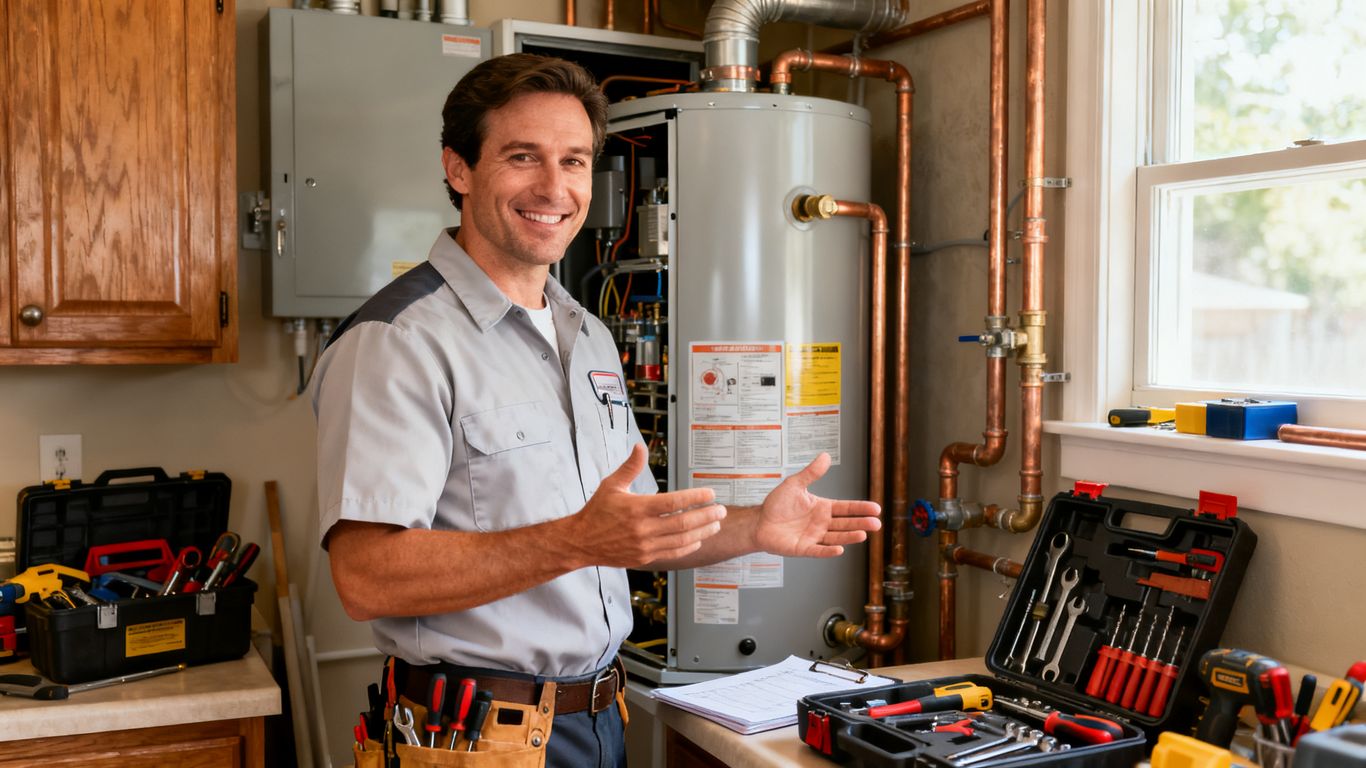
Film the plumber explaining a component, checking a connection, or walking through a safe diagnostic step. Close shots of tools and equipment can make an unfamiliar process easier to understand. The footage should support the spoken explanation rather than act as decorative background.
Ask the technician to use the words they use with customers. That usually sounds more credible than a marketing script filled with broad promises. A few retakes are fine, but the final edit should retain a natural voice.
Choosing camera angles, audio, lighting, and captions for local viewers
Frame the speaker clearly and record audio close to the source. Avoid loud fans, echoing garages, and backlit doorways when a small adjustment can solve the problem. Captions help viewers who watch without sound and make technical terms easier to follow.
Local relevance can come from the setting, service language, and examples rather than a forced reference to the city in every sentence. The viewer should quickly understand whether the company serves the area and handles the type of work being discussed.
Showing real before-and-after work without compromising customer privacy
Before-and-after footage can make an abstract service tangible, particularly when the camera shows the original condition, the work performed, and the finished result. Get permission before filming inside a customer’s property. Remove addresses, family photos, license plates, and other details that could identify the household.
The edit should explain what changed and why. A dramatic reveal without context may attract attention but will not necessarily improve lead quality. Useful documentation gives the viewer a better basis for deciding whether to request an inspection.
Avoiding scripted claims, stock footage, and production choices that reduce trust
Stock footage can make a local plumbing company look interchangeable with every other service provider. Claims about speed, savings, or guarantees should be supportable and specific to the company’s actual policies. If a statement cannot be verified by the team answering the phone, it does not belong in the script.
A restrained edit is often stronger than a frantic one. Let the plumber finish a thought, use clear cuts, and keep graphics subordinate to the explanation. The video should feel like evidence of competence, not a performance designed to hide a thin message.
Distributing plumbing videos across paid and organic channels
Distribution should follow the question the viewer is asking and the amount of attention they are willing to give. A longer explanation may work on a service page or YouTube, while a short cut can introduce the same idea in a social feed. Reuse the core insight, not necessarily the exact edit. The campaign should feel consistent without becoming repetitive.
Turning the core video into Google Ads and YouTube assets
Create variations around the same service problem: a concise hook, a longer explanation, and a version that answers the strongest objection. Search-oriented creative should match the query and landing page closely. Video placements can introduce the topic, explain the cost drivers, or bring back viewers who already showed interest.
When working in Google Ads, keep the service, geography, and conversion action clear in the campaign structure. The platform can support the distribution plan, but the message still needs to earn attention from a homeowner with a specific concern.
Using Meta Ads to retarget viewers with service-specific offers
Retarget viewers based on meaningful engagement where the available audience size supports it. Someone who watched most of a pricing explanation may be ready for a focused inspection offer, while a brief viewer may need another educational cut first. Keep the follow-up tied to the service in the original video.
Meta Ads can fit this retargeting role within campaigns that use Facebook and Instagram placements. The creative should make the next step obvious without suggesting that watching a video means the viewer has already been qualified.
Testing short-form cuts on Facebook, Instagram, and TikTok
Short-form versions should preserve the central answer, not merely chop a long video into random pieces. Test different openings, visual demonstrations, captions, and calls to action. A plumber answering one direct question can outperform a montage of unrelated jobs because the viewer knows what they are watching.
TikTok Ads can be part of a broader paid distribution plan for suitable creative, while organic clips can provide additional testing signals. Keep platform behavior in mind, but do not let trend-driven editing overpower the credibility of the subject.
Embedding videos on service pages and local SEO content
Place the video where it answers a question already present on the page. A pricing explanation belongs near the discussion of cost factors, while a process video may fit near the inspection or installation section. Add a written summary so the page remains useful to visitors who prefer reading.
The embedded video should load cleanly and support the page’s primary action. It is there to reduce hesitation, not to distract from the phone number, form, or booking path.
Matching creative length and calls to action to each platform
A viewer arriving from a high-intent search generally needs less introduction than someone encountering an educational clip in a feed. Adjust the opening, pacing, and call to action accordingly. Keep the promise consistent so a person moving from an ad to a landing page does not feel misled.
Review each cut for mobile readability, especially captions and contact details. Small creative changes can affect whether a viewer understands the message before scrolling away.
Building the conversion path from video view to booked job
The conversion path begins before the click. The video sets an expectation about the problem, price explanation, and next step, so every destination should continue that conversation. A technically correct campaign can still waste demand if the landing page is generic or the phone response is slow. Treat the handoff as part of the creative strategy.
Sending high-intent viewers to a focused plumbing landing page
A focused landing page should repeat the service problem in plain language and make the next action visible. Keep navigation limited when appropriate, show the service area, and explain what the inspection or estimate involves. The page does not need to repeat every sentence from the video, but it should answer the same core concern.
Use one page for one service intent whenever the campaign volume supports it. That makes the message easier to personalize and gives reporting a cleaner relationship between ad, video, page, and lead.
Using booking forms, click-to-call, and tracked estimate requests
Give the visitor an action that fits the situation. Emergency visitors may prefer click-to-call, while planned repair or replacement prospects may be comfortable with a form. Keep forms short enough to complete on a phone, but collect the details the office actually needs to route the inquiry.
Track calls, forms, and booking actions separately when possible. A single conversion count can hide the difference between a missed call, a duplicate inquiry, and a completed appointment. Clear event definitions improve both optimization and follow-up.
Aligning the landing page price explanation with the video promise
If the video explains that price varies by access, parts, or labor, the page should reinforce those same factors. Do not replace a careful explanation with a prominent low starting price that the video never mentioned. Consistency prevents the visitor from feeling that the campaign changed its terms after the click.
The page can also explain what happens during the inspection and when an estimate is prepared. That detail makes the next step less intimidating and gives the office a natural script for answering questions.
Separating emergency calls from planned repair and replacement leads
Emergency calls require different routing, response expectations, and qualification questions from planned work. Separate them in forms, call handling, and reporting so a fast-response campaign is not judged by the same standard as a replacement lead. The distinction also helps the team prioritize without treating every inquiry as identical.
Ask only questions that improve the next action. A homeowner with active water damage should not face a long questionnaire before reaching a person who can help. Planned prospects may need more detail about equipment, timing, and property conditions.
Measuring trust, lead quality, and pipeline impact
Measurement should connect the viewer’s first interaction to what the business ultimately values. Watch behavior on the video, but follow the person through the landing page, call, appointment, estimate, and sale when the systems allow it. This is where a promising creative idea becomes a campaign decision. It is also where inflated lead counts become easier to spot.
Tracking video engagement alongside calls, forms, and booked appointments
Record view rate, completion rate, clicks, calls, forms, booked appointments, and qualified opportunities in the same reporting view. Each metric answers a different question: Did the opening work? Did the message create interest? Did the handoff produce a real conversation? Did the conversation become a job?
Interpret the sequence rather than chasing one number. Strong engagement with weak booking activity may indicate a landing-page or offer problem. Weak engagement with good lead quality may point to a need for better reach or a stronger first few seconds.
Connecting CRM outcomes to campaigns, services, and creative variations
Use consistent naming for campaigns, service categories, audiences, and video versions. Pass source information into the CRM or lead record where the workflow supports it. That makes it possible to compare a pricing explainer with a before-and-after video without relying on memory.
The goal is not perfect attribution. It is a more reliable view of which combinations create useful opportunities. Even basic source discipline is better than treating every booked job as an undifferentiated marketing success.
Identifying whether pricing transparency improves close rates
Compare leads exposed to the pricing explanation with a comparable group or period when practical. Review close rate, average sold value, cancellation rate, and the quality of conversations, not just the number of inquiries. A transparent video may reduce some low-fit leads while improving the likelihood that qualified prospects understand the process.
Be careful with causal claims. Seasonality, technician availability, promotions, and service mix can all affect close rates. Pricing transparency is a hypothesis to test, not a guaranteed outcome.
Calculating cost per qualified opportunity and revenue, not just cost per lead
A low cost per lead can hide duplicate forms, out-of-area requests, price shoppers, or calls the business cannot serve. Define a qualified opportunity in operational terms, then calculate media cost against that outcome. Where revenue data is available, compare spend with sold work and gross contribution rather than celebrating volume alone.
A simple reporting table can keep the discussion grounded:
| Metric | What it reveals | Decision it supports |
|---|---|---|
| Cost per qualified opportunity | Efficiency after basic lead screening | Budget and targeting changes |
| Booked appointment rate | Strength of the handoff and follow-up | Landing page or call process changes |
| Close rate | Fit and sales quality | Creative and service prioritization |
| Revenue per opportunity | Economic value of the campaign | Scaling or trimming spend |
Read the table alongside call recordings, CRM notes, and service capacity. Numbers identify where to look; operating context explains what to change.
Refreshing the video when performance declines or service pricing changes
Creative fatigue can appear as lower completion, weaker click-through, or a change in lead quality. Pricing, parts availability, service policies, and seasonal demand can also make an otherwise accurate video feel outdated. Review the spoken claims and the landing page whenever the underlying offer changes.
Refresh the weakest element first. That might mean a new opening, clearer footage of the work, a revised range explanation, or a different call to action. Preserve what has worked, but do not keep an obsolete promise simply because the old video once performed well.
Conclusion
An honest pricing video will not replace good plumbing work or responsive customer service, but it can make the first interaction more useful and more credible. When the topic, audience, landing page, follow-up, and measurement all agree, video becomes more than awareness content: it becomes a practical bridge from uncertainty to a qualified plumbing conversation.
Plan Your Next Campaign
If you are ready to turn a clear service explanation into a measurable campaign, book a call to discuss the audience, creative, landing page, and tracking needed for the next step.
Frequently Asked Questions
Should a plumbing company publish exact prices in every video?
No. A company can explain realistic ranges and the factors that change cost without presenting an exact quote before inspecting the property. The right level of detail depends on the service and how variable the work is.
What should a plumbing pricing video include?
It should identify a specific customer problem, explain the main cost drivers, clarify what an inspection determines, and end with one clear next step. The language should be understandable to a homeowner rather than written like an estimate form.
How long should a plumbing marketing video be?
The video should be as long as necessary to answer its specific question without repetition. Short clips can introduce a problem, while longer versions may be useful for pricing explanations and service pages.
Can a phone camera produce a credible plumbing video?
Yes, if the image is steady, the audio is clear, the lighting is adequate, and the footage shows something relevant. A natural explanation from a plumber often creates more credibility than an expensive but generic production.
Where should plumbing videos be used?
They can support service pages, search and video advertising, retargeting, and short-form social content. The best placement depends on the viewer’s intent and the action the business wants them to take next.
How should plumbing video leads be measured?
Track views and engagement as early signals, then connect clicks to calls, forms, appointments, qualified opportunities, sold jobs, and revenue. This helps separate attention from commercially useful demand.
What makes a plumbing video feel trustworthy?
Specific explanations, realistic expectations, real people, relevant job-site footage, and clear limits on what can be known before inspection all help. Trust usually declines when the video relies on exaggerated guarantees or vague claims.