Virtual Showroom Tours for Countertop Companies: Converting Out-of-Area Buyers
Key Takeaways
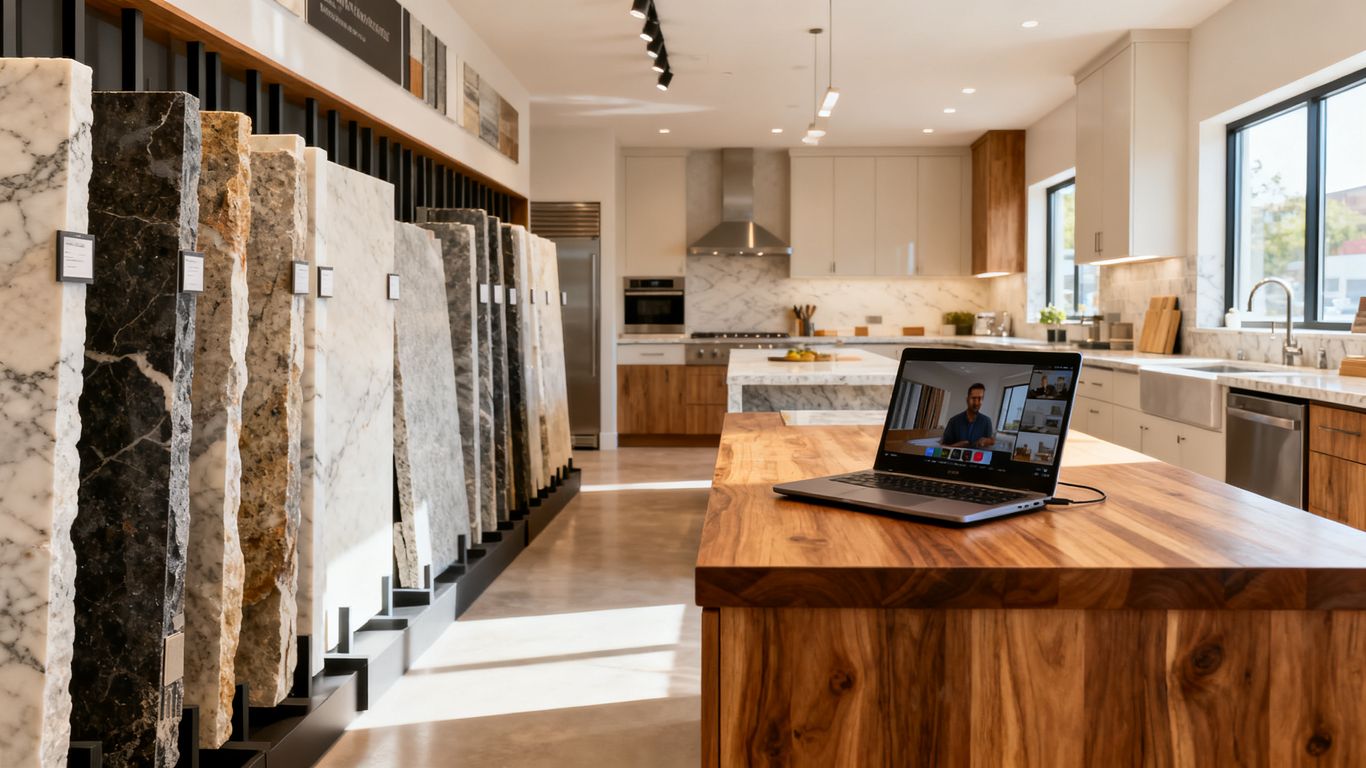
A virtual showroom is most useful when it helps a remote buyer make a decision and gives your team a clear next step.
- Target buyers whose project value and service radius support remote selling.
- Film the showroom around questions about materials, fabrication, and installation.
- Make the tour fast, accessible, and easy to connect with a consultation.
- Use Google Ads, Meta Ads, SEO, and retargeting to bring qualified visitors back.
- Measure inquiries, booked consultations, sales-qualified leads, and revenue, not just views.
Define the role of a virtual showroom in your sales funnel
A virtual showroom should not be treated as a digital replacement for every in-person interaction. It is a sales asset that helps buyers narrow choices, understand your process, and decide whether a conversation is worthwhile. For countertop companies, countertop showroom virtual tour marketing works best when the tour is connected to a specific service area, material category, and conversion path. The experience should answer practical questions before a salesperson invests time in a long consultation.
Identify which out-of-area buyers are worth targeting
Distance alone does not determine whether a remote lead is valuable. Look for buyers with projects large enough to justify travel, builders and designers who may send repeat work, and homeowners in nearby markets where your installation team already operates. A location campaign should reflect real delivery, templating, and installation limits rather than simply naming every city within a wide radius.
Start with search and customer data. Review which ZIP codes produce completed projects, which material searches bring serious inquiries, and where your gross margin can absorb travel. A virtual tour can widen awareness, but it cannot make an uneconomical project profitable.
Match the tour to the buyer’s decision stage
A first-time visitor may only need a quick sense of your inventory and workmanship. Someone comparing quartz colors needs close-up material views, while a buyer who has drawings and measurements needs a direct consultation option. Organize the experience so each stage has a useful next step instead of asking every visitor to complete a long quote form immediately.
Early-stage visitors can browse finished kitchens and material families. Later-stage visitors should be able to request samples, discuss layouts, or schedule a call. That progression keeps the tour helpful without turning it into a passive gallery.
Set expectations for service areas, fabrication, and installation
Remote buyers often worry about what happens after they choose a slab. Explain the markets you serve, whether the project requires an in-person site measure, how templating is handled, and what installation coordination looks like. If some steps depend on project size, access, or location, say so plainly.
A short process explanation can prevent poor-fit leads. It also gives salespeople a useful reference point when they discuss travel fees, lead times, material availability, and the difference between a preliminary estimate and a final quote.
Connect the tour to a measurable conversion goal
The primary goal might be a booked design consultation, a qualified quote request, or a call from a buyer in a serviceable market. Choose one main action for each landing page and support it with secondary actions such as viewing materials or requesting a callback. One clear next step is usually easier to measure than a page crowded with competing buttons.
Your analytics should record tour visits alongside meaningful actions. For paid campaigns, create separate conversion events for form submissions, phone calls, consultation bookings, and higher-value milestones when your CRM can pass them back to the ad platform.
Build a virtual tour that sells countertop projects
The best tour is not necessarily the most elaborate one. It is the one that helps a buyer picture a finished project and understand how your team will guide the work. Film with the same questions your sales team hears every week: Which colors are available? How does this edge look in a real room? What will happen after I choose a material? A well-planned route makes the showroom feel like a helpful conversation.
Plan the showroom route around buyer questions
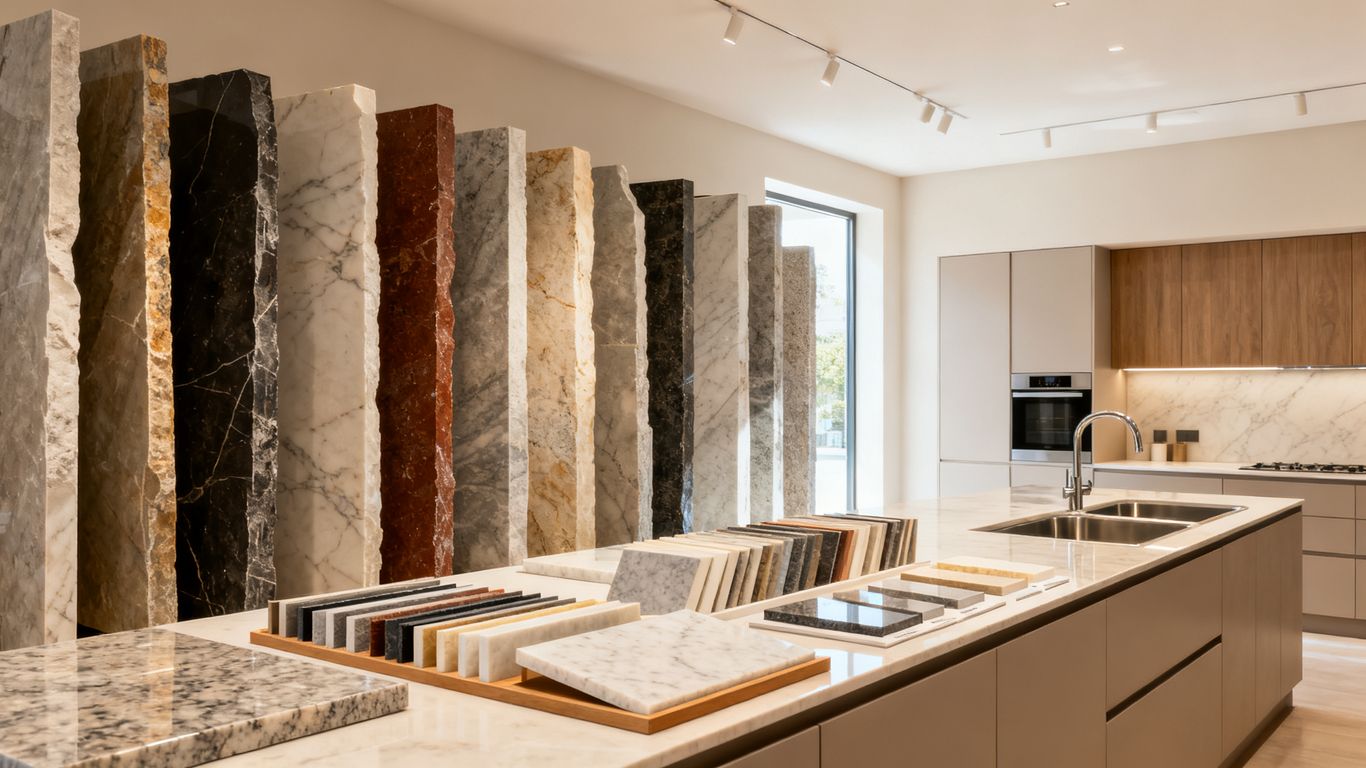
Begin at a recognizable entry point, then move through material displays, working areas, and completed installations in a logical order. Avoid wandering footage that forces viewers to guess why a particular corner matters. Each stop should have a purpose, such as comparing finishes, explaining slab handling, or showing how a sink is integrated.
Create a simple shot list before filming. Include wide views for orientation, medium views for displays, and detail shots for surfaces and craftsmanship. A consistent route also makes future updates easier when inventory or showroom layouts change.
Showcase slabs, edge profiles, sinks, and finished installations
Buyers need more than a catalog image to understand a countertop project. Show full slabs where possible, then connect those materials to edge profiles, sink cutouts, backsplashes, and finished rooms. The finished installation gives context that a freestanding sample cannot.
Keep the camera steady while moving between choices. When a feature has tradeoffs, such as a particular edge or sink configuration, explain what the buyer should ask about during a consultation rather than implying that every option fits every project.
Use close-up footage to communicate color and material quality
Color and texture are difficult to judge through a small screen, especially under showroom lighting. Capture close-ups from several angles and include a wider shot so viewers can see the material in context. Natural movement can help reveal veining and surface variation without making the footage feel like a product commercial.
Do not rely on one dramatic shot. A remote buyer benefits from seeing how a slab looks beside cabinetry, flooring, or other common finishes. Encourage visitors to request physical samples when color accuracy is critical.
Add captions, narration, and room-specific context
Captions make the tour usable with sound off, which matters when visitors arrive from social ads or browse in shared spaces. Narration can explain what the viewer is seeing, but it should add practical context rather than repeat labels on the screen. Mention the room, the material, and the decision the buyer is being asked to consider.
If you use video in promotion, connect it to a useful page rather than sending every click to a generic homepage. A resource such as countertop marketing guides can support owners who are building a broader acquisition plan around the tour.
Avoid visual details that create inaccurate expectations
Showrooms are controlled environments, while installations happen in homes with uneven walls, existing plumbing, limited access, and changing light. Avoid filming angles that hide seams, make slabs appear larger than they are, or suggest that every display can be reproduced exactly. Be careful with color correction, too.
A brief disclaimer about natural variation, inventory changes, and final site conditions can build trust. The goal is not to make the project look less appealing; it is to make the buyer’s expectations more realistic before the sales conversation.
Choose the right virtual showroom format and technology
Technology should serve the buying process, not become the story. A 360-degree tour can let visitors explore independently, while guided video can deliver a more focused explanation. An interactive gallery may be the simplest choice when the main need is comparing materials and finished work. Choose the format your team can maintain as inventory and projects change.
Compare 360-degree tours, guided video, and interactive galleries
A 360-degree experience is useful for orientation and self-directed browsing. Guided video gives you more control over the sequence and allows a salesperson or owner to explain details. Interactive galleries are often easier to scan on a phone and can connect each image to a material, room, or project type.
The decision should follow the page objective. If buyers need to understand the whole facility, use a navigable tour. If they need confidence in workmanship, a concise guided walkthrough may communicate more. If they are comparing finishes, prioritize an easy-to-filter gallery.
Decide when to use live virtual consultations
A live call is valuable when the buyer has a floor plan, rough dimensions, material shortlist, or questions about installation. It is less useful as the first step for someone who has only watched a few seconds of footage. Let the recorded experience do basic education, then reserve live time for decisions that benefit from dialogue.
Use a short intake form before the appointment so the salesperson knows the project location, timeline, preferred materials, and whether drawings are available. That preparation makes a remote conversation feel specific rather than generic.
Optimize tour performance for mobile users
Many paid visitors will arrive on a phone, often from a social feed or a local search result. The first screen should explain what the tour offers and why it is relevant to the visitor’s project. Keep controls obvious, avoid tiny hotspots, and test every interaction on a slower connection.
Do not hide the contact option below a long embed. A visitor who is ready to talk should be able to call or request a consultation without completing the entire tour first.
Make the experience accessible without requiring an app
A browser-based experience removes unnecessary friction. Visitors should not have to create an account, download software, or learn unfamiliar controls before they can view materials. Provide keyboard-friendly controls where possible, readable captions, descriptive labels, and a standard image or video alternative.
Accessibility also improves usability for everyone. A visitor with limited bandwidth, an older device, or a preference for straightforward pages still deserves a clear way to understand your showroom and contact your team.
Protect image quality without slowing down the page
Large video and panoramic files can produce a beautiful first impression and a frustrating loading experience. Use compressed files, responsive image sizes, lazy loading, and a poster image that explains the experience before playback. Test the page with the same mobile conditions your prospects encounter.
Review quality on both high-resolution and ordinary screens. A slightly lighter file that loads quickly can produce more completed visits than a technically perfect asset that keeps the page waiting.
Turn the tour into a conversion-focused website experience
The tour should live within a website structure that matches how buyers search. A single showroom page may help branded visitors, but it will not answer every question from someone searching for a material, project type, or service area. Build a path from the visitor’s original intent to the tour, then from the tour to a useful conversation.
Place the tour on service-area and material-specific pages
Embed or link the experience on pages for the markets you genuinely serve, as well as pages about relevant countertop materials and project types. The surrounding copy should explain what visitors can see and what happens next. This gives search engines and users more context than a bare tour embed.
Avoid duplicating identical pages for dozens of towns. Each location page should contain meaningful information about installation logistics, project fit, and service boundaries. A visitor in another market should quickly understand whether a consultation is appropriate.
Use calls to action that fit high-consideration countertop buyers
“Get a quote” can be too abrupt when the buyer is still comparing surfaces. Consider calls to action such as “Review my project,” “Discuss material options,” or “Schedule a showroom consultation.” The wording should match the visitor’s level of readiness and the information your team can use.
Keep one primary call to action visually dominant. Secondary links can support sample requests, material education, or a phone conversation, but they should not compete with the main conversion.
Build quote and consultation forms around project readiness
A useful form asks for enough information to qualify the opportunity without making the visitor do the work of a full design appointment. Include project location, room type, approximate timing, whether cabinets are existing or new, preferred material, and a way to share plans or photos.
Use progressive qualification when possible. A short first form can collect contact and project basics, followed by questions during scheduling. This often reduces abandonment while still giving the sales team a practical starting point.
Add trust signals for buyers who cannot visit in person
Remote buyers need evidence that your company can manage details at a distance. Use real installation photography, clear process explanations, team information, review excerpts where permitted, and examples of the types of projects you accept. Keep these signals close to the tour and form rather than hiding them on unrelated pages.
A useful reference point is a virtual showroom tour, which illustrates how an online walkthrough can help people explore surfaces from outside the physical location. Use the same principle with your own work: show enough substance that the buyer can evaluate fit before reaching out.
Create a fast follow-up path after a tour interaction
A tour visit can signal interest, but it does not tell you whether the buyer is ready to purchase. Route form submissions and call leads quickly, send a confirmation with the next step, and make it easy to upload measurements or project photos after the initial inquiry. If a buyer books a meeting, the confirmation should state what to prepare.
For scheduling, use a direct action link such as book a consultation so a qualified visitor does not have to wait for a manual reply. Speed matters, but relevance matters too: the first response should reference the project details the buyer already supplied.
Promote the virtual showroom to buyers outside your local market
Promotion should begin with markets and search terms that your operation can actually support. A virtual tour is a strong creative asset, but it is not a targeting strategy by itself. Paid campaigns need location rules, negative keywords, budget controls, and landing pages that make the offer credible to someone who is not nearby.
Use Google Search campaigns for high-intent countertop queries
Google Ads can capture demand from people searching for a countertop fabricator, a specific material, or installation help in a target area. Separate campaigns by service area and intent where volume allows, then send each group to a page that explains coverage and presents the tour in context.
Watch search terms closely. Queries from outside your service radius, people seeking materials you do not offer, and low-intent research terms can consume budget quickly. Exact and phrase match structures, location settings, and negative keywords deserve regular attention.
Test Meta Ads with material, style, and project-based creative
Meta Ads are useful for creating demand among homeowners who may not yet know which fabricator they will use. Test short clips of slabs, finished kitchens, edge details, and owner-led walkthroughs against static creative. The landing page should continue the same visual and verbal idea rather than switching to a generic sales message.
Keep prospecting and retargeting audiences separate. A person who watched a material video needs a different follow-up from someone who visited the consultation page twice.
Build SEO content around countertop selections and remote buying
Search content can answer questions that naturally lead into the tour: how to compare veining, what to bring to a consultation, how remote templating works, and how installation is coordinated across a service area. Each article should point to a relevant material or consultation page, not simply repeat broad marketing language.
For practical campaign planning, countertop marketing resources can help organize topics around budgets, campaign structure, negative keywords, and measurement. The content strategy should support both organic discovery and paid landing-page performance.
Retarget visitors who viewed the tour but did not inquire
Retargeting works best when the audience is segmented by behavior. Someone who opened the tour briefly may need a general reminder, while a visitor who explored several material views may be ready for a consultation message. Use frequency limits and fresh creative so the follow-up remains useful rather than repetitive.
Exclude converted leads when possible, then move them into a sales or customer audience. The objective is to bring uncertain visitors back with a relevant reason to continue, not to show the same ad indefinitely.
Create location-specific campaigns without overpromising coverage
A remote-market campaign should state what your company can do, where it can do it, and what the buyer must provide. If installation depends on travel distance or project size, explain that before the form. Honest qualification may reduce raw lead volume while improving the percentage of inquiries your team can serve.
Use location-specific headlines and examples only when they are accurate. A local landing page that feels copied or makes vague coverage claims can undermine the trust the tour was built to create.
Qualify and close remote countertop leads
Remote selling becomes manageable when the process is defined before the first call. Salespeople need enough information to distinguish a promising project from a request that cannot be served profitably. Buyers, meanwhile, need a clear picture of the milestones between choosing a surface and seeing it installed.
Capture project details before scheduling a consultation
Ask for the address or ZIP code, project type, approximate countertop area, renovation stage, desired material, timeline, and whether cabinets are ready. Photos of the existing space and any available plans can make the first conversation much more productive.
Keep the questions simple and explain why they matter. When prospects understand that the information helps confirm serviceability and prepare recommendations, qualification feels like guidance rather than a barrier.
Use video calls to review measurements, samples, and layouts
A video call can bring the showroom conversation into the buyer’s home. Review the layout, point out access concerns, discuss sample colors under the home’s lighting, and identify questions that require a site visit. Ask the buyer to have plans, cabinet information, and sample photos available before the meeting.
Do not treat a video call as a substitute for every field measurement. It is a way to narrow decisions and identify risks early, while the final process should follow the company’s actual measurement and installation requirements.
Explain the sample, templating, fabrication, and installation process
Walk buyers through the sequence in plain language. Explain when samples are useful, what templating confirms, how fabrication follows approved details, and which decisions must be final before production. A simple process overview can remove much of the uncertainty created by distance.
Give each stage an expected owner and next action. Buyers should know what they need to send, what your team will verify, and when they can expect an update. This turns a remote purchase into a series of understandable commitments.
Address shipping, travel fees, lead times, and site-measurement limits
These topics should appear before the buyer is emotionally committed to a material. Explain whether the company ships samples, how travel is calculated, what can change a lead time, and which site conditions require an in-person visit. Avoid promising a final price from photographs alone.
A transparent conversation may disqualify some leads, but it protects both sides. It also gives the sales team a consistent framework for answering questions across different markets.
Create a sales sequence for buyers who need more time
Countertop decisions often involve a spouse, designer, builder, or cabinet timeline. Build follow-up around the buyer’s stated decision date rather than sending generic reminders. A useful sequence might include a recap, a sample or layout prompt, an answer to the buyer’s unresolved question, and a final invitation to continue.
Document the reason for delay in the CRM. “Waiting on cabinets” needs a different follow-up from “comparing materials” or “uncertain about installation distance.” The distinction helps salespeople spend time where it can produce a real opportunity.
Measure virtual showroom tour marketing performance
A tour can attract attention without producing business, so reporting must connect engagement to lead quality. Start with the visitor’s source, location, material interest, and next action. Then compare those signals with consultation attendance, estimates, closed projects, and revenue when the sales system supports that connection.
Track tour engagement as more than a vanity metric
Measure whether visitors start the tour, reach material or installation areas, use navigation controls, return to the page, and click toward a consultation. Time on page can provide context, but it should not be treated as proof of intent on its own.
Engagement becomes useful when paired with outcomes. A shorter visit that produces a qualified call may be more valuable than a long session from an unserviceable market.
Configure events for clicks, form starts, calls, and booked consultations
Set up distinct events for tour starts, key interactions, form starts, completed forms, phone clicks, and scheduled consultations. Avoid counting every button click as a lead. Name events consistently across landing pages so campaign comparisons remain reliable.
Where possible, import offline milestones such as sales-qualified leads and closed revenue. That feedback helps advertising decisions move beyond the cheapest form fill.
Compare performance by traffic source, geography, and material interest
Break reports down by Google Ads, Meta Ads, organic search, referral traffic, service area, and material category. A campaign may produce strong engagement but weak qualification in one market and the opposite pattern in another.
Use enough data to avoid reacting to one or two leads. Review trends over a defined period, then adjust targeting, creative, landing-page language, or qualification questions based on the pattern.
| Measurement area | Useful signal | Business question |
|---|---|---|
| Tour behavior | Starts, depth, returns | Which content holds attention? |
| Website action | Form starts, calls, bookings | Where does interest become intent? |
| Lead quality | Serviceable ZIP, project fit, timeline | Are campaigns reaching viable buyers? |
| Sales outcome | Estimates, approvals, revenue | Which sources support profitable growth? |
This framework keeps reporting tied to decisions. If visitors engage with slab footage but never reach a consultation, improve the transition; if bookings are strong but projects fall outside the service area, tighten campaign geography and page expectations.
Evaluate assisted conversions and sales-qualified lead rates
Some buyers will view the tour, leave, search for your company later, and then call. Assisted-conversion analysis helps preserve that path in reporting, while sales-qualified lead rates show whether the traffic is useful to the sales team. Neither metric should replace closed-revenue analysis, but both can explain why last-click reporting is incomplete.
Compare lead quality by source and campaign, not only by total volume. A lower-volume market with better project fit may deserve more budget than a large audience producing inexpensive but unusable inquiries.
Improve the tour using drop-off and lead-quality data
Look for the point where viewers stop, then ask what the page is failing to answer. A drop-off before the service-area explanation may indicate that expectations are unclear. A drop-off before the consultation button may mean the next step feels too demanding or disconnected from the tour.
Test one meaningful change at a time: a different opening shot, shorter route, clearer service-area copy, stronger material detail, or a more specific call to action. Keep the changes tied to observed behavior and sales feedback rather than personal preference.
Schedule A Better Consultation
If your showroom experience is ready for more qualified conversations, give buyers a simple way to choose a time that works. A clear scheduling path can reduce back-and-forth and help your team prepare for each remote project.
Conclusion
A virtual showroom becomes a revenue asset when it connects visual proof with honest service-area information, useful qualification, and disciplined follow-up. Build the experience around buyer questions, promote it through intent-led campaigns and helpful content, and measure the path from tour interaction to profitable project.
Frequently Asked Questions
Can a virtual showroom replace an in-person countertop visit?
It can handle early education and many design conversations, but it may not replace physical samples, site measurements, or installation assessments. Define which steps require an in-person visit before promoting remote service.
What should a countertop virtual tour include?
Include the showroom route, slabs, finishes, edge profiles, sinks, finished installations, close-up material views, and a plain explanation of what happens after a buyer chooses a surface.
How can a company sell countertops to buyers outside its city?
Target markets where fabrication, templating, travel, and installation are economically practical. Explain service boundaries and project requirements clearly, then use consultations to confirm fit before quoting.
Which advertising channels work well for virtual showroom promotion?
Search advertising can capture high-intent demand, while social advertising can introduce materials and project ideas to prospective buyers. SEO and retargeting support both channels by answering questions and bringing interested visitors back.
What should a remote countertop lead form ask?
Ask for location, project type, renovation stage, approximate scope, material interest, timeline, and whether the buyer has plans or photos. Keep the first step short enough to complete on a phone.
How do you measure whether the tour generates revenue?
Track tour interactions alongside form submissions, calls, consultations, sales-qualified leads, estimates, approvals, and closed revenue. Compare those outcomes by source, geography, and material interest.
How long should a virtual showroom tour be?
There is no universal ideal length. Keep the main route focused, provide optional detail for motivated visitors, and make important conversion actions available before the visitor reaches the end.