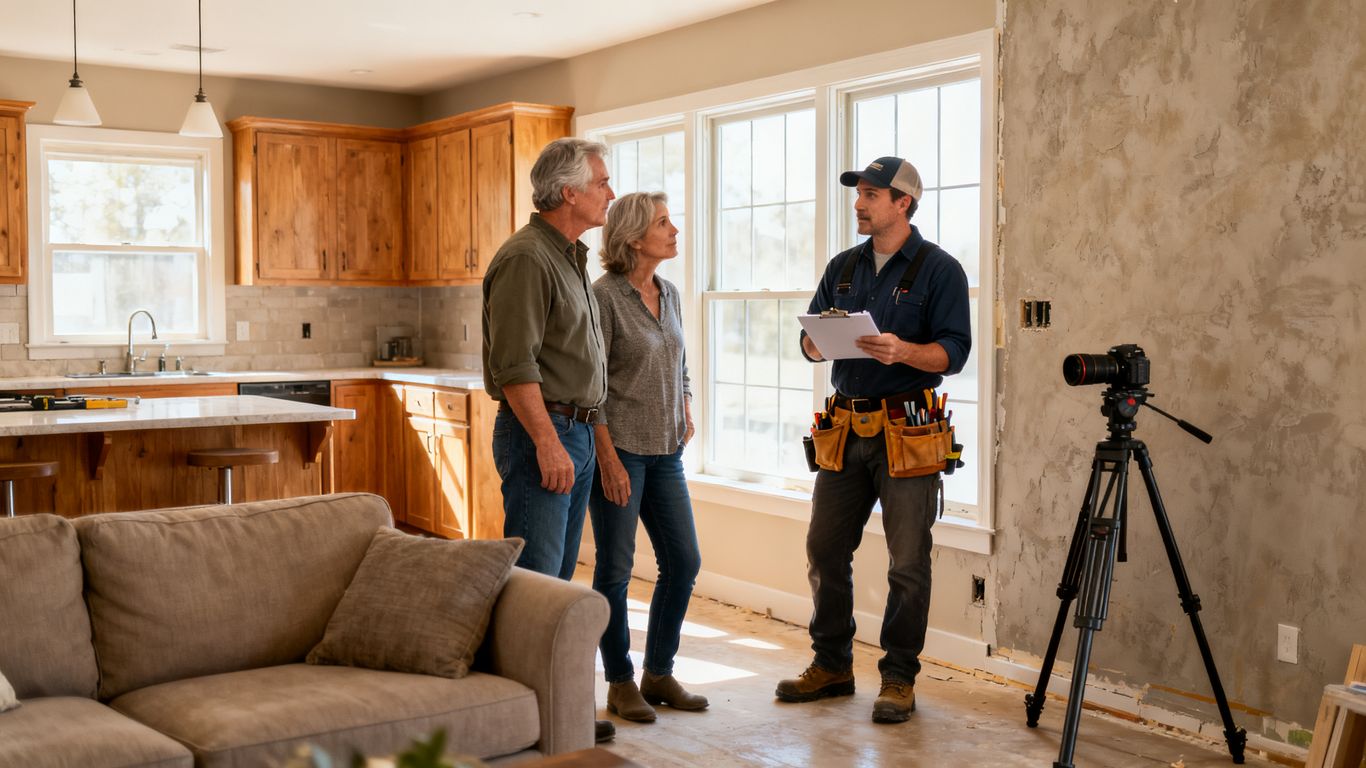
Key Takeaways
Video testimonials can make a renovation company easier to trust when they show a real customer, a real project, and a clearly explained result.
- Choose customers and projects that resemble the work you want more of.
- Build each story around the homeowner’s original concern, decision process, and outcome.
- Use simple filming techniques that preserve natural answers and useful project footage.
- Adapt longer testimonials into platform-specific ads, landing-page assets, and retargeting creative.
- Measure qualified consultations and revenue, not only views or engagement.
Why video testimonials build more trust than written reviews
A written review can confirm that someone was satisfied. A video testimonial gives a prospect more context: who the customer is, what the home looked like, what worried them, and how the finished project changed daily life. That additional context matters when a renovation involves an unfamiliar crew entering the home and a substantial financial commitment. A strong renovation company video testimonial strategy makes uncertainty easier to manage before the first consultation.
The renovation buyer’s risk is emotional, financial, and practical
Renovation buyers are not just comparing prices. They are wondering whether the company will respect their home, communicate when plans change, keep the worksite orderly, and deliver something that looks right months later. They may also be weighing financing, disruption, permitting, and the possibility of an overrun. A customer speaking plainly about those concerns can address objections that a polished service description usually misses.
The best testimonial does not pretend the project was effortless. It explains how the company handled the parts the buyer fears most. That honesty can be more persuasive than a string of five-star adjectives.
How faces, voices, and project footage increase credibility
A face gives the story a human reference point, while a voice carries hesitation, relief, and enthusiasm in ways text cannot. Footage of the actual kitchen, addition, bathroom, or exterior connects the words to visible evidence. Even modest smartphone footage can work when it captures the space clearly and the customer speaks without sounding coached.
A useful customer testimonial video guide can help a team think beyond the final reveal. The customer’s explanation of what happened before and during the job is often just as valuable as the finished-room footage.
Why specific proof outperforms generic praise
“Great company” is easy to say and difficult to evaluate. “They explained the schedule every Friday, protected the hardwood floors, and finished the kitchen before our family reunion” gives a prospect something concrete to picture. Specific details also help the viewer decide whether the testimonial resembles their own situation.
Ask for proof in ordinary language: what problem existed, what alternatives were considered, what the crew did, and what changed afterward. Concrete details build trust because they give the audience a way to judge the claim for itself.
What the “3x better” claim should—and should not—mean
The title’s “3x better” language should be treated as a testing hypothesis, not a universal promise. Performance depends on the audience, offer, placement, video quality, project type, landing page, tracking setup, and comparison creative. A testimonial may produce stronger response than a static review in one campaign and show no advantage in another.
The useful question is not whether video is automatically three times better. It is whether a particular customer story improves the next business outcome compared with the control. That means defining the comparison before launching and reading results through to qualified consultations and revenue.
What makes a renovation company video testimonial strategy effective
A testimonial strategy works best when it is planned around the company’s sales priorities rather than filmed whenever a customer happens to be pleased. Start with the services, locations, budgets, and project characteristics that define a valuable opportunity. Then find customers whose stories can answer the questions those prospects actually ask. The finished videos should feel like helpful evidence, not a collection of interchangeable endorsements.
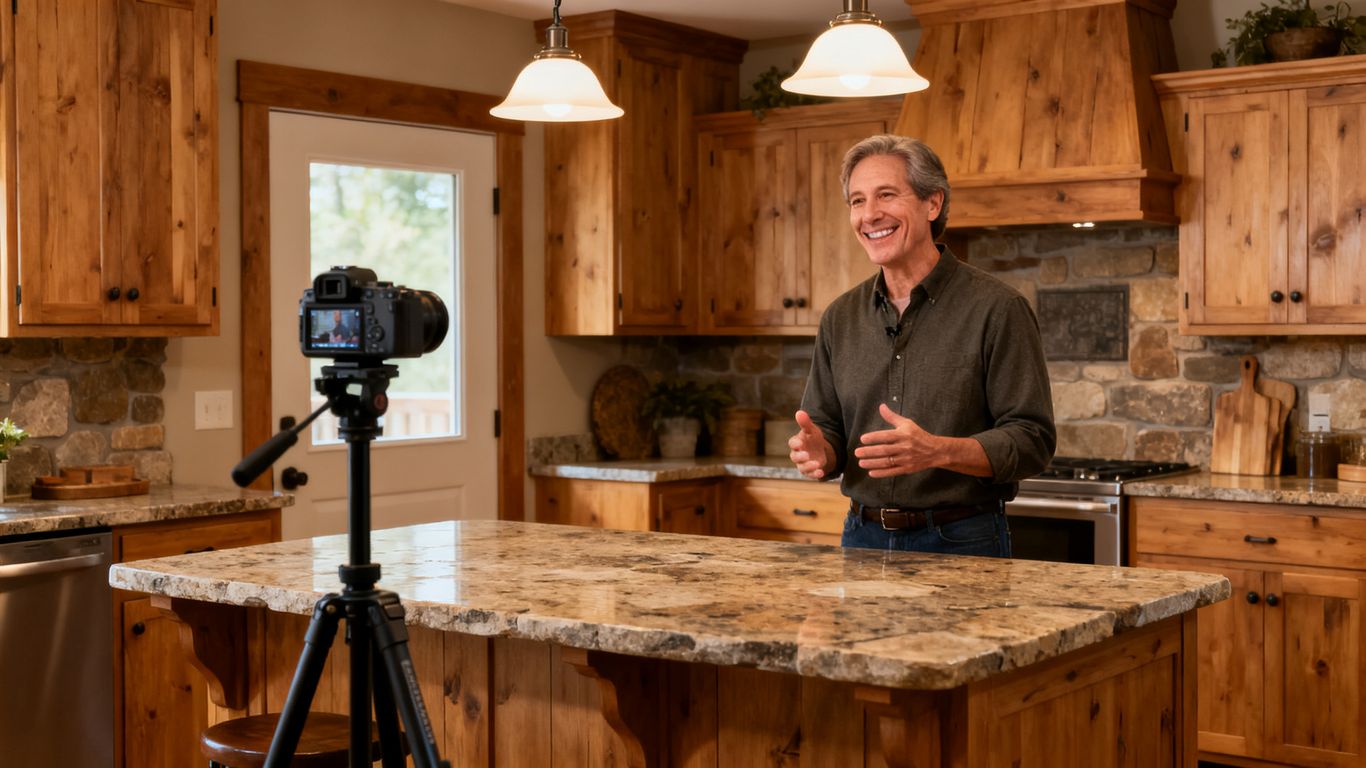
The image matters less than the story around it: a credible setting, a recognizable customer, and enough visual detail for a viewer to understand the work. A practical remodeling project advice resource can also inform the questions you ask about contractor selection, budgets, communication, and expectations.
Choosing projects that reflect your ideal customer
A beautiful project is not necessarily the best testimonial. If the company wants more whole-home renovations, a small powder-room review may attract attention but fail to qualify the right audience. Prioritize stories that resemble the desired customer in property type, service need, geography, and buying motivation.
Build a short project inventory with the original scope, approximate timeline, customer profile, and permission status. This makes it easier to identify gaps, such as having plenty of kitchen footage but nothing that speaks to additions or accessibility upgrades.
Matching testimonials to high-value renovation services
One video should not be expected to sell every service. A homeowner researching a primary-bath renovation wants different proof from someone considering a major addition. Organize testimonials by the decision they support, then place the closest match beside the relevant offer.
A simple content map keeps the relationship clear:
| Service or offer | Proof to emphasize | Best supporting footage | Likely next step |
|---|---|---|---|
| Kitchen renovation | Layout, disruption, finish quality | Before photos and completed cabinetry | Consultation |
| Bathroom renovation | Craftsmanship, waterproofing, usability | Fixtures, tile details, customer walkthrough | Estimate request |
| Home addition | Planning, schedule, communication | Exterior progress and new living space | Project discussion |
| Whole-home renovation | Coordination and decision support | Multiple rooms and timeline moments | Qualified consultation |
After mapping the videos, use the service page and ad copy to set the expectation the testimonial fulfills. A visitor should understand why this customer’s experience is relevant rather than having to search through a general gallery.
Capturing the customer’s before, during, and after story
The strongest arc begins before the contractor arrives. Show the cramped layout, dated finishes, or practical limitation that prompted the call. Then include selected moments from planning and construction, followed by the completed space and the customer’s description of what is different now.
This structure gives the viewer a reason to care about the result. It also makes the testimonial useful for content beyond paid ads, including a broader construction content marketing guide that discusses project experience, jobsite proof, and buyer research.
Using measurable outcomes instead of vague satisfaction claims
Outcomes do not need to be dramatic statistics. They can be observable changes: a family can host comfortably, storage is finally adequate, the morning routine is easier, or the owners stayed within the range they planned. If a customer shares a number, confirm that the customer is comfortable having it published and that the company can support the context.
Avoid turning one customer’s result into a guarantee. Present it as that homeowner’s experience, and let the viewer decide how closely it matches their needs.
How to structure a testimonial that moves prospects toward a consultation
A testimonial is not a customer interview in the documentary sense. It is a focused sales asset built from an honest conversation. The structure should answer the questions a prospect has before contacting a renovation company: What was wrong? Why this company? What was the process like? Was the result worth it? A clear sequence helps the viewer reach those answers quickly without making the story feel rushed.
The opening hook that earns attention in the first few seconds
Open with the customer’s most recognizable problem or most meaningful result. “We could not fit four people in this kitchen at once” creates more immediate interest than “We are happy with our renovation.” The first sentence should stand on its own because many viewers will encounter the clip in a feed with limited attention.
Record several possible openings during the interview. One may work for a landing page, another for a short social cut, and a third for a search ad that needs to connect with a specific service intent.
Questions that uncover the customer’s original problem
Good questions invite a story rather than a yes-or-no response. Ask what was frustrating about the old space, how the problem affected the household, and what finally made the project feel necessary. Then ask what a successful outcome would have looked like before work began.
The interviewer should listen for language the customer already uses. Those phrases often make stronger ad hooks and page headings than internal marketing terms because they reflect how prospects describe the problem themselves.
Showing the decision process and objections before hiring
Prospects want to know what happened before the contract was signed. Ask how the customer compared options, what made them cautious, and which questions the renovation company answered well. A customer who explains why communication, planning, or transparency mattered can reduce anxiety for someone still gathering estimates.
Keep the difficult questions in the edit when the answers are useful and fair. Removing every moment of uncertainty can make the video feel staged, while a calm explanation of how concerns were handled makes the company easier to believe.
Ending with a clear recommendation and next step
The close should connect the customer’s experience to a sensible action. A recommendation such as “If you are considering a similar project, ask them how they will handle the schedule” feels more credible than a forced sales slogan. The on-screen call to action can then invite the viewer to review the relevant service, request an estimate, or book a consultation.
Make the next step specific to the campaign. A short video shown to warm website visitors can ask for a consultation, while an introductory social clip may first direct people to a project page.
How to produce credible testimonial videos without a large production budget
Production quality should support credibility, not overpower it. A recent phone, a quiet room, and a thoughtful interview can be enough to create useful footage. The goal is not to make every customer sound like a spokesperson; it is to make their experience understandable and easy to verify. Simple production also makes it practical to collect testimonials consistently rather than waiting for a large annual shoot.
Selecting the right filming location and project details
Film where the work can be seen, provided the space is quiet and visually manageable. A completed kitchen offers useful depth, surfaces, storage, and movement; an exterior addition may need wider shots and a few close details. Remove distracting clutter, but do not make the home look like a showroom that the customer never uses.
Capture details that reinforce the story: cabinet alignment, tile transitions, door hardware, lighting, storage, or the connection between old and new space. Supplement the interview with a few steady shots rather than constant camera movement.
Recording natural answers instead of over-scripted endorsements
Send topics in advance, not a paragraph for the customer to memorize. During the interview, ask one question at a time and leave enough silence for a complete answer. If the response is vague, ask for an example instead of feeding the customer a claim.
A phone on a tripod is usually less intimidating than a camera held close to the face. Have the interviewer sit beside the lens so the customer can speak naturally while still looking close to camera.
Combining customer interviews with renovation footage
The interview supplies meaning; project footage supplies evidence. Edit them together so the viewer hears the customer describe a concern while seeing the relevant space, process detail, or finished result. This approach also creates several useful versions from one conversation.
For platform-specific creative, prepare a longer horizontal cut, a square or vertical version, and short excerpts with captions. Practical smartphone video ideas for contractors can help smaller teams gather additional footage between formal testimonials.
Use the embedded video as a learning reference for the broader production approach, but judge every shot by whether it advances the customer’s story. More footage is not automatically more convincing.
Handling lighting, sound, permissions, and privacy
Sound is usually the first quality issue viewers notice. Record away from active tools, HVAC noise, and hard reflective surfaces when possible, and monitor the audio with a second phone or inexpensive microphone. Face the customer toward soft window light rather than placing a bright window directly behind them.
Get written permission for the interview, home, family members, and identifiable personal details. Confirm where the video may appear, how long the permission lasts, and whether the customer wants children, addresses, or valuables excluded. A careful process protects the customer and prevents a useful asset from becoming difficult to publish.
Where renovation companies should use testimonial videos across the funnel
A good testimonial should travel farther than the page where it was first uploaded. Different placements need different edits, captions, openings, and calls to action, but the underlying story can remain consistent. Match the customer’s concern to the prospect’s stage rather than publishing the same cut everywhere. That is where a testimonial becomes part of a paid media system instead of a one-time social post.
Turning testimonials into Google Ads and landing-page assets
For high-intent search traffic, place the testimonial near the claim it supports. A kitchen renovation ad can lead to a page where a kitchen customer discusses planning, disruption, and the finished layout. Keep the first frame and the accompanying headline understandable even if the visitor watches without sound.
On the landing page, put the video near the form or consultation prompt, but give it enough surrounding copy to explain the service. A useful website conversion improvement guide covers the related fundamentals: clear headlines, contact information, trust signals, mobile performance, and conversion tracking.
Using short cuts for Meta Ads, Instagram, and TikTok
Short-form placements reward a direct opening and visible movement, but the story still needs a meaningful point. Start with the customer’s problem, use captions for silent viewing, and end before the explanation becomes repetitive. Build several cuts from the same interview so the audience does not see one overused asset.
Test vertical edits separately from the longer version. A first-person customer clip may work as an introduction, while a before-and-after sequence may be better for people who already know the company.
Adding service-specific videos to website pages and local SEO content
A testimonial on a relevant service page can reinforce the exact decision a prospect is making. Add a short transcript or summary so search visitors and accessibility tools can understand the content, then connect it to nearby project details, FAQs, and the consultation path. This also supports an owned Home Services SEO strategy built around reviews, local visibility, and useful website content.
Do not bury every testimonial in one generic video library. A smaller set of carefully matched videos is easier to navigate and more persuasive than a large archive with no context.
Retargeting visitors who viewed a project or requested an estimate
Retargeting lets the message reflect what the visitor already showed interest in. Someone who viewed an addition page may see a customer describing planning and schedule communication, while someone who started but did not complete an estimate form may see a shorter reassurance-focused clip.
Set frequency limits and rotate stories so the ads remain useful rather than intrusive. Exclude people who already booked when the campaign’s only purpose is to generate a first consultation, or move them into a different follow-up sequence.
How to measure whether video testimonials are actually converting
Measurement begins with a clean comparison, not a vanity metric. Decide what the testimonial is supposed to influence, which audience will see it, and what creative or placement serves as the control. Then make sure calls, forms, booked estimates, and revenue can be connected back to the campaign. Without that chain, a video may appear successful simply because it received cheap views.
Tracking video engagement separately from lead volume
Track starts, three-second views, completion rate, watch time, sound-on viewing where available, and clicks. These metrics explain whether the opening and edit hold attention, but they do not prove that the video generated a valuable opportunity. Compare engagement by audience and placement rather than relying on one blended average.
A low completion rate may indicate a weak hook or a long edit. Strong completion with no downstream action may mean the story is interesting but poorly matched to the offer or call to action.
Comparing testimonial creative with static review ads
Run the testimonial against a reasonable static control with a similar offer, audience, placement, and landing page. Keep the comparison clean enough to learn whether the format or message changed the result. If the video also introduces a different service, discount, or headline, the test will not tell you much.
Review cost per click, landing-page engagement, lead rate, and lead quality together. A cheaper click is not a win if it produces fewer serious renovation conversations.
Measuring qualified consultations, booked estimates, and closed revenue
For renovation companies, the valuable conversion is often several steps beyond the initial form. Track whether a lead answers the phone, fits the service area and scope, schedules a consultation, attends the appointment, receives an estimate, and becomes a customer. Assign those stages consistently in the CRM.
Revenue data may take longer to mature, but it prevents the team from scaling creative that attracts curiosity without commercial value. One customer’s high-value project can be encouraging evidence, not a blanket forecast for every future campaign.
Testing hooks, project types, placements, and calls to action
Test one meaningful variable at a time when volume allows. A useful testing sequence might include:
- The original problem versus the finished-project result as the opening hook.
- A kitchen story versus a bathroom, addition, or whole-home story.
- A longer landing-page cut versus a short vertical social edit.
- A consultation invitation versus a service-page or estimate-focused call to action.
After each test has enough data, record the audience, spend, placement, and downstream result. The purpose is to build a library of learning, not to declare a permanent winner from a small fluctuation.
Connecting testimonial performance to CRM and call-tracking data
Use consistent campaign names and tracking parameters across Google Ads, Meta Ads, TikTok Ads, landing pages, forms, and phone numbers. Pass the source and creative identifier into the lead record when possible. Call recordings and disposition fields can then show whether testimonial-exposed leads ask better questions or arrive with stronger intent.
The marketing report should connect the chain from view to click, lead, qualified conversation, booked estimate, and closed revenue. When those stages are visible together, the company can decide whether to produce another testimonial, revise the landing page, or shift spend toward a better-matched audience.
Schedule More Qualified Consultations
A testimonial works best when it leads naturally into a conversation about the homeowner’s project. Give prospects a clear way to choose a time that suits them, then use the customer story to make that next step feel informed rather than pressured. Schedule a consultation when you are ready to turn trust into a real project discussion.
Conclusion
Video testimonials do not convert because they are automatically more persuasive than every written review; they convert when they make a renovation decision feel more knowable. Choose relevant customers, capture specific evidence, adapt the story to each channel, and measure the path through qualified consultations and revenue. That disciplined approach gives a renovation company video testimonial strategy a fair chance to outperform attractive but unproven creative.
Frequently Asked Questions
How long should a renovation testimonial video be?
A longer edit can work on a service page when the story needs context, while paid and social placements often need a shorter version with a direct opening. Keep the length that preserves the customer’s problem, proof, and outcome.
Should the customer memorize a script?
Usually not. Give the customer topics and examples of what you would like to understand, then let them answer in their own words. Natural phrasing generally sounds more credible than a polished endorsement.
What should a renovation testimonial include?
It should explain the original problem, the decision process, the experience of working with the company, and the result. Specific details about communication, schedule, craftsmanship, or daily life are more useful than broad praise.
Can a smartphone produce a credible testimonial?
Yes, if the phone is stable, the light is workable, and the sound is clear. A quiet location and an honest answer matter more than expensive equipment for many customer interviews.
Where should testimonial videos appear?
Use them on relevant service pages, landing pages, search and social campaigns, retargeting sequences, and selected local content. Match each edit to the audience’s stage and the decision they are making.
How do you know whether a testimonial is working?
Measure engagement first, then connect clicks and leads to qualified conversations, booked estimates, and closed revenue. Compare the video with a similar static review or other control creative.
What permissions are needed for a customer video?
Obtain written permission covering the customer’s likeness, home, family members, project footage, channels, and duration of use. Confirm any privacy restrictions before publishing or repurposing the footage.